
Buckingham Palace ‘gardener’ removes Virginia Giuffre memorial plaque in just 90 minutes A gardener at Buckingham Palace’s grounds removed a tribute to Virginia Giuffre, the accuser of Andrew Mountbatten-Windsor, within a short hour. The plaque was taken down swiftly by a worker in high-visibility gear, who used a litter picker to erase the memory of the royal’s past connection to the case. Installed by activists from Everybody Hates Elon, the plaque was positioned on a grassy area where tourists gathered to take selfies with the royal family. The group had recently executed a bold prank at the Louvre, aiming to shift focus to survivors of sexual abuse by powerful figures like Jeffrey Epstein. Plaque honored survivors’ fight against Epstein The memorial read: “In honour of Virginia Giuffre, whose decades of campaigning exposed sexual abuse by powerful men like Jeffrey Epstein and former prince Andrew Mountbatten-Windsor.” It also included: “Her bravery and determination brought the truth to light. May she be remembered long after her abusers are forgotten.” Despite its brief presence, the plaque sparked reactions from the organization. A representative said: “Of course we are disappointed. We feel Andrew and the world should be made to remember Virginia’s bravery forever.” They added: “Billionaires and their mates think they can get away with anything. They think ordinary people will never fight back – let alone win.” The group highlighted that Giuffre’s persistence led to accountability for Epstein and Andrew. Giuffre’s legacy and final days Giuffre’s image with Andrew has become a symbol of the Epstein scandal. She accused Epstein of trafficking her for sexual encounters with the prince while underage. Andrew denied ever meeting her, claiming the photograph was a fabrication. After enduring years of mental health struggles and trauma, Giuffre passed away in her Australian home on April 25, 2025. Her family described her as “a fierce warrior in the fight against sexual abuse,” noting the “toll of abuse… became unbearable.” Dini von Mueffling, Giuffre’s long-time publicist, praised her as “one of the most extraordinary human beings I have ever had the honour to know.” She called Giuffre “deeply loving, wise, and funny,” and “a beacon to other survivors and victims.” Her legal representative, Sigrid McCawley, said: “Her courage pushed me to fight harder, and her strength was awe-inspiring.” Earlier this month, the same activist group managed to sneak a display of Andrew’s arrest photo into the Louvre’s gallery, alongside iconic artworks like the Mona Lisa. The mastermind of the operation told Metro: “It was all pretty fine getting it through. It was just in a bag and hidden under another picture.” The artwork remained for about 15 minutes before being removed, with staff initially amused by the stunt. ArrowMORE:Andrew’s latest visitor fuels speculation he could be axed from line of succession ArrowMORE:Lipreader reveals Andrew’s plea to Prince William before titles were stripped This site is protected by reCAPTCHA and the Google Privacy Policy and Terms of Service apply. Your information will be used in line with our Privacy Policy.
Exclusive: Iranian bombers were ‘two minutes’ from striking US air base before Qatari planes shot them down
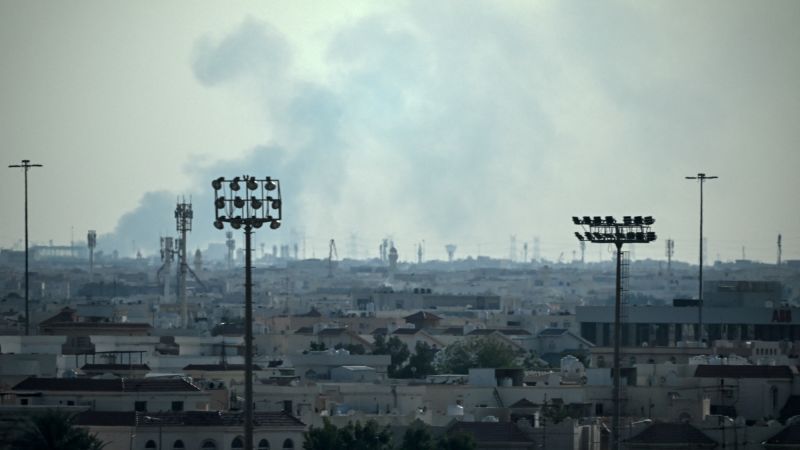
Exclusive: Iranian bombers were ‘two minutes’ from striking US air base before Qatari planes shot them down Two sources familiar with the operation revealed to CNN that Iranian bombers narrowly avoided hitting the primary military hub for US troops in the Middle East before Qatari aircraft intercepted them. The event marks the first instance of Qatari planes engaging in aerial combat, according to the sources. On Monday morning, the Iranian Revolutionary Guard sent two Soviet-era Su-24 bombers toward al-Udeid Air Base, home to approximately 10,000 US service members, and Ras Laffan, a vital natural gas processing site that underpins Qatar’s economic foundation. One source claimed the jets were just minutes away from their objectives. The second source confirmed the planes were visually spotted and documented with bombs and guided weapons. Qatar issued a radio warning, but the bombers did not alter course. They had descended to 80 feet to bypass radar detection, the source noted. Due to urgent circumstances and the evidence at hand, the aircraft were deemed hostile, the source added. First aerial engagement since Khamenei’s death Qatar’s F-15 fighters engaged the Iranian jets in a high-stakes aerial encounter before bringing them down. The bombers crashed into Qatar’s territorial waters, and a search is ongoing for the crew members. This bold move by Iran, which targeted a neighboring country for the first time since Supreme Leader Ali Khamenei’s assassination, highlights a shift in their strategy. US Gen. Dan Caine, Joint Chiefs of Staff chairman, acknowledged the incident during a Pentagon briefing but did not disclose the bombers’ intended target. “Qatari fighters for the first time have shot down two Iranian bombers on route to their location,” he stated. “Rather, it seeks to inflict harm on its neighbors and drag them into a war that is not theirs,” Qatari Prime Minister Mohammed bin Abdulrahman Al Thani remarked during a Wednesday call with Iranian Foreign Minister Abbas Araghchi. The incident was described as “escalatory” and signaled a lack of Iran’s commitment to deescalation, according to a summary of the conversation. The operation over Qatar stands out as unusual. Typically, Iran’s retaliation has focused on missiles and drones. However, since the US and Israeli strikes, the Iranian regime has launched over 400 ballistic missiles and more than 1,000 drones at Gulf Arab nations, as reported by regional governments. Iran’s attacks have targeted urban areas, energy infrastructure, airports, and hotels, unsettling populations accustomed to stability. Despite most projectiles being intercepted, six US service members lost their lives when an Iranian missile struck a temporary operations center at Kuwait’s Shuaiba port on Sunday.
‘Restoring control at borders not a betrayal of Labour values’, home secretary to say – as she sets out immigration shake-up
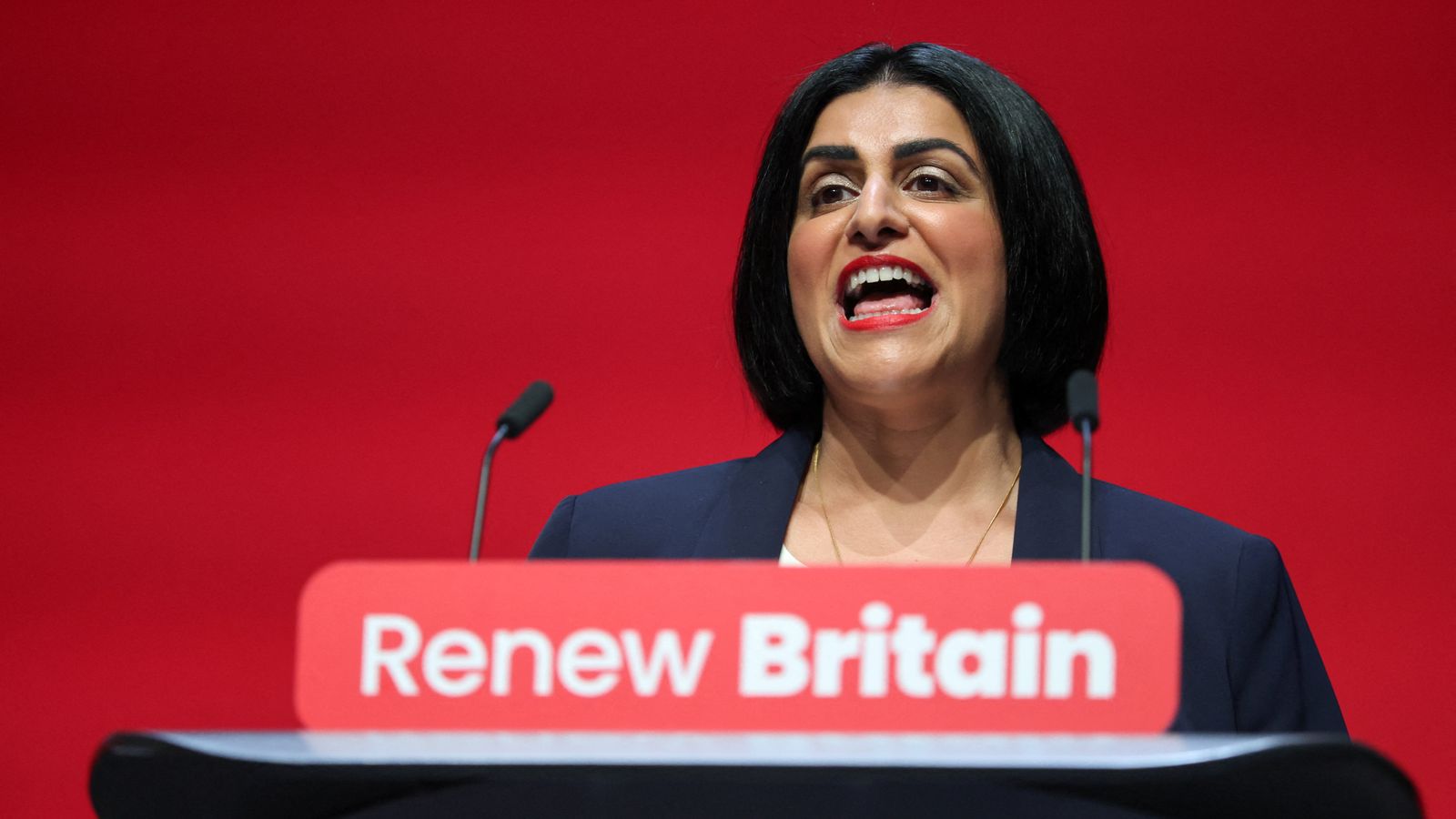
Labour’s Border Control Stance Reaffirmed by Home Secretary Home Secretary Shabana Mahmood will assert that reinforcing border management aligns with Labour’s core principles, not contradicting them, as she unveils plans to overhaul the immigration framework. Speech to IPPR Highlights Policy Shift Speaking at a gathering for the left-leaning IPPR on Thursday, the minister will argue that Labour should maintain its current trajectory rather than moving further left, following a significant setback in the recent Gorton and Denton by-election. Sky News reports that a stringent approach to curbing unauthorized arrivals has led to nearly £400 million in reductions for asylum-related expenses, particularly targeting tourists exploiting the system. “Establishing clear boundaries at our borders is not a step away from Labour’s ideals—it’s a reflection of them. This is essential for any Labour administration to make progress,” Mahmood will state. Under the proposed measures, individuals recognized as refugees in the UK will undergo status assessments every 30 months, differing from the existing five-year period before eligibility for indefinite leave to remain. Those who breach immigration laws or work without authorization will face removal from government-funded housing and loss of financial aid, according to the revised guidelines. This shift replaces the EU-mandated obligation to provide support with a conditional system. Denmark’s Model Inspires Reforms Mahmood’s strategy draws from Denmark’s success, where a social democratic government reduced asylum applications to a 40-year low and streamlined the process for rejected cases. She will describe this as a model for a “balanced approach” that is both humane and regulated. “Far from being an ideological departure, these reforms embody Labour’s commitment to a fair and orderly system. We must strike a harmony between compassion and control,” she will emphasize. The minister also warns that unchecked migration fosters anxiety, leading to a narrowing of national identity and the rise of ethno-nationalist sentiments. “When citizens perceive a loss of sovereignty, their vision of the UK shrinks, and extremist voices gain traction,” she will argue. Green Party Policies Criticized as Unrealistic Labour’s leader will dismiss the Green Party’s open-border proposals as an impractical vision. “A candidate for top leadership should not be seen encouraging illegal crossings on French shores,” she will claim, highlighting the financial strain on taxpayers. “Polanski’s call for unrestricted migration places an unsustainable burden on public resources, offering a dream rather than a viable policy,” Mahmood will note. Additional changes include requiring nationals from Nicaragua and Saint Lucia to obtain visit visas before entering the UK, with the Home Office citing a 93% drop in asylum claims from Jordan, Colombia, and Trinidad and Tobago since visa requirements were introduced. These adjustments are expected to prevent over 6,000 asylum applications and save more than £370 million in associated costs since July 2024, according to official data. Watch Trevor Phillips’ exclusive dialogue with Shabana Mahmood during a Politics Hub special on Sky News at 7 pm on Thursday, March 5.

Harry Styles says the tragic death of Liam Payne has made him live his own life to the fullest after struggling with public expectations on how he should grieve: ‘It’s so difficult to lose a friend who is so like you’
Harry Styles Reflects on Liam Payne’s Passing, Finds New Purpose in Life In a recent interview, Harry Styles opened up about the profound impact of Liam Payne’s untimely death, which has reshaped his approach to living. The 32-year-old singer, who lost his One Direction bandmate in 2024, shared how the tragedy compelled him to reexamine his own path. Cause of Liam Payne’s Passing Liam Payne’s death occurred tragically when he fell from a third-floor balcony at a hotel in Buenos Aires, Argentina. The incident marked a sudden end to the life of a 31-year-old who was celebrated for his kindness and drive to achieve greatness. “It’s so difficult to lose a friend. It’s difficult to lose any friend, but it’s so difficult to lose a friend who is so like you in so many ways.” Struggles with Public Expectations Styles revealed the emotional weight of navigating how others expected him to grieve. “Even the idea of talking about it, I struggle with that a little bit,” he admitted. “There was a period when he passed away where I really struggled with kind of like acknowledging how strange it is to have people kind of like own part of your grief in a way. I have such strong feelings around my friend passing away.” He further explained the pressure to conform: “And then suddenly being, you know, like aware of there’s maybe like a desire from other people of you to convey that in some way, or it means you’re not feeling what you’re feeling or something, you know?” A New Perspective on Life Styles described Liam as someone with “the kindest heart who just wanted to be great.” The loss became a pivotal moment for the artist, inspiring him to ask critical questions about his purpose as a musician. “How do I want to live my life?” he pondered, emphasizing that the best tribute to a departed friend is embracing life fully. His career, once defined by the success of One Direction, has since flourished with multiple Grammy and Brit awards, and his net worth has surged to £175 million. Meanwhile, Liam, though achieving early fame with his debut single, faced challenges maintaining the same momentum as his bandmates. He released only one full studio album before his passing and was dropped by Universal Music just days prior. Legacy of One Direction The group, once one of the most successful boybands in history, announced an indefinite hiatus in 2016. Each member, including Zayn Malik, Louis Tomlinson, Niall Horan, and Liam, pursued solo projects. Harry swiftly adapted, signing a major record deal with Columbia—his former label—immediately following the band’s dissolution. Styles also noted how witnessing his friends’ personal milestones, such as marriages, influenced his perspective. “I had to have a real, honest conversation with myself about where I saw myself in five years,” he said, adding that his relationship with actress Zoë Kravitz, 37, has strengthened his resolve to build a family. “I was turning 30 and I wanted to take a break and assess, I think. I didn’t want to just roll straight into another process of making something and I thought it was time to just, honestly, like make sure I still loved it.” His upcoming fourth studio album, Kiss All the Time, includes the track “American Girls,” which was inspired by this life-changing shift. Styles credited the song to his evolving mindset, reflecting on how his friends’ choices to settle down motivated him to embrace his own future with clarity and passion.
Pentagon prepares for Israeli-US war on Iran that could last ‘until September’
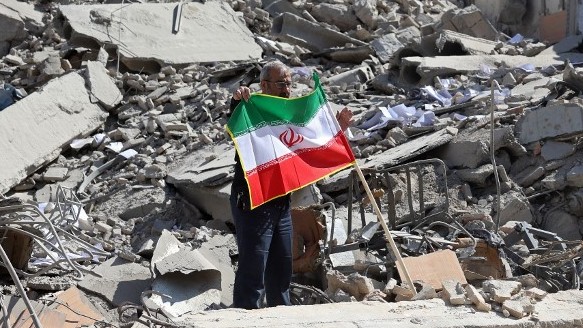
Pentagon prepares for Israeli-US war on Iran that could last ‘until September’ The Pentagon is accelerating intelligence efforts as Washington readies itself for an extended conflict against Iran, with military planning now extending into the autumn months. This move comes amid reports that the US Central Command has requested additional intelligence officers from the Pentagon to bolster operations at its headquarters in Tampa, Florida. A Politico report revealed that the reinforcements would support the campaign against Iran for at least 100 days, potentially stretching into September. The request marks the first known initiative under the Trump administration to increase intelligence personnel for the ongoing war, signaling a shift toward a more prolonged campaign than initially disclosed. Earlier this week, US President Donald Trump suggested the military campaign might span four to five weeks, but he cautioned it could extend beyond that timeframe. The rapid deployment of personnel and resources highlights how unprepared Washington was for the scale of the conflict it initiated in conjunction with Israel, as reported by Politico. According to the Iranian Red Crescent Society, the attacks have resulted in at least 700 deaths and numerous injuries, with over 165 children among the casualties from a double-tap strike on an elementary school. The US Central Command reported Monday that six military personnel were killed in Kuwait as a result of an Iranian strike. Prior reporting from Politico on February 25 revealed that senior Trump advisers advocated for Israel to launch the initial strike against Iran before the US followed suit, which ultimately happened, pulling Washington into the conflict. The war has now become a pivotal issue in Trump’s presidency, deepening rifts within his political base, where many supporters oppose further Middle Eastern engagements on Israel’s behalf. “We knew there would be an Israeli action. We knew it would lead to an attack on American forces, and we knew if we didn’t act before they launched their strikes, the casualties would be higher.” US Secretary of State Marco Rubio emphasized the necessity of US involvement, stating that Israel’s actions compelled Washington’s response. The conflict now threatens to dominate Trump’s administration, with Rubio’s remarks underscoring the refusal to restrain Israel despite its role in escalating the regional war. Israeli Prime Minister Benjamin Netanyahu celebrated the second Israeli-US war with Iran in less than a year, declaring, “The attacks on Iran are being executed with the assistance of the United States, my friend, US President Donald Trump, and the US military.” He also framed the conflict as the realization of a decades-long strategic goal, stating, “This coalition of forces allows us to do what I have yearned to do for 40 years. … This is what I promised—and this is what we shall do.”
Watch: BBC asks Hegseth about reports of strike on school
Watch: BBC Investigates Allegations of School Strike in Iran During a press briefing, the BBC’s state department correspondent Tom Bateman questioned US Secretary of Defense Pete Hegseth regarding claims of an attack on the Shajareh Tayyebeh elementary school. The incident, which Iran asserts resulted in the deaths of 153 individuals including numerous children, has sparked international concern. Hegseth provided limited details about the operation, leaving key questions about its scale and duration unresolved. Iran’s state media confirmed the death of Supreme Leader Ali Khamenei, a significant development amid ongoing tensions. Protests erupted across American cities, with more demonstrations expected in the coming days. Meanwhile, the US reported that six F-15 jets were “mistakenly shot down by Kuwaiti air defenses,” with all crew members in stable condition. Iran’s Retaliatory Strikes and US-Israeli Response The US and Israel launched coordinated attacks as part of Operation Epic Fury, targeting Iran in response to recent developments. An eyewitness captured footage of an Iranian drone crashing in Kuwait, adding to the visual evidence of the conflict’s reach. The BBC’s Clive Myrie reported from Tel Aviv’s bomb shelter, detailing Iran’s retaliatory strikes toward the country. Donald Trump warned of further US casualties after three service members were killed in the second day of strikes. The president shared a video statement on Truth Social, accusing the Iranian regime of waging an “unending campaign of bloodshed and mass murder targeting the United States.” In Jerusalem, the BBC’s Jon Donnison covered the declaration of “major combat operations” by Trump. Global Reactions and Strategic Implications As the conflict escalated, global attention shifted to the broader geopolitical context. The expiration of the New START treaty removed nuclear weapon limits between the US and Russia for the first time since 1991. In Ecuador, the BBC’s Ione Wells examined the government’s response to the incident, which occurred during heightened regional tensions. The ongoing conflict has drawn celebrations of the Lunar New Year across the world, from Hong Kong to Buenos Aires. However, the focus remains on the military actions, with analysts like the BBC’s Sarah Smith speculating on Trump’s strategic ambitions in the latest assault on Iran.
Iran war: Why is Russia not coming to Tehran’s aid?
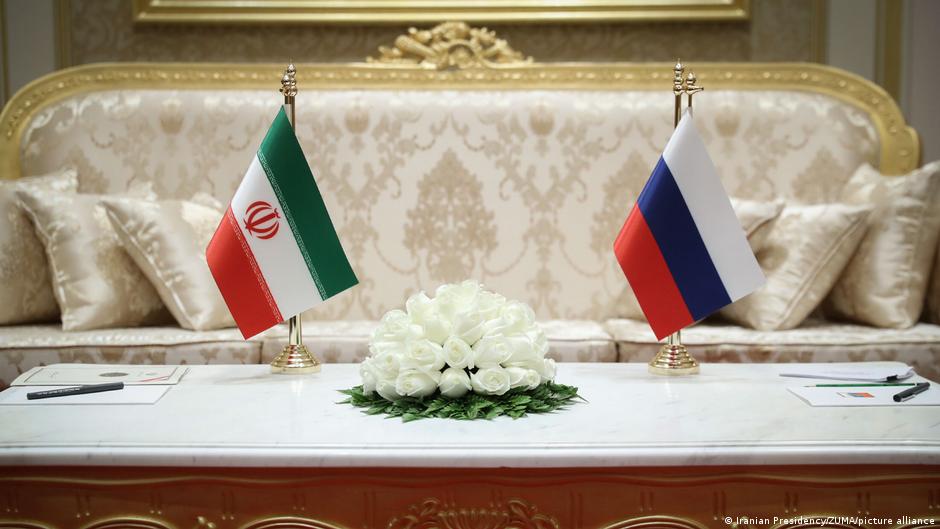
Iran War: The Role of Russia in Tehran’s Crisis Amid escalating US-Israeli strikes, the Iranian regime—facing dwindling global backing—has pinned hopes on Moscow’s solidarity. Yet, the absence of significant Russian intervention has left Tehran frustrated. Just days into the conflict, Russia’s UN envoy, Vassily Nebenzia, labeled the attacks as an “unprovoked act of armed aggression against a sovereign and independent UN member state.” Despite this diplomatic stance, Moscow’s concrete support has been limited, raising questions about its strategic priorities. Strategic Partnerships Under Pressure Russia and Iran share a long-standing alliance, tied together by shared interests in countering Western influence. However, the lack of active military backing has puzzled analysts. Nikita Smagin, an Azerbaijan-based expert, notes that their collaboration includes vital economic ventures. “The North-South transport corridor is a key example,” he explains. “Russia lost access to its traditional transit routes after invading Ukraine in February 2022, making the corridor a critical lifeline.” Launched in 2000, this 7,200-kilometer multi-mode network passes through Azerbaijan and connects Russia to the Indian Ocean. The Gulf Research Center in Saudi Arabia reports 75% of the project is complete. Yet, despite these ties, Russia has not mobilized to shield Iran from the current assault. “The two nations aren’t defensive allies,” says Julian Waller, a CNA analyst. “Their partnership is pragmatic, not ideological.” Drone Support and Intelligence Sharing Russia has historically relied on Iranian military assets, such as Shahed drones, since 2023. These unmanned systems have transformed the Ukraine war, according to Waller. “Iran’s drones were instrumental in Russia’s campaign, even as production now shifts to domestic models,” he adds. Moscow’s collaboration with Tehran extends beyond weaponry; it includes intelligence exchanges and missile supplies. Smagin highlights that Russia’s alliance with Iran is driven by mutual hardship. “Both face international sanctions,” he says. “Unlike Turkey or Egypt, which might halt trade with Russia if pressured, Iran remains a dependable partner.” Gregoire Roos, Chatham House’s Europe and Russia director, argues that Iran has even served as Moscow’s mentor in navigating sanctions. “Tehran’s experience in evading economic restrictions has guided Russia’s strategies,” Roos explains. Expectations and Calculations Despite this, experts suggest Iran’s expectations were misplaced. Mojtaba Hashemi, a political analyst, notes that Tehran anticipated “tangible political and military support” from Moscow. “This meant expanded cooperation, intelligence sharing, and a strong deterrent message,” he says. “But Russia and China have more pressing concerns, offering only symbolic aid.” Mohammad Ghaedi, a George Washington University lecturer, adds that Russian support was never guaranteed. “Tehran has long been skeptical of Moscow’s loyalty,” he says, citing former President Mahmoud Ahmadinejad’s claim that “Russia has always sold out the Iranian nation.” President Masoud Pezeshkian echoed this sentiment after the 12-day war in June 2025, stating that “countries we considered friends did not help us during the conflict.” Some analysts see potential benefits for Russia in a prolonged Iranian crisis. “A war in the Middle East could divert attention from Ukraine,” says Roos. “It would weaken Zelenskyy’s global standing and force Washington to manage multiple fronts.” This suggests Russia’s inaction may be a calculated move to maximize its geopolitical leverage.

‘Urgent action’ needed as pollution fuels mental health risks, EU agency warns
‘Urgent action’ needed as pollution fuels mental health risks, EU agency warns The European Environment Agency (EEA) has sounded an alarm, highlighting how pollution—particularly air, noise, and toxic chemicals—plays a growing role in mental health challenges. With rising concerns over environmental factors influencing psychological well-being, the agency advocates for immediate and substantial measures to mitigate these risks. Air Pollution and Mental Health Conditions Pollution has been identified as a potential catalyst for mental health disorders, exacerbating existing symptoms or triggering new conditions through prolonged exposure. Research indicates that poor air quality, especially long-term exposure to fine particulate matter (PM2.5) and nitrogen dioxide (NO2), is significantly linked to depression. Recent studies further suggest that periods of high pollution correlate with increased depression rates, while short-term spikes in air quality can worsen schizophrenia symptoms. Noise Pollution and Its Impact Environmental noise, notably from transportation sources, is a key concern. Road traffic, railways, and aircraft contribute to stress responses in the body, fostering inflammation and oxidative stress that harm mental health. The EEA’s analysis reveals that for every 10 decibel (dB) rise in noise levels, there is a slight but measurable uptick in depression and anxiety risks. Aircraft noise, however, shows the strongest connection, with one study finding a 12 percent rise in depression risk per 10 dB increase. This type of noise also causes greater annoyance than other transport sounds, potentially leading to mental health issues. Chemical Exposure and Mental Health Links The EEA reviewed scientific studies connecting exposure to certain chemicals to mental health outcomes. Heavy metals, like lead, and second-hand smoke have consistently shown associations with depression and schizophrenia, especially after prenatal or childhood contact. Pesticides also link to depression, anxiety, and schizophrenia. Endocrine-disrupting chemicals, such as bisphenol A and PFAS, interfere with hormonal systems, with prenatal exposure tied to childhood depression and anxiety. According to the World Health Organization (WHO), one in six Europeans lives with a mental health condition, and one in three receive insufficient treatment. In the EU, over 11 million disability-adjusted life years were lost in 2023 due to mental health disorders. These figures are expected to grow in the coming years, particularly affecting young people and vulnerable groups.

The Iran war’s troubling missile math
The Iran war’s troubling missile math Four days after the conflict with Iran began, at least one Gulf ally of the United States is facing a critical shortage of key interceptor missiles essential for countering Iranian strikes. Two unnamed sources informed CNN that the situation is not yet a crisis, but urgency is growing as the allied nations seek additional supplies from Washington. “The sooner they arrive, the more favorable it will be,” said a regional official, highlighting the need for timely reinforcement. Concerns over supply chain strains Across the region, including in Israel, there is growing worry about the adequacy of defensive weaponry. A Qatari official noted that while the country has a sufficient stockpile for extended use, it remains in communication with the US Central Command to monitor potential shortages. This underscores a broader challenge: how to sustain missile defenses without diverting resources from other fronts. “Each intercept represents hundreds of hours of training, readiness, and technology all coming together to work as designed,” said Gen. Dan Caine, chairman of the Joint Chiefs of Staff, during a press briefing on Monday. His remarks emphasized the operational strain on interceptors, which are vital for protecting US forces and allies in the region. President Donald Trump, speaking at the White House, initially projected the war to last “four to five weeks” but later hinted at a longer campaign. “The US military has the capability to go far longer than that,” he stated, suggesting the conflict could persist without immediate replenishment. This stance has raised eyebrows among regional partners, who are already scrambling to maintain stockpiles. Shift in priorities and production rates Officials have warned Trump that prolonged operations could deplete reserves critical for supporting Israel and Ukraine. A person close to the matter described the rapid consumption of long-range precision-guided munitions, signaling a pressing need for supply chain adjustments. “Wars can be fought ‘forever,’ and very successfully, using just these supplies,” Trump claimed on Truth Social, though he avoided specifying which weapons he meant. “At the highest end, we have a good supply, but are not where we want to be,” Trump added, criticizing Biden for allocating significant portions of advanced munitions to Ukraine. Biden’s administration had cited concerns over depleting stockpiles as a reason for delaying certain deliveries, but Trump argued that the supply chain is now robust enough to sustain extended efforts. Adm. Brad Cooper, head of US Central Command, shared a video message on Tuesday evening, reporting that the military had targeted nearly 2,000 Iranian assets using over 2,000 munitions. “We have severely degraded Iran’s air defenses and destroyed hundreds of ballistic missiles, launchers, and drones,” he stated, while acknowledging the Iranian military’s response of over 500 ballistic missiles and 2,000 drones. Political tensions and strategic implications On Capitol Hill, Democrats have voiced increasing concern about the pace of munitions use and its long-term impact on US defense capabilities. Arizona Senator Mark Kelly, a Democrat, warned that Iran’s production of Shahed drones and ballistic missiles remains substantial, with estimates suggesting over 100 missiles per month. “So at some point… this becomes a math problem and how can we resupply air defense munitions,” he said, stressing the need for clear logistics planning. Meanwhile, global rivals like China are closely monitoring the situation, aware that the conflict’s trajectory could shift supply dynamics in the Pacific. As the war expands, the balance between defensive needs and offensive operations will determine the resilience of the US and its allies in the region.

Legendary college football coach Lou Holtz dead at age 89
Legendary College Football Coach Lou Holtz Passes Away at 89 The University of Notre Dame confirmed the passing of Lou Holtz, the esteemed college football coach who guided the Fighting Irish to their final national championship in 1988. Holtz was 89 years old when he died, with his family disclosing that he had been under hospice care in Orlando, Florida, for several months. Holtz’s 33-year coaching journey saw him amass a 249-132-7 record, with a significant portion of his achievements at South Bend, Indiana. During his tenure from 1986 to 1996, the Irish compiled a 100-30-2 mark, a testament to his influence on the program. “We are deeply saddened by the loss of Lou Holtz,” said current Notre Dame head coach Marcus Freeman in a statement. “His legacy at Notre Dame transcends the field of play. Lou and his wife, Beth, are cherished for their kindness and dedication to the university’s values,” Freeman added. Throughout his head coaching tenure, Holtz steered teams at multiple institutions, including William & Mary, North Carolina State, Arkansas, Minnesota, and South Carolina. His time with the New York Jets in 1976 was brief but notable, as he posted a 3-10 record before resigning with one game remaining. Reflecting on that chapter, Holtz once remarked, “God did not put Lou Holtz on this Earth to coach in the pros.” His words proved prophetic, as he quickly returned to college football, leading the Arkansas Razorbacks to a 60-21-2 record during his five seasons there. A Legacy Etched in Tradition Notre Dame highlighted Holtz’s enduring impact, noting that the iconic “Play Like A Champion” slogan in the team’s locker room originated during his era. The university also praised his practice of removing names from the back of jerseys, a move that underscored team unity and remains a tradition in modern games. Holtz’s influence extended beyond wins, shaping the culture of the program and earning reverence from fans and alumni alike. After retiring from coaching following the 1996 season, Holtz transitioned to sports broadcasting, joining CBS Sports as an analyst. However, his passion for coaching resurfaced when he took over South Carolina’s struggling program. The Gamecocks started 1-10 in 1998 and 0-11 in 1999 under his leadership, but Holtz transformed the team, posting a 33-26 record over the next five seasons. His final coaching stint ended with a definitive retirement, returning to the studio as an ESPN analyst. “He and Lee Corso shared memorable stories, and Lou remained as witty and energetic as ever,” recalled ESPN’s Andrea Adelson of their last public appearance together in Orlando. “Even as his time was limited, he brought warmth and humor to every interaction.” Holtz is survived by his four children: Luanne, Lou Jr. (known as “Skip”), Kevin, and Elizabeth. The latter three graduated from Notre Dame, the university noted. His wife, Beth Holtz, passed away in 2020 at the age of 82.