
Iran says it will ‘facilitate and expedite’ humanitarian aid through Strait of Hormuz The Iranian ambassador to the United Nations in Geneva, Ali Bahreini, announced on Friday that Tehran has committed to accelerating the flow of humanitarian supplies via the Strait of Hormuz. This comes as the UN seeks to address disruptions in aid delivery caused by the ongoing conflict. The move marks the first significant progress at the vital waterway since the war began a month ago. Strikes and Aid Priorities On the same day, Israeli air strikes targeted two of Iran’s nuclear facilities, prompting immediate concerns over the impact on global food security. While the focus has been on oil and gas supply chains, the blockade of fertiliser has also disrupted agricultural production worldwide. “This measure reflects Iran’s continued commitment to supporting humanitarian efforts,” Bahreini stated in a post on X, emphasizing the urgency of unimpeded aid access. “Attack contradicts POTUS extended deadline for diplomacy,” Iranian Foreign Minister Abbas Araghchi wrote on X, referring to U.S. President Donald Trump. “Iran will exact HEAVY price for Israeli crimes.” Nuclear Facilities Under Fire The Iranian Atomic Energy Organisation confirmed that the Shahid Khondab Heavy Water Complex in Arak and the Ardakan yellowcake plant in Yazd Province were hit. IRNA reported no casualties or contamination risks from the strikes. The Arak facility, damaged in a previous attack last June, remains non-operational. Yellowcake is a refined uranium product, while heavy water serves as a reactor moderator. “This time, the equation will no longer be ‘an eye for an eye,’ just wait,” said Seyed Majid Moosavi, IRGC’s Aerospace Force commander, in a X post. He urged employees of US- and Israel-linked companies to leave their workplaces, signaling Iran’s intent to retaliate. Global Diplomatic Efforts Diplomats from Pakistan and Turkey have attempted to arrange a direct dialogue between US and Iranian representatives. Meanwhile, G7 foreign ministers meeting in France called for an immediate cessation of attacks on civilian populations and infrastructure. Despite this, the US has deployed ships to the region, transporting 2,500 Marines and 1,000 paratroopers from the 82nd Airborne, ready to secure key positions in hostile territory. “Most US objectives in Iran are ‘ahead of schedule,’ and ‘we can achieve them without any ground troops,’” stated Secretary of State Marco Rubio during the G7 meeting. The UN atomic watchdog reiterated its call for restraint after the strikes, noting “no increase in off-site radiation levels” at the affected sites. IAEA Director General Rafael Grossi urged military caution to prevent nuclear accidents. Iran’s retaliation threats and the UN’s efforts to restore aid flow highlight the complex interplay of conflict and humanitarian needs in the region.

How good is YOUR colour perception? Deceptively difficult test tasks you with finding the boundary between two shades – so, how far can you get?
How good is YOUR colour perception? Deceptively difficult test tasks you with finding the boundary between two shades – so, how far can you get? A novel challenge has emerged that forces participants to reconsider their understanding of color recognition. The ‘What’s My JND?’ test requires identifying the dividing line between two hues, a task that seems simple but rapidly escalates in complexity. The Mechanics of the Test Players are presented with two color blocks on their screen and must click the line separating them. While the initial rounds are straightforward, the difficulty intensifies as the shades become increasingly similar. As the game progresses, the gap between the colors narrows until the player’s ability to detect the slightest difference is tested. Each round challenges the participant to pinpoint the boundary. After every attempt, they receive feedback on whether their choice was accurate or significantly off. The test typically spans around 40 iterations, with an average score of 0.02, indicating the threshold of perceptible color variation. The Science Behind Color Perception Humans and many other species rely on intricate eye structures to perceive color. The pupil regulates light intake, functioning like a camera lens. Photoreceptors—cones and rods—reside in the retina, with cones enabling color detection and rods aiding in low-light vision, which facilitates a grey-scale perception. Humans possess three types of cones that respond to short, medium, and long wavelengths of light. This combination allows for a broad spectrum of visible colors, spanning from red to blue. Some animals, including numerous bird species, have a mutation known as tetrachromacy, which grants them four cones and the ability to discern ultraviolet light. When light interacts with these photoreceptors, it triggers electrical signals that travel to the brain via the optic nerve. These signals converge at the optic chiasm, where the brain compares the two visual inputs, creating a unified perception of color. User Engagement and Feedback The game has gained traction online, with players sharing their results on social media. One user remarked, ‘This is great fun. How good is your colour perception? What are the finest shades you can distinguish? Apparently I’m a bit special.’ Another added, ‘Some were just completely uniform to me. I had no idea. Had to keep tilting my screen all ways to try to spot a border but still ended up guessing.’ Players with color vision deficiencies have also shared their experiences. A participant quipped, ‘Not bad considering I’m colourblind.’ For those seeking a greater challenge, the test offers a Hard Mode. In this version, nine squares appear—eight identical and one distinct. The goal is to locate the odd square, a task that demands heightened focus and precision. Keith Cirkel, the software engineer behind the game, designed it to explore the limits of color perception. The test’s instructions highlight its progressive nature: ‘You see two colours. Click on the line between them. That’s it. It starts easy. It does not stay easy.’ The challenge underscores how environmental factors, such as fluorescent lighting, can affect color recognition. A message encourages players to retry in a darker setting, suggesting, ‘Rough. But look, I once failed a colour vision test because the room had fluorescent lighting. Environment matters. Try again in a dark room with your brightness cranked. Or don’t. I’m not your mum.’
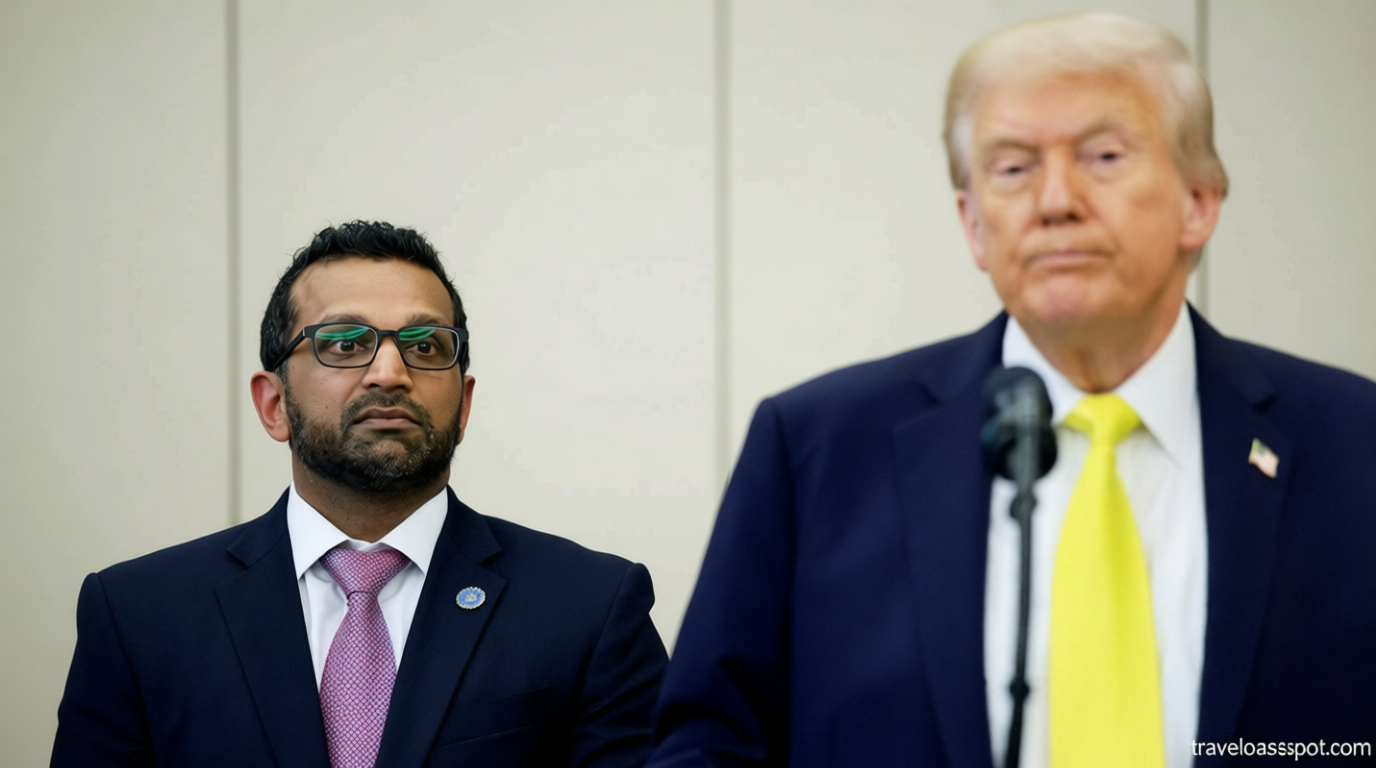
FBI director Kash Patel hacked by pro-Iranian group as personal photos appear online
FBI Director Kash Patel Hacked by Pro-Iranian Group as Personal Photos Appear Online A pro-Iranian hacking collective claims to have breached FBI Director Kash Patel’s account, revealing personal images and files online. The leak exposed a collection of years-old photographs, including a professional resume, and other private documents, some of which date back over a decade. In a message posted on Friday, the hacker group Handala stated, “Kash Patel, the current head of the FBI, who once saw his name displayed with pride on the agency’s headquarters, will now find his name among the list of successfully hacked victims.” The FBI responded by stating, “We are aware of malicious actors targeting Director Patel’s personal email information and have implemented measures to address the risks posed by this activity.” The bureau further noted, “The data in question is historical and does not include any classified government information.” A Department of Justice official confirmed to Reuters that the materials released appeared genuine. Among the images shared were photos of Mr. Patel next to an antique sports car and another depicting him with a cigar in his mouth. The exact timing of the breach remains unclear, but Mr. Patel was reportedly notified by the FBI in December 2024 that he had been targeted as part of an Iranian hacking operation. Handala, a pro-Iranian and pro-Palestinian hacking collective, also claimed responsibility this month for a cyber attack on Stryker, a Michigan-based medical technology firm. The group stated that the hack was in retaliation for US strikes they claimed had killed Iranian schoolchildren. Meanwhile, other news snippets include a benefit cheat who claimed anxiety left her housebound but was later seen ziplining and surfing in Mexico, a family of a former Zutons star criticizing police over a racist attack investigation, and a man jailed after assaulting a woman in an incident witnessed by Barron Trump.
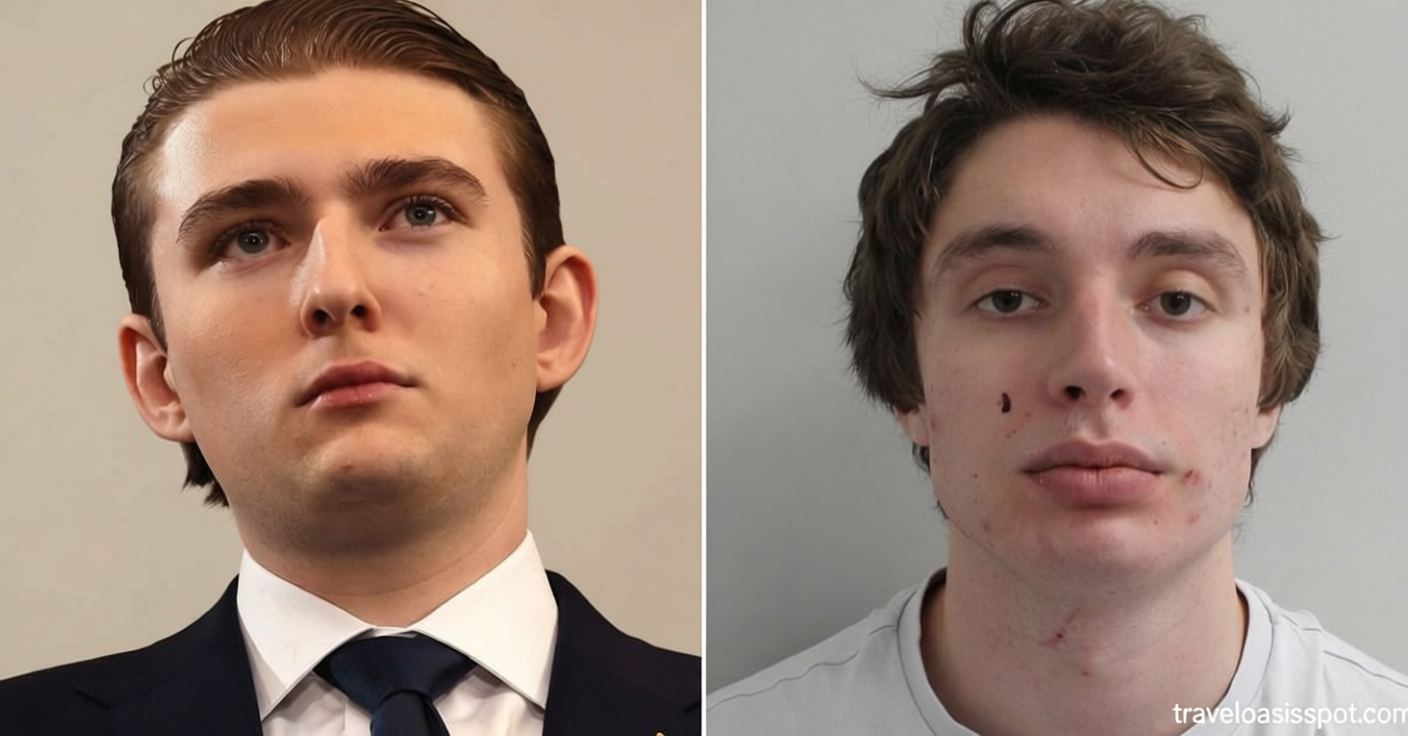
Barron Trump praised by UK judge for phoning 999 to report attack on friend
Barron Trump praised by UK judge for phoning 999 to report attack on friend A Russian man, Matvei Rumiantsev, 23, was sentenced to four years in prison after assaulting a woman and using her phone to film Barron Trump, the president’s youngest son, during the attack. Rumiantsev attacked the victim out of envy over her friendship with Donald Trump, whom he had met through social media. During the incident, he answered a FaceTime call from Barron and turned the camera to capture himself striking the woman while she cowered and cried on the floor. “It’s really an emergency. I’m calling from the US, uh, I just got a call from a girl, you know, she’s getting beat up,” Mr Trump said during the 999 call. The woman testified at Snaresbrook Crown Court that Barron’s prompt action helped her escape harm. She described the assault as lasting nearly an hour, with moments where she feared for her life. Mr Justice Bennathan, addressing Rumiantsev, called him a “trained fighter” and “a man driven by jealousy” with a short temper. The judge noted his failure to show insight or empathy, blaming the victim for the events. Metrolaunches campaign to spotlight violence against women On November 25, 2024, Metro launched “This Is Not Right,” a campaign to raise awareness about the ongoing crisis of violence against women. Partnering with Women’s Aid, the initiative aims to highlight the severity of the issue and advocate for systemic change. The 999 call transcript, made just days before Trump’s father’s inauguration, reveals his urgency in reporting the assault. Despite being in the US, he took responsibility for ensuring the UK emergency services were alerted. “I’m calling from the United States, uh, I just spoke to a girl, you know, she’s being attacked,” Barron stated. “The call was about eight minutes ago, and I don’t know what could have happened by now.” When asked how he knew the victim, he replied: “I don’t think these details matter, she’s being attacked. But okay fine, also I met her on social media, I don’t think that matters.” Although Trump didn’t testify in court, his account to police was crucial to the case. In an email to detectives last May, he mentioned: “What I saw was very brief, but prevalent. I didn’t expect her to answer due to the time zone difference. The phone was answered, but not by her, which dismayed me.”