
Men’s Final Four Teams Finalized: UConn Defeats Duke, Michigan Triumphs Over Tennessee The men’s Final Four has been finalized, featuring thrilling matchups as UConn and Michigan secured their places in the tournament’s final weekend. Joining them are Illinois and Arizona, setting the stage for the national semifinals in Indianapolis. The women’s bracket also saw decisive outcomes on Sunday, with UConn and UCLA advancing to the semifinals. Here’s a breakdown of the key moments from Sunday’s games. UConn’s Dramatic Comeback Against Duke In a stunning upset, second-seeded UConn defeated top-seeded Duke 73-72 in a nail-biting finish. With less than 10 seconds remaining, the Huskies’ defense forced a turnover from Duke’s Cadyn Boozer after an inbounds play, allowing Braylon Mullins to launch a long-range three-pointer that sealed the victory. This marked UConn’s third Final Four appearance in four years, continuing their dominance in the tournament. “It feels so good to go back home,” Mullins said on CBS. “I can tell you that. I’m excited. Think everyone else will enjoy it too, but we’re ready for Indy.” Despite a 19-point deficit early in the game, UConn outscored Duke 44-29 in the second half, fueled by Tarris Reed Jr.’s 26 points. The Huskies’ struggles from beyond the arc in the first half—shooting 1-for-18—turned around as they hit 4 of 5 in the final stretch. The 19-year-old Mullins, from Indiana, added 10 points to the victory. Michigan’s Dominance Over Tennessee No. 1 seed Michigan showcased their unstoppable momentum by overpowering No. 6 seed Tennessee 95-62. The Wolverines’ 21-0 run in the first half shifted the game’s trajectory, extending their lead to 19 points and leaving Tennessee in a scoring slump. Star forward Yaxel Lendeborg led the charge, scoring 27 points with a highlight-reel reverse lay-up during the critical run. “Yaxel is serious with that shot!” exclaimed a commentator, referencing the standout moment. 🤯 By halftime, Michigan had a commanding 48-26 lead, signaling their intent to dominate the Final Four. The Wolverines’ performance marks a historic achievement: they become the first team to win their first four NCAA tournament games by double digits while scoring 90+ points in each contest. Their path now leads to a showdown with Arizona on Saturday. Women’s Final Four Progress Meanwhile, the women’s tournament also reached its semifinal stage. UConn, the overall No. 1 seed, extended their Elite Eight-winning streak to 54 games with a 70-52 win over Notre Dame. Sarah Strong, the sophomore standout, contributed 21 points, including 15 in the second half, alongside seven rebounds, five steals, and three blocks. The Huskies will face either South Carolina or TCU in the semifinals. UCLA’s battle against Duke was equally intense, with the Bruins narrowly advancing after a hard-fought contest. Duke, however, managed a narrow escape as they defeated their opponents, though the outcome didn’t match the momentum of the men’s games. Looking Ahead to the Final Four Michigan will take on Arizona in the semifinals, promising a high-stakes clash. For UConn, the challenge remains to bring their third national championship in four years to Storrs, Connecticut. The Final Four games will unfold at Lucas Oil Stadium, with teams eager to make their mark in the final weekend of the tournament.

Hollywood actress slams Sydney Sweeney as ‘totally wrong’ to play her in new biopic
Hollywood actress slams Sydney Sweeney as ‘totally wrong’ to play her in new biopic Kim Novak, a revered figure in Hollywood, has criticized Sydney Sweeney’s casting as her in an upcoming biographical film. The movie, which follows Novak’s interracial romance with Sammy Davis Jr., has sparked controversy among the actress. Two years ago, it was announced that a film would depict Novak’s 1957 relationship with the Rat Pack member. Titled Scandalous!, the project explores the tumultuous affair between the Vertigo star and Davis Jr. The film is directed by Colman Domingo, with Sydney Sweeney starring as Novak and David Jonsson portraying the late Davis Jr. In a recent interview with The Times of London, Novak, now 93, expressed her dissatisfaction with Sweeney’s selection. She said she ‘would not have endorsed’ the actress for the role, highlighting concerns that the film would emphasize the sexual aspect of their relationship rather than their shared values. ‘There’s no way it wouldn’t be a sexual relationship because Sydney Sweeney looks sexy all the time. She was totally wrong to play me,’ Novak remarked. Novak first met Davis Jr. in 1957 during a joint appearance on The Steve Allen Show. The following year, they began a relationship, which faced scrutiny due to Novak’s contract with Columbia Pictures. At the time, the studio’s president, Harry Cohn, feared public backlash against their union. A Gallup survey from that era revealed only 4% of Americans supported interracial relationships, which were still banned in certain states. Despite this, Novak stood by her choice, stating: ‘Something inside of me rebelled when I was told not to see him. I didn’t think it was anybody’s business.’ ‘We became conspirators, drawn together by the single thing we had in common: defiance,’ Davis Jr. once said. However, Davis Jr. faced pressure to end the relationship after a gossip column hinted at an impending marriage. Organized crime figures linked to Cohn threatened him, demanding he break things off with Novak. If he refused, he’d be forced to marry a Black woman within two days. Nine days later, Davis Jr. married a Black chorus girl named Loray White. The couple never lived together and divorced the following year. He later wed white-Swedish actress May Britt in 1960, facing similar racial tensions. Their marriage ended eight years later when he admitted to infidelity. Novak, meanwhile, married actor Richard Johnson in 1965. After their divorce, she partnered with veterinarian Robert Malloy in 1976, remaining together until his death in 2021. Reflecting on her past with Davis Jr., she noted their bond was ‘often misunderstood’ and that ‘because of the colour of his skin, people did terrible things.’ At the Venice Film Festival last year, Novak voiced her worries about the biopic. Speaking during a masterclass, she said: ‘I have to speak out about the movie that’s about to be made about the Sammy Davis relationship.’ She then explained her reservation about Sydney Sweeney’s casting. ‘I think actors have a wonderful place to do whatever, but, in my case, I’m not an actress – I’m a re-actress. So therefore, I’d like to see somebody playing that role that is more of a re-actor than an actor,’ she stated. Novak admitted she had no issue with Sydney’s talent but emphasized her personal feelings about the role. In contrast, during an interview with The Hollywood Reporter, Sydney described her experience working with the director and Novak as ‘really cool.’ ‘Colman and her have a really beautiful relationship. They’ve been talking. We connected them,’ Sydney said. Speaking to People, the actress called it ‘incredibly honoured’ to portray Novak, believing her story remains relevant today. However, Novak’s criticism suggests she feels the film’s portrayal could overshadow the deeper aspects of their connection.

Scientists film whale giving birth while other whales work together to help her
Scientists Film Whale Birth with Unprecedented Group Support For the first time, researchers captured footage of a sperm whale giving birth, aided by a collective effort from other females in the pod. The event, recorded near Dominica’s Caribbean coast on 8 July 2023, involved a 19-year-old whale named Rounder, who was supported by her relatives and non-related individuals during the delivery of her second calf. The Project Ceti team, dedicated to decoding whale communication, observed the process from a boat while using drones and underwater recordings to document every detail. Over five and a half hours, they tracked the group’s coordinated actions, revealing a rare and remarkable display of communal care in marine mammals. A Rare Display of Collective Care Published in Scientific Reports and Science, the study highlights the scarcity of such observations. Among the 93 cetacean species, only nine have been seen birthing in the wild, and this instance added a new layer: non-related females actively assisting the mother. “This is the first evidence of birth assistance in non-primates. It is fascinating to see the intergenerational support from the grandmother to her labouring daughter, and the support from the other, unrelated females,” said Shane Gero, a Project Ceti team member, in an interview with New Scientist. The birth itself spanned 34 minutes, from the emergence of tails to the calf’s full arrival. During the process, adult females dove beneath Rounder’s dorsal fin, positioning themselves on their backs with heads directed toward her genital slit to help guide the baby. Post-delivery, the pod shifted into rapid action. Researchers noted that all adults “squeezed the newborn’s body between theirs, touching it with their heads,” while others nudged the calf across the water’s surface. This behavior, preserved for over 36 million years, reflects cetaceans’ unique evolutionary journey. Evolutionary Adaptations for Survival After evolving from land-dwelling ancestors, cetaceans became the sole mammals to return to aquatic life. This transition required specialized adaptations, such as calves being born tail-first to avoid drowning. Despite this, newborns initially sink and must be lifted by the group to facilitate their first breaths. Unlike primates, which are known for birth assistance, cetaceans have long been studied for their communication skills. Yet, this footage underscores a previously undocumented social behavior, showing how the pod collaborates to ensure the calf’s survival. Sperm whales, with a 16-month gestation period, give birth to calves already 4 metres long. These young depend on their mothers for at least two years, with the rest of the pod providing care during foraging trips. The calf’s survival past its first year, observed again in July 2024 alongside other pod members, signals a promising future for the species. The event, though brief, marks a significant milestone in marine biology. It offers insights into the complex social structures of whales and their evolutionary strategies for nurturing offspring in an oceanic environment.

Exclusive: Israel to crack down on settler violence in the West Bank
Exclusive: Israel to crack down on settler violence in the West Bank Euronews has obtained an exclusive document revealing orders from Prime Minister Benjamin Netanyahu’s office to the Israeli military and police regarding the suppression of settler violence directed at Palestinians in the West Bank. The directive, shared in a confidential document titled “Prime Minister’s Directive on Combating Nationalist Crimes in Judea and Samaria,” marks a rare policy pivot for the Netanyahu administration. Judea and Samaria, the biblical names for the West Bank, are now the focus of intensified military presence. The Israeli army recently reallocated forces from its operations in Lebanon to this region, a significant move aimed at curbing escalating violence by Jewish settlers. This is the first time troops have been withdrawn from an active conflict zone to reinforce a less volatile area, according to officials. Manpower Strain and Strategic Reassessment Amid concerns of an impending IDF collapse, due to severe staffing shortages across multiple fronts—Gaza, Lebanon, Syria, and the West Bank—Netanyahu has prioritized domestic security. The directive emphasizes the need to bolster forces in areas of tension, ensuring a stronger military footprint to address rising nationalist incidents. Meanwhile, European nations have imposed sanctions on key figures, including travel bans. The directive also highlights the establishment of a specialized unit within the Ministry of Defence to tackle the “Hilltop Youth,” a group of religious-nationalist extremists linked to violent attacks on Palestinians and the creation of illegal outposts. Settlement Expansion and Political Influence Under Netanyahu’s leadership, settlement activity has surged, with over 700,000 Jewish settlers residing in the West Bank and East Jerusalem. The region is home to 3.8 million Palestinians seeking statehood. Though Israel disputes the legality of its occupation, international law classifies it as an illegal claim. Trump’s administration has notably supported settlement growth, unlike previous US governments. This shift in U.S. policy has emboldened radical elements, such as the “Hilltop Youth,” who are responsible for attacks, property destruction, and violent clashes with security forces during outpost evictions. Smotrich and Ben-Gvir, both hardline ministers, have praised these groups as “pioneers” of expansion. Policy Evolution and Enforcement Measures The directive, issued at the latest security cabinet meeting on 25 March, includes economic penalties for settlers establishing unauthorized outposts. It also calls on government ministers to endorse efforts against nationalist crimes, signaling a warning to Smotrich and Ben-Gvir. Previously, Netanyahu had criticized settler violence but framed it as an issue of a few extremists. This new approach, involving troop reallocation and sanctions, represents a more proactive stance. The UN’s Office for the Coordination of Humanitarian Affairs reported a spike in attacks in 2025, with over 1,800 incidents and 1,600 Palestinians displaced. A total of 240 Palestinians were killed in the year, either by settlers or the military, while 17 Israelis lost their lives to Palestinian attacks. “We are committed to steering at-risk youth away from violent actions through educational and therapeutic programs,” stated the new special administration, targeting the Hilltop Youth phenomenon.
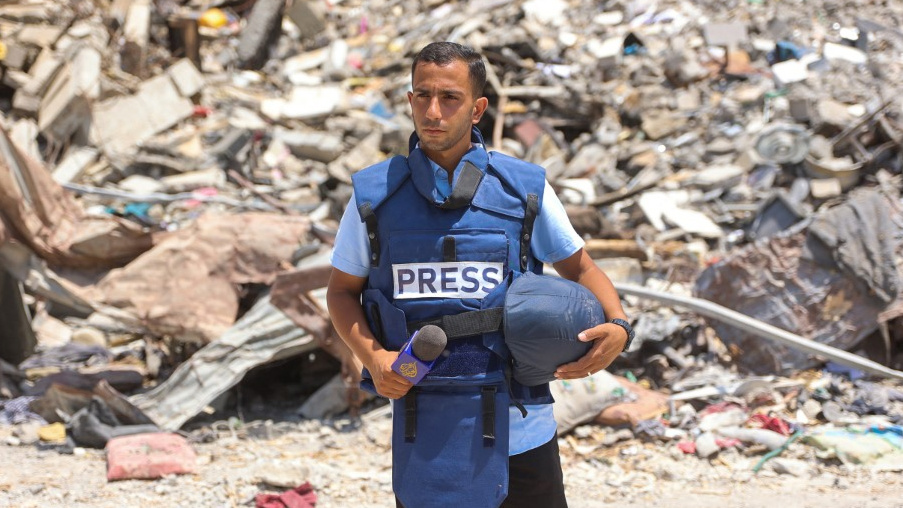
Anas al-Sharif was murdered for being Gaza’s voice
Anas al-Sharif was murdered for being Gaza’s voice Israeli forces executed Al Jazeera correspondents Anas al-Sharif and Mohammed Qreiqeh, alongside camera operators Ibrahim Zaher, Mohammed Noufal, and Moamen Aliwa, during a direct strike on their media tent at al-Shifa Hospital in Gaza City. The attack was not a random act of conflict—it was a deliberate operation, designed to silence voices that refused to shy away from truth. Anas al-Sharif’s Story A young Palestinian from Jabalia in northern Gaza, al-Sharif had spent 22 months documenting the war. His crime? Persisting in exposing the horrors of genocide—unrelenting violence, the systematic dismantling of life itself. His work never ceased, no matter the peril. The Weight of Truth His journey was etched by conflict: born in 1996, he witnessed the Second Intifada as a child, the 2008 Gaza war at 12, and the 2014 assault at 18. At 28, he was among the casualties of a 22-month campaign that saw endless civilian deaths and the collapse of Gaza’s foundations. Yet, his commitment to truth endured. A Voice for the Voiceless “Carry on, Anas, you are our voice,” a passerby cried as he watched a woman faint from hunger, her fate captured live on camera. Al-Sharif’s reporting reached millions across the Arab world, making him a symbol of resistance. His personal tragedies—his father’s killing by Israeli fire, the separation from his mother, daughter Sham, newborn son Salah, and wife Bayan—were not just family losses; they were part of a broader narrative of suffering. His audience knew his grief as intimately as his voice. Legacy of Courage He stepped into the void left by colleagues like Ismail al-Ghoul, slain by Israeli fire, and Wael Dahdouh, who continued reporting after his family was massacred before his eyes. Dahdouh later left Gaza for treatment, but al-Sharif returned, carrying the weight of their legacy. Israeli intelligence openly threatened al-Sharif, warning him of punishment if he persisted. His father’s death was the first blow, followed by the assassination of his comrades. The final strike came in a drone attack, shattering his body along with those of four others—a grim echo of countless killings in Gaza, Lebanon, and Syria. The Cost of Reporting With no weapon and his location always known, al-Sharif could have been arrested. But Israel chose to eliminate him, ensuring their propaganda remained unchallenged. Netanyahu’s war on Gaza has stretched for 22 months, failing to achieve its stated goals except for mass civilian slaughter and the erosion of daily life. Avichay Adraee, Israel’s most aggressive spokesperson, singled him out. Last month, the Committee to Protect Journalists cautioned: “These recent baseless accusations aim to justify the killing of Al-Sharif, manufacturing public approval for his removal.” Adraee, likened to a modern-day Joseph Goebbels, now marks targets for death with a smug smile. Enduring the Storm Al-Sharif’s courage was a beacon, even as friends and colleagues fell. He bore their coffins, then returned to the frontline, dust still on his hands from the graves. His strength drew from Shireen Abu Akleh, killed in Jenin in 2022—Israel’s indifference to religious or ethnic differences in its war on truth was absolute. In the end, al-Sharif and his team became the final chapter of a campaign that sought to extinguish Gaza’s voice. With their loss, Israel’s propaganda machine now moves into darker territory, ready for the next round of erasure.

No title found
Historical Lunar Mission and Modern Parallels In 1968, the United States launched its first lunar expedition amidst a period of intense political strife. The mission, which marked the eighth Apollo flight, carried significant weight for the success of the space program. On December 21 of that year, three astronauts—Frank Borman, William Anders, and James Lovell—left Earth aboard a Saturn V rocket from Florida’s Kennedy Space Centre. Fast forward to today, and the nation finds itself at a crossroads, with divisions resurfacing in a manner reminiscent of the past. Yet, this renewed push to return to the moon, under the Artemis initiative, shares a striking timeline with the historic Apollo 8 launch. The 1968 mission coincided with a year defined by profound social unrest, as the Vietnam War escalated and public morale wavered under rising casualties. During that era, the Soviet Union had already secured major space milestones, including the first satellite, the first human in orbit, and the first woman to travel beyond Earth’s atmosphere. The Apollo 8 crew captured Earth’s fragile beauty from lunar orbit, a moment that galvanized global awareness of environmental issues. Their message of unity, broadcast from the vastness of space, resonated with a message of hope: “To all of you on the good Earth.” Unity in the Face of Division Dr. Jill Stuart, a space politics analyst at the London School of Economics and Political Science, notes that the shared objective of the moon mission briefly united the country. “The timing of Artemis’s revival during a period of cultural rifts and political tensions is noteworthy,” she explains in a interview with Sky News. “While the program has been in development for years, its current phase may inadvertently serve as a tool to foster collective identity, even if only temporarily.” Today, as Secretary of War Pete Hegseth and NASA Administrator Jared Isaacman inspect the Artemis II rocket, the parallels between past and present are evident. The same societal fractures that shaped the 1968 mission now influence the Artemis era, raising questions about whether space exploration can once again bridge ideological gaps. Looking back, the Apollo 8 crew’s composition—three white male astronauts—stood in contrast to the broader struggles of the time. While the mission symbolized progress, it also highlighted the limited representation of the era’s diverse challenges. With Apollo 8’s triumph, NASA hastened its efforts toward a lunar landing. Just seven months later, Neil Armstrong’s historic step was witnessed by a fifth of the world’s population, a testament to the mission’s global impact. The legacy of that time, however, remains a reminder of both achievement and omission in the quest for unity.

An agent’s murder rocked the real estate world. A recent arrest is a reminder of the job’s dangers.
An Agent’s Tragic Death Resurfaces Safety Concerns in Real Estate In late 2011, a 27-year-old real estate agent was fatally shot during an open house in Iowa, sending shockwaves through the industry. The incident prompted the real estate sector to adopt new safety protocols, including a “safety pledge” aimed at mitigating risks. However, recent interviews with NBC News following a long-unsolved case’s arrest revealed that many professionals still feel vulnerable, with insufficient measures in place to protect them. Industry Leaders Highlight Persistent Risks Gavin Blair, head of the Iowa Association of Realtors, called Okland’s murder a “worst-case scenario” that forced the field to acknowledge its hazardous nature. “The safety pledge is a step forward,” he said, “but the reality remains that agents often face threats in isolated, enclosed spaces with minimal oversight.” Beth Andress, a trainer in Canada and the U.S., emphasized the urgency of these dangers. “Real estate is one of the few professions where you interact with strangers in private settings, often without standardized checks,” she noted. “The industry has become desensitized to the risk, so many agents no longer see it as a major concern.” Survey Data Shows Ongoing Challenges According to the National Association of Realtors’ 2024 survey, over 45% of 1,423 respondents reported meeting clients in secluded locations alone. Almost 25% said they felt unsafe or worried about personal information during recent showings. The data also revealed that nearly half of the agents had visited vacant properties in areas with poor cell service, leaving them disconnected in emergencies. While the association claims progress in safety awareness, Katy Caldwell, a Louisiana agent and co-host of the “Hustle Humbly” podcast, argued that the culture of competition keeps agents prioritizing deals over precautions. “Most agents struggle to earn a living wage,” she said. “They’re hesitant to implement extra steps, like requiring ID upfront, for fear of losing clients.” Agents Adapt with Personal Safety Measures Many professionals now rely on individual strategies to stay protected. Alex Harper, a Texas agent, described a rigorous routine: carrying a firearm, using apps for background checks, and never parking in driveways to avoid being trapped. “I lock doors behind me when entering empty homes alone,” she said. “But the safety pledge is more of a suggestion than a mandate.” Despite these efforts, some agents feel the balance between safety and business remains precarious. “We’re told to do our best to stay safe,” Harper added, “but we’re also bound by the duty to secure transactions. It’s a constant trade-off.” “The phrasing and verbiage in listing agreements often downplay the risks, making agents feel like they’re expected to manage them on their own.” A spokesperson for the National Association of Realtors reiterated the organization’s commitment to member safety, citing ongoing education and resource development. “We encourage all stakeholders to keep safety a priority,” they stated, “but the data suggests more needs to be done to address real-world threats.”

Lionesses star opens up on heartbreaking miscarriage with footballer boyfriend weeks after announcing she is pregnant
Lionesses star opens up on heartbreaking miscarriage with footballer boyfriend weeks after announcing she is pregnant England national team player Missy Bo Kearns has shared a deeply emotional update about losing her child, just days after revealing her pregnancy. The midfielder, 24, and her partner Liam Walsh, 28, had eagerly anticipated their first child, but the news came as a devastating blow. Pregnancy Announcement and Sudden Loss Kearns first shared the joy of her pregnancy in early March, expressing her excitement during a video where she painted the word ‘Mum’ on a wall. Walsh later contributed ‘Dad’ to the message, capturing the couple’s anticipation. However, the happiness was short-lived as Kearns posted a heart-wrenching Instagram story on Sunday, revealing the loss of their baby in the early stages of the pregnancy. “With very heavy hearts, we want to share that we’ve lost our baby during pregnancy,” Kearns said. “The past weeks have been filled with a kind of sadness that’s hard to explain, and we’re still trying to come to terms with it all. Right now, we’re focusing on recovering and supporting each other through this. We truly appreciate the love and support around us more than we can say.” Club Support and Career Context Aston Villa Women extended their condolences, posting: “We are sending all our love and support to Missy Bo and Liam at this difficult time.” Luton Town also joined in, writing: “We send all our love and support to Liam, Missy Bo, and their families at this deeply sad time.” Prior to this, Kearns was set to miss the rest of the season with her club and the start of the next campaign due to her pregnancy. The midfielder made her England debut last year and has since earned three caps for the Lionesses. She was also on the standby list for Euro 2025, with England ultimately retaining their title. Timeline and Personal Journey The couple, who have been together since 2022, had planned for their child to be born in September. Kearns had shared glimpses of the baby scans, highlighting the excitement of the journey. Now, the focus shifts to healing and moving forward, as the pair navigate this unexpected loss with mutual strength.
Russia wants to legalize cars stolen in EU
Russia’s New Law on Stolen Vehicles from EU Russia is considering a proposal that would enable the legal registration of cars stolen in European Union countries within its borders. This move has raised alarms in Germany, where a police union warns it could exacerbate car theft rates across the region. The initiative, spearheaded by the Russian Interior Ministry, has been under discussion by lawmakers since early February. A draft bill, reportedly directed by President Vladimir Putin, aims to allow vehicles seized in “hostile states” to be officially recorded in Russia. These states include the 27 EU members, along with Switzerland, Norway, the US, Canada, Japan, South Korea, and Australia. Russia currently blocks the registration of vehicles listed under international search warrants. However, the ministry claims it often struggles to identify the reasons behind such listings. Since the war in Ukraine began, authorities in these countries have not responded to Moscow’s requests for information, according to the Interior Ministry. “The BKA is aware of inquiries from Russian authorities regarding vehicles listed by Germany. However, since these primarily concern civil law issues (ownership and the owner’s interest in repatriation), the BKA has no jurisdiction,” stated the Federal Criminal Police Office (BKA) in response to DW’s query. Germany’s police union GdP, represented by Benjamin Jendro, noted a lack of formal communication with Russia on this matter. “There has certainly been cases where Russian authorities recovered sought vehicles,” he said. Yet, Jendro emphasized that German officials are unlikely to travel to Russia for vehicle retrieval, as insurance claims often conclude before the cars are found. “We have had stable vehicle theft figures for years — at a very high level. Such a law would further undermine the security authorities’ fight against international car-trafficking gangs,” warned Jendro, calling the draft legislation a “disastrous sign” that “encouraged crime.” The ministry highlighted that 123 German cars listed as wanted internationally were located in Russia in January 2026. However, Berlin has not provided Moscow with details on why these vehicles were flagged. Meanwhile, the BKA reported 30,373 cars stolen in Germany in 2024, with only 8,858 cases resolved. Russian experts also weighed in, noting potential benefits of the law. Alexander Kholodov of the Public Chamber of the Russian Federation (OPRF) suggested the amendment could facilitate… (content cut off) While the exact impact remains debated, the law’s passage could reshape the dynamics of cross-border vehicle theft, creating new challenges for European nations.
Netanyahu says Latin Patriarch will have full access to holy site
Netanyahu Grants Latin Patriarch Full Access to Holy Site Prime Minister Benjamin Netanyahu announced on Sunday that the Latin Patriarch of Jerusalem will now be granted “full and immediate access” to the Church of the Holy Sepulchre, following earlier restrictions imposed by Israeli police. The decision follows an incident on Palm Sunday when the cardinal was prevented from entering the church during a Mass to commemorate the start of Holy Week. Netanyahu explained that the cardinal, Cardinal Pierbattista Pizzaballa, had been asked not to enter the site out of safety concerns. He cited Iran’s repeated ballistic missile strikes targeting Jerusalem’s holy locations as a key reason for the precaution. The move drew criticism from several Western nations, including the United States, where Ambassador Mike Huckabee called it “an unfortunate overreach” and “difficult to understand or justify.” “This hasty and fundamentally flawed decision, tainted by improper considerations, represents an extreme departure from basic principles of reasonableness, freedom of worship, and respect for the status quo,” stated the patriarchate. Church authorities confirmed that Cardinal Pizzaballa and Reverend Francesco Ielpo were stopped outside the church, believed to be the site of Jesus Christ’s crucifixion and resurrection. The patriarchate called the incident “the first time in centuries” a Latin Patriarch had been denied access on Palm Sunday, emphasizing its significance. The cardinal and his colleague had been “compelled” to return to the site without entering, according to their office. Netanyahu highlighted that worshippers of all faiths had been urged to avoid Jerusalem’s Old City due to recent Iranian missile attacks. Israeli police had closed holy sites in the area since the conflict with Iran began on 28 February, citing security risks. They rejected the patriarchate’s request for a Palm Sunday exemption, though plans are being made to allow religious leaders to worship at the site in the coming days. The Latin Patriarch’s office stated that Sunday’s action was “a manifestly unreasonable and grossly disproportionate measure,” while Netanyahu assured there was “no malicious intent whatsoever” behind the initial decision. He added that the situation would be clarified further in the days ahead, balancing safety with the right to prayer. “We want to use this situation to try to clarify better in the coming days what to do, in respect for everyone’s safety but also in respect for the right to prayer,” Cardinal Pizzaballa remarked. International reactions included condemnation from Italian Prime Minister Giorgia Meloni, who called the move “an offence not only against believers but against every community that recognises religious freedom.” French President Emmanuel Macron echoed concerns about “the worrying increase in violations of the status of the Holy Places in Jerusalem,” linking the decision to the ongoing security challenges in the region.