
Starmer Expresses Concern Over Kanye West’s UK Festival Headlining Sir Keir Starmer, the UK’s Prime Minister, has voiced alarm over Kanye West’s upcoming performance at the Wireless Festival in London this summer. West, who is now known as Ye, has been widely criticized for his antisemitic remarks in recent years, including an apology he issued in January. Starmer highlighted these comments in remarks first shared by the Sun on Sunday, stating that West was booked “despite his previous antisemitic remarks and celebration of Nazism.” Pepsi’s Sponsorship Withdrawal Following Starmer’s concerns, Pepsi, the festival’s headline sponsor, announced its decision to withdraw support from the three-day event. The company’s move came after Starmer emphasized that “antisemitism in any form is abhorrent and must be confronted firmly wherever it appears.” He also stressed that “everyone has a responsibility to ensure Britain is a place where Jewish people feel safe.” Political Reactions Liberal Democrat leader Sir Ed Davey called for stricter measures against antisemitism, suggesting the government should ban West from entering the UK. He described the planned appearance as “extremely serious.” Meanwhile, Conservative leader Kemi Badenoch argued that “we are seeing a huge increase in antisemitism all across the world” and stated that “we need to do everything we can in order to stop the rise in hatred of Jewish people.” She added that this includes “not platforming people who make antisemitic statements or who put out anything that will incite violence and hatred towards Jews.” West’s Past Controversies Kanye West, 48, was blocked from entering Australia last year after releasing a song titled “Heil Hitler,” which glorified the Nazi leader. He also declared himself a Nazi earlier in the year, retracting an earlier apology over antisemitic comments. Additionally, he sold T-shirts with swastikas on his clothing website. In 2022, his X account was banned multiple times for posts that violated platform rules, including a tweet combining a swastika and the Star of David with a claim that he would “go death con 3 on Jewish people.” Recent Apologies and Context West reportedly met with Rabbi Yoshiyahu Yoseph Pinto in November 2025, where he apologized for past antisemitic comments. He later published a full-page ad in the Wall Street Journal in January, writing, “I am not a Nazi or an antisemite.” He attributed his earlier actions to bipolar disorder, explaining that “when you’re manic, you don’t think you’re sick” and that he “lost touch with reality” during those episodes, adding that he “regret and am deeply mortified by my actions in that state.” Industry and Public Response West’s “white lives matter” T-shirt appearance at Paris fashion week in 2022 drew criticism, leading clothing brand Adidas to end their partnership with him. The rapper has not performed in the UK since 2015, when he headlined Glastonbury. His latest album, Bully, released in March, features three songs currently in the UK’s top 100 singles chart. The Wireless Festival, running from 10-12 July, is marketing the event as a “three-night journey through his most iconic records.” Festival’s Stance and Organizers’ Comments A spokesperson for London Mayor Sir Sadiq Khan said, “We are clear that the past comments and actions of this artist are offensive and wrong, and are simply not reflective of London’s values.” The decision to book West was made by the festival organizers, with no involvement from City Hall. Festival Republic, the Wireless organizers, and West’s representatives have yet to provide further comment on the situation. “I am not a Nazi or an antisemite,” he wrote. “I regret and am deeply mortified by my actions in that state.”

‘Absolutely spectacular’: Artemis II crew see first glimpse of far side of Moon
Absolutely Spectacular: Artemis II Crew Witnesses Moon’s Far Side Nasa’s Artemis II mission has captured the attention of its crew, who recently shared their first view of the Moon’s far side. The team, comprising astronauts Reid Wiseman, Victor Glover, Christina Koch, and Canadian Space Agency member Jeremy Hansen, are currently in their third day aboard the Orion spacecraft. Their journey will take them around the Moon’s uncharted side before returning to Earth. “There’s a certain feeling when you see a part of the Moon you’re not familiar with,” Koch remarked. A photo taken by the crew of the Orientale basin has been released, marking the first time the entire structure has been observed by human eyes, according to Nasa. As of 23:00 BST on Saturday, the spacecraft was recorded at over 180,000 miles (289,681km) from Earth. Great Marshmallow Drop Draws Thousands During the annual Great Marshmallow Drop event, more than 15,000 fluffy treats were released from a helicopter, prompting children to rush for the catch. Meanwhile, the BBC’s Ione Wells engaged with demonstrators and participants outside the Supreme Court during a hearing on President Donald Trump’s executive order. Trump’s Support Amid Economic Strain Despite economic pressures, a farmer in Alabama continued to back President Trump, as reported by the BBC’s Gary O’Donoghue. The former prosecutor has maintained a close connection with the president, having represented him in a hush-money case. The Supreme Court also faced a challenge regarding Bill 21, a secularism law in the province, with Muslim women highlighting personal sacrifices. Delays and Disruptions at the Airport US airports are grappling with extended delays, partly due to TSA agents operating without pay during a partial government shutdown. The wreckage of a collision between a passenger plane and a firefighting vehicle blocked one of two runways at a busy New York City airport. BBC Verify detailed the moments leading to the deadly incident, while Valero noted no injuries in the refinery accident. Public Demonstrations and Presidential Engagements Across the country, large protests against the Trump administration erupted, featuring the third No Kings rally. The installation “A Throne Fit for a King” at the National Mall served as a critique of White House renovations. Meanwhile, the robot joined First Lady Melania Trump at the White House during a summit focused on AI, education, and youth safety in digital environments. Animal and Human Safety A yellow Labrador Retriever named Tessie remained unharmed after a fall and subsequent rescue, returning to her yard as crews repaired the sinkhole. The event also saw the presence of a robot alongside First Lady Melania Trump, underscoring the intersection of technology and public engagement.

What we know so far about rescue of US airman in Iran
What We Know So Far About Rescue of US Airman in Iran The United States has successfully retrieved the missing crew member of a U.S. F-15 fighter jet that was downed over southern Iran on Friday. President Donald Trump shared the news on social media on Sunday, calling it “one of the most daring Search and Rescue Operations” in military history. He emphasized that the officer “is now SAFE and SOUND!” following the operation. Two individuals were aboard the jet when it was shot down, and both managed to eject from the aircraft. One was already recovered by U.S. forces earlier in the day. Iranian authorities stated the plane was brought down by their air defense system, though specifics about the rescue remain under review. The details of how the operation unfolded are still emerging, with reports highlighting the high-stakes nature of the mission. Operation in the Mountains US and Iranian forces engaged in a race to locate the missing airman after the jet’s downing. A source close to the operation described it as a “huge” combat search and rescue effort in southern Iran. The BBC learned of an exchange between U.S. and Iranian troops during the operation, with the pilot possibly sustaining injuries during his initial ejection. “Their number-one priority is to stay alive and to avoid capture,” said Jennifer Kavanagh, a military analysis expert at Defense Priorities. “They’re trained to, assuming they can move, get away from the ejection site as quickly as possible and conceal themselves for safety.” According to officials, the airman spent over 24 hours in the mountains, armed with a handgun, evading capture. Trump noted that senior US officials monitored his location continuously during the rescue. The CIA was instrumental in tracking the individual, identifying his position in a mountain crevice and sharing it with the Pentagon. Reports suggest the agency deployed a deception strategy, falsely informing Iran that the airman had been located and was being extracted. During the operation, the US military deployed multiple aircraft into Iran, asserting that the mission occurred without any American casualties. Iranian state media reported that troops from the Islamic Revolutionary Guard Corps (IRGC) shot down a US drone while searching for the missing airman. The drone crashed in the southern province of Isfahan, as per the IRGC’s public relations office, according to Fars news agency. Earlier, Iran had expressed a desire to recover the American alive, offering a reward for assistance. The pilot of the F-15 was initially recovered in a separate operation, which involved an A-10 Warthog aircraft struck over the Gulf. That mission reportedly included a helicopter hit by small arms fire, injuring crew members but landing safely, as reported by US media. The IRGC claimed the downing was conducted in response to a threat, citing nomadic tribes living in the region as potential witnesses. As the situation unfolds, the complexities of combat search and rescue missions—marked by their need for speed and precision—continue to shape the narrative of this high-profile operation.
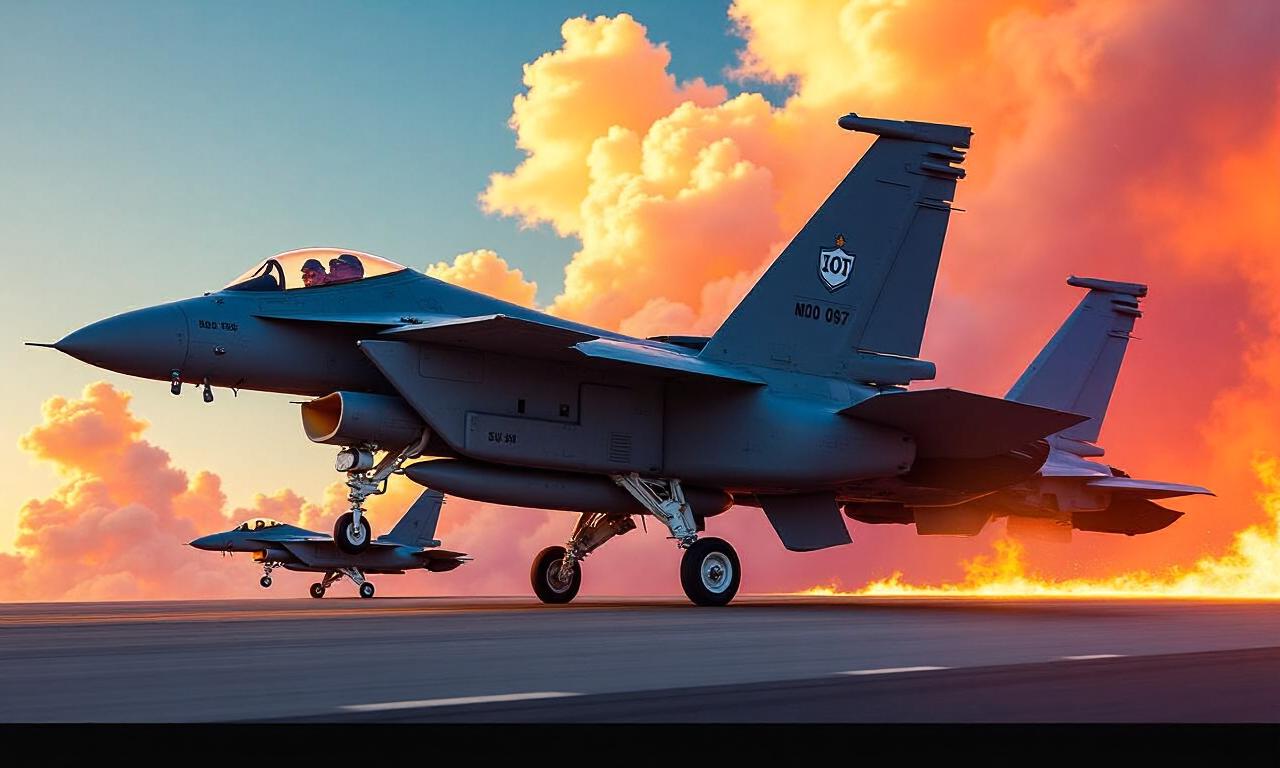
F15 Pilot’s Heroic Mission Sparks Global Interest
The Unforgettable Heroic Mission The recent F15 pilot‘s daring rescue operation has captured the attention of aviation enthusiasts and global audiences alike. During a routine training flight, the pilot encountered an unexpected crisis when their aircraft suffered a critical system failure at high altitude. With no time to lose, the F15 pilot executed a series of emergency maneuvers that turned a potentially catastrophic situation into a triumphant survival story. This incident not only showcased the pilot’s exceptional skill but also highlighted the importance of preparedness in high-speed, high-altitude aviation. As news of the event spread, social media platforms and news outlets began to share stories of the F15 pilot’s bravery, igniting a worldwide conversation about heroism in the skies. The F15 Pilot's Background and Training The F15 pilot involved in the mission is no stranger to high-pressure scenarios. With over 20 years of military service and extensive training in advanced flight operations, the pilot has earned a reputation for precision and composure. Their experience in simulating emergency situations during training sessions proved invaluable in the real-world crisis. The ability to remain calm and make split-second decisions is a hallmark of elite pilots, and this F15 pilot exemplifies that quality. Their background underscores the rigorous selection process and the years of dedication required to master the complexities of flying one of the most iconic fighter jets in history. The High-Stakes Situation The incident unfolded in the middle of a clear sky, just minutes after the F15 pilot initiated a high-speed intercept exercise. Suddenly, a warning light blared across the cockpit, signaling a malfunction in the aircraft’s hydraulics. With the plane losing control, the pilot faced a race against time to stabilize the situation. The F15 pilot’s quick response included activating backup systems and communicating with ground control for immediate assistance. The stakes were incredibly high, as the pilot was flying at an altitude of over 40,000 feet and at supersonic speeds, leaving little room for error. Aerial Maneuvers and Courage Under Fire In the face of the crisis, the F15 pilot demonstrated remarkable skill by steering the aircraft into a controlled descent. Using only manual controls, the pilot executed a series of tight turns and adjustments to avoid terrain and maintain stability. The maneuver required split-second timing and unwavering focus, qualities that are essential for any fighter pilot. As the aircraft neared a safe landing zone, the pilot also coordinated with rescue teams on the ground, ensuring a seamless evacuation. This display of technical prowess and mental resilience has since become a case study in emergency aviation procedures. Global Recognition and Impact The F15 pilot’s actions have sparked a wave of admiration and praise from around the world. Aviation experts, military historians, and even civilians have taken to social media to celebrate the pilot’s heroism, using hashtags like #F15Pilot and #SkyHeroes to amplify the reach of the story. The incident has also reignited interest in the F15 fighter jet, with many questioning its reliability and the training required to operate it under extreme conditions. Governments and defense organizations are now reevaluating the role of the F15 in modern warfare, citing the pilot’s performance as a testament to its capabilities. Lessons from the Mission The F15 pilot’s mission has offered valuable lessons for both military and civilian aviation. It has emphasized the importance of continuous training, especially in simulating real-world emergencies. The pilot’s ability to stay focused during the crisis also highlights the psychological preparation necessary for high-stakes operations. Additionally, the event has underscored the need for improved onboard systems and redundancy protocols in fighter jets. As the aviation community analyzes the incident, the F15 pilot’s story serves as a reminder of the human element behind every technological advancement in the field. Inspiration for Future Generations Beyond the technical and operational aspects, the F15 pilot’s heroic mission has inspired a new generation of aviators and aerospace enthusiasts. Young pilots, especially those in training, have cited the incident as a pivotal moment in their career choices. The pilot’s courage has also sparked discussions about the role of individual bravery in aviation history, drawing parallels to past heroes like Chuck Yeager and James Smith. As the story continues to gain traction, it’s clear that the F15 pilot’s actions have left a lasting impression, reinforcing the idea that even in the most advanced technology, human skill and determination remain irreplaceable. The Human Element in Aviation While the F15 fighter jet is a marvel of engineering, the F15 pilot’s heroism reminds us that aviation is as much about human expertise as it is about machine capability. The pilot’s decision-making process, mental resilience, and physical endurance during the emergency have become focal points in recent analyses. Experts now highlight how the F15 pilot’s experience and training allowed them to navigate the crisis with composure, setting a benchmark for future operations. This incident has also prompted a renewed appreciation for the everyday risks that F15 pilots and other aviators face, emphasizing the vital role they play in national defense and global security. A Legacy of Courage and Precision The F15 pilot’s mission is more than just a single event—it has become a symbol of courage and precision in the aviation world. As the story of their survival continues to circulate, it’s shaping public perception of military aviation and the individuals who operate these aircraft. The F15 pilot’s actions have not only saved lives but also reinforced the value of training, teamwork, and quick thinking in high-stakes situations. Their legacy is now being studied in aviation academies, where the incident is used to illustrate the importance of preparation and adaptability. The Future of F15 Pilots and Aviation Training Looking ahead, the F15 pilot’s mission has sparked a reevaluation of training programs and emergency protocols for fighter jet pilots. Defense agencies are now exploring new technologies and methodologies to enhance pilot readiness and reduce the risks of such incidents. The F15 pilot’s performance has also highlighted the need for psychological support systems for aviators, especially those operating in high-pressure

UN watchdog voices ‘deep concern’ as Iran reports new attacks on nuclear plant
UN Nuclear Monitor Expresses ‘Deep Concern’ Over Iran’s Fourth Nuclear Plant Strike Iranian authorities have confirmed that the region surrounding the Bushehr nuclear power plant, the country’s sole operational facility, experienced its fourth assault during the ongoing conflict. The attack resulted in the death of one employee, according to the Atomic Energy Organisation. While Iran attributes the strike to the United States and Israel, neither nation has officially acknowledged responsibility. The International Atomic Energy Agency, the UN’s nuclear monitoring body, was notified of the strike and conveyed “deep concern” over the incident. In a statement on X, it noted that “no increase in radiation levels was reported” and stressed that “nuclear power plant sites and nearby areas must never be attacked” to prevent a potential catastrophe. The agency also urged “maximum military restraint” to avert such risks. On March 27, former US President Donald Trump announced a 10-day halt on targeting energy infrastructure, giving Iran a chance to negotiate a deal. However, he later warned on Truth Social that “all Hell will reign down on them” if the country failed to reopen the Strait of Hormuz or meet the conditions within 48 hours. Meanwhile, Iran continues to launch missile strikes against Gulf nations, Iraq, and Israel, with debris from intercepted missiles causing damage. Amid the conflict, both Iranian and US forces are searching for a missing American crew member following the downing of an F-15 fighter jet on Friday. A pilot was rescued by US media reports. Iran’s statement on the Bushehr strike indicated that critical plant structures remained intact, and operations were unaffected. Russia has begun evacuating staff from the site, with Rosatom’s head, Alexei Likhachev, confirming that the evacuation of 198 individuals commenced that morning. “Remember the Western outrage about hostilities near Zaporizhzhia Nuclear Power Plant in Ukraine? Israel-U.S. have bombed our Bushehr plant four times now.” – Iran’s Foreign Minister Abbas Araghchi Iran’s nuclear program has been a longstanding source of international friction, leading to widespread sanctions. The US-Israeli conflict with Iran began on February 28, two days after the third round of indirect nuclear talks in Geneva. Araghchi warned that a major accident could “end life” in Gulf Arab states aligned with the US. Additional strikes have reportedly targeted the Mahshahr petrochemical complex and the Bandar Imam petrochemical company in southwestern Iran, injuring five individuals. Iranian Science Minister Hossein Simai Sarraf highlighted the impact of the conflict on academic institutions, stating that over 30 universities had been hit by attacks since the war began. Visiting Shahid Beheshti University, which suffered damage, he criticized the US and Israel for targeting “institutions of knowledge, laboratories or research centres,” calling them “stone age” actors.

Experts dispute US account of deadly Iran sports hall strike in Lamerd
Experts Dispute US Claim of Iran’s Responsibility in Lamerd Strike On the opening day of the war, a missile attack in Lamerd, southern Iran, claimed 21 lives, including four children, according to official reports. However, multiple weapons experts have raised questions about the US assertion that Iran was responsible for the incident. Their analysis, based on footage and technical details, challenges the attribution of the strike to an Iranian missile. Initial Reports and Centcom’s Denial BBC Verify first reported on the attack on 28 March, citing experts who suggested the missile used was a US Precision Strike Missile (PrSM). The US Central Command (Centcom) initially did not comment on the report but later issued a statement on 31 March. The statement claimed the footage aligned with an Iranian Hoveyzeh cruise missile, stating, “US forces do not target civilians, unlike the Iranian regime which has attacked civilian locations in neighboring countries more than 300 times.” Centcom remained firm in its stance when BBC Verify revisited the case with expert findings. The command said it had “nothing to add” to its original claim. The verified CCTV footage, authenticated by BBC Verify, showed a munition detonating above a residential zone in Lamerd. Experts noted the mid-air explosion, which they linked to the PrSM’s airburst capability, a feature designed to scatter debris over a broader area. Technical Evidence Contradicts Centcom’s Claim Weapons analysts highlighted key differences between the PrSM and the Hoveyzeh missile. Amael Kotlarski of Janes defense intelligence pointed out the Hoveyzeh’s visible belly-mounted turbojet and mid-body wings, stating, “Crucially, no matter the viewing angle, the wings and turbo jet would be clearly visible. None of these elements appear in the footage.” Another expert from McKenzie Intelligence noted the absence of wings or external engines in the video, arguing the missile’s design matched the PrSM. They emphasized, “The canard fins, characteristic of a PrSM, are visible in the footage. The two missiles are vastly different in appearance.” Trevor Ball of Bellingcat added that the missile’s length was “much more consistent with the PrSM” than the Hoveyzeh. He explained, “The Hoveyzeh’s silhouette changes depending on the angle, with a visible engine at certain perspectives.” Broader Context of the Conflict On the same day, nearly 400km east, strikes targeted a school and a military base in Minab, killing 168 people. Expert video analysis suggested a US Tomahawk missile was involved. US Defence Secretary Pete Hegseth confirmed the incident was under review, asserting, “US forces never target civilian targets.” US Navy Captain Tim Hawkins stated in a recent statement, “After reviewing the reports, Centcom has confirmed the accusations are false. US forces did not launch strikes into Lamerd or within 30 miles during the conflict’s first day. The munition in the video appears to be twice as long, matching the Hoveyzeh’s dimensions.”