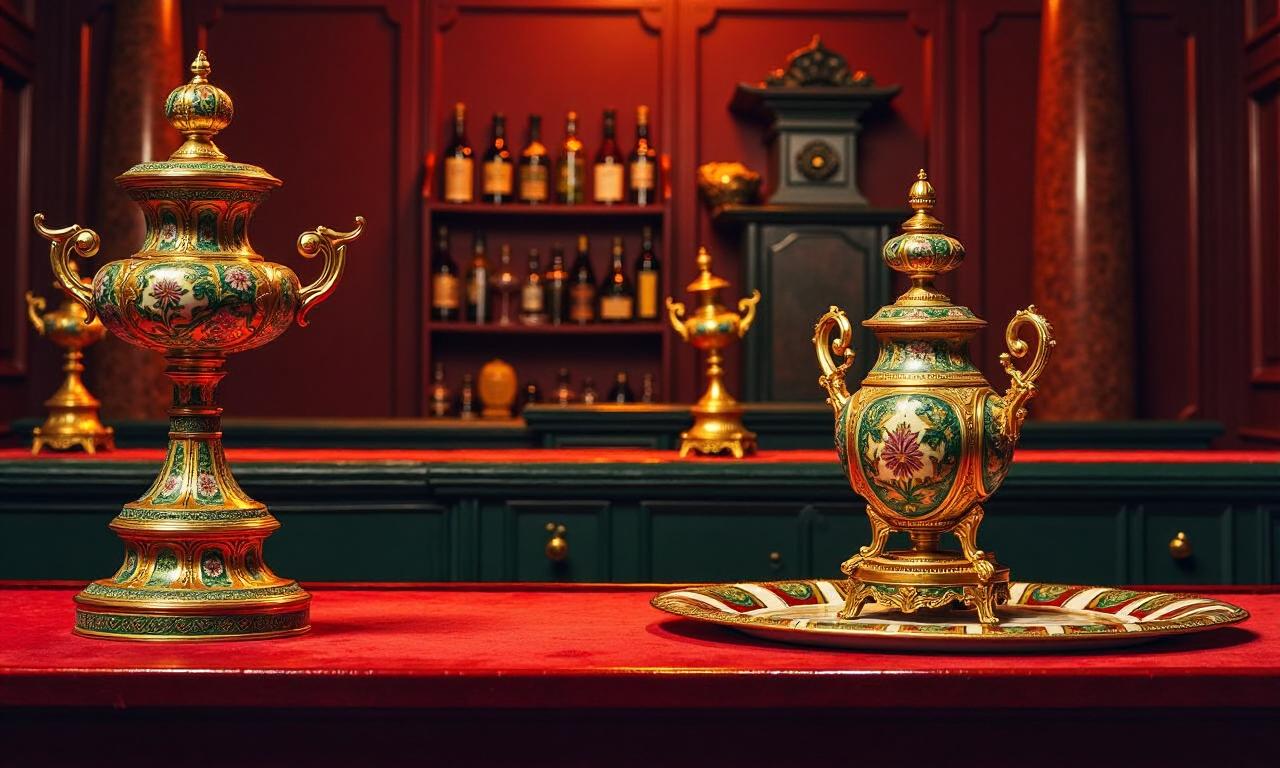
Pub Thief Jailed Over £2.2m Fabergé Theft Enzo Conticello, a 29-year-old opportunist, has been sentenced to more than two years in prison after stealing a handbag from a London pub that held a £2.2m worth of emerald-encrusted Fabergé items and a watch set. The theft occurred on 7 November 2024, when Conticello, also known as Hakin Boudjenoune, took Rosie Dawson’s bag while she stood outside the Dog and Duck pub in Soho. Dawson had placed the handbag between her legs on the ground as she prepared to attend a work event that evening. Inside were a Fabergé egg, a watch, and other luxury items, which were not recovered after the crime. Conticello’s guilt was established at Southwark Crown Court, where he admitted to three counts of fraud by false representation and one theft charge. The court learned that he intended to use the stolen bag to purchase drugs, handing it over to someone else shortly after the incident. Fabergé’s Rare Artistry Fabergé, a prestigious Russian jeweler founded in 1842, is renowned for its gemstone-encrusted eggs and exquisite timepieces. These items are part of a limited collection, with only seven such sets in existence. Despite the loss, insurers compensated Dawson’s employers at the Craft Irish Whiskey Company with £106,700. “On the night in question, it was a moment of opportunity which he took, and he is genuinely remorseful for his behaviour,” said Conticello’s barrister, Katie Porter-Windley. She added that the thief, who once worked as a chef, lost his job during the pandemic and fell into cocaine addiction, unaware of the items’ true value. Conticello was apprehended in Belfast for separate thefts in November 2025, more than a year after the London incident. Investigators connected him to the 2024 crime when he attempted to use Dawson’s bank cards at a nearby shop shortly after the theft. During sentencing, Recorder Kate Livesey emphasized the “inconvenience and stress” caused to Dawson and her company, noting the “extraordinary” nature of the stolen Fabergé egg. “Ms Dawson described the particular shock and panic upon realising a bag containing items of such particular value owned by the company had been stolen, and the incredible stress this incident has caused her,” said Livesey. She added that Conticello’s actions were driven by “greed,” as he thought nothing of taking someone else’s possessions. Policemen continue to search for the stolen Fabergé egg and watch. Det Con Arben Morina, leading the investigation, remarked: “Conticello thought nothing of helping himself to someone else’s possessions, and he now faces a prison sentence as a result of his greed.” Listeners can tune into BBC Radio London on Sounds and follow BBC London on Facebook, X, and Instagram for more updates. Story ideas should be sent to hello.bbclondon@bbc.co.uk.
UK says Russia ran submarine operation over cables and pipelines
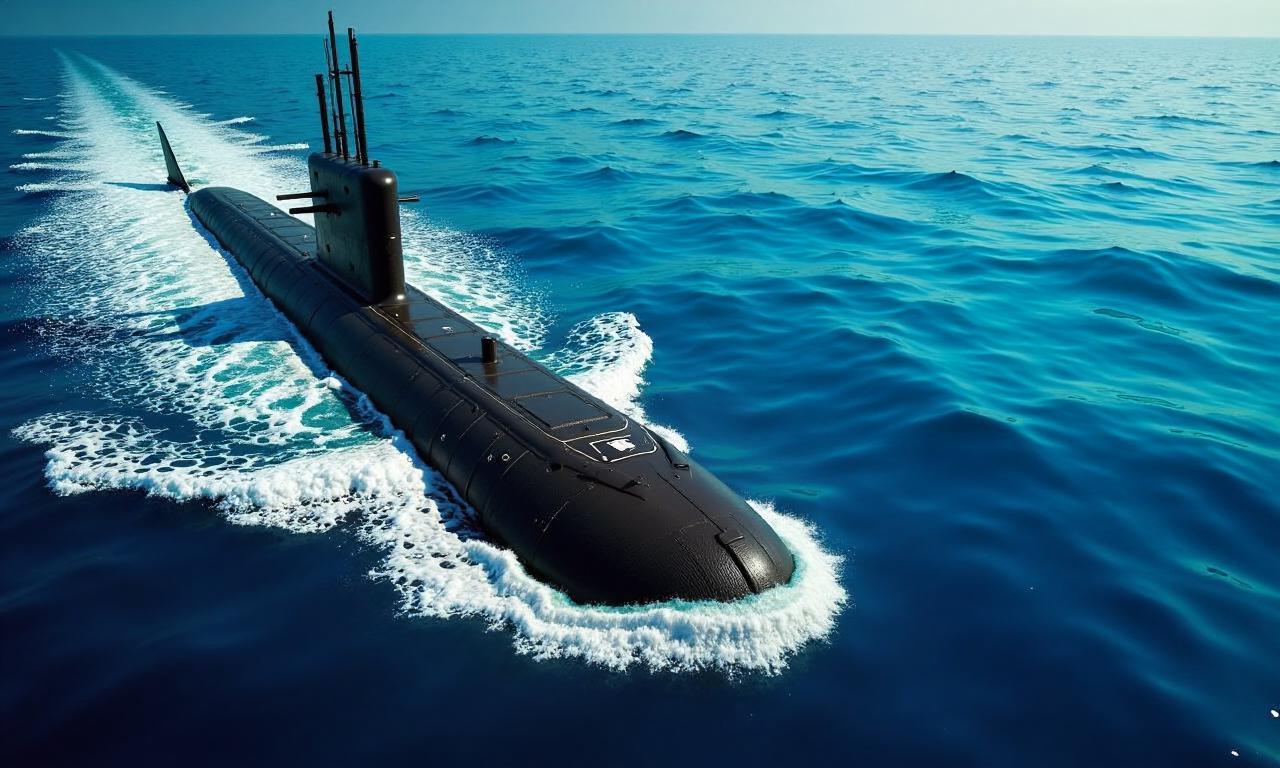
UK says Russia ran submarine operation over cables and pipelines Defence Secretary John Healey disclosed that three Russian submarines carried out a covert mission targeting cables and pipelines in the Atlantic waters north of the UK. He noted the deployment of a British warship and aircraft to counter Moscow’s “malign” activity, with no damage reported to UK infrastructure. “We see you. We see your activity over our cables and our pipelines, and you should know that any attempt to damage them will not be tolerated and will have serious consequences,” Healey stated during a Downing Street press conference on Thursday. Russian Submarine Tactics and UK Response According to Healey, Russia employed an Akula-class submarine as a distraction while two Guggi-class vessels performed surveillance on the undersea cables. The first Akula was observed leaving UK waters and returning to Russia, while the Guggi subs stayed. To monitor the operation, the Royal Navy used a Type 23 frigate, the RFA Tidespring, and Merlin helicopters. Other countries, including Norway, also contributed to tracking the Russian activity, though Healey only named Norway explicitly. “Our armed forces left [Russia] in no doubt that they were being monitored, that their movements were not covert, as President Putin planned, and that their attempted secret operation had been exposed,” Healey said. UK’s Dependence on Critical Infrastructure The UK relies heavily on its undersea cables and pipelines for data and energy. Around 60 cables, landing along the East Anglia and South West England coasts, carry nearly 90% of the nation’s internet traffic. Additionally, a network of gas pipelines, mainly in the North Sea, supplies essential energy from the UK and Norwegian Continental Shelves. The Langeled pipeline, spanning 724 miles (1,166km) between Norway and the UK, is a key link in this system, with 77% of the UK’s gas imports sourced via this route. Hybrid Warfare Context BBC InDepth revealed in 2025 that Russia was conducting “hybrid warfare” against the UK and Western Europe, aiming to penalize or deter continued military support for Ukraine. This strategy involves anonymous attacks that avoid direct attribution to a state. Healey linked the recent submarine activity to this broader approach, emphasizing that Russia remains the “primary threat” to UK security. Despite this, he expressed confidence in the UK’s ability to detect and neutralize future covert operations threatening national interests. The Russian embassy previously claimed it was “not interested in British underwater communications,” but Healey’s remarks suggest otherwise, highlighting Moscow’s intent to disrupt critical infrastructure.

Lebanon thought there was a ceasefire – then Israel unleashed deadly blitz
Lebanon Thought There Was a Ceasefire – Then Israel Unleashed Deadly Blitz Peace had seemed within reach. Just hours after US President Donald Trump declared a two-week ceasefire to halt hostilities in the Middle East, the skies over Lebanon turned violent. Israeli jets executed a 10-minute aerial assault, killing at least 203 individuals and injuring over 1,000, according to Lebanon’s health ministry. The attack shattered the fragile hope for calm, as the region’s fragile truce crumbled under the weight of military action. The strike targeted key Hezbollah strongholds in Beirut, Bekaa, and southern Lebanon, with the IDF claiming it struck “100+ headquarters, military arrays, and command centers.” The city center, including the affluent Tallet el Khayat neighborhood, bore the brunt of the devastation. A 10-story residential building was reduced to rubble, highlighting the unexpected nature of the assault. Civilians, caught off guard, faced the full force of the operation, which officials called the most intense since Hezbollah entered the conflict in March. “This was a massacre,” said President Joseph Aoun, describing the toll on Lebanese lives. Prime Minister Nawaf Salam referred to the victims as “martyrs and wounded,” underscoring the scale of the tragedy. Iran condemned the attack as a “grave violation” of the ceasefire, urging the US to stop Israeli “aggression.” The US, however, remained silent on its ally’s actions. Israel framed its strikes as necessary to weaken Hezbollah and meet remaining military goals. The conflict, which began with US and Israeli attacks on Iran on 28 February, has spiraled into a broader war involving Tehran’s proxies in Yemen and Lebanon. Iran’s proposed plan demands a halt to fighting on all fronts, including against Lebanon’s resistance movement. Meanwhile, Israeli Prime Minister Benjamin Netanyahu’s government claimed the ceasefire did not extend to Lebanon, citing Hezbollah as the reason. Donald Trump echoed this, stating the deal was “because of Hezbollah” and that the war in Lebanon was “a separate skirmish.” Amid the chaos, Beirut’s streets were eerily quiet on a crisp morning. The nation observed a day of mourning, with civil defense teams working tirelessly to recover bodies. Ziad Samir Itani, a leader of the teams, called the situation “new to Beirut,” noting the exhaustion of personnel after six weeks of relentless strikes. The attack left little hope for those still searching for missing loved ones, as the city’s heart was laid bare by the violence. Pakistan Mediates Amid Escalation Pakistan’s Prime Minister Shehbaz Sharif, acting as mediator, announced the ceasefire, stating that US allies had agreed to a pause “everywhere including Lebanon and elsewhere.” The nation is set to host peace talks on Friday, with the US offering a 15-point plan and Iran presenting its 10-point counter-proposal as starting points. Yet, the sudden Israeli strike has cast doubt on the deal’s viability, as the conflict rages on. Israel’s ongoing operations have resulted in “70+ terrorists” being killed, with the IDF targeting Ali Yusuf Harshi, the secretary to Hezbollah’s leader. While the claim remains unverified, the attack has intensified the suffering of Lebanon’s people, who now face a renewed wave of destruction.

Dogs found crammed in living room ‘doing really well’, says RSPCA
Dogs found crammed in living room ‘doing really well’, says RSPCA The RSPCA reported that around 250 dogs, rescued from an overcrowded property, are in good condition. These poodle crossbreeds were discovered in January at an unspecified location in the UK. The charity noted that the situation had “rapidly grown out of control amid extenuating family circumstances,” but the animals are now thriving. Condition and Care Lee Hopgood, the RSPCA’s operational superintendent for the North of England, shared an update on BBC Breakfast. He remarked that “surprisingly… the dogs are fine and doing really, really well.” However, many were found in poor condition, with “matted and crusted coats” requiring treatment. “Many of the dogs have now been successfully rehomed and are enjoying life in their forever homes,” stated a Dogs Trust spokesperson. They added that some still remain in their care, including those who have given birth while under their supervision. Adoption and Social Impact One of the recently rescued poodle-cross dogs, Boone, was adopted by Dermot Murphy, a former RSPCA inspectorate commissioner. The adoption was highlighted during a BBC Breakfast appearance on Thursday morning. The RSPCA linked cases of large numbers of animals kept at one address to factors such as mental health struggles, the cost of living crisis, or poor breeding practices. In this instance, they chose not to pursue prosecution, citing the “extremely vulnerable nature” of the owners. A “shocking” image of dozens of dogs crammed into a living room, taken by a rescuer, was confirmed as genuine by the charity. This photo was initially questioned online, with many suggesting it was AI-generated. The RSPCA emphasized that such incidents have risen by 70% in England and Wales since 2021. Poodle-Cross Popularity The dogs, also known as “doodles,” have become increasingly popular in recent years. According to a 2025 survey by Dogs Trust, these crossbreeds rank among the top three most commonly owned types. In November, the RSPCA rescued 80 dogs, including chihuahuas, pomeranians, and crossbreeds, from a house in Bedfordshire.
Spanish police ‘dismantle’ Scottish drugs gang as crime boss arrested
Spanish police ‘dismantle’ Scottish drugs gang as crime boss arrested Spanish authorities have claimed they have effectively dismantled a drug trafficking organization tied to the Lyons family, with its leader, Steven Lyons, captured in the Netherlands after being sent from Bali. The Civil Guard reported that the 45-year-old Glasgow-based criminal figure was detained in Indonesia following his arrival from Singapore on 28 March. The operation, named Armorum, led to 14 arrests across four nations and 20 additional individuals being probed. According to the statement, the Lyons network’s activities in Spain have been significantly disrupted, though the crime boss is expected to face charges in Spain within two to three weeks, pending extradition approval. “We will not allow Indonesian territory, especially Bali, to become a haven or base of operations for international criminals,” said Bugie Kurniawan, head of the Ngurah Rai Immigration Office, confirming Lyons’ deportation. Lyons, who had a Red Notice from Interpol, was arrested in the Netherlands on the same day his wife, Amanda, was detained in Dubai. The raids involved 18 operations in the past week, targeting locations like the Costa Del Sol and Barcelona. Seized items included electronic devices, cash, company files, luxury watches, and cryptocurrency wallets. The investigation, spanning three years, revealed a sprawling criminal network active in Europe, the Middle East, and Asia. It featured a sophisticated money laundering system using shell companies and global financial transactions, funneling millions from drug sales. The statement emphasized the gang’s ability to operate in multiple countries, including Spain, the UAE, and Turkey, while forming alliances with other organized crime groups. Lyons, leader of the Lyons group, has been embroiled in a decades-long rivalry with the Daniel gang. In 2006, he survived an attack in Glasgow’s Lambhill area, during which his cousin was killed. He relocated to Spain before establishing a presence in Dubai, where he connects with the Kinahan organization. His brother, Eddie Lyons Jr., and associate Ross Monaghan were fatally shot in Fuengirola last May, with Michael Riley, a 44-year-old from Liverpool, accused of the crime. Riley initially resisted extradition but later agreed to face trial in Spain. A Spanish National Police detective noted that the suspect was linked to the rival Daniel gang, though Police Scotland insists the killings were unrelated to ongoing conflicts in the UK.
Best-selling The Housemaid author Freida McFadden reveals true identity
Best-selling The Housemaid Author Freida McFadden Unveils Her Real Identity One of publishing’s longest-standing enigmas has been unraveled as Freida McFadden, the acclaimed American author behind the hit thriller The Housemaid, disclosed her actual name to the public. Known to millions for her gripping novels, McFadden had long kept her real identity under wraps, though she never hid her dual role as a medical professional. McFadden, who has authored 29 books, topped the UK best-seller charts in 2025 with three titles, including The Housemaid. The novel, first released in 2022, was adapted into a film last year featuring Sydney Sweeney and Amanda Seyfried. In 2025, she ranked second in UK book sales, with 2.6 million copies sold, and six million printed copies in the U.S. Only Julia Donaldson, the creator of The Gruffalo, surpassed her in overall sales that year. From Doctor to Author: A Pseudonym Born of Humor Sara Cohen, the author’s real name, first adopted the pen name Freida as a playful nod to her medical field. The name came from the Fellowship and Residency Electronic Interactive Database, a humorous inside joke for her as a resident doctor. She began self-publishing in 2013 with The Devil Wears Scrubs, a fictionalized account of her life in medicine. “I’m at a point in my career when I’m tired of this being a secret,” Cohen explained in an interview with USA Today. “I’m tired of people debating if I’m a real person or if I’m three men. I am a real person and I have a real identity and I don’t have anything to hide.” While working as a neurologist in Boston, Cohen continued writing, eventually shifting focus to psychological thrillers. She maintained two separate identities for years, fearing her patients might feel uneasy about being treated by a bestselling author. “At work, I want to be a doctor,” she said in 2024. “A lot of my books have medical stuff in them, and I don’t want people saying, ‘Is this based on me?’ It feels unprofessional.” Her dual life also fueled social anxiety. “It’s not just about privacy but also about social anxiety,” Cohen told the Washington Post in 2024. “My success as an author had escalated fears that I might not be ‘that amazing person that everyone expects you to be.’” Cohen’s decision to reveal her identity came after stepping back from her medical career. She now works part-time, only once or twice a month, allowing her to share her true name without compromising her professional life. “My whole goal was to keep it a secret until I was ready to step away from my doctor job,” she said. “But I have stepped away, and it’s easier now to reveal who I am.” Despite the revelation, Cohen still hopes her fans will embrace her pen name. “Even though I haven’t told my real name until now, I feel like I’ve shared the real me all along,” she said. “Everything I’ve told them has been the truth. The name will be a surprise, but nothing else will. I’ve always been genuine with my readers.” In a twist of irony, her secret was nearly exposed earlier this year when a colleague recognized her in a Freida McFadden photo. “The cat is out of the bag,” she admitted to the Times. “But they’ve been really respectful about not posting anything about me on social media, and I tried to repay them with a book signing at work.” Cohen also joked about her public appearances as Freida, noting she wears a wig during events simply because “I have no idea how to style my hair.” Yet, the revelation marks a new chapter for her, blending her medical expertise and literary passion into one identity.
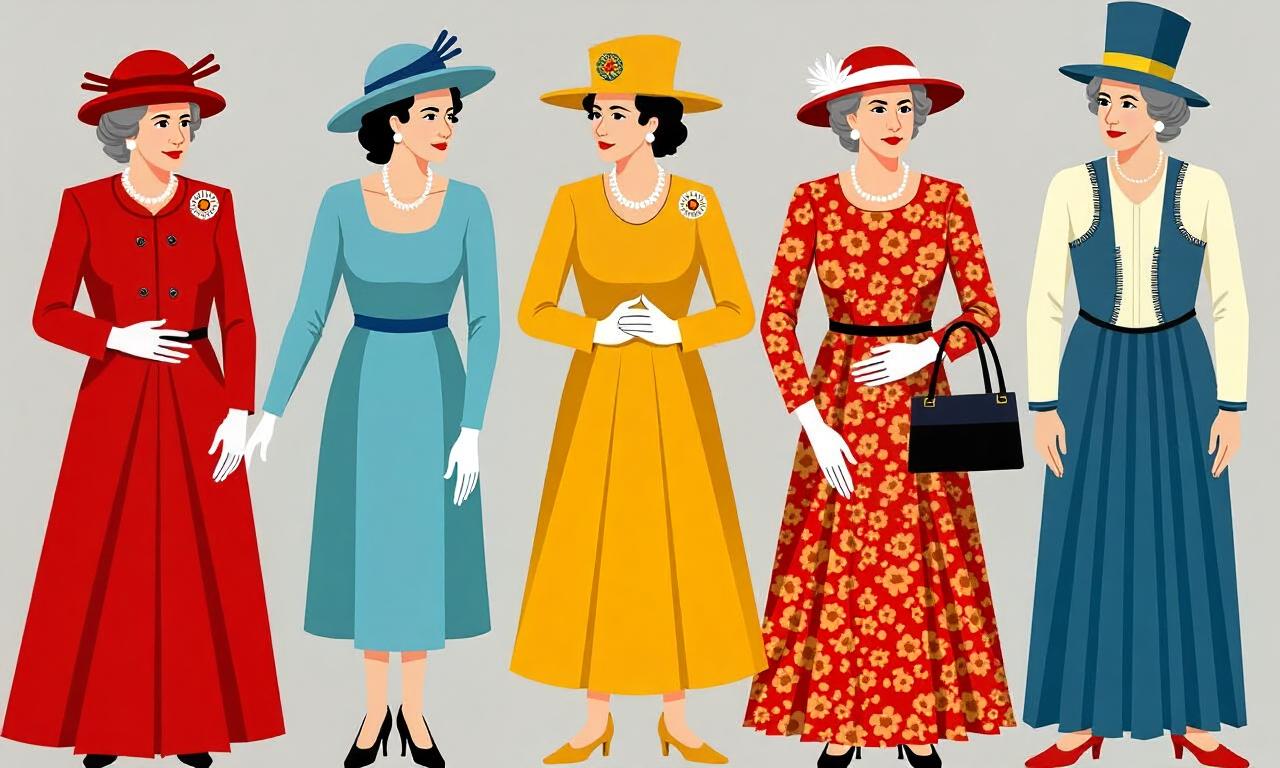
Five of Queen Elizabeth II’s most iconic outfits – from new royal exhibit
Five Iconic Outfits of Queen Elizabeth II Displayed in New Royal Exhibition Queen Elizabeth II, one of the most widely recognized figures of her era, cultivated a style that was both understated and globally identifiable. Her fashion, often characterized by simplicity and tradition, served as a symbol of continuity and national identity throughout her 70-year reign. The recent exhibition at The King’s Gallery in Buckingham Palace explores this legacy, presenting 200 items—from clothing and accessories to jewellery and headwear—that reflect the evolution of British culture over a century. The showcase also celebrates the centenary of her birth on 10 April, highlighting how her appearance mirrored the changing world around her. A National Symbol Among the standout pieces is a Harris tweed jacket paired with a Balmoral Tartan skirt, designed by her long-time dressmaker Norman Hartnell. First worn in the 1950s, the outfit became a defining element of her casual attire. While practical for her active lifestyle and modest in design, it subtly reinforced British craftsmanship and heritage, as noted by royal fashion commentator Marian Kwei. The fabrics were chosen to “promote British fashion, excellence and production,” she explains, with the cut and color evoking “stability, dependence, soft power.” Kwei emphasizes that the look conveyed authority without overt flamboyance, embodying the idea of “I’m in charge” through quiet elegance. “It’s ‘I’m in charge,’ without being too loud about it.” Symbolism in Design The 1953 Coronation dress, another Hartnell creation, exemplifies her commitment to national symbolism. Crafted from Kent silk and adorned with gold bugle beads, diamantés, and pearls, the gown features intricate embroideries that represent the four UK nations. The Queen’s decision to include emblems from other Commonwealth countries—such as the Canadian maple leaf and India’s lotus flower—demonstrates her role as a unifying figure. “The gown was pretty much a nod to Britain and the Commonwealth,” Kwei remarks, adding that her sartorial choices reflected “the kind of Queen we had and how she reigned.” Divisive Yet Defining Moments Her 1957 sleeveless green gown, also by Hartnell, is another notable item. Worn during a state banquet for US President Dwight Eisenhower, the dress sparked debate about its symbolism. While de Guitaut, the exhibition curator, calls it “absolutely beautiful,” she notes that its meaning remains unclear. Kwei suggests the “apple crisp green” hue may subtly reference American culture, linking it to the nickname “The Big Apple” and the archetype of “American Pie.” The Queen’s choice, she argues, conveyed both sovereignty and a gesture of connection: “It says, ‘I’m Britain’s sovereign, this is us, but I’m also nodding to you.’” “From New York being known as ‘The Big Apple’ right through to the traditional place the ‘American Pie’ holds in American culture, apples have become synonymous with all things classically American.” Early in her reign, Elizabeth II used her wardrobe to redefine her public image, as highlighted by author and royal fashion commentator Elizabeth Holmes. She notes that her outfits, often with a fitted waist and full skirt, “accentuated her femininity rather than attempting to mask or hide it,” positioning her as a glamorous yet authoritative presence on the global stage.

Primrose Hill stab victim ‘can never be replaced’
Primrose Hill Stabbing: Father Calls Victim ‘Unreplaceable’ A tragic incident occurred in Primrose Hill, where a 21-year-old aspiring filmmaker lost his life in a stabbing. Christopher Sullivan, the father of Finbar Sullivan, expressed his grief, stating that his son “can never be replaced.” The incident unfolded near the park’s scenic overlook, shortly after 6:30 PM BST on Tuesday. Sullivan, who was visiting the area with a birthday gift camera, was fatally wounded during a confrontation. Victim’s Legacy and Passion Finbar Sullivan, a student at the London Screen Academy, had a deep connection to the world of film. He was known for creating music videos under the moniker Sully Shot It, focusing on drill rap artists. His grandfather, Michael Seresin, was a notable figure in cinema, having contributed to films like *Harry Potter and the Prisoner of Azkaban* and *Rambo III*. Sullivan described his son as a “beautiful, lovely, outgoing, loving boy,” emphasizing his vibrant personality and creative spirit. “This is the worst tragedy I could ever imagine,” Christopher Sullivan told the *Daily Mail*, adding that Finbar was his only son. In the same altercation, a second individual in his early 20s sustained non-life-threatening injuries. He was hospitalized but is expected to recover. The Metropolitan Police is urging anyone with information, photographs, or videos from the scene to come forward. As of now, no arrests have been made in connection with the incident. Following the tragedy, the *Daily Mail* highlighted Sullivan’s talents and his aspirations to follow in his grandfather’s footsteps. His father clarified that Finbar was not part of a gang, describing him as a “groovy 21-year-old who loved movies and making films.” The community is left mourning the loss of a young life filled with potential. Stay connected with BBC Radio London via Sounds, and follow BBC London on Facebook, X, and Instagram for updates. Share your story ideas with hello.bbclondon@bbc.co.uk.

Four people die in Channel crossing attempt, French authorities say
Four Fatalities in English Channel Crossing Attempt Four individuals lost their lives during an attempted passage across the English Channel near northern France, according to local officials. The incident, which occurred off the coast of Boulogne, took place between the beaches of Équihen and Écault, south of Calais. French authorities stated that a taxi boat sank today, though the full extent of the situation remains under investigation. “Rescue operations are currently active as the event unfolded this morning,” reported French media. “The situation is still being evaluated, and further developments may occur.” Plans for a press conference to address the incident are set to be announced shortly. Over the past three years, the number of people crossing the Channel by small boat has fluctuated, with 41,472 arrivals in the UK recorded in 2025. By early March 2026, 4,441 crossings were documented, marking a 33% decline from the 6,642 recorded in the same timeframe the previous year. This drop may be linked to harsher weather conditions in the Channel during the recent period compared to 2025. Additional updates will be provided as the situation evolves. For real-time alerts, download the BBC News App or follow @BBCBreaking on X.

BBC at the site of Israeli air strikes in Beirut
BBC at the site of Israeli air strikes in Beirut https://www.bbc.com/news/videos/cly9z7xp10wo Wednesday marked the most severe Israeli bombardment of Lebanon in the ongoing conflict. The assault spanned ten minutes, during which Israel claimed to have conducted approximately 100 strikes. Lebanon’s health ministry reported that at least 182 individuals were killed and over 800 injured. BBC Middle East Correspondent Hugo Bachega was stationed in Beirut, witnessing one of the deadliest strikes of the conflict.