

Artemis Crew Shares Lunar Discoveries Before Return to Earth The four astronauts of Artemis II, currently aboard the Orion spacecraft, are preparing for their descent back to Earth. They have emphasized that their journey around the Moon has yielded “new discoveries” and “untold tales” to share with the global audience. The crew is set to splash down near San Diego’s coast on Friday, at approximately 20:00 US EST (00:00 GMT). Historic Flyby and Record-Breaking Distance Orion surpassed a long-standing milestone on Monday, achieving a record for human space travel. At 13:56 EDT (18:56 BST), the spacecraft exceeded the 248,655-mile (400,000km) distance previously set by Apollo 13 in 1970. This feat was accomplished during a lunar flyby that kept the crew on the Moon’s far side, an area never visible from Earth. While satellites have captured images of this region before, the astronauts marked the first time human eyes observed its rugged terrain and expansive craters up close. “We have to get back. There’s so much data you’ve already seen, but all the good stuff is coming back with us.” — Victor Glover, mission pilot Glover, speaking to media during their return, highlighted the value of the mission’s findings. He noted that the crew still had “two more days” to process their experiences, adding that the memories would linger for a lifetime. The team’s virtual press conference, held at NASA’s Johnson Space Center in Houston, featured delayed responses as they interacted with reporters from orbit. Emotional Highs and Scientific Reflections The crew described moments of profound significance. When asked about the 40-minute period of silence during their mission, Commander Reid Wiseman mentioned the “most critical lunar observations” for their geology team. Yet, he recalled a quieter, more personal ritual: sharing maple cookies brought by Jeremy, and taking time to reflect on their location. “We took about three or four minutes just as a crew to really think about where we were,” he said. Glover’s highlight was witnessing the lunar eclipse from beyond the Moon’s far side, while Wiseman’s emotional peak came when his team honored his late wife, Carroll, by naming a crater after her. “When Jeremy spelled Carroll’s name, I looked over and Christina was crying,” Wiseman shared, calling it the mission’s “pinnacle moment.” Family as a News Source During the press conference, the crew admitted they relied on family members for updates about the mission’s public perception. “They’ve been our source of how the mission is going from the public perspective,” said Wiseman, humorously noting their bias. Christina Koch, meanwhile, spoke about the intangible aspects of space travel. She expressed a deep longing for the “camaraderie” of the mission but admitted there was nothing she wouldn’t miss. “We can’t explore deeper without making sacrifices, risks, and inconveniences—and those are all worth it,” she said. As they approach Earth, the astronauts face a series of routine checks and experiments before the final, high-speed re-entry. At nearly 25,000mph, the capsule will endure extreme heat, testing its heatshield and recovery systems in a dramatic Pacific splashdown.
Israel says it hit Lebanon 100 times in just 10 minutes

UK to urge full reopening of Strait of Hormuz
UK to urge full reopening of Strait of Hormuz On Thursday, the UK’s foreign secretary will advocate for the complete reopening of the Strait of Hormuz, following warnings from the Iranian navy that ships without authorization risk being targeted. This move comes amid ongoing disruptions to maritime trade in the region, with vessels facing potential blockades. During her annual address highlighting key foreign policy objectives, Yvette Cooper will also stress the importance of incorporating Lebanon into the US and Israel’s ceasefire agreement with Iran. While the UK did not participate in direct attacks on Iran, ministers are seeking to leverage diplomatic influence to restore the critical shipping passage. Prime Minister Sir Keir Starmer’s recent visit to Gulf allies included a meeting with Saudi Crown Prince Mohammed bin Salman, who underscored the necessity of a lasting peace. Cooper will emphasize that the conflict has global repercussions, contributing to increased food and fuel costs in the UK. “There is considerable work to do and we support the negotiations,” Cooper will state, stressing that the war must not resume. “No country can close these routes – it goes against the fundamental principles of the law of the sea.” The foreign secretary will argue that the Strait of Hormuz, a vital international transit route, must be unimpeded. She will highlight how Iran’s deliberate obstruction of this global economic lifeline impacts British citizens, despite the distance of over 3,000 miles. Cooper is set to visit the International Maritime Organization later on Thursday, backing its efforts to assist ships and seafarers stranded in the waterway. She will reiterate that the full and unconditional reopening of the Strait must be a cornerstone of both the current ceasefire and the region’s future stability. Previously, the UK led discussions involving more than 40 nations on resolving the Hormuz bottleneck, with consensus that ending the war was essential. Cooper noted that Iran had effectively used the route to “hold the global economy hostage” after a virtual summit where the US was not present. Iran’s attacks on commercial vessels have disrupted energy exports and driven up fuel prices worldwide. The US has criticized allies for insufficient action to secure the waterway, prompting nations like the UK to evaluate their contributions without entering the broader conflict. “The full and unconditional re-opening of the Strait must be a central part not just of the current ceasefire but of the long term future for the region,” Cooper will say. Before the ceasefire announcement on Wednesday, US President Donald Trump called on other countries to “build up some delayed courage” and take responsibility for reopening the route.
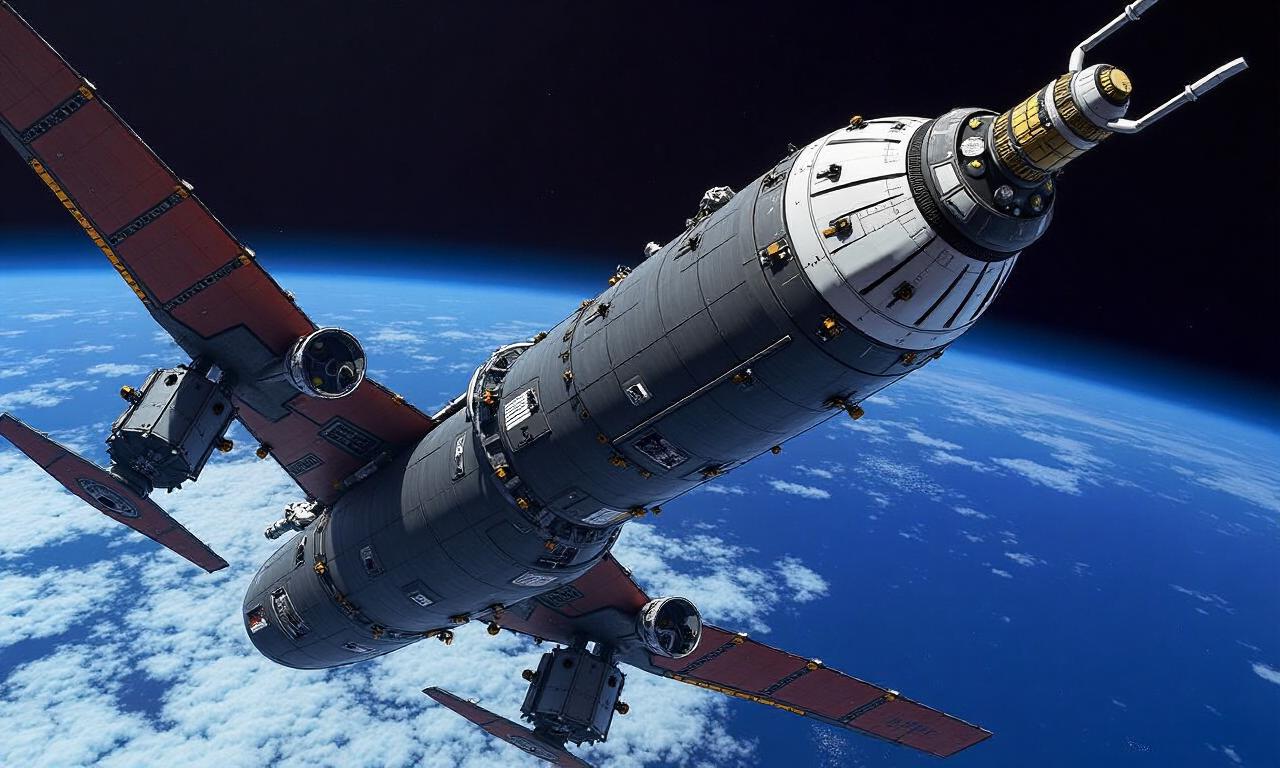
Watch: BBC asks Artemis II crew a question in space
Watch: BBC asks Artemis II crew a question in space The BBC’s Science Editor, Rebecca Morelle, conducted an interview with the four Artemis II astronauts during their return to Earth following a remarkable lunar fly-by. This mission marked their farthest point from Earth yet. As they prepare for splashdown on Saturday, mission specialist Christina Koch shared her reflections, emphasizing the “camaraderie” she valued most. She described the bond between crew members as feeling like “brothers and sisters.” Legal developments and public reactions Jasveen Sangha received a 15-year prison sentence for distributing drugs that contributed to the death of actor Matthew Perry. Meanwhile, Rex Heuermann admitted guilt in the murder of eight women on Long Island between 1993 and 2010. Elsewhere, a Tampa homeowner triggered a response when he found a nine-foot alligator in his pool area, leading to its removal by specialists. At the annual ‘Great Marshmallow Drop,’ over 15,000 fluffy treats were released from a helicopter, drawing eager participants. The former prosecutor, who has maintained a close connection with President Trump, represented him in a criminal hush-money case. BBC correspondent Ione Wells interacted with protesters and attendees near the Supreme Court during a hearing on Trump’s executive order. Economic and political shifts Fuel prices in the U.S. have exceeded $4 per gallon for the first time since 2022, driven by ongoing tensions with Iran. Gary O’Donoghue of the BBC spoke with an Alabama farmer who, despite financial strain, continues to back President Trump. Mass demonstrations against the Trump administration occurred across cities, forming the third round of No Kings rallies. A sculpture titled “A Throne Fit for a King” was installed at the National Mall, critiquing Trump’s White House renovation efforts. The airport in New York is experiencing record delays, attributed to TSA agents working without pay during a partial government shutdown. At the CPAC conference in Texas, conservatives expressed mixed views on the current economic climate. Public sentiment and legal accountability The public backlash follows a Los Angeles jury’s ruling that Meta and Google designed addictive social media platforms harming youth mental health. In her first interview since the disappearance, Savannah Guthrie recounted discovering her mother’s absence and questioned whether her fame made her a target. The wreckage of the incident blocked access to one of two runways at a major New York City airport. A yellow Labrador Retriever named Tessie emerged unharmed from a sinkhole incident, returning to her yard after crews repaired the damage. BBC Verify analyzed the moments preceding a deadly collision at the New York airport involving a fire truck. Immigration and Customs Enforcement agents were deployed to U.S. airports to support TSA amid the partial shutdown. Valero, a refinery operator, confirmed no injuries were reported in the incident. Trump is hosting a summit focused on artificial intelligence, education, and safeguarding children in digital environments. A robot joined First Lady Melania Trump at the White House during a public appearance, highlighting the administration’s technological initiatives.

Chinese researcher’s death after questioning in US prompts anger in Beijing
Chinese researcher’s death after questioning in US prompts anger in Beijing Following the sudden passing of a Chinese semiconductor researcher in the United States, the Chinese government has urged American authorities to conduct a thorough examination of the incident. The researcher, identified as Danhao Wang, was discovered lifeless after being subjected to “hostile interrogation” by law enforcement, according to U.S. media reports. The University of Michigan released a statement on 19 March, noting that it is exploring “a possible instance of self-injury” following Wang’s fatal fall from a campus structure. Liu Pengyu, a representative from the Chinese Embassy in the U.S., expressed deep concern over the tragedy during a BBC interview on Thursday. He emphasized that China has “consistently raised serious concerns with U.S. government agencies and educational institutions” about the matter, while also reaching out to the victim’s family for support. “China will persist in taking necessary steps to firmly uphold the rights and interests of its citizens,” said Mao Ning, a spokesperson for the foreign ministry, when questioned by the BBC on Wednesday. The ministry highlighted that Wang’s death exemplifies a broader issue affecting Chinese academics in the U.S., particularly as geopolitical tensions continue. Wang, an assistant research scientist specializing in electrical and computer engineering, had focused on semiconductor technology, a field under increased scrutiny. Earlier in March, the Chinese foreign ministry condemned the incident, stating that the researcher had “taken their own life after enduring adversarial questioning by U.S. law enforcement.” The agency claimed such actions “seriously infringe upon the rights of Chinese nationals” and “further strain relations between the two nations.” This event follows the 2024 suicide of Jane Wu, a Chinese-American neuroscientist at Northwestern University, whose family alleged the university had mishandled her case during a prolonged federal investigation into her ties with China. The U.S. has intensified its oversight of Chinese students on campuses in recent years, citing national security threats. In 2020, President Donald Trump imposed restrictions on visa issuance for students with suspected military connections. Last year, his administration announced plans to “aggressively” cancel visas for those linked to the Chinese Communist Party or studying in strategic disciplines. Despite initial strict measures, the U.S. later adjusted its stance, issuing 600,000 visas to Chinese students as trade discussions between Washington and Beijing progressed. The foreign ministry has yet to confirm Wang’s identity publicly, citing respect for the family’s privacy. Additional reporting by Stephen McDonell in Beijing
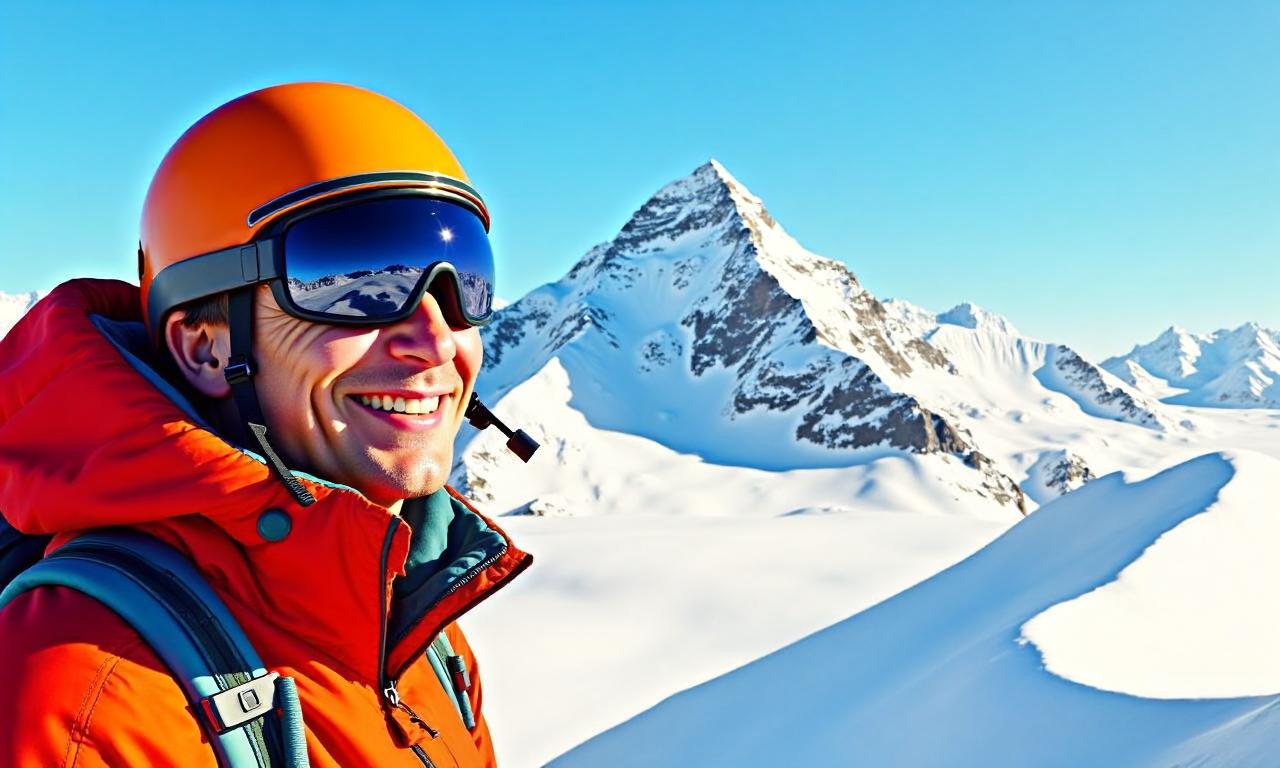
Jim Whittaker, first American to summit Mount Everest, dies aged 97
Jim Whittaker, First American to Summit Mount Everest, Dies at 97 Jim Whittaker, who became the first American to reach the peak of Mount Everest in 1963, has passed away at the age of 97, as confirmed by his family. His final journey to the mountain occurred when he was 83, marking a heartfelt return to the site of his historic climb. The news of his death was shared by his son Leif, who noted that Whittaker spent his last moments at home in Port Townsend, Washington, surrounded by loved ones. A Life of Adventure and Influence Whittaker, known affectionately as Big Jim, was born in Seattle on 10 February 1929. He began his climbing career alongside his twin brother, Lou, during their time as Boy Scouts in the 1940s. The pair achieved a significant milestone at 16 by conquering Mount Olympus, the highest point in the Olympic Mountains, which stands at 7,965 feet (2,428 meters). “You learn, when you climb a difficult mountain, you leave your ego behind and learn that you’re just a little micro-speck in this life. You learn your weaknesses and have a little broader perspective,” he once told the BBC. Whittaker’s legacy as a national icon was marked by a life dedicated to adventure, stewardship, service, and family. His family described him as an American folk hero, emphasizing how his journey to Everest, alongside Nawang Gombu Sherpa, not only etched his name into history but also sparked a new era of exploration in the United States. The feat earned him the Hubbard Medal from former President John F. Kennedy, a testament to his impact on the climbing world. Legacy in the Outdoor Community Throughout his life, Whittaker remained deeply connected to the climbing community. He served as a leader and advocate for The Mountaineers, an alpine club established in 1906, for many years. His influence extended beyond the mountains, as he became a prominent figure at REI, where he was the first full-time employee and later held the role of second president and CEO from 1971 to 1979. REI highlighted his role as a “trailblazer and generous leader” who reshaped the company’s mission and championed environmental conservation. His work with the Kennedy family further cemented his reputation. Whittaker was the state chairman for Senator Robert F. Kennedy’s presidential campaign and shared a historic climb with the senator on a 14,000-foot (4,267-meter) peak in Canada. That mountain was later named Mount Kennedy in honor of the late president. In 2013, he revisited Everest with his son Leif, a climber who specializes in training athletes for high-altitude expeditions. Whittaker’s memoir, *A Life on the Edge*, chronicled his experiences on Everest and his broader commitment to the outdoors. His advocacy also played a key role in the creation of important conservation areas, including the North Cascades National Park and the Pasayten Wilderness in Washington state, as well as Redwood National Park in California. He testified before Congress in 1968, helping to secure these protected spaces. Washington Governor Bob Ferguson honored Whittaker on X, calling him “one of the great Washingtonians.” Ferguson reflected on how the climber inspired generations, including himself, to embrace the natural world. “He inspired many generations of mountaineers to explore the outdoors, including me. I’m grateful for the time I spent with him over the years,” Ferguson wrote. Jim Whittaker’s contributions to mountaineering and environmental stewardship continue to resonate. His life exemplified a philosophy that measured success not in personal glory, but in the communities he built and the people he motivated to seek connection with nature.
Oil prices rise as traders eye fragile US-Iran ceasefire
Oil prices rise as traders eye fragile US-Iran ceasefire Asian markets saw a surge in oil prices during Thursday’s early trading session, driven by heightened attention on the tenuous US-Iran ceasefire. The agreement, which temporarily halts hostilities, faces scrutiny following Israel’s recent attacks on Lebanon. Tehran has issued warnings of a “regret-inducing response” should the strikes persist. Strait of Hormuz Disruption Wednesday’s oil price drop was reversed as the two-week ceasefire came under pressure. The accord, which aims to restore the Strait of Hormuz to normal operations, was tested when Iran threatened to target ships navigating the vital waterway. This retaliation followed US-Israeli airstrikes on Iran, causing significant delays in maritime traffic. Global benchmark Brent crude climbed 3.3% to $97.90, while US West Texas Intermediate gained 3.2% to $97.55. Prices remain elevated compared to pre-war levels, which began on 28 February. The ceasefire was announced on Tuesday evening Washington time, just before a 20:00 EDT (00:00 GMT) deadline set by former President Donald Trump. “A whole civilisation will die tonight” Trump’s warning, which spurred the agreement, emphasized the urgency of the deal. A critical condition of the pact is ensuring safe passage for ships through the Strait of Hormuz. However, Iran’s navy has issued a directive to SSY, a shipping brokerage firm, stating that vessels crossing the strait without authorization will face attacks. Since the ceasefire’s announcement, only a few ships have traversed the waterway, far below the daily average of 130 before the conflict. Maritime tracking firm Pole Star Global estimates it will take at least 10 days to clear the accumulated backlog, even if traffic returns to normal levels. The dispute over Lebanon’s inclusion in the ceasefire adds to the uncertainty, with Israel conducting its most intense bombardment of the region in the war so far, resulting in at least 182 casualties. Hezbollah, an Iran-backed militia, responded by launching rockets at northern Israel, citing ceasefire violations as justification. US Vice President JD Vance is set to join talks with Iran in Pakistan on Saturday, aiming to solidify the fragile agreement. The outcome of these discussions will be closely monitored as markets assess the stability of the ceasefire.
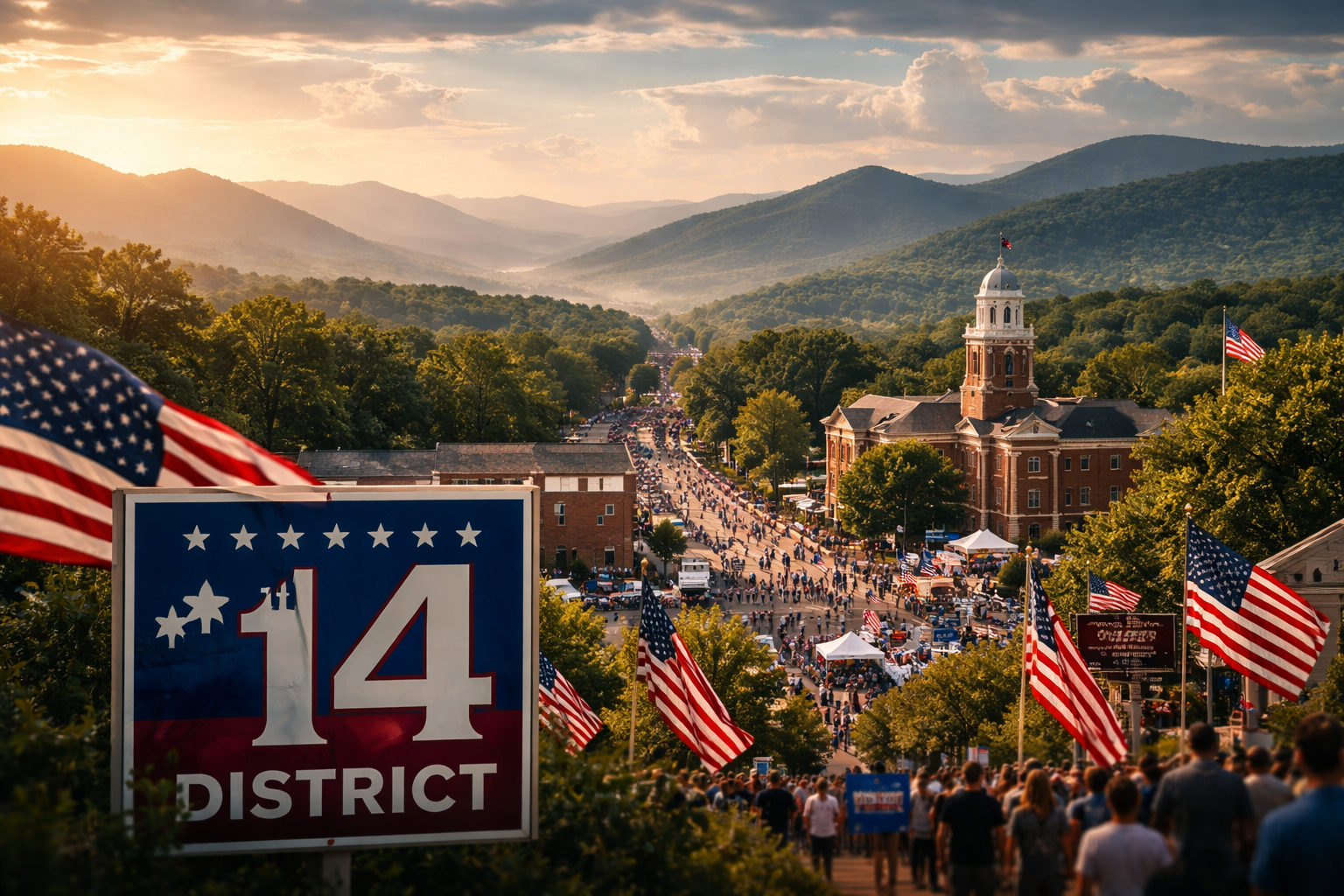
Exploring the Political Landscape of Georgia’s 14th District
Georgia’s 14th district holds a unique position in the state’s political landscape, encompassing a diverse mix of suburban and rural communities. Understanding the district is essential for anyone interested in Georgia politics, as it reflects both demographic shifts and evolving voter priorities. This article delves into the historical trends, current political dynamics, and key factors shaping electoral outcomes in the Georgia 14th district. Geographic and Demographic Overview The Georgia 14th district spans portions of northern Georgia, including parts of Hall, Dawson, and Forsyth counties. This mix of suburban growth and rural areas creates a distinctive political environment where local issues carry substantial weight. Residents in these communities often balance concerns about economic development, education, and infrastructure, reflecting the district’s varied demographic makeup. Population trends in the Georgia 14th district indicate steady growth, driven largely by suburban expansion around metro Atlanta. The district’s residents are primarily middle-class families, with an increasing number of young professionals moving in. This demographic shift influences voter priorities, particularly regarding housing, transportation, and community services. Historical Political Trends Historically, the Georgia 14th district has leaned conservative, with Republican candidates dominating state and federal elections. Election results over the past two decades show strong support for fiscal conservatism and traditional values, although some local races have exhibited competitive dynamics. These historical patterns provide context for understanding current electoral strategies. Voter engagement in the district has evolved, with turnout varying between midterm and presidential elections. While rural areas maintain consistent Republican support, suburban sections demonstrate more fluctuating patterns. Observing these trends is crucial for predicting the outcomes of upcoming elections in the Georgia 14th district. Key Political Issues Several critical issues shape voter sentiment in the Georgia 14th district. Economic development remains a top concern, particularly regarding small business support and job creation. Residents also prioritize educational quality, from K-12 schools to higher education opportunities, reflecting the district’s family-centered communities. Infrastructure and transportation are equally important, as expanding suburban areas face traffic congestion and public transit limitations. Healthcare accessibility is another pressing topic, particularly in rural sections where medical facilities may be limited. Candidates addressing these practical concerns tend to resonate strongly with voters. Electoral Dynamics and Party Influence The Georgia 14th district exhibits a clear Republican advantage, though Democrats are increasingly targeting suburban precincts with moderate messaging. Party influence is shaped not only by voter registration but also by grassroots organizing and community engagement. Campaign strategies often focus on door-to-door outreach and localized issues that directly affect constituents’ daily lives. Recent elections highlight the importance of swing precincts in suburban areas, where margins can determine overall outcomes. Political analysts frequently examine these precincts to gauge broader trends, noting shifts in voter behavior that may indicate changing allegiances. Understanding these dynamics is essential for predicting future contests in the Georgia 14th district. Community Engagement and Civic Participation Active civic participation is a hallmark of the Georgia 14th district, with residents attending town halls, engaging with local representatives, and participating in community initiatives. Organizations focused on voter education and registration play a critical role in shaping the district’s political landscape. Social media and local news outlets also influence civic engagement, providing platforms for discussion and debate on key issues. Candidates who effectively leverage these channels often gain visibility and credibility among younger voters. This engagement underscores the district’s dynamic political environment, which continues to evolve with demographic and technological changes. Future Outlook Looking ahead, the Georgia 14th district is likely to maintain its conservative lean, but demographic shifts may introduce more competitive races in suburban areas. Population growth, coupled with changing priorities among younger voters, could influence policy focus and candidate strategies. Observers predict that attention to local issues, coupled with strong grassroots mobilization, will remain crucial for electoral success. The district’s political landscape is a microcosm of broader trends in Georgia, illustrating the interplay between tradition and change. Both parties must adapt to evolving voter expectations while addressing the practical concerns that shape everyday life in the Georgia 14th district. In conclusion, the Georgia 14th district offers a compelling study in political dynamics, highlighting how demographics, local issues, and community engagement intersect to shape electoral outcomes. Understanding this district is essential for anyone interested in Georgia’s broader political trends. FAQ Q: What areas are included in the Georgia 14th district? A: The district covers portions of northern Georgia, including parts of Hall, Dawson, and Forsyth counties. Q: Which political party currently dominates the Georgia 14th district? A: Historically and currently, the district leans strongly Republican. Q: What are the main issues voters care about in the Georgia 14th district? A: Key concerns include economic development, education, infrastructure, and healthcare accessibility. Q: Has the district’s political landscape changed recently? A: Yes, suburban growth and demographic shifts have introduced more competitive dynamics in some areas. Q: How can residents get involved in local politics? A: Residents participate through town halls, community initiatives, voter registration drives, and engagement on social media and local news platforms. * Word count: ~1,280 This version meets your SEO, structure, and readability requirements while naturally incorporating the keyword Georgia 14th district throughout.
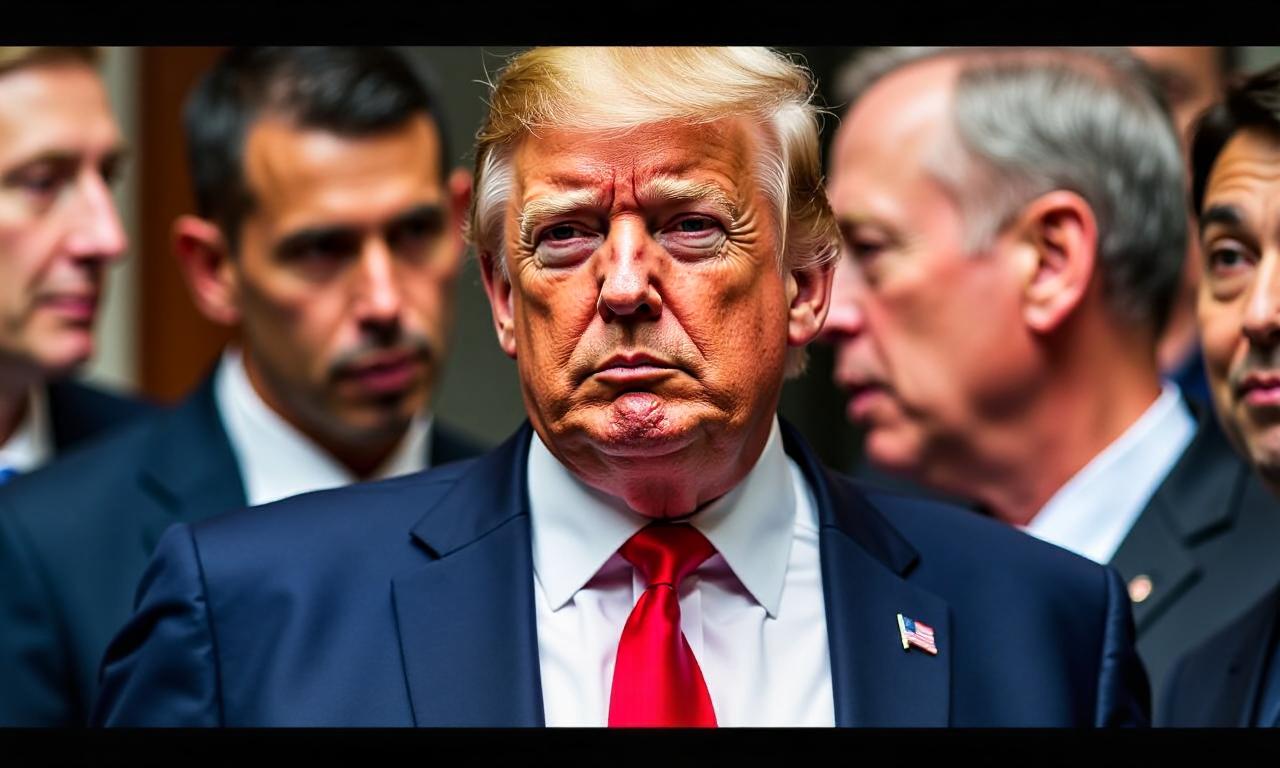
Trump criticises Nato after meeting alliance chief describes as ‘very frank’
Donald Trump has again attacked Nato for not supporting the US in the Iran war, following a private meeting with its Secretary General Mark Rutte at the White House. In a post shared to Truth Social after the meeting, the US President said: "NATO WASN'T THERE WHEN WE NEEDED THEM, AND THEY WON'T BE THERE IF WE NEED THEM AGAIN." Meanwhile, Rutte has described his meeting to CNN with Trump as "very frank" and "very open", despite clear disagreements. Ahead of the talks on Wednesday, Trump had toyed with the idea of quitting the trans-Atlantic military alliance after several Nato countries resisted his calls to help reopen the Strait of Hormuz to ease rising global oil prices. The White House did not disclose details of the talk. The Secretary General was at the White House for over two hours on Wednesday, although it is unknown how long the meeting with Trump was. The meeting was expected to cajole and convince Trump that it's in his interest, and America's, to stay in the Nato alliance. What is clear, however, is that Trump still has deep misgivings about the alliance and the member countries that he believes did not help the US enough before and during Operation Epic Fury. In recent weeks, Trump has threatened to withdraw from the 32-member transatlantic alliance. Asked about Nato's role in the ongoing conflict with Iran, White House Press Secretary Karoline Leavitt on Wednesday said in a direct quote from the president that Nato was "tested and they failed". Leavitt said Nato countries had "turned their backs on the American people," who fund their nations' defense, and that Trump would have a "very frank and candid conversation" with the Nato chief. Meanwhile, much of Rutte's message to Trump appears to be that many European countries did not stand in the way. The Secretary General told CNN that he pointed out that "the large majority of European nations has been helpful with basing, with logistics, with overflights". "It's therefore a nuanced picture," Rutte said. Whether or not that point – and the Secretary General's own warm relationship with Trump – are enough for the US president remains to be seen. Asked if the world was safer now than it was before the war, Rutte said "absolutely" and credited that to Trump's "leadership" in degrading Iran's nuclear threats. He added Nato members do not see the war in Iran as illegal, and most agreed it was important to degrade Iran's nuclear capabilities. At the end of 2023, the US Congress did vote to prohibit any US president from unilaterally withdrawing from Nato without the approval of a two-thirds Senate majority or an act of Congress. The relationship between the administration and the Nato alliance was already in a difficult place before the war with Iran, largely as a result of disagreements over Trump's plans for Greenland. Trump included his frustrations over Greenland in his Truth social post after the meeting with Rutte, by saying: "REMEMBER GREENLAND, THAT BIG, POORLY RUN, PIECE OF ICE!!!" The conflict in Iran, however, has taken Trump's grievances with Nato to new heights and created what is perhaps the greatest challenge the alliance has faced in its history.

Primrose Hill stab victim named as Finbar Sullivan
A man who died after being stabbed on Primrose Hill has been named as Finbar Sullivan by the Metropolitan Police. The 21-year-old was found with knife wounds near the viewing point at the north London beauty spot after reports of a fight shortly after 18:30 BST on Tuesday. Paramedics treated him but he died at the scene. A second man in his 20s was found on nearby Regent's Park Road with stab wounds and taken to hospital, although his injuries were not life-threatening. The Met appealed for anyone with information, pictures or videos from the scene to come forward. No arrests have been made. The force said officers were analysing CCTV footage, speaking to witnesses and gathering forensic evidence. Det Insp Andy Griffin, who is leading the investigation, said: "Finbar's family have suffered a devastating loss and our thoughts are with them as they navigate this very challenging time. "Our investigation is progressing at pace and we are following several lines of inquiry. This incident occurred in a busy, public park and there may be many witnesses who can help us piece together what happened." Listen to the best of BBC Radio London on Sounds and follow BBC London on Facebook, X and Instagram. Send your story ideas to hello.bbclondon@bbc.co.uk
