
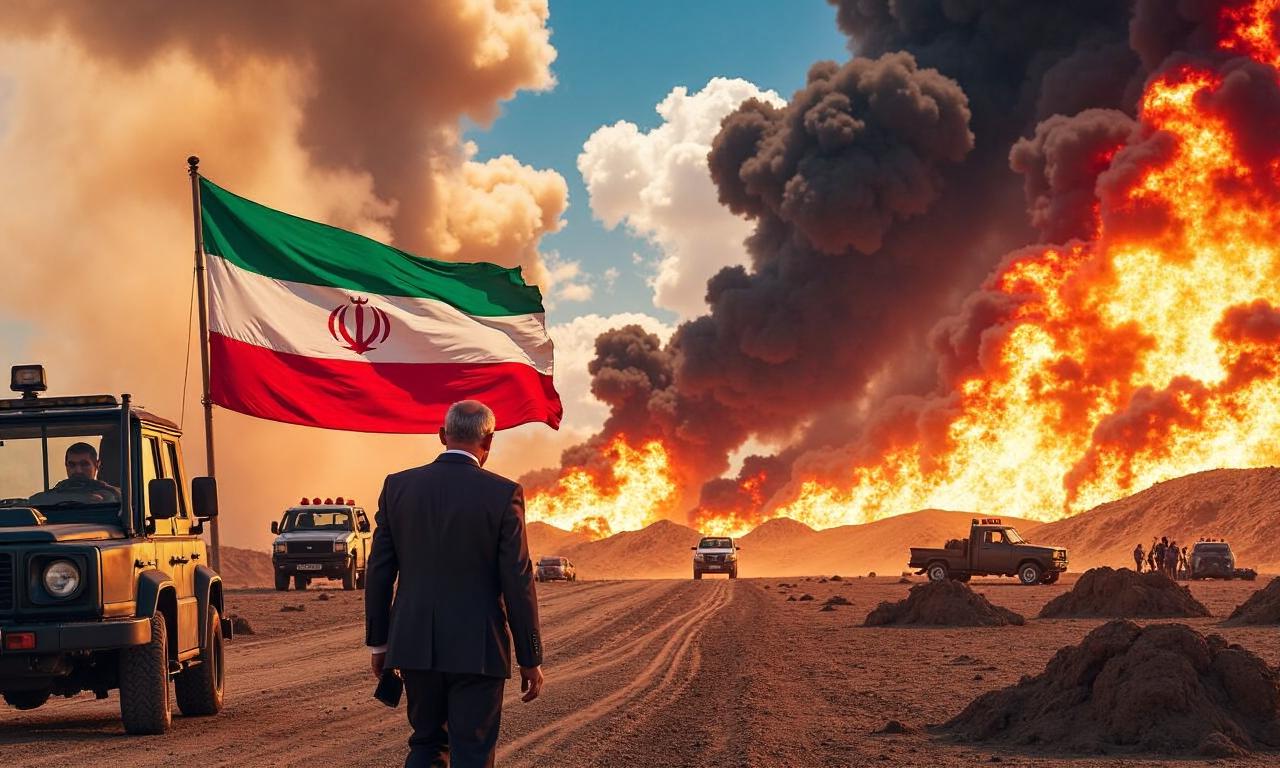
When Israel's Prime Minister Benjamin Netanyahu announced the start of the Israeli-US military campaign against Iran at the end of February, he was bullish. But the tone of the statement from his office acknowledging the ceasefire announced overnight was far more muted and made clear the decision was made by President Donald Trump. There was also a marked contrast with the triumphal statements from the US and Iran, both of which claimed major victories after five weeks of war. In remarks broadcast on Wednesday night, Netanyahu characterised the operation as a success, but said the ceasefire was not the end and that Israel had more goals to achieve, either by agreement or renewing the fighting. Where does the war leave Israel and its prime minister? At the start of the war, Netanyahu said the "goal of the operation is to put an end to the threat from the Ayatollah regime in Iran" and that "this operation will continue as long as necessary". But these goals have not been achieved: Iran's armed forces have still been fighting and the governing clerical establishment remains in place, although Supreme Leader Ayatollah Ali Khamenei and other senior figures have been killed in US-Israeli strikes. The status of Iran's nuclear programme and stockpile of enriched uranium also remain unresolved. And while Iran's arsenal of ballistic missiles has been degraded, it has continued to launch barrages of them towards Israel throughout the war. There were missile alerts and the sound of explosions here in Jerusalem overnight, even after Trump announced the deal, with the Israel Defense Forces (IDF) saying multiple missiles were fired from Iran. Netanyahu appears to have overestimated the ability of Israel and the US to defeat Iran's forces and bring about a change of its ruling system. Anshel Pfeffer, a veteran Israeli journalist and biographer of Netanyahu, said the prime minister had only referred to a "suspension" of hostilities, ahead of talks between the US and Iran, but that he had not publicly accepted the war was over. He said Netanyahu's failure to achieve his stated objectives was "not good" for him, and that another issue could be "some kind of rift opening up with the Americans" if the ceasefire was being agreed without Israel having much of a say. Until now, there were public displays of unity between Netanyahu and Trump, but their goals might not now fully align. A full end to the war, if it is based on the "10-point proposal from Iran" that Trump has referenced, will be widely seen as a strategic success for Tehran, given that is constitutes a list of demands by its leadership. Yair Lapid, leader of the opposition in Israel, said there had "never been such a political disaster in our entire history" and that "Israel was not even at the table when decisions were made concerning the core of our national security". He added: "The army did everything they asked of it, the public displayed incredible resilience, but Netanyahu failed politically, failed strategically, and did not meet any of the goals he himself set." It is an election year in Israel, meaning Netanyahu could potentially lose power within months. Shira Efron, the Israel policy chair at the US-based RAND corporation, said that Netanyahu "promised Israelis that this campaign would lead to the end of the Islamic regime, that by cutting the head of the snake, this war would remove an existential threat from Israel." "Yet, the snake turned into a hydra." She said the war was a "hard" sell to the Israeli public because there had been no regime change in Iran, the Iranians still had enriched uranium, and the Iranian missile threat remained. "The missile programme still exists and, for Israelis, whether 70 or 80 per cent of capabilities have been degraded, there hasn't been a discernible difference for those sheltering [from missiles] over the last five weeks." But Yossi Kuperwasser, who worked in Israeli military intelligence and is now director of the Jerusalem Institute for Strategy and Security (JISS), said Israelis should differentiate between "practical achievable goals" and "all kinds of wishful goals that we all wanted to see happening, but we couldn't guarantee". He said the "achievable goals were all completely achieved" because Iran's nuclear and ballistic missiles production facilities were hit, and its military capabilities and leadership were "decimated". He said the "wishful goals", which had not occurred, were causing regime change by triggering a popular uprising, removing highly enriched uranium from Iran by military force, and putting an end to Iran's capacity to launch missiles. It is possible that far-right members of Netanyahu's coalition government will reject any ceasefire agreement or an end to the war, creating a political challenge for him. A stark conflict over whether the ceasefire deal covers Lebanon has also emerged, which is putting the entire ceasefire at risk. Iran and Pakistan's Prime Minister Shehbaz Sharif, who helped negotiate the ceasefire, both said the deal covered Lebanon, where Israel has been fighting the Iranian-backed armed group Hezbollah. But Netanyahu's office said the ceasefire "does not include Lebanon", and the IDF carried out on Wednesday what it called the "biggest strikes" in Lebanon since the recent conflict began in March. Lebanon's government said the strikes have killed at least 112 people and wounded over 830 others across the country, including in the capital Beirut. Later, Trump also told a PBS journalist that Lebanon was not part of the ceasefire agreement "because of Hezbollah". When asked about the Israeli strikes, he replied: "It's part of the deal – everyone knows that. That's a separate skirmish." In a press conference late on Wednesday afternoon, White House press secretary Karoline Leavitt said Lebanon was not part of the ceasefire but the country would "continue to be discussed" by the US, Israel and all other parties. Iran's Revolutionary Guards have issued a "stern warning" to the US and Israel, saying they would respond if Israel did not immediately end "aggressions against dear Lebanon". In recent weeks, Israel has
Iran Strait of Hormuz warning adds to shipping uncertainty
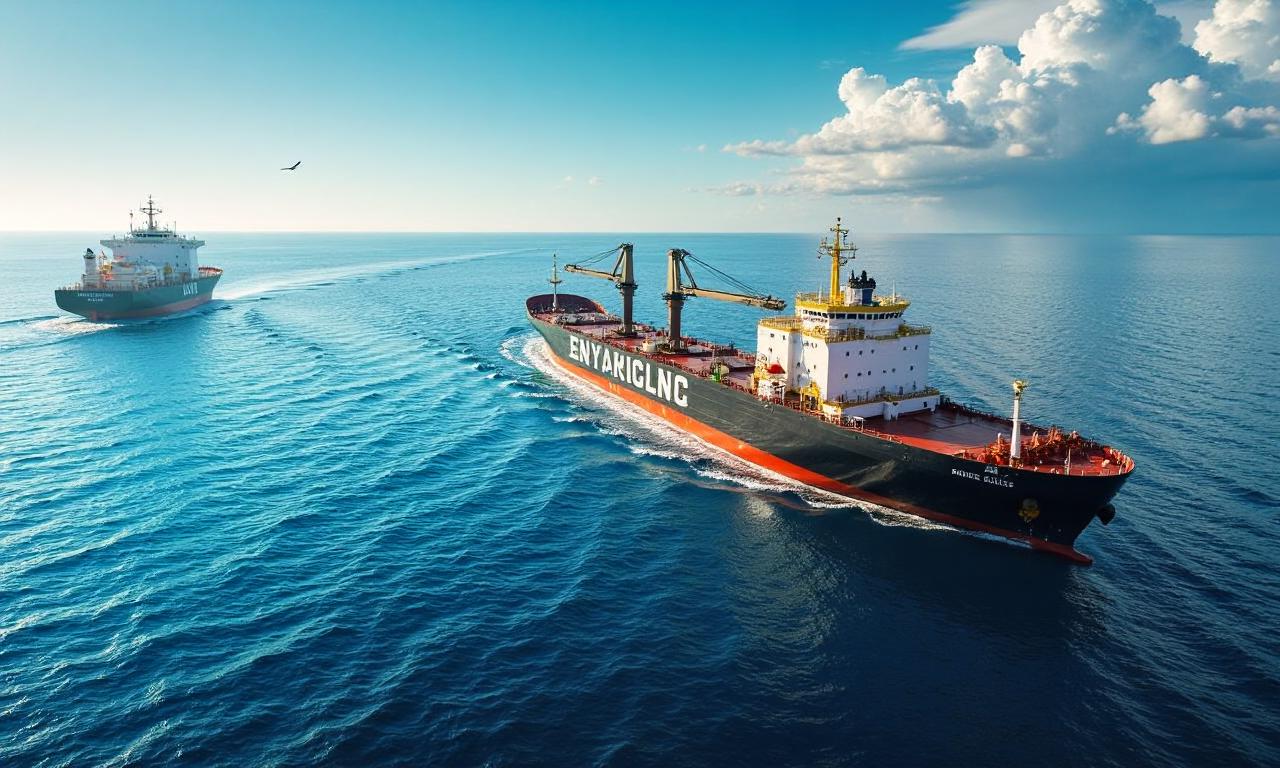
Iran Strait of Hormuz warning adds to shipping uncertainty Iran’s naval forces have issued a caution to vessels in the Gulf, stating that any ships attempting to navigate the Strait of Hormuz without prior approval will face interception and potential damage. This confirmation comes from SSY, a shipping brokerage firm, which shared the alert with BBC Verify. Ceasefire agreement raises cautious optimism A two-week ceasefire was established on Tuesday evening, contingent on ensuring “safe passage” through the strait. However, the initial results have been modest, with only a handful of vessels crossing the waterway since the deal was announced. BBC Verify’s analysis of tracking data from MarineTraffic reveals that just three bulk carriers—NJ Earth, Daytona Beach, and Hai Long 1—passed through the strait by 14:00 BST on 8 April. Before the conflict began on 28 February, an average of 138 ships traversed the strait daily. Now, with the ceasefire in place, analysts remain skeptical about a significant increase in crossings, citing lingering doubts about operational clarity. Strait’s strategic importance remains critical The Strait of Hormuz, a vital 33km-wide channel, serves as a key artery for global trade. It transports roughly a fifth of the world’s oil and liquefied natural gas, making it a central point in the US-Israel conflict with Iran. The recent disruptions have already strained international supply chains, affecting industries reliant on chemicals for products like microchips, fertilizers, and pharmaceuticals. Analysts suggest the initial crossings might reflect either the ceasefire’s influence or prearranged exceptions. “It is still too soon to tell whether this reflects a broader ceasefire-driven reopening or a previously approved exception,” says Ana Subasic of Kpler, highlighting the uncertainty surrounding the situation. Operators hesitant to resume full traffic “Most shipping lines would want to get details and reassurances on what it actually takes to transit and those details are not available,” Lars Jensen from Vespucci Maritime told the BBC. Jensen adds that crews are still cautious, with confidence in safe passage taking time to build. Richard Meade of Lloyd’s List echoes this, noting the strait remains “very dangerous” for ship owners amid ongoing ambiguity. “The assumption is that ship owners will still need to seek permission from the IRGC… and how that’s going to work is still not clear,” he explains. Analysts also point to the possibility of sea mines as a lingering threat. “We need to make sure that we have clear confirmation that the safety of navigation for the ships and the seafarers are being agreed,” says Thomas Kazakos of the International Chamber of Shipping. Tolls and sanctions add to complexity Another layer of uncertainty involves tolls for passage, as reports suggest payments could be part of the ceasefire arrangement. “The Iranian negotiation position seems to be that you need to pay a toll to go through the strait,” Jensen notes, emphasizing that shipping lines may be wary of such costs. Some nations, including India, Malaysia, and the Philippines, have secured safe passage agreements. However, the risk of violating US sanctions on Iran could complicate matters for others. “If tolls are required, it might actually be in violation of some of the US sanctions on Iran which would have other repercussions on shipping lines,” adds Jensen. Meade anticipates that fully loaded tankers will likely be the first to resume crossings, as they are most vulnerable to delays. “You’ve had nearly 800 ships stuck in there for several weeks… the priority is going to be to get them out,” he says. Yet, the two-week ceasefire period may limit immediate confidence, with analysts doubting a swift return to normal operations.
Bowen: Ceasefire means respite for civilians, but it might not last long
Bowen: Ceasefire Offers Temporary Relief for Civilians, But Longevity Uncertain Donald Trump’s position shifted dramatically within a single day, moving from a stark warning that Iran’s civilization would “die tonight” to asserting that its ten-point proposal could serve as a foundation for talks in Pakistan. This ceasefire, while providing a momentary pause for civilians across the Middle East, has not extended to the people of Lebanon. Despite initial claims that the agreement would protect all populations, Israel swiftly launched air strikes targeting Lebanese territory, undermining the respite for those regions. The agreement’s impact is uneven. While it may offer relief to civilians caught in the crossfire of the conflict between the United States and Israel against Iran, its stability remains questionable. Both Iran and the U.S. have compelling reasons to end the war, yet their stated positions appear worlds apart. With two weeks to negotiate, the two sides face the challenge of bridging their distrust, a task complicated by their simultaneous declarations of triumph. A Fragile Truce and Divergent Narratives U.S. Vice President J.D. Vance characterized the ceasefire as a “fragile truce,” a pragmatic view that aligns with the precarious nature of the agreement. However, both sides have made more assertive claims. At the Pentagon, Defense Secretary Pete Hegseth told reporters that the operation marked a “capital V military victory” for America, calling it “historic and overwhelming.” He noted that Iran’s ability to defend itself had been proven insufficient, with its people and territory under threat. “The world’s leading state sponsor of terrorism proved utterly incapable of defending itself, its people or its territory,” Hegseth stated. Meanwhile, Tehran’s First Vice President, Mohammed Reza Aref, shared an equally bold perspective on social media. He claimed, “the world has welcomed a new centre of power, and the era of Iran has begun.” This duality in claims reflects the broader uncertainty surrounding the ceasefire’s durability. Trump’s supporters argue that the severe damage inflicted on Iran by the U.S. and Israel compelled it to negotiate, framing his threats as strategic moves to secure leverage. “the world has welcomed a new centre of power, and the era of Iran has begun,” Aref wrote. Iranians, on the other hand, believe their resilience and continued capacity to launch ballistic missiles, drones, and control the Strait of Hormuz have forced the U.S. to compromise on their terms. The ten-point plan includes demands such as recognition of Iran’s military dominance over the strait, reparations for damages, sanctions relief, and the release of frozen assets. These points may prove as challenging for the U.S. as the American demands would be for Iran. The ceasefire’s success hinges on whether Pakistan can facilitate a lasting agreement. However, the conflict has already begun to reshape the Middle East’s geopolitical landscape. Trump and Israeli Prime Minister Netanyahu had both declared Iran’s regime change as a goal, yet the country remains intact. Critics within Iran, who once hoped for its collapse, are now wary of the peace process, as the regime positions itself as a key negotiator. Despite Trump’s previous insistence on unconditional surrender, the current arrangement suggests a more flexible approach. The outcomes of the Islamabad talks will likely mirror the Geneva discussions, which stalled after the U.S. and Israel reignited hostilities. In Geneva, negotiations focused on Iran’s nuclear program, including its enriched uranium stockpile. In Islamabad, the Strait of Hormuz will take center stage, with Iran seeking to maintain its influence over maritime traffic and potentially impose tolls akin to those at the Suez Canal.

Pastor charged after man drowned during baptism
Pastor Faces Charges After Man Drowns During Baptism Cheryl Bartley, a 48-year-old pastor based in Erdington, has been formally accused of gross negligence manslaughter following the death of Robert Smith, 61, during a baptism event in Birmingham. The incident occurred on 8 October 2023 at a residence on Slade Road, Erdington, where Smith drowned. The Crown Prosecution Service (CPS) confirmed the charge, which relates to Bartley’s responsibilities during the ceremony. Bartley is scheduled to appear at Birmingham Magistrates’ Court on 14 May. The CPS’s special crime division, led by Malcolm McHaffie, stated that the investigation was conducted in partnership with West Midlands Police. McHaffie emphasized the ongoing nature of the legal process, stating, “We remind all concerned that criminal proceedings against this defendant are active and that she has the right to a fair trial.” “It is vital that there should be no reporting, commentary or sharing of information online which could in any way prejudice these proceedings.” The case highlights the scrutiny surrounding religious practices, particularly baptism, which involves submerging individuals in water. Smith, from Brixton, London, was among those participating in the ritual. The CPS’s decision to pursue charges underscores the gravity of the incident and the role of oversight in such events. Follow BBC Birmingham on BBC Sounds, Facebook, X and Instagram.
New light shed on who benefits most from weight-loss jabs
New light shed on who benefits most from weight-loss jabs A recent study published in the Nature journal has revealed insights into why certain individuals experience greater weight loss from drugs like Wegovy and Mounjaro. Researchers found that people with specific genetic variations related to appetite regulation and digestion may see more significant results when using these medications. These drugs function by mimicking a natural gut hormone, which suppresses hunger and promotes a feeling of satiety. However, the study suggests that genetic differences play a role in determining how effective these treatments are for individuals. While the impact of genes is not the sole factor, it could explain why some people achieve substantial weight loss while others gain little or none. Genetic Insights and Side Effects By analyzing genetic data from 15,000 participants who had previously used 23andMe for testing, scientists identified a pattern linking certain variants to drug effectiveness. Professor Ruth Loos, from the University of Copenhagen, noted that one variant was associated with both increased weight loss and nausea. Those carrying two copies of the gene saw double the average reduction in body weight, approximately 0.76kg (1.6 lbs), compared to individuals with one copy. “The study found a genetic variant associated with weight loss, which was also linked to nausea. People who have this variant tend to lose more weight,” said Prof Loos. She added that the variant is more common among individuals of European descent—64% carry one copy, while 16% have two. In contrast, only 7% of African Americans were found to possess a single copy of the gene. The research also uncovered another genetic factor tied to severe side effects. For tirzepatide (Mounjaro), some users with specific variants may experience vomiting up to 15 times more intense than typical, affecting up to 1% of patients. Broader Considerations Dr Marie Spreckley from the University of Cambridge emphasized that genetics is just one piece of the puzzle. “Outcomes are influenced by behavioural, clinical, and treatment-related factors,” she explained. This includes exercise habits, dietary choices, and support systems, alongside existing health conditions. Other variables, such as sex, age, and ethnicity, also appear to affect results. Women, for instance, are more than twice as likely as men to lose 15% of their body weight on Mounjaro. Similarly, younger individuals, as well as those of white or Asian backgrounds, may experience greater weight loss, though the reasons remain unclear. Professor Naveed Sattar, a metabolic health expert at the University of Glasgow, highlighted that while these findings are scientifically intriguing, they are not yet sufficient to alter clinical practices. “We need more robust trial data to better understand the trade-offs between benefits and risks,” he stated, noting that precision medicine could one day use genetic and personal data to personalize weight-loss treatment options. Approximately 1.6 million people in the UK have attempted weight-loss drugs in the last year, with most purchasing them through private online pharmacies. The NHS currently provides Wegovy and Mounjaro to a smaller group, typically those with severe obesity and related health conditions.

Greece to ban social media for under-15s from next year
Greece to Ban Social Media Access for Under-15s Starting Next Year Greece is set to introduce a new policy that limits social media access for children under 15, joining a wave of European nations implementing child-focused online restrictions. Prime Minister Kyriakos Mitsotakis highlighted concerns over the psychological impact of digital platforms, citing rising cases of anxiety and sleep disturbances among young users. The initiative will take effect in January, marking a significant step in regulating online engagement for minors. Australia was the first country globally to mandate social media platforms like TikTok, YouTube, and Snapchat to remove accounts of users under 16 or face substantial penalties. France, Austria, and Spain have also explored similar measures, while the UK is currently evaluating a potential ban for the same age group. Ireland and Denmark are following suit with their own considerations. Government’s Rationale and Proposed Measures Mitsotakis emphasized that the move aims to counter the “addictive design” of social media, which he claims exploits users’ attention spans. He noted that young people often feel overwhelmed by constant comparisons and online pressure, leading to exhaustion and emotional distress. Parents have reported that their children struggle with sleep and anxiety, frequently staying connected to their phones throughout the day. “The addictive design of certain applications, and a business model based on capturing your attention—how long you stay in front of a screen—takes away your innocence and freedom. That has to stop somewhere,” Mitsotakis stated in a video message shared on TikTok. He added that the government’s objective is not to exclude technology but to ensure it serves as a tool for inspiration rather than a source of harm. Further details about the regulatory framework will be announced Wednesday. Mitsotakis proposed a unified EU approach, urging the European Commission to support national efforts. His plan includes mandatory age verification for under-15s, a continent-wide ban, and periodic rechecks of users’ ages every six months. The discussion around children’s social media use has gained momentum, fueled by recent studies linking excessive screen time to mental health challenges. In March, Meta and YouTube were held accountable in a U.S. court case involving a woman’s childhood social media dependency. Jurors determined that the companies had intentionally created addictive platforms that negatively impacted her well-being. Meta and Google have since contested the ruling, planning to appeal the decision.

Will the ceasefire have any impact on UK fuel and food prices?
Immediate, but temporary, relief. That's the initial economic response to news of a two-week ceasefire: stock markets across the globe rallied, while the price of crude oil plunged. But there is less optimism over how much this will feed through to people's finances, with fears long-lasting damage has already been set in motion. The last month has seen ships carrying oil, liquid natural gas and fertiliser effectively blocked from passing through the Strait of Hormuz, while significant damage to facilities in the Gulf has halted production. Even if the ceasefire holds and a peace deal is reached in time, analysts estimate it will take months to restart production and get supplies back to normal. Despite today's plunging crude oil price, it remains higher than pre-war levels and drivers should not expect a significant drop in costs at the pump soon, says the RAC. Its head of policy Simon Williams says there is still huge uncertainty for drivers, and their best hope is for pump prices to stop rising in the coming days. But he says some smaller independent forecourts – which buy oil as it costs on the day rather than in advance at a set price – may be quicker to pass on reductions. "Much will depend on the stability of the ceasefire, whether oil shipments can move freely through the Strait of Hormuz, and the longer‑term impact on oil production across the Gulf," he says. He adds a sustained lower price – over several weeks – is needed to meaningfully lower wholesale fuel costs. Rachel Winter, from the wealth management company Killik & Co, says it is difficult to predict how quickly costs at the pump might fall. "I would expect it to take at least a few weeks, if not a few months," she told BBC Radio 4's Today Programme. Meanwhile, jet fuel is roughly double its pre-war levels. Willie Walsh, the boss of the International Air Transport Association (IATA), says even if traffic through the waterway resumes now, it will take months for supplies to reach the level they need to be at. Passengers should expect higher ticket prices in the meantime, he says. Some airlines have already hiked fares, while some have cut routes. Even if jet fuel were able to flow through the strait, it still needs refining – and some facilities have been damaged, Winter adds. Alan Gelder, senior vice-president of Refining, Chemicals and Oil Markets for energy analysts Wood Mackenzie, says the whole supply chain needs to return to normal, with ships getting to the right place and refineries resuming operation. That'll take "weeks, not days", he believes. A third of the world's fertiliser usually passes through the Strait of Hormuz, and consequently prices have shot up in recent weeks. It has already become more expensive to transport food across the UK, and for farmers to operate agricultural machinery powered by increasingly expensive diesel, while crop growers who use energy to warm their greenhouses will be facing hikes when the energy price cap resets in July. The Food and Drink Federation, which represents thousands of UK manufacturers, says the ceasefire hasn't ended the "long‑term uncertainty". Recovery to supply chains and energy infrastructure in the Gulf is expected to take between six months and a year, says Dr Liliana Danila, its chief economist. "This means manufacturers will continue to feel the impact of supply chain disruptions for oil, gas, fertiliser, packaging materials and essential cleaning chemicals, keeping costs under strain for months to come." Even if the conflict ends within the next two weeks, it expects UK food inflation to reach at least 9% before the end of the year. So far, households under Ofgem's energy price cap have been shielded from the spike in wholesale energy prices. The cap resets for three months in July, and we are more than halfway through the window the regulator uses to calculate the new price. Experts have been expecting a big jump at this point. The government has promised support based on household income, but hinted this might not come until autumn. Dr Craig Lowrey, principal consultant at Cornwall Insight, says a ceasefire eases some of the immediate pressure on gas markets but "does not wipe the slate clean". If the strait opens and stays open this will ease prices and be reflected in the July price cap, he says, but adds: "Unless prices fall well below where they were before the conflict, the wholesale price rises seen through March and early April will still feed through to bills." Lars Jensen from Vespucci Maritime says companies will want reassurances on how vessels can transit safely, and he doesn't believe the two-week pause will be enough to restore trust. "We should see an increase in exiting vessels," he told Today. "We will likely also begin to see a trickle of vessels going into the Gulf, but those two will not be of the same magnitude." Aside from movement through the strait, Lowrey says damage to gas infrastructure in Qatar will take years to rebuild, meaning supply constraints will continue. "As a result, even with a ceasefire, wholesale gas prices are likely to stay elevated for some time, limiting how far the July price cap can fall." You can also get in touch by following this link
