Governments Urged to Provide Compensation for Forced Adoption Victims Following Apologies
Compensate victims of forced adoption after – Recent apologies from the Scottish and UK governments have sparked renewed demands for financial support and long-term assistance for individuals impacted by historical forced adoption practices. While the acknowledgment of past injustices has been welcomed, advocates argue that symbolic gestures are insufficient without concrete measures to address the ongoing struggles of survivors. The call for action comes as a senior legal representative highlights the need for systemic change to ensure victims receive the care and recognition they deserve.
Legal Advocate Emphasizes Need for Practical Support
Patrick McGuire, a senior partner at Thompsons Solicitors Scotland, praised Prime Minister Sir Keir Starmer’s apology to victims of forced adoption in England and Wales, delivered three years after the Scottish Government’s own acknowledgment. However, he stressed that the next step must involve tangible compensation and sustained support programs. McGuire pointed out that while the apology marks progress, it should not be the end of efforts to rectify the harm caused by decades of institutional pressure on unmarried mothers.
“The Prime Minister’s recent apology to victims of forced adoption in England and Wales, following the Scottish Government’s earlier acknowledgment, has been welcomed by legal representatives. But fine words from both governments are no substitute for fast and effective action. We need to see proper help and support put in place for victims, along the lines of provisions that were established for those affected by the infected blood scandal,” McGuire stated.
Personal Stories Highlight Systemic Coercion
Marion McMillan, a campaigner who lost her firstborn son to forced adoption at age 17, recounted the emotional toll of being pressured into surrendering her child. Speaking on the BBC’s Radio Scotland Breakfast programme, she described the era as one of relentless manipulation, where unmarried mothers were stripped of their autonomy and forced to conform to societal expectations. “We were like lambs to the slaughter. We had no voice, and we just did as we were told,” she said, emphasizing the psychological devastation that followed.
“You’ve got to cast your mind back to that era in the history of adoption. We were forced,” McMillan explained. “The women were given no meaningful choice and were subjected to extreme pressure to give up their babies. Authorities engaged in ‘relentless brainwashing,’ and this scandal remains Scotland’s ‘hidden history,’” she added.
McMillan detailed the lasting trauma of losing her son, describing how the experience left her feeling “utterly worthless and absolutely broken.” The emotional and psychological consequences, she argued, are still deeply felt today, underscoring the urgency for comprehensive support. Despite the Scottish Government’s 2023 apology, which she called a “significant” moment, McMillan noted that many victims continue to face barriers in accessing tailored assistance.
Historical Context and Government Accountability
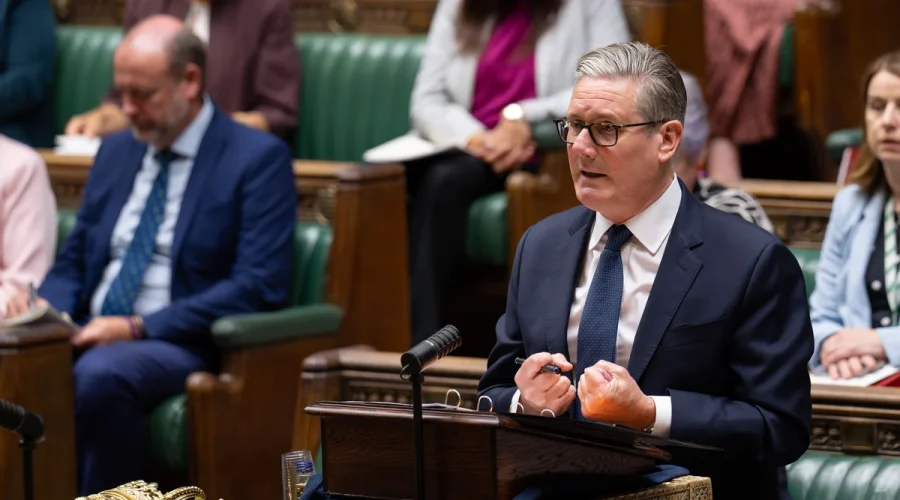
On Thursday, Sir Keir Starmer made history by offering the first official apology from the Westminster Government for the forced adoption of children from unmarried mothers. In the House of Commons, he acknowledged the systemic failures that affected “tens of thousands of mothers, children, and families” across local authorities, faith groups, and health services. “Mothers were coerced, bullied, or misled into feeling that they had no choice but to give up their children,” he said, placing the blame on institutional practices rather than individual decisions.
“The shame was never yours, the shame is ours,” Starmer told victims, a statement that marked a pivotal shift in accountability. This apology followed earlier formal apologies from the Scottish and Welsh Governments in 2023, but it was the first time the UK Government publicly recognized the issue at the national level.
Historical data reveals the scale of the crisis. Approximately 60,000 unmarried women in Scotland were forced to relinquish their children for adoption between the 1950s and 1970s, while around 185,000 babies of unmarried mothers were adopted in England and Wales from 1949 to 1976. These figures highlight the widespread impact of policies that prioritized societal norms over individual rights.
Scottish Government’s Response and Ongoing Measures
A Scottish Government spokesperson outlined the steps taken since the 2023 apology, including the allocation of funding for trauma-informed support and counseling. “Following our national apology in March 2023, the Scottish Government has implemented a range of initiatives to aid those affected,” the statement read. These efforts include a £200,000 investment over five years to support the Health in Mind program and a £270,000 contribution to Birthlink for the Adoption Contact Register and intermediary services.
The spokesperson also highlighted improvements in access to records through National Records of Scotland and the Scottish Courts and Tribunals Service, which now provide free access to historical documents and practical guidance. While these measures represent progress, advocates argue that they must be complemented by financial compensation to fully address the long-term suffering of victims.
Call for Comprehensive Reforms
McGuire emphasized that the current support mechanisms fall short of what is needed, urging the governments to adopt a model similar to the one used for the infected blood scandal. “A proper scheme for medical and psychological support, along with a clear financial compensation framework, is essential to heal the wounds of the past,” he said. This includes not only immediate assistance but also ongoing care to help survivors rebuild their lives.
McMillan echoed this sentiment, noting that while the apology is a crucial first step, many victims still lack access to specialized services. “For the first time in my life, I heard somebody saying they were sorry for what happened,” she said of the apology delivered by former First Minister Nicola Sturgeon. “But the real work is just beginning—there are still countless individuals in need of psychological support and financial aid.”
As the UK Government prepares to act, the focus remains on ensuring that victims of forced adoption are no longer left without recourse. The apology serves as a catalyst, but its success will depend on the implementation of policies that reflect the gravity of the historical injustices. With millions of lives impacted, the demand for compensation and support grows stronger, calling on governments to fulfill their promises and provide lasting redress for the pain endured.