Thousands Gather for Pride Parade Amid Growing Concerns Over Trans Rights
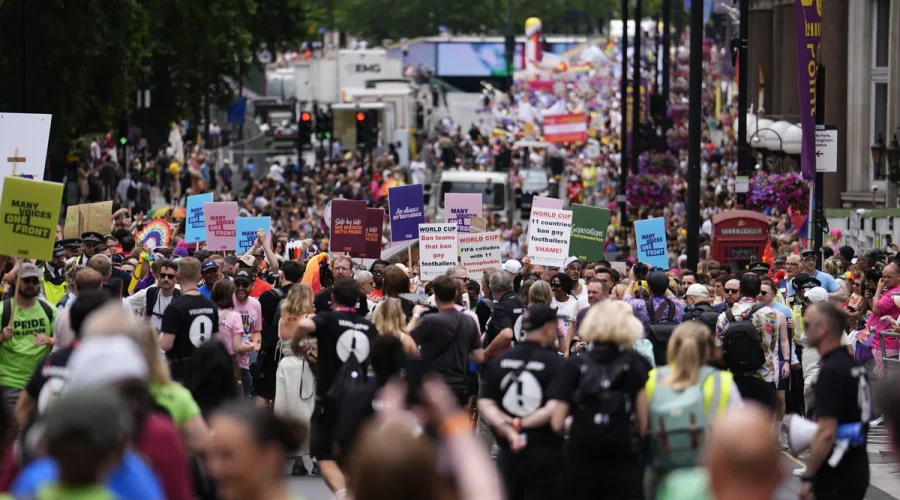
Thousands march in Pride parade as activists – On Saturday, London’s annual LGBT+ Pride parade drew thousands of participants, with activists raising alarms about the increasing risks to LGBTQ+ rights. The vibrant procession, which wound through central London, served as both a celebration and a rallying point for those advocating against recent legislative moves that threaten trans communities. Mayor of London Sir Sadiq Khan, a prominent supporter of the event, took part in the march, joining others in chanting “Happy Pride” as the crowd waved rainbow flags and cheered the arrival of colorful floats.
Madonna’s Absence Sparks Speculation
Despite widespread anticipation, pop icon Madonna did not attend the Pride in London event, marking a notable absence from the Trafalgar Square stage. Organisers had initially hinted at her possible participation, fueling discussions among fans who donned Madonna T-shirts in hopes of catching a glimpse of the star. However, a statement clarified that the singer had not confirmed her attendance, leaving the event’s headline slots open to other performers.
The Pride in London organisers announced that the event would feature two headliners at Trafalgar Square, ensuring a mix of cultural and political expression. These acts, including American singer Beth Ditto and British artist MNEK, were expected to captivate the audience during the day’s culmination of protest and celebration. While Madonna’s absence was a surprise, it underscored the uncertainty surrounding the involvement of high-profile figures in the march.
Activists Highlight Global Threats to LGBTQ+ Rights
As the parade unfolded, voices from the crowd echoed growing concerns about the state of LGBTQ+ rights in the UK and beyond. Gay rights activist Peter Tatchell, a long-time advocate for equality, pointed to FIFA’s inaction in the face of 11 countries banning gay footballers from national teams during the World Cup. “Fifa is doing nothing,” he stated, “even though 11 nations have imposed bans on LGBTQ+ athletes, directly contradicting their own rules.”
“We’re marching in London Pride today to highlight the fact that at the World Cup, which is ongoing right now, 11 countries ban gay footballers from their team – that’s against Fifa rules, but Fifa is doing nothing.”
Tatchell also critiqued the rise of conservative groups like Reform, which have sought to limit the visibility of Pride in public spaces. “This year’s Pride is as important as ever,” he added, “especially now that Reform councils are targeting Pride flags and attempting to remove LGBTQ+ literature from shelves. That’s a direct attack on our freedoms.”
Another participant, Julian Hows, a 70-year-old veteran of the movement, emphasized the enduring need for protest. “Pride is important every year,” he said, “because it reminds us that rights can be stripped away at any moment. Whether it’s through Reform policies, anti-trans legislation, or international discrimination, we must keep fighting to protect what’s left.”
“Pride is also important because it needs to have an underlying level of protest, and you can see the freedoms that we have can so easily be taken away. Whether it’s in this country with Reform, whether it’s this country with rights being taken away from trans people, whether it’s abroad in other countries.”
The event’s timing was also significant, with the Metropolitan Police vowing to ensure “no tolerance of hate crime” during the weekend. This pledge came amid reports that over a million people were expected to fill the streets of London, showcasing the deep community support for the cause. The parade’s route, stretching from Hyde Park Corner to Whitehall Place via Piccadilly, brought together over 35,000 marchers from more than 600 organizations, reflecting the diverse spectrum of LGBTQ+ advocacy.
Community Voices and Corporate Support
The procession was not only a political statement but also a cultural showcase. Sponsors such as Lidl, Tesco, and Ikea lent their support, with Ikea’s float displaying the slogan “Love doesn’t require instructions.” London-based football clubs like Arsenal, West Ham, and Crystal Palace also participated, symbolizing the growing intersection between sports and LGBTQ+ activism. Spectators, dressed in rainbow hues, filled the sidewalks, creating a sea of color as floats featuring dancers and speakers moved through the city.
Among the crowd were long-time advocates like Julian Hows, who recalled his early days in the movement. “I’ve been coming to Pride marches since 1972,” he said, “when the police outnumbered the marchers. It’s been a journey of resilience, and today’s event is a reminder that the fight is far from over.” Hows, wearing a rainbow waistcoat adorned with pins from the Abseil Against Section 28 and Gay Liberation Front, stressed the importance of maintaining momentum in the face of ongoing challenges.
Broader Context of Trans Rights and Community Struggles
A Pride in London spokesperson highlighted the urgency of the situation, noting that NHS gender-affirming care waiting lists in some regions have surpassed four years. “This is a crisis,” the statement read, “with a comprehensive ban on conversion therapy still not codified into law, despite a 2018 government promise.” The spokesperson also pointed to the decline in LGBTQ+ community infrastructure, citing that 58% of London’s LGBTQ+ venues have closed since 2006. “These gaps in care and protection are expanding as hostility toward the community persists,” they added.
As the parade concluded, the atmosphere remained charged with both optimism and apprehension. While the event celebrated progress, it also served as a platform to demand more from lawmakers and institutions. The presence of thousands in the streets underscored the deep-rooted pride of Londoners, but their voices carried a clear message: the fight for equality must continue, or the gains made over decades could be lost.
With the next Pride parade set for 2026, organisers have already begun planning. Details about the route, timings, and spectator opportunities will be shared in the coming months, ensuring that the tradition of solidarity and protest endures. For now, the 2025 parade remains a testament to the community’s strength, even as it faces new threats on the horizon.