Jackdaw Oil Field Development Claims Minimal Impact on Global Emissions
Industry Leader Defends Controversial North Sea Project
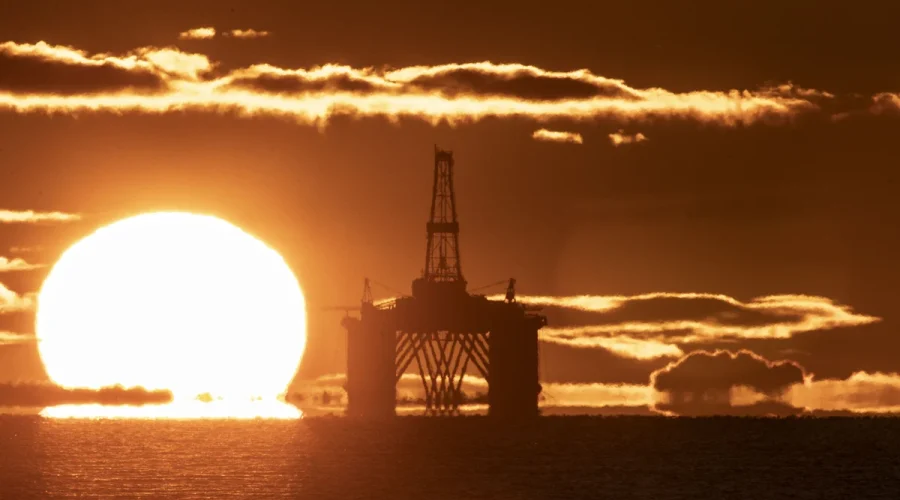
Traveloasisspot.com – Adura, the consortium responsible for the contentious Jackdaw oil field proposal, has asserted that the development will not significantly alter greenhouse gas emission trajectories. The company recently submitted an updated environmental impact assessment following legal action initiated by environmental campaigners. Should the UK Government grant its approval, the facility would be situated off the Aberdeen coastline.
The comprehensive 159-page assessment document, published alongside a public consultation period, reveals that the Jackdaw project would contribute merely 0.02% to worldwide greenhouse gas emissions. According to the report’s findings, this minimal contribution suggests the development alone will not substantially affect future global emission levels or their associated environmental consequences.
The report states: “This indicates that the project alone will not materially influence the evolution of future global GHG levels or the impacts attributed to those future GHG levels.”
Furthermore, the assessment concludes that the Jackdaw development aligns completely with the measures required to establish a pathway toward net zero emissions targets.
Executive Leadership Highlights National Importance
Neil McCulloch, serving as chief executive of Adura, emphasized the historical significance of the North Sea in powering British industry for over fifty years. He characterized both Jackdaw and Rosebank as advanced initiatives of considerable national significance that could establish the foundation for the region’s energy future.
McCulloch remarked: “The North Sea has helped to power Britain for more than half a century. In Jackdaw and Rosebank we have two advanced projects of national importance that can define the next chapter.”
The executive expressed enthusiasm regarding the public consultation process and encouraged stakeholders interested in strengthening British energy security, maintaining skilled employment positions, and supporting the nation’s premier energy supply infrastructure to participate actively.
He continued: “Jackdaw is ready to make a major contribution to Britain’s energy needs by this winter. Alongside Rosebank, it represents a material economic opportunity that has already been realised through multibillion-pound investment – and can be sustained throughout the production life of both fields.”
McCulloch noted that both projects demonstrate high economic intensity while maintaining lower carbon intensity compared to alternative energy sources. He highlighted that these developments are being executed by individuals, organizations, and communities throughout the United Kingdom who have accumulated decades of North Sea expertise and wish to continue utilizing that knowledge to support the nation’s energy requirements for many years ahead.
Political Support and Economic Benefits
Shadow Scottish secretary Andrew Bowie welcomed the consultation launch and advocated for government approval of the project. He emphasized that Conservative politicians have backed the development since its inception and that it would positively impact thousands of North Sea workers for generations to come.
Bowie stated: “Supporting this, which will give us greater energy security and create 3,500 jobs during construction, with 880 high-quality, well-paid jobs sustained throughout production, is a no-brainer.”
The shadow secretary encouraged citizens to communicate clearly to both Labour and SNP administrations that Britain must resume drilling operations by bringing this essential project into production.
Environmental Opposition Raises Concerns
Conversely, Tessa Khan, executive director of Uplift, argued that the development would have negligible effects on consumer energy costs and contribute minimally to increasing domestic gas supplies. She explained that even under the most favorable circumstances, and assuming no gas exports, Jackdaw would supply only 2% of United Kingdom gas requirements throughout its nine to twelve-year operational lifespan.
Khan observed: “The reality is, after 50 years of drilling, the UK has now burned most of its gas and a relatively small gas field like Jackdaw will do next to nothing to reduce our dependence on imports.”
She warned that continued reliance on gas would result in economic decline while corporations such as Shell profit substantially. Khan pointed out that elevated gas prices are driving millions of households into energy debt, whereas Shell is projected to generate approximately 30 billion US dollars in revenue during the current year.
She concluded: “The only way to insulate ourselves from price shocks is to double down on renewables and upgrade homes to get us off gas. This is just common sense in today’s world, particularly when we also know that fossil fuels are what is driving these more frequent and intense heatwaves in the UK.”
The public consultation period for the Jackdaw development will conclude on August 10, allowing stakeholders to submit their final responses before the government makes its decision.