London Faces Prolonged Heatwave as Transport Networks Strain Under Rising Temperatures
London weather LIVE – Communities across the capital are bracing for another extended period of sweltering conditions as meteorologists predict temperatures will climb further throughout the day. The ongoing heatwave is already creating significant challenges for rail operators, with multiple lines experiencing delays and cancellations as infrastructure struggles to cope with the extreme weather.
Rail Services Under Pressure
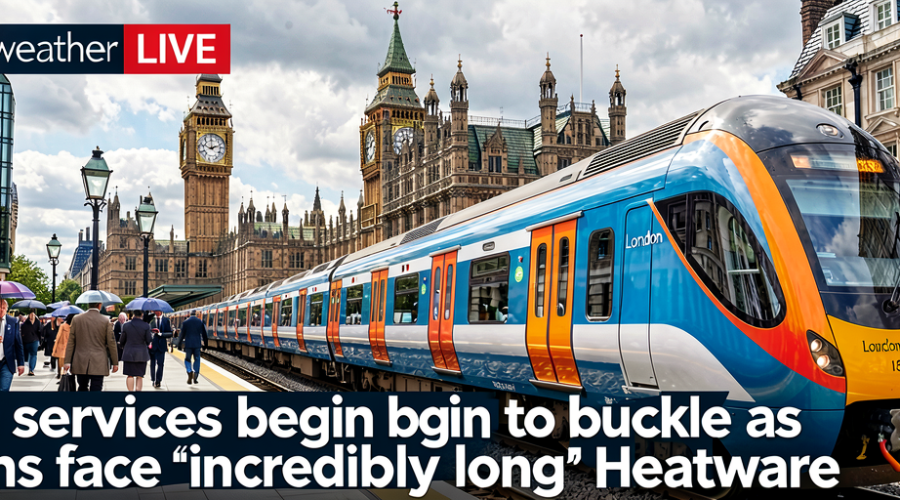
Great Western Railway has confirmed that several routes connecting Paddington with Oxford will cease operation entirely. Additionally, passengers traveling between London and Reading can anticipate considerable delays across local services. National Rail has issued a comprehensive warning regarding potential disruptions, explaining that elevated temperatures can cause overhead electrical lines to expand and sag, trigger fires alongside railway tracks, and even cause steel rails to buckle under the heat.
East Midlands Railway has advised travelers to plan journeys before midday whenever possible to sidestep the peak heat hours. The operator noted that certain services will run at reduced speeds as a precautionary measure to ensure passenger safety. Passengers are encouraged to verify timetable modifications prior to departure, as the network continues to experience widespread disruption.
The physics behind these disruptions are straightforward yet concerning. When ambient air temperatures reach 30 degrees Celsius, steel rails can simultaneously exceed 50 degrees Celsius, creating dangerous conditions for train operations. This thermal expansion is one of the primary reasons why rail networks across the country are experiencing unprecedented challenges during summer months.
Temperature Forecasts and Alerts
Chris Fawkes, a forecaster appearing on BBC Radio 4’s Today programme, indicated that temperatures in the London metropolitan area are likely to reach approximately 34 degrees Celsius. He characterized the current heatwave as remarkably persistent, noting that parts of the United Kingdom could maintain temperatures above 30 degrees Celsius not only through the remainder of the current week and weekend, but potentially extending into the following week as well.
London recorded a maximum temperature of 32 degrees Celsius on Tuesday, setting the stage for what officials describe as an amber heat-health alert. This warning remains active for the capital until 9pm on Sunday, July 11, urging residents to take appropriate precautions during the hottest hours of the day.
Beyond terrestrial concerns, the Met Office has issued separate warnings regarding marine conditions. A marine heatwave is expected to intensify around certain coastal regions of the United Kingdom later in the week, potentially reaching extreme levels that could significantly impact marine ecosystems and aquatic wildlife populations.
Water Safety and Drowning Risks
The Royal National Lifeboat Institution has intensified its public safety campaign following troubling statistics. Police data reveals that more than twenty individuals lost their lives during water-related incidents throughout the May and June heatwaves, prompting urgent calls for families to disseminate essential safety guidance.
One particularly tragic incident occurred during the June heatwave when a thirteen-year-old boy drowned in London’s Royal Victoria Dock. Emergency responders from multiple agencies—including the Metropolitan Police marine policing unit, London Ambulance Service, London’s Air Ambulance, London Fire Brigade, and the coastguard—converged on Silvertown Way following reports of a child in distress in the water. Despite their coordinated efforts, the young boy was pronounced deceased at the scene.
Ross Macleod, RNLI water safety manager, explained: “The sea or open water may look inviting during hot weather, but it remains cold enough year-round to trigger cold water shock, which can cause uncontrollable gasping, increased heart rate, and can lead to panic and drowning very quickly.”
Macleod further advised that entering water gradually allows the body to acclimatize properly. For anyone finding themselves in perilous water conditions, he recommended fighting the instinct to panic and instead floating on one’s back with the head tilted backward, using gentle hand and leg movements to maintain buoyancy. This technique, he noted, provides crucial time to regulate breathing before attempting to call for assistance or swim toward safety.
Wildfire Concerns Mount
As the United Kingdom experiences its third heatwave of the season, fire service leaders have heightened warnings about wildfire potential during extended periods of hot, dry conditions. The National Fire Chiefs Council identified Wednesday as a critical day for risk assessment, recommending that the public avoid using disposable barbecues in open countryside, parks, and moorland areas.
Historical data underscores the growing concern. London recorded eighty-three wildfires during the summer months of the previous year, representing more than twice the number observed in 2023 and a thirty-two percent increase compared to 2024 figures. With record-breaking temperatures returning this year, officials emphasize that wildfire risk remains elevated.
Dave Swallow, the NFCC’s wildfire deputy lead and lead tactical adviser, stated: “Hot, dry weather can significantly increase wildfire risk, but most wildfires start because something provides the spark.”
Swallow highlighted that common ignition sources include discarded barbecues, cigarette butts, and even glass bottles left exposed to sunlight. He emphasized that while summer offers opportunities for outdoor enjoyment, residents must not underestimate potential dangers. With schools beginning their summer holidays, fire chiefs are encouraging communities to remain vigilant, support one another, and implement simple preventive measures to avoid unnecessary tragedies.
According to the Met Office, daily peak temperatures are expected to remain above the twenty-eight degree Celsius threshold required for an official heatwave designation through at least the beginning of next week, suggesting that Londoners and residents across the country should prepare for continued challenging conditions in the coming days.