Trump Warns Iran of More Raids as Ceasefire Falters
Trump warns Iran he will probably launch additional military strikes as the fragile ceasefire agreement appears to be collapsing. The announcement sent shockwaves through global markets, with crude oil prices jumping sharply in response to the deteriorating situation between Washington and Tehran.
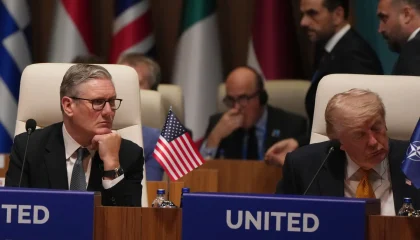
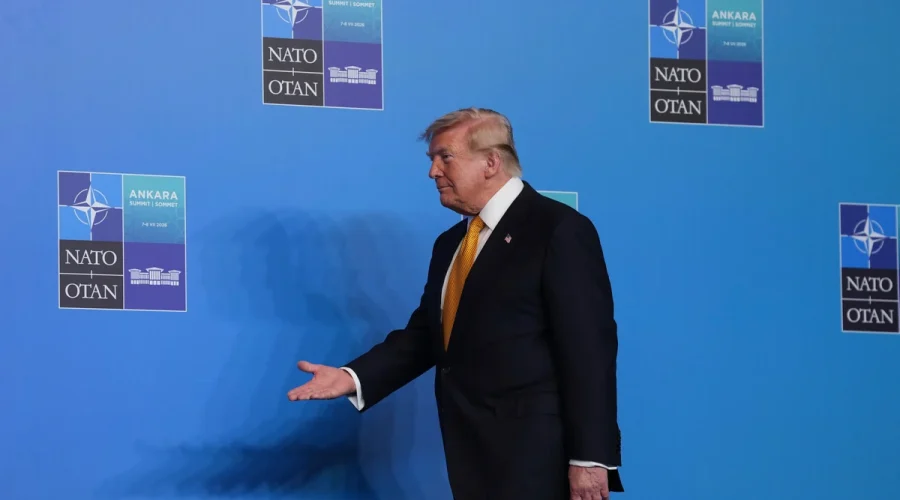
Speaking at the NATO summit in Turkey, the US president made his position clear regarding future relations with Iran. He expressed serious doubts about the durability of any new agreements, citing what he described as Iran’s inconsistent behavior on the international stage.
If we make a deal with Iran, I’m not sure that will stick because I found them to be very dishonourable.
When pressed about whether military action would continue, Trump indicated that further attacks were likely. He stressed that Iran had limited options for meaningful retaliation against American forces in the region.
Normally I wouldn’t tell you, but you know what, there’s not a thing they can do about it.
Market Impact and Military Response
Brent crude oil prices climbed approximately 6.5 percent to reach 79 US dollars per barrel during Wednesday morning trading. This surge came directly after Trump declared that the ceasefire arrangement had effectively ended.
The president had earlier dismissed diplomatic efforts with Iran as largely unsuccessful, using strong language to describe Iranian officials. His comments followed coordinated American military strikes against Iranian positions in the region.
These operations were launched in response to Iranian attacks on commercial shipping vessels moving through the Strait of Hormuz. Iranian authorities subsequently confirmed they had retaliated by striking military facilities in Bahrain and Kuwait.
Adding to the tension, Washington had recently withdrawn Tehran’s permission to export oil—a concession that had been granted just one month earlier as part of the temporary peace deal.
Diplomatic Fallout and Regional Concerns
At the Ankara gathering, Trump offered his evaluation of what he called the Islamabad memorandum of understanding, the formal designation for the initial ceasefire between the two countries. His assessment was decidedly negative.
I think it’s over. I don’t want to deal with them any more. They’re scum. You know what scum is? They’re scum.
NATO member nations released a unified statement declaring that Iran must never obtain nuclear weapons. The declaration also called on Tehran to respect its commitments to keep the critical waterway open for international commerce.
British Prime Minister Sir Keir Starmer’s administration voiced continued support for the diplomatic effort. A spokesperson emphasized that London had consistently endorsed the agreement and hoped negotiations would resume soon.
We’ve always been clear we support the deal and want to see the ceasefire hold and the talks to continue.
The spokesperson also condemned Iran’s recent attacks on commercial vessels, pointing out that such actions contradicted Tehran’s previous assurances to allow safe passage for international shipping.
Details of American Military Operations
US Central Command issued a detailed briefing on the scope of American military actions. According to military sources, forces targeted more than 80 locations using precision-guided weapons on July 7.
The operations hit various categories of Iranian military infrastructure, including air defense networks, command centers, coastal radar stations, and anti-ship missile batteries. American forces also engaged over 60 small boats operated by the Islamic Revolutionary Guard Corps in and around the strait.
The military statement named three specific commercial ships that came under Iranian fire: the Marshall Islands-flagged M/T Al Rekayyat, the Saudi Arabia-flagged M/T Wedyan, and the Liberian-flagged M/T Cyprus Prosperity.
US military leaders described Iranian actions as a “clear and dangerous violation” of the ceasefire terms. They made clear that American forces stood ready to respond if Iran failed to honor the agreement’s provisions.
Bahrain, home to the US Navy’s Fifth Fleet, and Kuwait, which hosts American Army units, both issued missile warnings early Wednesday morning following Iranian strikes on their territories.
Iran’s Revolutionary Guard confirmed that their counter-attacks targeted military installations in both neighboring countries. The I