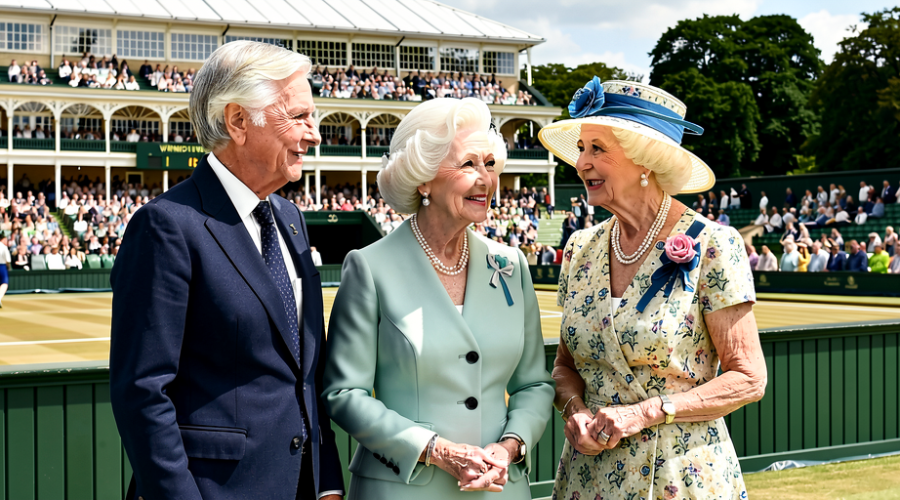
Queen Camilla and Sister Annabel Elliott Make Unannounced Appearance at Wimbledon Championships
Queen Camilla joined by sister for surprise – The royal family’s presence at the prestigious All England Club was confirmed on Wednesday morning when Queen Camilla joined by sister Annabel Elliott for a surprise visit to the tennis tournament. The monarch arrived on the tenth day of the Championships, choosing to explore the players’ area situated adjacent to Centre Court rather than remaining in the traditional royal box. This unexpected outing allowed the sisters to experience the tournament atmosphere firsthand, meeting with athletes, staff, and community members throughout the morning.
Dressed elegantly in a turquoise chiffon creation designed by Anna Valentine, Her Majesty proceeded to meet with various individuals connected to the tournament. The gathering included Wimbledon personnel, competing athletes, and local community workers who contribute to the event’s success. The sisters’ presence was particularly meaningful given their long-standing connection to the tournament, having attended matches since their childhood years.
Meeting with Tennis Star Heather Watson
Among those welcomed by the Queen was thirty-four-year-old Heather Watson, who previously held the position of British number one player. The former tennis champion expressed her delight at the encounter, describing the experience as particularly pleasant. Watson revealed that she began perspiring considerably due to nervousness during their conversation, but found the monarch to be approachable and warm.
She’s super down-to-earth.
The monarch showed genuine interest in Watson’s professional journey and her connection to the tournament. Watson noted that Camilla demonstrated sincere curiosity regarding her athletic accomplishments, calling the interaction lovely. Following this exchange, Watson conversed with Ms. Elliott, who shared that the sisters had been attending Wimbledon since their childhood years.
I started sweating profusely with nerves. She asked me about Wimbledon and my career.
Watson also reflected on her previous royal encounter, noting: “I met the previous Queen, I think it was over 10 years ago now, in exactly the same sort of place with Laura (Robson).” This connection to past royal visits adds historical significance to the day’s events.
Young Ball Boys and Girls Share Their Experiences
The royal also took time to speak with two young ball attendants serving at the tournament. Zebedee, who attends Saint Cecilia’s Church of England School, described the encounter as very special. His counterpart Aniya, a student at The Tiffin’s Girl School, expressed similar enthusiasm about meeting the monarch.
It was an amazing experience. I really enjoyed it. It’s definitely an opportunity of a lifetime.
Camilla inquired about how long each child had served in their roles and which courts they had been assigned to work on during the Championships. The young attendants’ excitement was palpable, with both expressing gratitude for the personal attention from the royal visitors.
Charitable Connections and Long-Serving Staff
Another notable meeting occurred between the Queen and Richard Gammage, the chief executive of City Harvest, an organization dedicated to reducing food waste. Mr. Gammage recalled having the privilege of meeting Her Majesty approximately fifteen years earlier when she became involved with the Royal Air Force Station.
I had the great privilege of meeting her about 15 years ago when she was becoming involved with the Royal Air Force Station, and she remembered that, which was lovely.
He explained that the monarch showed considerable interest in their charitable operations, particularly regarding the diverse groups receiving donated food. The charity serves everyone from women refugees to day centers supporting homeless individuals, as well as youth organizations, educational institutions, and religious congregations across various denominations.
Also present in the receiving line were Morag Ranford, who has contributed to Wimbledon’s press operations for half a century, and Pete Dobson, a dedicated safety officer with twenty-five years of service at the tournament. Their long-standing contributions to the event were recognized during the visit.
Royal Box Guests for Wednesday
While the Queen explored the players’ area earlier in the day, she remains scheduled to join distinguished guests in the royal box on Centre Court on Wednesday. The seating arrangement includes American actress Elle Fanning, outdoor adventurer Bear Grylls, and British actor Sir David Suchet, among other notable personalities attending the prestigious event. This continuation of royal attendance at Wimbledon highlights the enduring connection between the monarchy and the tournament.