Police Urged to Act After Mosque Replica on Loyalist Bonfire
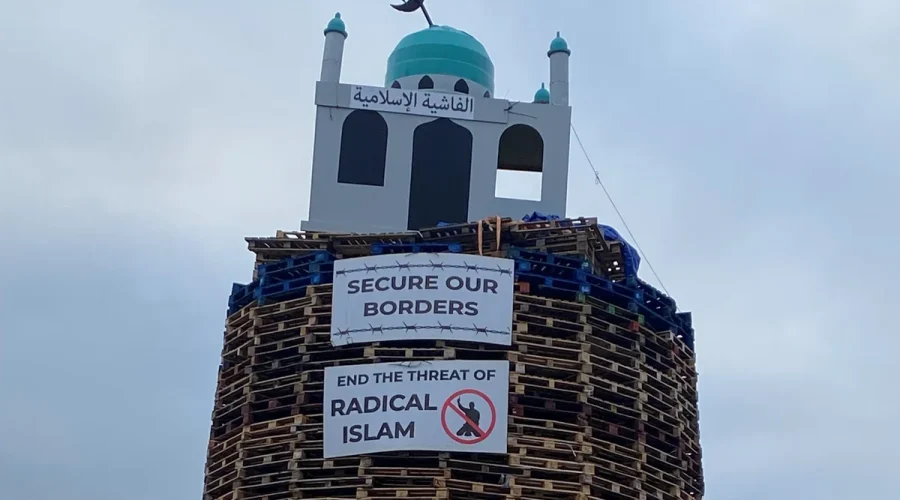
Traveloasisspot.com – Police urged to act after a controversial mosque replica was placed atop a traditional loyalist bonfire in County Tyrone, Northern Ireland. The striking structure was discovered on Thursday in the village of Moygashel, where it now stands prominently above a large pyre built primarily from wooden pallets. This placement has sparked renewed calls for law enforcement intervention, with human rights advocates demanding swift action to address what they describe as a potentially inflammatory display.
Symbolic Tensions Emerge
Adding to the symbolic weight of the bonfire display, two banners have been carefully affixed to the structure. One banner proclaims “Secure our borders,” while another declares “End the threat of radical Islam.” The fire is scheduled to be ignited on Friday evening, coinciding with the traditional Eleventh Night celebrations that precede the Orange Order’s annual July 12 parades across Northern Ireland. These celebrations mark a significant moment in the region’s cultural calendar, drawing communities together while sometimes highlighting underlying tensions.
While the majority of bonfires throughout Northern Ireland proceed without significant incident, several have increasingly become focal points for community debate and discussion. The controversy often centers on the various flags, effigies, and political posters that are placed on these structures before they are set ablaze. Each year, the selection of imagery sparks conversations about representation, respect, and community harmony in the region.
Amnesty International Calls for Action
Human rights organization Amnesty International has characterized the mosque replica as a “vile display” and described it as a “blatant attempt to stir up anti-Muslim hatred and intimidate local families.” Patrick Corrigan, who serves as the organization’s Northern Ireland director, emphasized the seriousness of the situation and the need for immediate police response. His comments reflect growing concern among human rights advocates about the potential for such displays to alienate minority communities.
“This vile display is a blatant attempt to stir up anti-Muslim hatred and intimidate local families. It must be met with a decisive response by the police.”
Corrigan further explained that placing an effigy of a mosque on a bonfire constitutes incitement to hatred directed at actual residents of Northern Ireland—people who live, work, and raise their families in the region. Under Northern Ireland legislation, it is considered a criminal offense to distribute materials that are intended or likely to provoke racial or religious hatred or to arouse fear among communities. This legal framework provides the basis for potential police intervention in such cases.
“The police must investigate this as a potential crime, identify and hold to account those responsible, and ensure this material is swiftly removed before it can be used to incite further hatred and violence.”
A History of Controversy in Moygashel
The Moygashel bonfire site has a track record of generating public debate in recent years, making this latest incident particularly noteworthy. During last year’s celebrations, the bonfire drew widespread condemnation when effigies depicting migrants in a boat were burned as part of the festivities. This previous controversy demonstrated how quickly bonfire displays can become flashpoints for community tension and media attention.
More recently, in the month preceding this incident, police in Moygashel removed a banner from a local children’s playpark, classifying the matter as a hate crime. These recurring episodes highlight the ongoing tensions that can emerge during the bonfire season and underscore the importance of proactive policing and community engagement. The pattern of incidents suggests that authorities may need to develop more comprehensive strategies for managing these cultural celebrations.
Broader Cultural and Political Context
The Eleventh Night bonfires represent one of the most visible cultural traditions in Northern Ireland, with communities across the region lighting fires on Friday, Saturday, and Sunday evenings. These celebrations build toward the Orange Order’s grand parades on Monday, July 12, commemorating the Battle of the Boyne. The tradition has deep historical roots but continues to evolve as Northern Ireland’s demographic landscape changes.
The Police Service of Northern Ireland (PSNI) has been approached for comment regarding the mosque replica incident. As the bonfire season progresses, authorities will likely face increasing pressure to address both the symbolic significance of the effigies and their potential impact on community relations. The PSNI’s response to this incident may set important precedents for how similar situations are handled in the future.
The incident underscores the delicate balance between preserving cultural traditions and ensuring that bonfire displays do not alienate or intimidate minority communities. With Northern Ireland’s diverse population growing, the question of how best to honor heritage while fostering inclusion remains a pressing concern for policymakers and community leaders alike. As the region continues to navigate its complex history, events like this bonfire controversy serve as reminders of the ongoing work needed to build stronger, more inclusive communities for all residents.