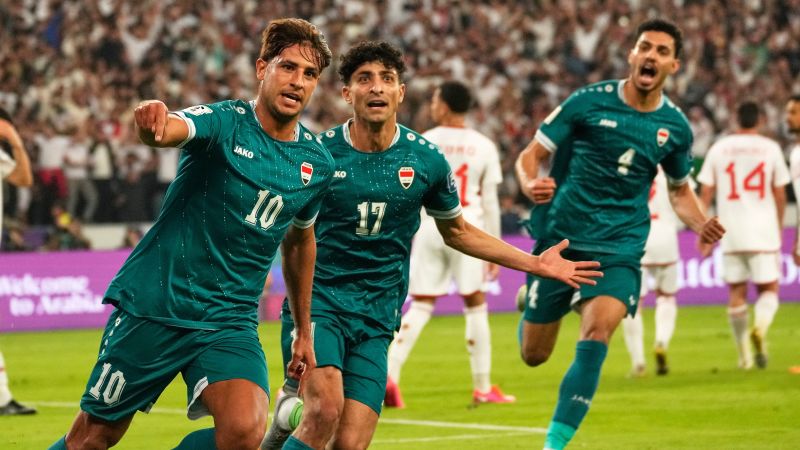
A lot of sleepless nights: Why the war in Iran might cost Iraq a World Cup berth
With just 90 minutes remaining until the final showdown, Iraq’s men’s national soccer team stands on the brink of securing a World Cup spot for the first time in four decades. Yet, the looming conflict in Iran and its ripple effects across the Middle East have turned this critical moment into a logistical nightmare. The Lions of Mesopotamia are set to face the winner of Bolivia and Suriname in a March 31 playoff qualifier, but travel to Mexico’s Monterrey is now uncertain.
Graham Arnold, the Australian coach leading the squad, shared his concerns with CNN Sports. “It’s a major challenge,” he said, explaining how the country’s airspace closures have left his players and staff stranded in Iraq until at least April 1, the day after the match. “We’ve got several contingency plans, but they’re all different. It’s been stressful, and there have been many sleepless nights trying to get everything sorted.”
“It’s a big challenge. I’ve got about four or five plans at the moment, and obviously, they’re all different. A lot of sleepless nights worrying about getting that planning right.”
The Iraq Football Association (IFA) has officially asked FIFA to reschedule the playoff game, according to a source at the organization. The decision is expected by the end of the week. Meanwhile, Arnold remains trapped in Dubai, where he had been scouting talent, while his medical team is stuck in Qatar. The situation has become even more complicated due to embassy closures in the region, which are hindering visa processes for Mexico and the U.S.
Arnold likened the current predicament to the early days of the pandemic, when he was coaching Australia. “Back then, we had plans A to F,” he recalled. “This time, though, we’re completely cut off—not just by travel challenges, but also by the difficulty of securing visas for the countries hosting the qualifiers.”
The team’s planned training camp in Houston, Texas, aimed at adapting to the climate and time zone, has been abandoned. Busing players out of Iraq, the only alternative, would require a 30-hour journey, which Arnold calls impractical for both health and logistical reasons.
Possible Impact on Iran’s Participation
FIFA is also preparing for the risk that Iran might withdraw from the tournament. The country’s Football Federation president, Mehdi Taj, expressed doubt about their continued involvement after the recent attack, stating: “What is certain is that after this attack, we cannot be expected to look forward to the World Cup with hope.”
“What is certain is that after this attack, we cannot be expected to look forward to the World Cup with hope.”
If Iran exits, Arnold believes the vacant spot should go to Iraq. “Iran and Iraq are both in the Asian Football Confederation,” he said. “If Iran is out, we’re the next in line.” His solution involves pushing the playoff game to the week before the World Cup begins, allowing his team time to travel and prepare. “Bolivia and Suriname can play in March,” he noted. “We could play the winner of that just before the tournament starts; the winner stays, the loser goes home.”