Table of Contents
ToggleHistorical Lunar Mission and Modern Parallels
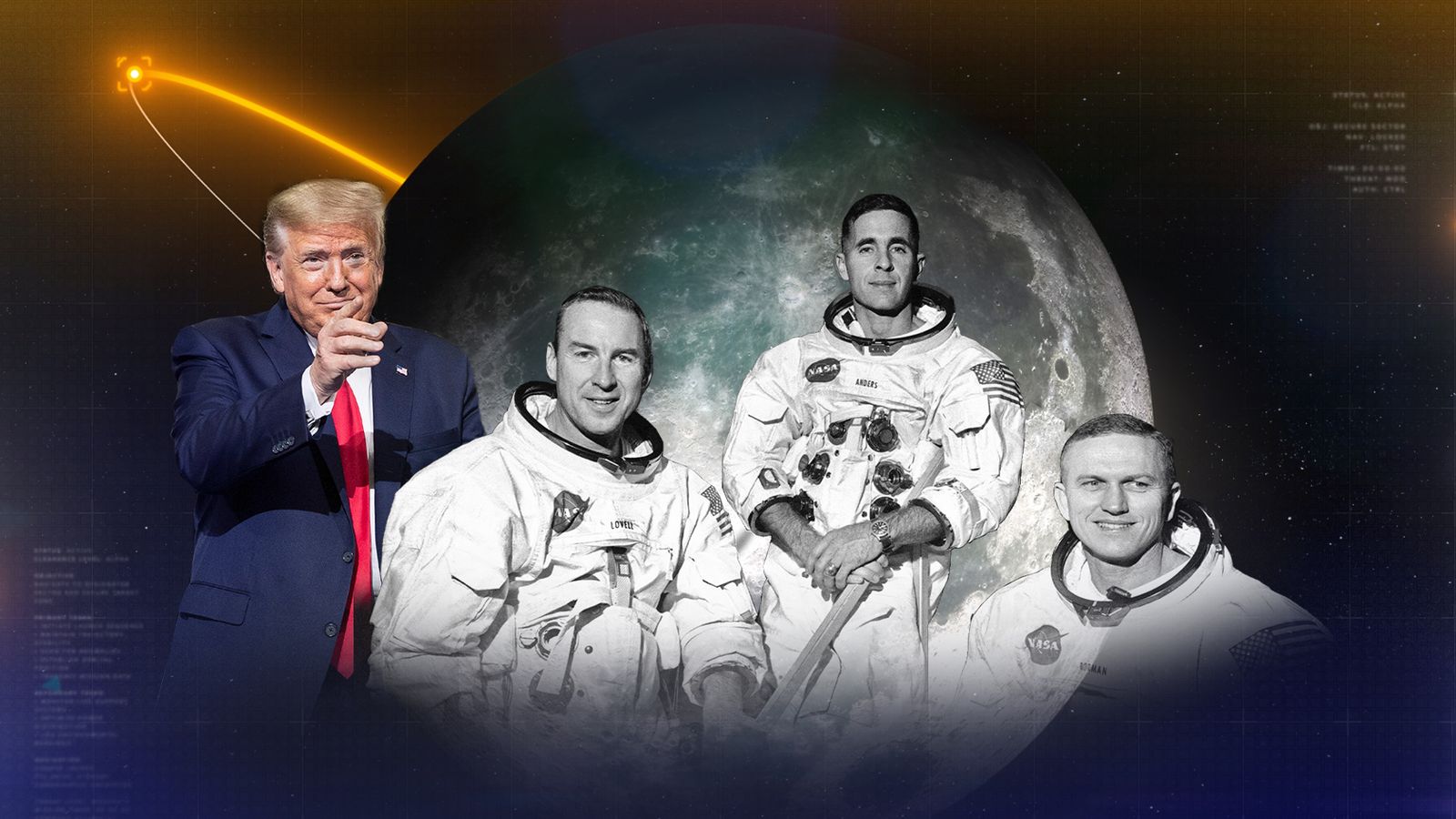
In 1968, the United States launched its first lunar expedition amidst a period of intense political strife. The mission, which marked the eighth Apollo flight, carried significant weight for the success of the space program. On December 21 of that year, three astronauts—Frank Borman, William Anders, and James Lovell—left Earth aboard a Saturn V rocket from Florida’s Kennedy Space Centre.
Fast forward to today, and the nation finds itself at a crossroads, with divisions resurfacing in a manner reminiscent of the past. Yet, this renewed push to return to the moon, under the Artemis initiative, shares a striking timeline with the historic Apollo 8 launch. The 1968 mission coincided with a year defined by profound social unrest, as the Vietnam War escalated and public morale wavered under rising casualties.
During that era, the Soviet Union had already secured major space milestones, including the first satellite, the first human in orbit, and the first woman to travel beyond Earth’s atmosphere. The Apollo 8 crew captured Earth’s fragile beauty from lunar orbit, a moment that galvanized global awareness of environmental issues. Their message of unity, broadcast from the vastness of space, resonated with a message of hope: “To all of you on the good Earth.”
Unity in the Face of Division
Dr. Jill Stuart, a space politics analyst at the London School of Economics and Political Science, notes that the shared objective of the moon mission briefly united the country. “The timing of Artemis’s revival during a period of cultural rifts and political tensions is noteworthy,” she explains in a
interview with Sky News. “While the program has been in development for years, its current phase may inadvertently serve as a tool to foster collective identity, even if only temporarily.”
Today, as Secretary of War Pete Hegseth and NASA Administrator Jared Isaacman inspect the Artemis II rocket, the parallels between past and present are evident. The same societal fractures that shaped the 1968 mission now influence the Artemis era, raising questions about whether space exploration can once again bridge ideological gaps.
Looking back, the Apollo 8 crew’s composition—three white male astronauts—stood in contrast to the broader struggles of the time. While the mission symbolized progress, it also highlighted the limited representation of the era’s diverse challenges.
With Apollo 8’s triumph, NASA hastened its efforts toward a lunar landing. Just seven months later, Neil Armstrong’s historic step was witnessed by a fifth of the world’s population, a testament to the mission’s global impact. The legacy of that time, however, remains a reminder of both achievement and omission in the quest for unity.