Table of Contents
ToggleFarage No Longer Seeks Compromise with Tories, Aims to Eliminate Them
A brisk March morning sees me at a modest service station in the Peak District, its forecourt transformed with Reform’s signature teal branding. The price board announces “Reform Refuel: 25p off with Farage,” drawing a cluster of journalists, cameras, and passersby. Alan Graves, Reform’s Derbyshire County Council leader, begins fueling his turquoise Bentley, while Robert Jenrick, a notable Conservative defector, waits nearby. Nigel Farage arrives shortly after, flanked by photographers and wearing a flat cap, Barbour jacket, and corduroys.
Jenrick climbs the ladder to update the fuel prices, while Farage observes from below. This arrangement, a one-day collaboration with the station’s owner, highlights Reform’s strategic push to pressure the government on fuel duty increases. Farage declares:
“We will spend the next few months trying to shame Rachel Reeves into canceling [the 5p] rise in fuel duty in September. But if she doesn’t—whether because she’s fleeing the Greens or shackled by her far-left backbenchers—then Reform will reverse it in our first budget.”
Conservatives Face Pressure from Reform’s Rising Influence
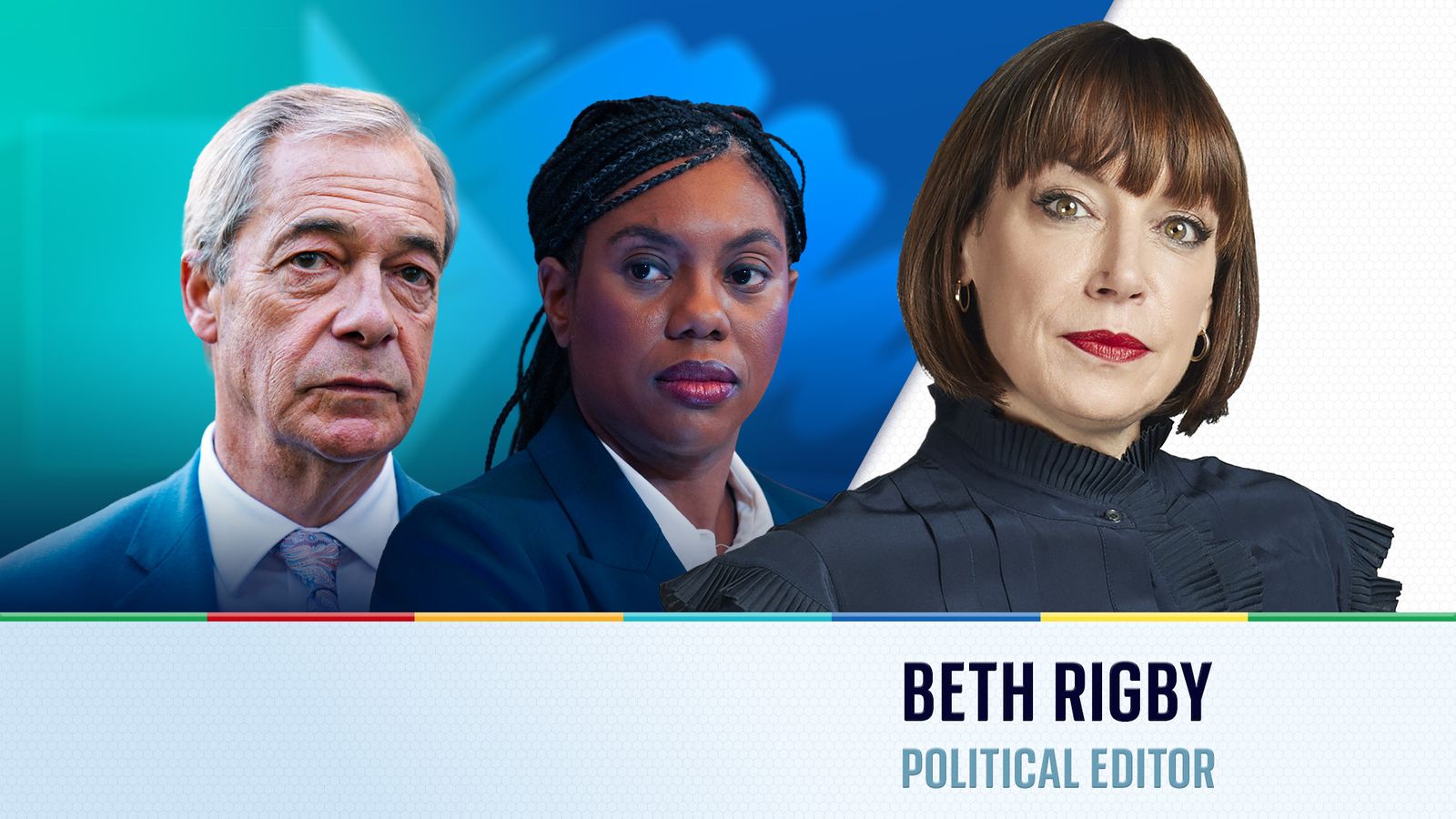
Meanwhile, Kemi Badenoch, the Conservative leader, expresses similar concerns on X:
“Labour knows exactly what a fuel duty hike will do to working families, yet they proceed anyway. It’s incorrect. That’s why the Conservatives introduced a motion in parliament to halt their plans.”
Despite her determination to appear firm, her policy stance remains elusive. Reform, however, has outmaneuvered her, capturing public attention with its bold tactics.
Reform UK has evolved into a formidable challenge for the Conservative Party, surpassing it in polls and growing its own ranks as disillusioned Tories defect. With five parliamentary seats and 14.3% of the vote, Farage’s party secured its best result in recent history, while the Tories plummeted to 121 seats. This shift marks a turning point, with Reform now dominating local elections and expanding its political footprint.
From Partnership to Rivalry: Farage’s Political Evolution
Once, Farage aligned with the Conservatives through an electoral pact in 2019, sacrificing 317 seats to support Boris Johnson’s leadership and Brexit. At the 2023 Conservative Party conference, he received a warm reception from right-wing members before mingling with Priti Patel. At that time, there was speculation about his potential return to the party. But before the 2024 election, Farage launched Reform, securing a decisive victory and distancing himself from any deal with the Tories.
Reform has since surged, claiming a by-election and taking control of over a dozen councils. Jenrick, a former Conservative who once advocated EU membership, now serves as Farage’s key ally. Reflecting on his departure, Jenrick states:
“If anyone thinks leaving a party you’ve joined since age 16 is simple, they misunderstand the gravity of this decision. I concluded the Tory party had not absorbed the lessons of its past mistakes. It remained stagnant.”
With Reform’s growing momentum, the Conservatives now confront an existential threat from their former ally turned adversary.