Young Fox Freed After Nearly 48 Hours With Bottle Stuck on Head
A Dramatic Rescue in Glasgow
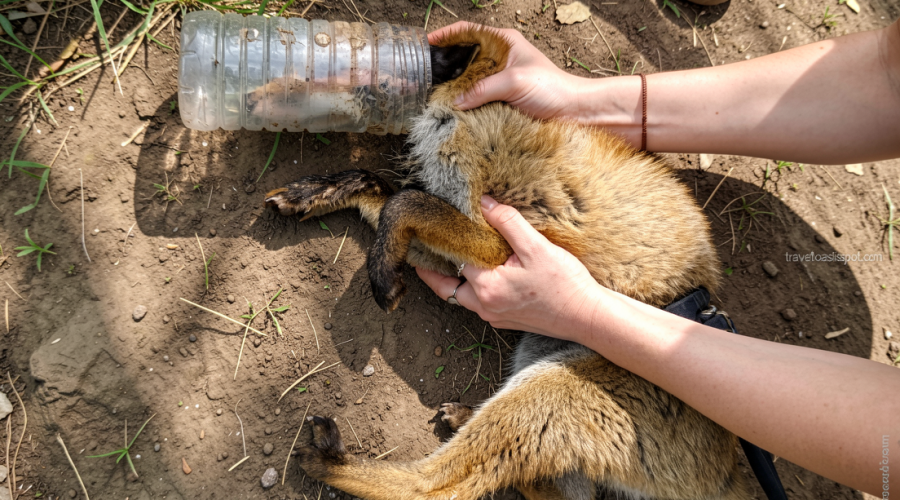
Fox cub rescued after almost two days – A young fox has been saved by wildlife professionals after spending almost two full days with a plastic bottle firmly lodged over his head. The injuries sustained during this ordeal could easily have been fatal, but timely intervention by the Scottish SPCA ensured the cub’s survival. The dramatic rescue unfolded in Glasgow, where a concerned member of the public first noticed the distressed male fox cub struggling in the area.
When Scottish SPCA personnel arrived at the scene, their initial efforts to capture the frightened animal were unsuccessful. The fox, clearly uncomfortable and possibly injured, managed to retreat back into his den before rescuers could secure him. Rather than giving up, the team returned the following day with renewed determination and successfully captured the cub this time around.
Once safely caught, the fox was transported to the University of Glasgow’s Small Animal Hospital for immediate medical attention. Veterinarians there cleaned the wound he had sustained and administered pain relief medication to help ease his discomfort. The young animal remained at the hospital overnight before being transferred the next day to the Scottish SPCA’s National Wildlife Rescue Centre located at Fishcross in Clackmannanshire.
Expert Assessment and Ongoing Care
Upon arrival at the rescue centre, it became clear that the fox’s head had been trapped inside the bottle for nearly two days by the time he was finally freed. The cub, estimated to be approximately 12 weeks old, was discovered near Knightswood Park in the Knightswood district of Glasgow on June 27. Since his arrival at Fishcross, he has been under close medical observation and has received daily treatment for his wound.
Animal rescue officer Ella Mackenzie expressed relief at the outcome, noting that the fox was incredibly fortunate to be found. She explained that had the team not managed to catch him, the injuries caused by the bottle could have escalated into life-threatening conditions. Mackenzie emphasized that this situation is far from unique, stating that every year they encounter wild animals that are injured, trapped, or even killed by discarded litter.
“This fox was incredibly fortunate. Had we not managed to catch him, the injuries caused by the bottle could have become life-threatening,” Mackenzie said.
“Sadly, this isn’t an isolated incident. Every year, we see wild animals injured, trapped or killed by discarded litter. Something as simple as taking your rubbish home or disposing of it properly can prevent animals suffering in this way.”
Broader Context and Community Awareness
During the rescue operation, Mackenzie received assistance from fellow animal rescue officer Calum Wilson. The Scottish SPCA has used this incident as an opportunity to raise public awareness about the devastating consequences that litter can have on local wildlife populations. The organization has urged members of the community to dispose of their waste more carefully to prevent similar incidents.
The statistics paint a concerning picture of wildlife challenges in the region. The Scottish SPCA responded to almost 109,000 wildlife incidents between 2023 and 2025, with many of these cases involving animals that were injured or placed at risk due to human activity. The organization continues to encourage people to dispose of litter responsibly as a means of helping prevent avoidable suffering for wild animals across Scotland.
Bottle entrapments, while seemingly minor, can prove particularly dangerous for young animals. The plastic container restricts movement, prevents normal feeding, and can cause serious injuries as the animal struggles to free itself. In hot weather, trapped animals are also at risk of dehydration and heat exhaustion. The Scottish SPCA’s message remains clear: simple actions like taking rubbish home or using designated bins can make a significant difference in protecting vulnerable wildlife from unnecessary harm.