Wimbledon 2026: Sinner Triumphs Over Djokovic in Semi-Final Thriller
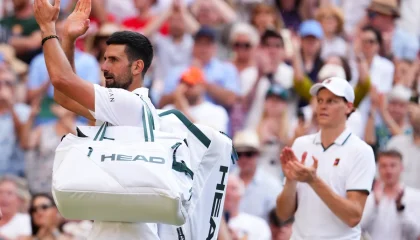
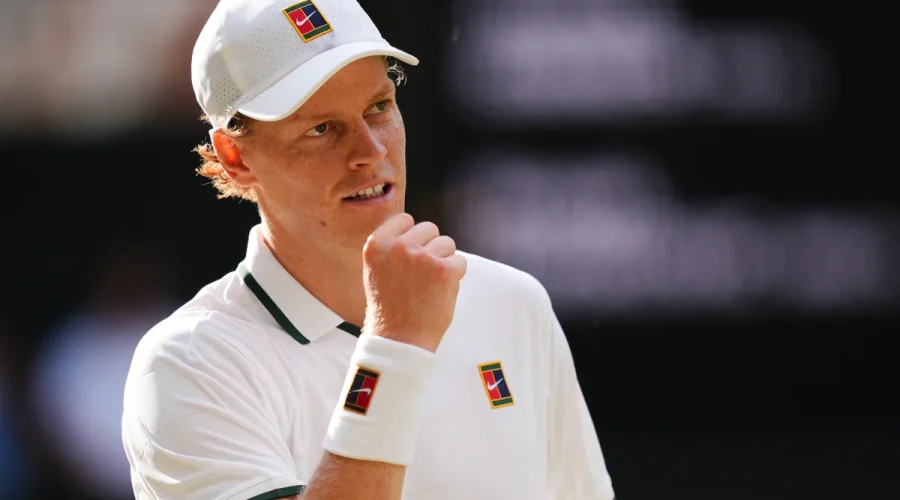
Traveloasisspot.com – The highly anticipated second men’s semi-final at Wimbledon 2026 delivered exactly what fans expected when Jannik Sinner and Novak Djokovic stepped onto Centre Court. The defending champion and twenty-four-time Grand Slam champion engaged in a compelling battle that ultimately saw the Italian world number one advance to the final. This clash came after British wildcard Arthur Fery’s remarkable tournament journey concluded in straight sets against Alexander Zverev, whose ruthless performance earned him a place in the last four. Zverev now faces a formidable challenge against either Sinner or Djokovic as he seeks to build upon his recent French Open victory on Sunday.
Player Form and Tournament Journey
Sinner has demonstrated exceptional consistency throughout this year’s championship, recovering from an unexpected setback in the opening round. His five-set comeback victory against Miomir Kecmanovic initially raised questions, but the Italian quickly silenced any doubts. He subsequently defeated Jan-Lennard Struff in the quarter-finals and maintained his perfect record by not dropping another set in victories over Nuno Borges, Jenson Brooksby, and Shintaro Mochizuki.
Physical freshness may have played a crucial role in Sinner’s success. Djokovic endured a particularly demanding encounter against third seed Felix Auger-Aliassime on Tuesday, having already navigated through matches against Roman Safiullin, Arthur Rinderknech, Stefanos Tsitsipas, and Wu Yibing. The cumulative effect of these challenging matches could have impacted the Serbian champion’s energy levels.
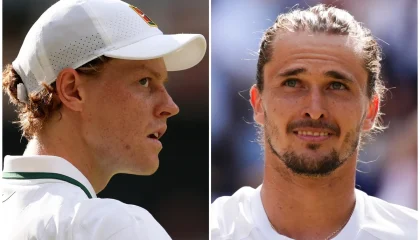
The historical record between these two tennis giants slightly favors Sinner, who leads the all-time ATP head-to-head 6-5. However, their most recent encounter in the Australian Open semi-finals in January saw Djokovic emerge victorious. Standard Sport’s Matt Verri provided comprehensive coverage from Centre Court throughout this exciting semi-final contest.
Match Highlights and Key Moments
Sinner began the match with tremendous authority, launching a powerful 133mph ace to set the tone. He followed this with a thunderous overhead that caught Djokovic off guard, unable to adjust his hands quickly enough. The Italian quickly established a 30-0 lead before adding another ace down the T, bringing him to three match points.
Sinner converted at the first opportunity, as Djokovic stretched to his full height to reach a lob but could not direct it back effectively. The crowd erupted as Sinner secured his place in the Wimbledon final with what proved to be a sensational performance. Despite the defeat, Djokovic showed remarkable determination, producing brilliant volleys at the net and continuing to attack with his powerful forehand whenever possible.
Several memorable moments defined the match. Sinner worked Djokovic off the court with a precise forehand that landed almost in the crowd in a completely empty corner of the court. A brutal return later spun Djokovic around, bringing the score to deuce. Djokovic managed to escape the game with two first serves, though Sinner would need to serve out the match himself.
After another exhausting rally, Djokovic could only lob the ball upward, visibly drained. Sinner capitalized on this with a decisive big forehand at the net. Djokovic’s subsequent return landed just long, giving Sinner a 40-0 advantage as he raced toward victory. An ace followed, placing Sinner just one game away from the final.
Djokovic continued to fight valiantly throughout. When Sinner framed his backhand, sending it straight into the air, he would have nearly hit the roof had the Centre Court been closed. Djokovic took his cap off for the first time during the match, perhaps seeking a psychological boost. Sinner dominated another point, forcing Djokovic to lob before letting the ball bounce and finishing with a powerful smash.
The match featured several crucial break points. Djokovic went for a lob on one occasion, coming close to perfection but landing just beyond the baseline. On another occasion, he saved a break point with an ace out wide that Sinner initially questioned, staring at the line for several seconds before confirming it had just clipped the edge.
Sinner transformed into a serving machine at a critical juncture, delivering an ace, followed by an unreturned serve, and then another ace to hold his service game. Djokovic struggled to find answers when the world number one truly accelerated from the baseline, with Sinner dominating their exchanges. A couple of inches separated Djokovic from a stunning crosscourt forehand winner, and he breathed a sigh of relief when that shot landed out.
Djokovic earned his first break point of the match with a perfect drop shot, sending Centre Court into raptures. However, Sinner responded with composure, and another ace out wide ultimately sealed his hold. The relentless Sinner charge continued as his support box rose to their feet, waving their rackets in encouragement. With 15-30 on the board, Sinner presented a chance for a double break that would effectively end the contest.
Djokovic battled through several points with determination, but Sinner’s consistency and power proved too much. The Italian’s ability to control rallies while maintaining his composure under pressure ultimately made the difference. As the final points unfolded, Sinner’s dominance was clear, and his advancement to the Wimbledon final seemed inevitable.
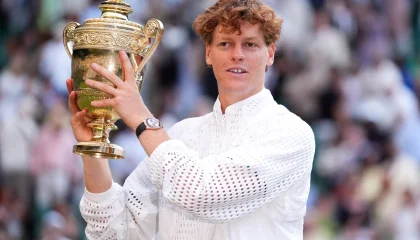
The victory represents another significant milestone in Sinner’s career, adding to his growing collection of major titles. His performance against one of tennis’s all-time greats demonstrated not only his technical excellence but also his mental strength. Djokovic, despite falling short, showed no signs of quitting and continued to compete with the same intensity that has defined his legendary career.
As Wimbledon 2026 moves toward its conclusion, all eyes will now turn to the final, where Sinner will face his opponent from the other side of the draw. The defending champion’s journey through this tournament has been nothing short of impressive, and his semi-final victory over Djokovic has undoubtedly raised expectations for what could be another memorable chapter in his championship story.