Record-Breaking Heatwave Triggers Widespread Water Restrictions Across the UK
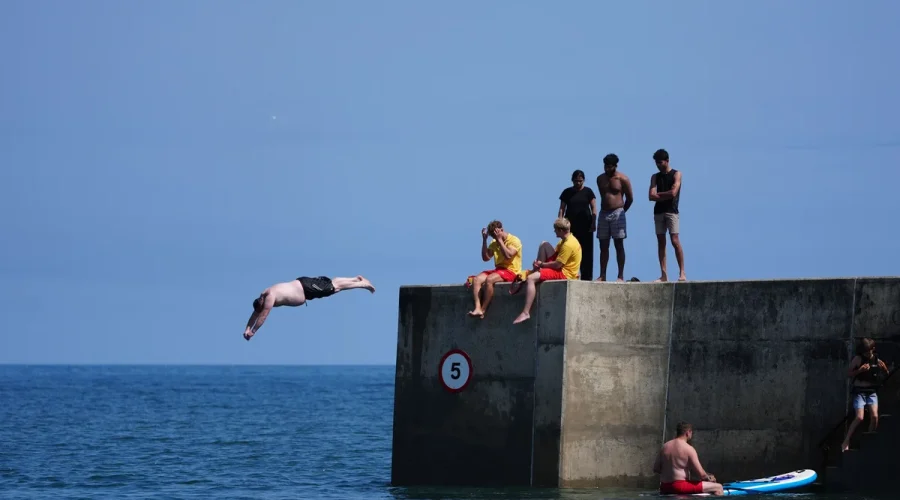
Traveloasisspot.com – Forecasting experts have revealed that 2026 marks a historic milestone as the inaugural year to experience six distinct days reaching or exceeding 35 degrees Celsius. This remarkable achievement comes as Britain endures its third consecutive heatwave within a three-month span, placing unprecedented strain on national resources.
The Met Office confirmed the new benchmark following Friday’s peak reading of 35.2C recorded at Coton in the Elms, Derbyshire. This surpasses the previous record established jointly by 1976 and 2020, when five days surpassed the 35C threshold.
Beyond the six-day milestone, 2026 has also achieved the distinction of being the first year to register temperatures of 35C or above across three separate calendar months. Additionally, the year has shattered records for the highest number of days reaching 34C or warmer, with nine such days documented so far during the summer season.
Utility Companies Respond with Hosepipe Bans
A fresh hosepipe restriction is preparing to take effect for millions of residents throughout South East England as rising temperatures place water resources under considerable pressure. Affinity Water has emerged as the most recent utility provider to implement limitations, citing prolonged hot and dry conditions alongside demand exceeding normal levels.
The company announced on Friday afternoon that restrictions would commence on July 17, impacting approximately 1.1 million households spanning Bedfordshire, Berkshire, Buckinghamshire, Essex, Hertfordshire, Surrey, and portions of London.
Under these regulations, residents must refrain from utilizing hosepipes for garden irrigation, vehicle washing, patio and path cleaning, driveway maintenance, window cleaning, and filling swimming or paddling pools.
Stephen Plumb, asset strategy and capital delivery director at Affinity Water, explained: “We don’t take a decision like this lightly, but with demand for water use at unprecedented levels, we need to act now to protect supplies, for our customers, especially those who are most vulnerable, for the communities we serve, and for the environment.”
He continued: “We know a hosepipe ban is disruptive, and we apologise for the inconvenience this will cause. We would like to thank customers for their support so far this summer and for working with us to help protect our water supply. Every bit of water saved makes a difference.”
Broader Regional Impact and Historical Context
Water companies across multiple regions have similarly implemented restrictions. Areas including the east of England, Cambridge, Hampshire, the Isle of Wight, and various Kent locations have all introduced or announced hosepipe bans.
Several providers have additionally requested voluntary conservation measures from customers, though formal restrictions remain pending in certain territories.
The heatwave’s intensity was further underscored on Thursday when the UK recorded its eighth day at or above 34C within a single calendar year. This surpassed the previous maximum of seven days, previously achieved during the summers of 1976 and 2020.
Water minister Emma Hardy convened with utility executives last week to evaluate preparedness for extended hot weather, following official warnings regarding potential drought conditions in specific regions over the coming weeks.
Authorities are monitoring East Anglia, Devon, Cornwall, Hampshire, and the Isle of Wight particularly closely as conditions evolve.
Long-Term Challenges Facing Water Infrastructure
The UK’s water system faces mounting pressure as human-driven climate change alters rainfall patterns and generates increasingly extreme weather events. These challenges have been intensified by population growth alongside decades of insufficient infrastructure investment.
Notable concerns include the absence of new reservoir construction over the past thirty years and widespread pipe leakage throughout the network.
Southern Water implemented restrictions on Friday for roughly one million customers across Hampshire and the Isle of Wight. Anglian Water followed suit, announcing a ban for its five million east of England customers, effective from 1am Saturday, though urging immediate voluntary compliance.
Cambridge Water introduced a temporary restriction on Thursday for its 350,000 customers, with enforcement beginning July 17. This represents the first such measure in three decades, with teams operating continuously to maintain adequate supplies.
South East Water became the earliest adopter, implementing a ban on July 3 for Kent areas including Ashford, Canterbury, Faversham, Maidstone, Sevenoaks, Snodland, Tenterden, and Tunbridge Wells.
Thames Water has meanwhile requested customers to limit their water consumption as the nation continues to navigate these challenging conditions.