Extended Heatwave Brings Extreme Conditions Across Britain
Temperatures Set to Remain Elevated Through the Week
Traveloasisspot.com – According to meteorological experts at the Met Office, the intense heatwave gripping substantial portions of the United Kingdom is anticipated to persist for several more days. Officials have indicated that these sweltering conditions are expected to continue until at least the beginning of next week, keeping residents on alert for prolonged periods of high temperatures.
Forecasts suggest that various regions within England and Wales will experience temperatures surpassing the 30-degree Celsius threshold throughout Sunday and beyond. While meteorologists note that thunderstorms may emerge in certain southern locations starting Monday, the majority of the country is projected to maintain dry, bright, and exceptionally warm weather patterns as the week progresses.
Record-breaking figures have emerged during this heat event. A provisional daily maximum of 33 degrees Celsius was documented in Yelverton, located in Devon, on Saturday, according to statements provided to the Press Association by the Met Office. This measurement contributes to what has become a remarkable year for British weather patterns.
2026 Sets New Temperature Records
The current year has already established several significant milestones in UK meteorological history. According to the forecaster, 2026 marks the first occasion where temperatures reached or exceeded 35 degrees Celsius on six distinct days throughout the calendar year. This achievement surpasses the previous record, which was jointly held by the years 1976 and 2020, each recording five days above the 35-degree mark.
Additionally, 2026 has become the inaugural year to experience temperatures of 35 degrees Celsius or higher spanning three consecutive calendar months. The year has also broken the record for the highest number of days reaching 34 degrees Celsius or above, with nine such days recorded so far during the summer season.
Emergency Services Issue Warnings
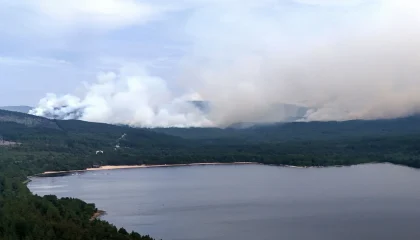
Emergency response organizations have cautioned about an elevated danger of wildfires throughout the current weekend. The London Fire Brigade has specifically advised the public against utilizing disposable barbecue grills, citing concerns that the combination of dry conditions and intense heat could ignite unwanted blazes.
Fire officials reported that the risk level within London escalated from “elevated” to “extreme” status on Saturday. This increase was attributed to multiple contributing factors, including extended periods of dry weather, elevated temperatures, and wind speeds. The extreme classification is expected to remain in effect through Monday.
Simultaneously, the Metropolitan Police has expressed concern regarding a potential surge in emergency calls during England’s World Cup match against Norway scheduled for Saturday evening. The force has encouraged residents to utilize the 999 service exclusively for situations involving immediate danger or active criminal incidents, while recommending that other offenses be reported through online channels.
Health Alerts and Safety Recommendations
Craig Snell, a forecaster with the Met Office, provided guidance to the Press Association regarding the ongoing conditions. “Today, 33C is still well above average for the time of year,” he noted. “The very hot conditions are going to continue to remain across the UK until at least next week.”
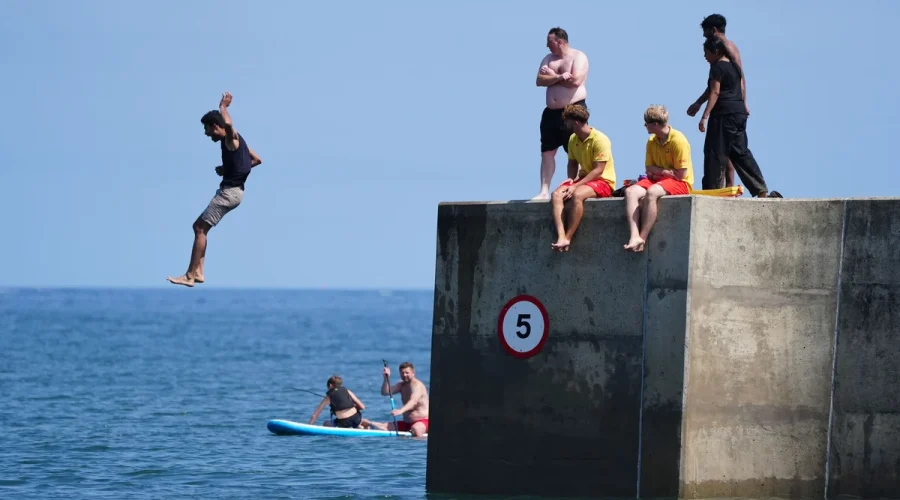
Snell offered several practical recommendations for the public. “During the hot weather, make sure to stay hydrated, avoid prolonged exposure to the sun and check on friends and family,” he advised. He also cautioned beachgoers about water temperatures, stating, “If you’re planning on enjoying the seaside, check the water temperature. The water still can be quite cold so make sure you’re fully aware of that to avoid cold water shocks.”
The UK Health Security Agency has implemented amber heat health alerts for the West Midlands and the South West region, effective from 9am on Sunday through 9pm on Wednesday. These alerts indicate that substantial impacts are anticipated across health and social care services, including an increase in mortality rates, particularly among individuals aged 65 and older or those with pre-existing health conditions.
Yellow alerts have been issued for the East Midlands, North West, South East, East of England, and London, covering the same timeframe. The UKHSA warned that similar significant impacts are possible in these areas and highlighted potential increases in water-related incidents, including risks associated with cold water shock and drowning.
Tragic Water Incidents and Additional Warnings
Recent days have seen three fatalities related to water activities. Derbyshire Constabulary reported that the body of an 18-year-old man was recovered from waters near a weir at the Darley Abbey Mills complex close to Derby, following an incident involving two teenagers. Greater Manchester Police confirmed that an 18-year-old man died at Dovestone Reservoir in Oldham on Friday. Additionally, Police Scotland announced that a woman’s body was retrieved from the Falls of Falloch, a renowned scenic location in Stirling, after she encountered difficulties in the water on Friday evening.
The Met Office has also cautioned about “high” or “very high” ultraviolet radiation levels throughout the weekend, recommending that individuals apply sun protection when spending time outdoors. A UV index of eight is forecast for most of England and Wales on Sunday, classified as “very high.” Furthermore, pollen concentrations are expected to reach “high” or “very high” levels in certain regions, with particular emphasis on Wales and the South West of England.
Water utility companies have implemented hosepipe bans affecting the east of England, Cambridge, Hampshire, the Isle of Wight, and various areas within Kent, as supply pressures mount during the extended dry spell.