Beckhams Reunite for England World Cup Clash
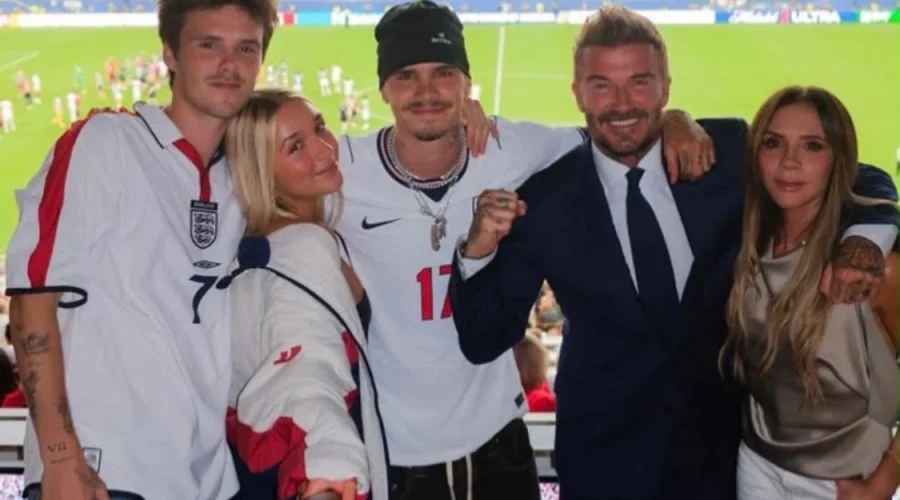
Traveloasisspot.com – The Beckham family gathered in Miami as the Beckhams reunite for England World Cup clash against Norway on Saturday. While the majority of the clan celebrated at Hard Rock Stadium, Brooklyn stayed behind in New York, reflecting his ongoing tensions with his parents. This gathering marked a significant moment for the family as England advanced toward the semi-finals.
David Beckham, now 51, was captured singing Wonderwall with thousands of supporters following England’s 2-1 quarter-final victory. The former England captain, who serves as co-owner and president at Inter Miami CF, shared an emotional moment with his son Romeo, who is 23 years old. David draped his arm affectionately over Romeo’s shoulder as they sang the Oasis anthem together.
While most family members celebrated at the stadium, Brooklyn remained in New York with his wife, Nicola Peltz. The 27-year-old watched the match remotely, maintaining distance from the family gathering. Reports suggest Brooklyn has been experiencing a significant rift with his parents and has reportedly cut off communication with his younger siblings: Cruz, aged 21, Romeo, 23, and Harper, 15.
Family Tensions Continue
David took to social media to share images of the gathering, writing:
What a moment in Miami. I’m so proud of the team tonight reaching the semi-final of the World Cup and to celebrate with my family was so special. Thank you England for giving our country these moments.
Victoria also posted photographs from the event, adding:
Special moment tonight in Miami with my family and for our country xxxx.
Cruz’s partner, Jackie Apostel, was present at the stadium, adding to the family representation. Brooklyn did not miss the occasion entirely, sharing an Instagram story showing his remote viewing setup. The reunion in Miami represents a bittersweet moment for the Beckhams reunite for England World Cup celebration.
Brooklyn recently faced public scrutiny when the complete version of his World Cup advertisement seemed to make another subtle reference to his family. Many viewers described the campaign as inappropriate given the circumstances. The aspiring chef released the full DoorDash commercial following England’s triumph over Croatia, just days after the teaser version generated accusations that he was capitalizing on his separation from his parents.
The advertisements have created considerable controversy, with sources suggesting that Brooklyn’s famous parents have been deeply affected by the campaign. The entrepreneur has been engaged in a prolonged dispute with his parents since January, when he made a dramatic statement claiming they had been
trying endlessly to ruin my relationship since before my wedding, and it hasn’t stopped.
He further alleged that his wife, Nicola, had received disrespectful treatment from his family members. Since making this declaration, Brooklyn has neither appeared publicly with his parents nor acknowledged them on social media platforms. His statement also included claims that his parents manipulate press narratives regarding their family and prioritize
Brand Beckham
above all else.
Brooklyn wed Nicola, the daughter of billionaire Nelson Peltz, in 2022, marking a significant chapter in his personal life amid the family tensions. As the World Cup progresses toward its climax, the Beckhams reunite for England World Cup clash continues to capture public attention both through their professional endeavors and personal relationships.