Double Stabbing Tragedy Leads to Murder Arrest in Hayes
Traveloasisspot.com – A 44-year-old man has been taken into custody following a fatal double stabbing incident that claimed the life of a young woman in west London. Metropolitan Police officers responded to reports of a serious assault on Uxbridge Road in Hayes on Sunday morning, where they discovered a 24-year-old woman suffering from multiple stab wounds.
Emergency services were alerted to the property at approximately 7:55am, and London Ambulance Service personnel quickly arrived at the scene. Despite the immediate efforts of paramedics and medical staff, the young woman was unfortunately pronounced dead at the location. The tragic circumstances were compounded by the discovery of a second victim—a man in his twenties who was found outside the property, also bearing stab injuries.
Quick Police Response and Arrest
According to a Metropolitan Police spokesperson, officers moved swiftly to identify potential suspects in the area. Within a short timeframe, they located a 44-year-old man whose physical description matched that of the person involved in the incident. He was subsequently arrested on suspicion of murder as well as possession of a bladed article in a public place.
The arrested individual was transported to a nearby hospital where he received treatment for injuries that are believed to have been sustained when he jumped from a window during the incident. Police are currently awaiting further updates regarding his medical condition.
Community Impact and Witness Accounts
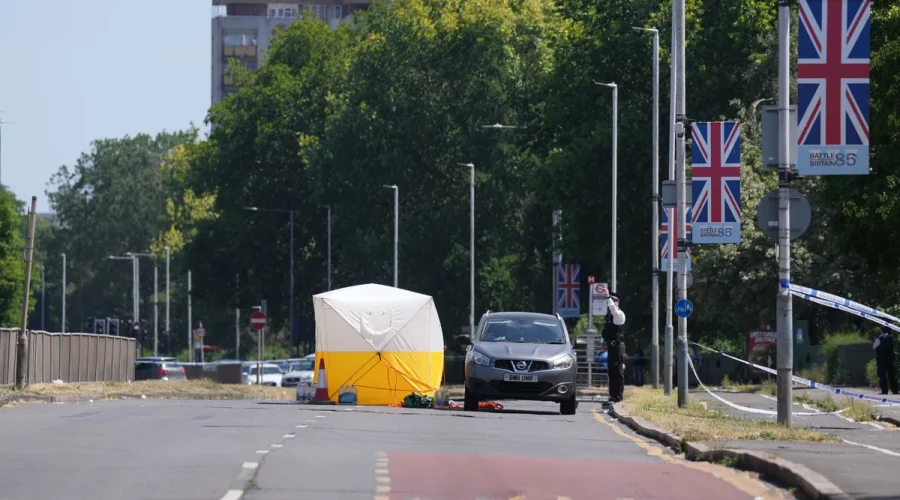
The incident has left a significant impression on local residents. A large section surrounding the property was cordoned off on Sunday afternoon, with approximately twelve police officers remaining on site throughout the day. A forensic tent was erected on Uxbridge Road adjacent to a parked vehicle, while forensic specialists conducted thorough searches and examined relevant documents in the vicinity.
One local resident, a 67-year-old woman who lives on Belmore Avenue behind Uxbridge Road, shared her reaction with the Press Association. She expressed that she had never witnessed anything comparable during her twelve years of living in the neighborhood. Speaking anonymously, she described the scene as frightening, noting the unusual sight of police presence, the forensic tent, and the overall commotion.
Official Statements and Investigation
Detective Chief Inspector Allam Bhangoo provided an official statement regarding the incident, describing it as a shocking event that has tragically resulted in one woman losing her life and another man being hospitalized with injuries.
“Our thoughts at this time are with both victims and their loved ones, who are being supported by specialist officers.”
The detective further explained that while their inquiries remain in the early stages, authorities do not believe there is any wider threat to the general public. However, they are actively seeking information from anyone who may have observed relevant details or possesses knowledge that could assist with the ongoing investigation.
“We know this incident will have caused significant concern in the community and residents can expect to see an increased police presence in the area over the coming days.”
How to Provide Information
Members of the public who have information relevant to the case are encouraged to contact police by calling 101 and quoting reference number 2501/12JUL. Alternatively, individuals can provide details anonymously through Crimestoppers by dialing 0800 555 111 or by visiting their website at crimestoppers-uk.org.
The investigation continues as forensic teams work to piece together the sequence of events that led to this devastating outcome. Police have not yet released the identities of either victim, and formal identification procedures are underway. The community remains on alert as officers conduct door-to-door inquiries and review potential CCTV footage from the area.