London Heatwave LIVE: Unprecedented Heat Alerts Trigger Emergency Response Surge
Traveloasisspot.com – London has been thrust into a state of heightened alert as the Met Office issued a red heat warning for Friday, signaling the persistence of an extreme weather event. This follows Thursday’s record-breaking temperatures, which saw the UK’s hottest June day ever recorded in Somerset at 36.7°C—a figure surpassing the previous high of 36.1°C set in Hampshire the prior day.
Breaking Records Amid Intense Heatwave
The Met Office confirmed that Thursday marked the UK’s hottest June day on record, with temperatures peaking at 36.7°C in Merryfield, Somerset. This achievement comes as part of a prolonged heatwave that has gripped the country, prompting officials to issue “risk-to-life” warnings for consecutive days. The forecast for Friday suggests the capital could face temperatures climbing to 36°C, potentially setting yet another record.
While the heatwave has already claimed a historic toll on emergency services, the situation is expected to worsen. Temperatures are predicted to remain above 23°C overnight, creating what meteorologists call “tropical nights”—a phenomenon that has raised concerns about prolonged exposure to extreme heat. Greg Wolverson, deputy chief meteorologist at the Met Office, noted the heatwave’s intensity: “We’ve seen a new provisional June maximum temperature record for a second consecutive day as the heatwave continues. This marks unprecedented heat for the month of June and provides further evidence of how temperature extremes are becoming increasingly common in the UK due to human-induced climate change.”
Transport Disruptions and Water Restrictions
Transport networks have also felt the strain of the heatwave. The Elizabeth line, which connects central London to Heathrow Terminals 4 and 5, has been operating with fewer trains as part of “heat mitigation measures” announced by Transport for London (TfL). Similarly, the Heathrow Express service has seen reduced frequency, affecting travel for thousands of commuters.
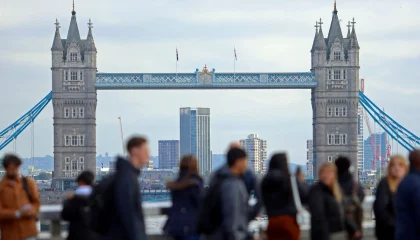
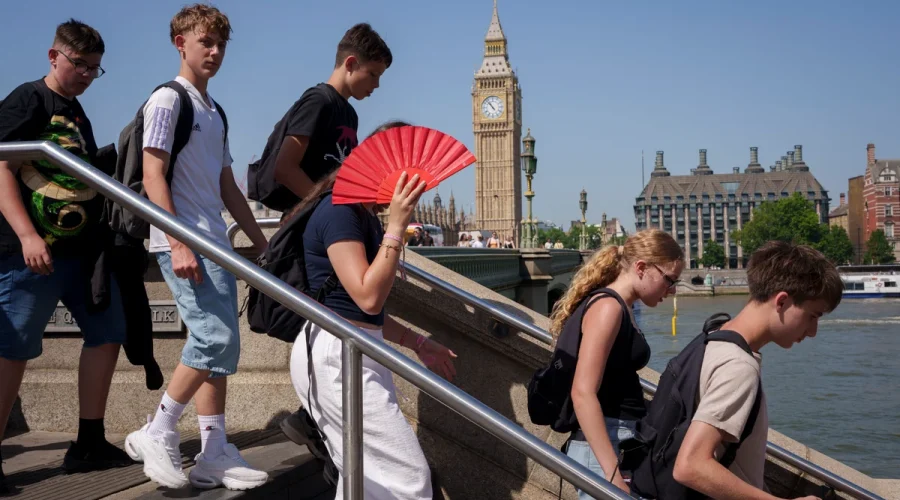
In response to the rising temperatures, South East Water has implemented a hosepipe ban in Kent to conserve water. This measure, which does not officially take effect until July 3, urges customers to use less water “immediately.” Meanwhile, Anglian Water has stated it has no plans to introduce such restrictions in London for this year, though it is encouraging residents to adopt water-saving practices. The impact of the heatwave is evident in central London, where footfall dropped by 14% at 9 a.m. on Thursday compared to the same time the previous week, according to O2 Motion data.
Emergency Services Face Record Pressure
The London Ambulance Service has been overwhelmed by the heatwave, reporting a historic surge in life-threatening emergencies. On Wednesday, the service handled a record 642 category one calls—a number that highlights the severity of the situation. Category one incidents include critical conditions such as cardiac arrests and patients experiencing respiratory failure, both of which have become more frequent in recent days.
Greg Wolverson added that the warmth is shifting more markedly eastward on Friday, which could challenge the current record. “There’s a chance of this record being broken again as the warmth moves more markedly east on Friday, before a gradual easing in temperatures through the weekend,” he said. The service has also increased its monitoring efforts, deploying over 400 additional ambulance crews and conducting more frequent checks on patients waiting for care to prioritize those in the most urgent need.
The heatwave has not only affected emergency services but also hospitals. Queen Alexandra Hospital in Portsmouth and Norfolk and Norwich University Hospitals NHS Foundation Trust both declared critical incidents on Wednesday, indicating a strain on healthcare resources. Doctors warn that even after temperatures begin to decline, the health impacts of the heatwave may persist, with a rise in heat-related illnesses expected in the coming days.
Regional Heat Records and Climate Change Implications
The heatwave has extended beyond London, with Wales also recording its highest June temperature ever at 35.9°C in Cardiff. Northern Ireland, meanwhile, matched its previous June record high of 30.8°C in Castlederg. The Met Office emphasized that the new record for the hottest June day could still be surpassed in the next few hours as the heatwave continues.
Experts are linking these extreme conditions to the broader effects of climate change. “The UK is experiencing increasingly frequent and severe temperature extremes, which are exacerbated by human-induced climate change,” Wolverson explained. The prolonged heatwave has created a perfect storm of challenges, from straining infrastructure to increasing health risks for vulnerable populations.
Preparedness and Community Response
As the situation unfolds, local authorities are urging residents to take precautions. In Kent, where the hosepipe ban has been introduced, the fine for using a hosepipe is set at £1,000. Despite the ban not officially coming into force until July 3, customers are being asked to comply immediately to reduce pressure on water supplies.
While London remains free of water restrictions, the city is preparing for the worst. Ambulance crews have been working around the clock, and hospitals have ramped up their capacity to handle the influx of heat-related cases. The London Ambulance Service has also warned that patients can deteriorate rapidly in high temperatures, emphasizing the need for timely intervention even as the weather begins to cool.
For residents, the heatwave has become a daily reality. The combination of record-breaking temperatures and prolonged tropical nights has left many without respite, forcing them to adapt their routines. Whether through reduced travel, increased hydration, or emergency services, the city is navigating a period of extreme challenge, with officials closely monitoring the situation for any further developments.
Looking Ahead: A Test for Resilience
With the heatwave showing no signs of abating, the focus remains on mitigating its effects. The Met Office has forecasted that temperatures in London could remain high through Friday, creating a critical window for emergency services to manage the demand. The next few days will be pivotal in determining whether the heatwave will break another record or ease into a more manageable phase.
As the UK grapples with this extreme weather event, the incident underscores the growing need for climate adaptation strategies. The unprecedented temperatures are a stark reminder of the challenges posed by a warming planet, and the response from local authorities and emergency services highlights the importance of preparedness in the face of such threats.
In summary, the heatwave has pushed London to its limits, with record temperatures, transportation delays, and a spike in critical health incidents all contributing to a state of emergency. The Met Office’s warnings and the actions of water companies and ambulance services reflect a coordinated effort to manage the crisis, even as the country awaits the final chapters of this prolonged heatwave.