Farage Demands Snap Election, Questions Burnham’s Political Legitimacy
Traveloasisspot.com – Reform UK’s leader Nigel Farage has issued a forceful call for an immediate general election, challenging the legitimacy of incoming Prime Minister Andy Burnham. In his assessment, the new leader possesses “absolutely no mandate of any kind at all” to govern the nation.
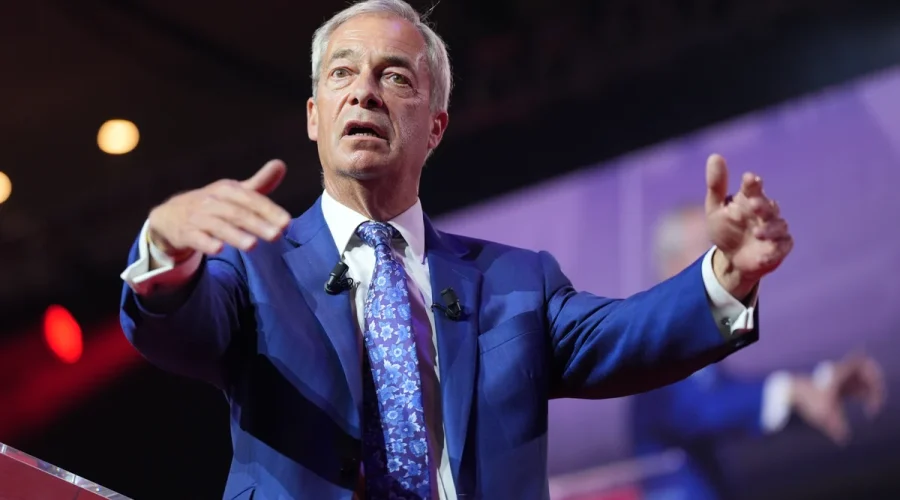
The political figure delivered his inaugural significant address following his departure from Parliament at London’s O2 venue. This gathering marked the inaugural British iteration of the Conservative Political Action Conference, commonly known as CPAC. The American political institution was notably introduced to the UK by former Prime Minister Liz Truss during her time in office.
A Scathing Critique of the New Leadership
During his presentation, Farage directed considerable criticism toward Mr Burnham, characterizing the incoming Prime Minister as “the great chameleon of British politicians.” This description suggests someone capable of adapting their positions to suit various audiences rather than maintaining consistent principles.
The Reform leader further dismissed the Makerfield MP’s acceptance address as “utterly vacuous,” indicating it lacked substance and meaningful content. He emphasized that the proper course of action would be to allow voters to express their preference through a general election rather than accepting leadership without public consultation.
“The only good and decent and right thing to do given where we are, with a new Prime Minister coming in, that none of you have had the opportunity to vote for or against, is that there must be an immediate general election so that the country can decide the future.”
Throughout his remarks, Farage consistently returned to his central argument regarding Burnham’s lack of democratic authorization. He noted this situation exists within what he described as “one of the world’s best and oldest and most functioning democracies,” suggesting an inconsistency between British democratic ideals and current circumstances.
Economic and Policy Concerns
Farage expressed confidence that conditions would not improve under Burnham’s leadership. He predicted that the new administration would continue existing policies while moving further leftward on the political spectrum. Despite Burnham’s claims of wanting to implement “the biggest change of direction in politics in 40 years,” Farage argued that such ambitions lack popular support beyond the 25,000 voters in Makerfield who elected him as Labour leader.
On immigration matters, Farage suggested Burnham had demonstrated minimal concern regarding current trends. He also expressed skepticism about the new Prime Minister’s willingness to withdraw Britain from the European Convention on Human Rights, stating there “was not a hope in hell” that such action would occur.
Regarding economic policy, Farage warned that taxes would increase, particularly property taxes that could destabilize the housing market in London and the South East while causing damage elsewhere. He anticipated that the top rate tax would rise and noted that whoever Burnham appointed as Chancellor would lack private business experience, potentially explaining the economy’s current difficulties.
Personal Motivation and Future Predictions
The Reform leader explained that his continued involvement in politics stems not from personal ambition but from fear that Britain is “going down the drain.” He made a stark prediction that if Reform fails to win the next election, the UK would “go bust.” Farage further claimed he believes the nation is “less than a decade away from effectively turning into a third world country,” vowing not to witness this decline passively.
In contrast, Burnham had recently declared his intention to restore “hope” to the British public while establishing a “distinctively Labour” political direction. The former Greater Manchester mayor, who returned to Westminster as Makerfield MP last month, received overwhelming support from Labour MPs to succeed Sir Keir Starmer following his resignation announcement.
During his acceptance speech, Burnham committed to building a new politics characterized by reduced division and factionalism. He emphasized the necessity of party unity to counter what he termed “Britain’s new right.” The Home Secretary, Shabana Mahmood, serving as chairwoman of Labour’s National Executive Committee, officially confirmed the leadership contest results.
“He is the great chameleon of British politics, capable of being all things to all people.”
Farage, currently contesting a by-election in Clacton after resigning his parliamentary seat in protest against scrutiny of his finances, positioned himself as a voice of concern for the nation’s trajectory. His speech at CPAC represented both a personal statement and a broader challenge to the political establishment’s direction.