
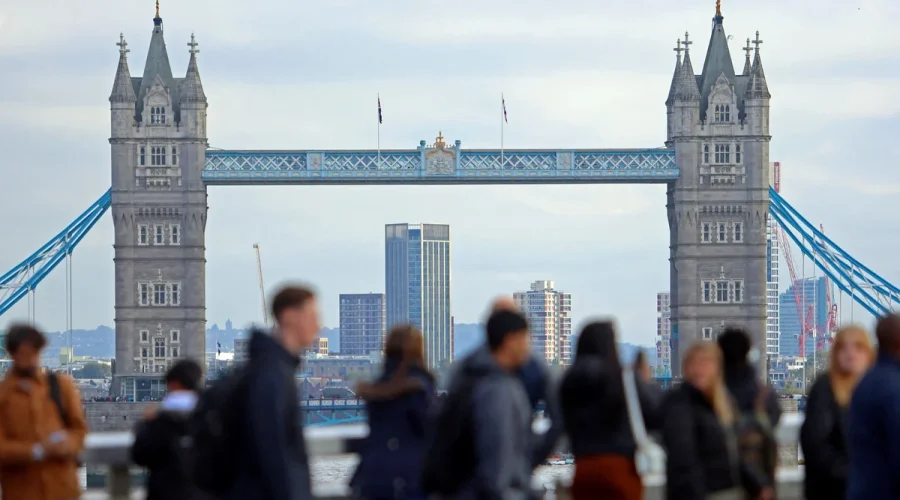
London Leavers: City Population Drops for First Time in 37 Years
Traveloasisspot.com – London leavers are reshaping the capital’s demographic landscape as more than 400,000 residents depart within a single year, relocating to other parts of the United Kingdom. According to comprehensive mid-2025 statistics from the Office for National Statistics, this marks the first genuine population decline in London since 1988, representing a historic turning point for the city.
The phenomenon of London leavers extends beyond temporary pandemic-era movements. While the coronavirus period saw significant population shifts, those changes were largely transient. The current exodus reflects a more permanent structural transformation, with many Londoners choosing to establish permanent homes in commuter towns or distant regions in search of better quality of life and affordability.
Understanding the Migration Numbers
The detailed ONS data reveals a complex picture of London’s changing fortunes. During the year ending June 2025, precisely 420,492 individuals relocated from the capital to other British regions, while 288,531 people arrived from elsewhere in the country. This imbalance created a net outflow of 131,961 residents, fundamentally altering the city’s demographic trajectory.
Despite this domestic outflow, London continues to attract international talent. The data shows 234,612 people arrived from overseas compared to 182,773 who departed for foreign destinations, generating a net international inflow of 51,839. Similarly, natural population growth remains positive, with 104,610 births recorded against 50,399 deaths during the same period.
Although London had positive natural change (more births than deaths) and net international inward migration, this was more than offset by net outward migration to other areas of the UK.
Boroughs Leading the Exodus
Certain London boroughs are experiencing particularly pronounced population losses among London leavers. Newham leads with 16,235 residents departing, followed by Brent with 9,077, Redbridge with 8,267, and Southwark with 7,494. Tower Hamlets, Lambeth, and Hillingdon also feature prominently in the outflow rankings, with 6,900, 6,694, and 6,475 departures respectively.
These movements have collectively reduced London’s total population by 0.29%, equivalent to 26,737 people, bringing the mid-2025 figure to 9,122,909 residents. This decline carries implications across multiple sectors, from education to housing markets, as families relocate and demand patterns shift.
Broader National Context
The London trend mirrors wider patterns across England and Wales, where population growth has slowed to its lowest level since the pandemic. The combined population of these nations reached an estimated 62 million in mid-2025, representing an increase of 224,900 or 0.4% from the 61.8 million recorded in mid-2024.
This modest growth rate follows more substantial increases in recent years, including a 1.4% rise in 2023 and 1.0% in 2024. The deceleration stems primarily from declining net migration to the UK, which has fallen dramatically from record levels achieved in 2023. Net international migration to England and Wales totaled 211,700 in the year to mid-2025, compared to 612,500 during the previous twelve months.
Natural change also contributed modestly to population growth, with 588,000 births and 568,400 deaths resulting in a net increase of 19,600. Notably, the birth rate represents the lowest figure since mid-1978, while deaths remain at their lowest level since mid-2019. These demographic shifts suggest a complex interplay of factors reshaping Britain’s population landscape, with London at the center of this transformation.
Frequently Asked Questions About London Leavers
Why are London leavers leaving the capital? Rising housing costs, improved remote working opportunities, and the desire for better quality of life in other regions are primary drivers behind the exodus of London residents.
How significant is this population decline? With 420,492 people leaving London in a single year, this represents the most substantial net outflow since 1988, marking a historic demographic shift for the city.
Which boroughs are losing the most residents? Newham leads with 16,235 departures, followed by Brent (9,077), Redbridge (8,267), and Southwark (7,494).
Is London still attracting international migrants? Yes, despite domestic outflow, London continues to see net international migration with 234,612 arrivals compared to 182,773 departures to overseas destinations.
What impact does this have on London’s economy? The population decline affects housing markets, school enrollment, and local businesses as demand patterns shift across different sectors of the capital’s economy.