Miliband Navigates Past Trump Criticism During Key Washington Diplomatic Visit
Traveloasisspot.com – Britain’s Foreign Secretary Ed Miliband faced direct questioning regarding his historical stance on Donald Trump while conducting important bilateral discussions in the American capital. The diplomatic encounter with US Secretary of State Marco Rubio provided an opportunity to address longstanding political differences while focusing on pressing international matters requiring coordinated action.
Reporters present at the US State Department captured Miliband’s response when asked whether he maintained his characterization of the former American president as someone who was “an idiot, a racist and a misogynist.” Rather than providing an extended explanation, the Foreign Secretary offered a measured acknowledgment of the past comments while emphasizing the forward-looking nature of current diplomatic relations.
Building on Recent Bilateral Engagement
This Washington visit represents the second formal meeting between Miliband and Rubio, following their initial encounter on the sidelines of a foreign ministers’ summit held in the Philippines during the previous month. The invitation to travel to the United States capital signaled mutual interest in strengthening Anglo-American cooperation across multiple policy areas.
The agenda for discussions encompassed several critical international challenges. Reopening the Strait of Hormuz emerged as a priority objective, given its strategic importance for global energy supplies and commercial shipping routes. The ongoing conflict in Ukraine and the humanitarian crisis developing in Gaza rounded out the key topics requiring sustained diplomatic attention and coordination between the two nations.
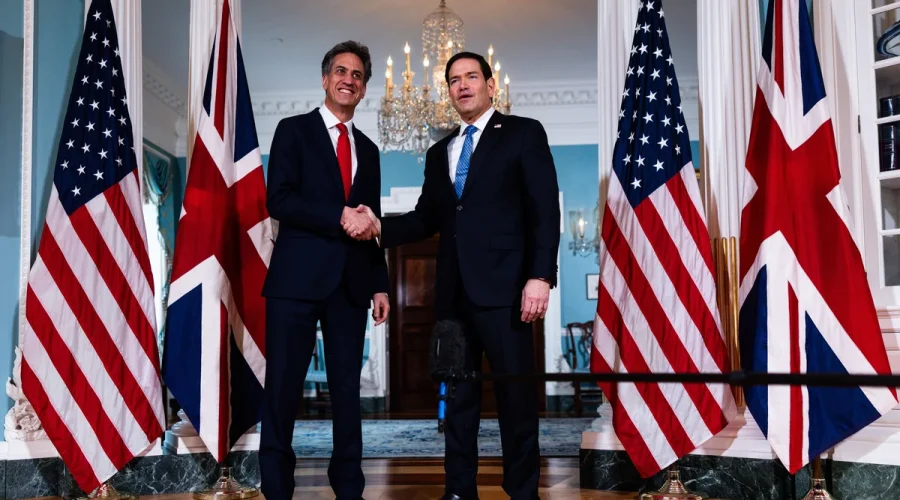
Smiling as he shook hands with Mr Rubio at the US state department, Mr Miliband ducked shouted inquiries by reporters about his previous strident views on Mr Trump, and said: “We are looking forward to our meeting.”
Energy Policy Divergence and Convergence
The relationship between the two diplomats carries additional significance given their contrasting positions on energy policy. During his tenure as energy secretary, Miliband established himself as a vigorous advocate for renewable energy sources and net zero emissions targets. His commitment to green transition policies positioned him as a champion of environmental sustainability within British politics.
Conversely, Trump has consistently demonstrated strong support for fossil fuel industries, including his advocacy for expanding North Sea oil exploration and his well-documented opposition to wind energy infrastructure. This policy divergence could potentially influence future bilateral cooperation on climate and energy matters.
Prime Minister Andy Burnham has indicated a willingness to adjust Britain’s energy approach since taking office, a flexibility that has received positive acknowledgment from American officials. The White House reportedly expressed concerns regarding Burnham’s decision to appoint Miliband to lead the Foreign Office, suggesting that the energy policy landscape remains a point of active diplomatic consideration.
Washington’s Assessment of Miliband’s Evolution
Warren Stephens, the American ambassador stationed in the United Kingdom, recently offered his perspective on Miliband’s historical comments about Trump. The ambassador suggested that the Foreign Secretary had been “wrong” in 2016 when describing Trump as “a racist, misogynistic, self-confessed groper.” Stephens expressed hope that Miliband’s views had evolved since that period of intense political rhetoric.
Despite this disagreement over past statements, Stephens committed to working constructively with Miliband in his current role, demonstrating that personal political differences need not impede professional diplomatic cooperation. This willingness to move forward reflects the broader tradition of Anglo-American relations transcending individual political personalities.
Speaking ahead of his talks with Mr Rubio, Mr Miliband said: “The Government is committed to nurturing our strong, enduring and essential alliance with the US.”
Strategic Priorities on the Agenda
The Strait of Hormuz represents a critical maritime chokepoint that had remained open before the United States and Israel initiated military operations in February. Disruptions to this vital shipping lane have contributed to increased fuel and food prices globally, creating cost-of-living pressures that directly affect British households and families.
Miliband emphasized the connection between international security and domestic economic stability, noting that securing a lasting ceasefire would help alleviate financial burdens on ordinary citizens. The Foreign Secretary’s remarks highlighted how geopolitical conflicts extend beyond their immediate theaters of operation to influence everyday life across the Atlantic.
I am greatly looking forward to my second meeting with secretary of state Marco Rubio, in which we will discuss the ongoing work to reopen the Strait of Hormuz and secure a lasting ceasefire, which is essential to ease cost-of-living pressures on British families.
Ukraine and Gaza: Parallel Challenges
Ukraine’s struggle against Russian aggression continues to demand sustained international support. Miliband prepared to articulate the principle that Ukrainian security remains fundamentally connected to broader European and transatlantic stability. The United Kingdom has maintained its commitment to supporting Kyiv through whatever duration the conflict requires, demonstrating consistency in its foreign policy approach.
Simultaneously, the humanitarian situation in Gaza presents another dimension of international responsibility. Addressing the dire conditions faced by Palestinian civilians while working toward sustainable peace for both Palestinians and Israelis requires coordinated diplomatic effort and sustained engagement from multiple nations.
In my meeting with UK Foreign Secretary Ed Miliband, we discussed the need for Europe to take a greater role in its own security. We also reaffirmed our shared commitment to open transit in the Strait of Hormuz and ensuring Iran never obtains a nuclear weapon.
Broader Diplomatic Engagement
Beyond the bilateral meeting with Rubio, Miliband’s Washington visit includes additional diplomatic engagements. The Foreign Secretary will meet with World Bank president Ajay Banga following the announcement that he will assume the United Kingdom’s position on the World Bank board. This meeting will focus on development initiatives, climate change responses, and efforts to strengthen global resilience against future challenges.
The strategic sea route through the Strait of Hormuz has proven to be a flashpoint in Middle East conflicts, with trade disruptions having measurable impacts on global commodity prices. Understanding this connection between international security and economic stability remains central to effective foreign policy formulation.
As Britain navigates complex international relationships, the ability to maintain constructive dialogue while acknowledging past differences demonstrates the maturity of diplomatic engagement. The upcoming weeks will reveal whether the foundations laid during this Washington visit translate into sustained cooperation on the critical issues facing both nations and the broader international community.
Related Reading
Frequently Asked Questions
What is Miliband ignores questions about past views?
Miliband ignores questions about past views is the main topic of this guide. The article explains the context, practical details, and next steps readers should understand.
Why does Miliband ignores questions about past views matter?
Miliband ignores questions about past views matters because readers are looking for a useful answer, not just a short summary. Good content should match search intent and help them decide what to do next.