London Marylebone Trains Cancelled by Track Inspection
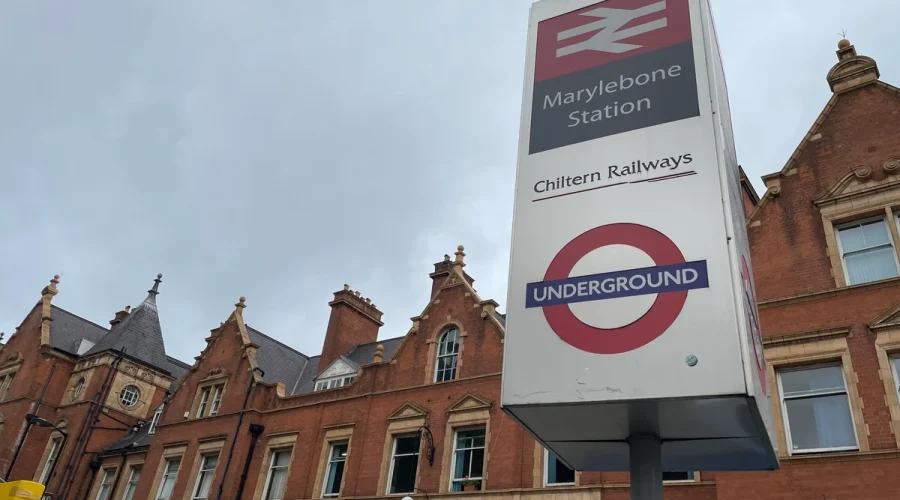
Traveloasisspot.com – London Marylebone trains cancelled and delayed across an entire evening service day after engineers shut a critical stretch of west London track for an emergency safety inspection. Commuters and intercity passengers faced cancellations and delays stretching to 45 minutes when the line between West Ruislip and South Ruislip was closed, severing the primary corridor that links the capital’s Marylebone terminus with the West Midlands, Oxfordshire, and the Buckinghamshire commuter belt.
Scope of the Disruption
National Rail confirmed the blocked section rendered the route unusable for the rest of the service day. Chiltern Railways, which operates the majority of services into the station, advised passengers to expect disruption lasting until the end of operations. Trains normally stopping at West Ruislip, South Ruislip, and intermediate stations were either cancelled outright or held indefinitely while crews assessed alternative routing.
The knock-on effects extended far beyond the immediate west London area. Intercity routes toward Birmingham Snow Hill, Birmingham Moor Street, Stourbridge Junction, Stratford-upon-Avon, Banbury, Aylesbury, High Wycombe, and Oxford were all disrupted. Passengers mid-journey faced missed connections, stranded luggage, and lengthy waits for replacement buses or rescheduled departures.
Heat-Related Derailments Set the Context
The inspection was not an isolated precaution. Days earlier, two separate passenger trains had derailed within a single 24-hour window — one on a Thursday, the other the following Friday — both incidents occurring just outside London’s boundaries. Temperatures at the time had surged past 38 °C during what was recorded as the fifth heatwave of that summer, placing extraordinary thermal stress on the rail network.
Steel rails expand as ambient temperatures climb. Under sustained extreme heat, the metal can lengthen by several centimetres over a single sleeper span. When that expansion is constrained by fastenings or adjacent track geometry, the rail may buckle laterally, producing a sudden gauge deviation capable of lifting wheels off the running surface. Engineers call the phenomenon “sun kink” or “heat buckling,” and it ranks among the most dangerous failure modes in railway infrastructure because it can develop rapidly with little visible warning to approaching trains.
In the wake of the two derailments, the Rail Accident Investigation Branch (RAIB) and Network Rail launched parallel investigations to determine the precise mechanical cause of each event. The evening inspection between West Ruislip and South Ruislip formed part of the broader safety response, with engineers examining rail geometry, fastening integrity, and ballast condition on sections that experienced peak-temperature loading during the heatwave.
Operator Statement and Passenger Guidance
A Chiltern Railways spokesperson addressed the disruption directly:
“We are sorry to announce that due to a safety inspection of the track between the Bicester area and Haddenham & Thame Parkway, services on the lines towards Oxford, London and the West Midlands, may be cancelled or delayed.”
National Rail urged all affected passengers to check real-time service information before leaving home or work and to build in substantial extra travel time. Station staff were instructed to provide updated departure boards, replacement-bus details, and ticket-refund guidance where services were cancelled outright.
Why the Wider Network Is at Risk
The Marylebone corridor carries a dense mix of commuter, semi-fast, and intercity traffic. A single-track closure between two west London stations can cascade delays across multiple operators and hundreds of daily services. The timing — an evening peak when return-home demand is at its highest — amplified the inconvenience for thousands of travellers who depend on the line for work commutes, evening appointments, and weekend trips.
More broadly, the sequence of events underscores a growing infrastructure challenge: as summer temperatures in southern England push beyond levels the network was originally engineered to tolerate, the frequency of heat-related track interventions is likely to increase. Network Rail has in recent years accelerated its programme of rail replacement, fastening upgrades, and ballast renewal specifically to raise the thermal tolerance of the network, but the scale of the task means legacy sections remain vulnerable during extreme-weather episodes.
Frequently Asked Questions
Why were services cancelled rather than simply delayed? Once the track between West Ruislip and South Ruislip was closed for inspection, no train could pass through that section. Without an alternative routing available on the same evening, operators had no choice but to cancel affected departures rather than hold them indefinitely.
Which destinations were affected? All routes normally using the closed section, including services toward Birmingham (Snow Hill and Moor Street), Stourbridge Junction, Stratford-upon-Avon, Banbury, Aylesbury, High Wycombe, and Oxford, were disrupted for the remainder of the service day.
What should passengers do if caught in similar disruption? Check National Rail or the operator’s live service page before travelling, allow extra time, and follow station-staff instructions for replacement buses or ticket refunds. Keep your ticket or booking reference handy for any compensation claim.
Is the track safe now? The inspection was part of a wider safety response following two heat-related derailments. RAIB and Network Rail investigations were ongoing, and engineers examined rail geometry, fastening integrity, and ballast condition before the line was cleared for normal operation.