London’s Clean Air Zone Shown to Reverse Childhood Lung Damage in Landmark Five-Year Study
Traveloasisspot.com – A peer-reviewed investigation tracking the respiratory development of thousands of schoolchildren has produced what health advocates call definitive proof that ultra low emission zones can undo the physiological harm caused by traffic pollution in young lungs. The work, published in The Lancet Public Health on Tuesday, follows more than 3,400 children aged six to nine across 84 primary schools in London and Luton over annual school-visit measurements spanning 2018 through 2022.
The study was led by researchers at Queen Mary University of London and represents one of the largest longitudinal examinations of how a city-scale air-quality intervention affects paediatric lung growth. Luton, a town roughly 30 miles north of the capital, served as the control group because it carries a comparable burden of road-traffic emissions yet never implemented a clean air zone of its own.
What the Data Revealed
At the outset of the monitoring period — before London’s ultra low emission zone took effect in 2019 — baseline spirometry readings showed that children in the capital possessed measurably smaller lung capacity than their Luton counterparts. The gap reflected years of accumulated exposure to nitrogen dioxide and particulate matter from older diesel and petrol vehicles that dominated London’s roads at the time.
Over the subsequent five years, however, the trajectory reversed. Lung growth among London children accelerated markedly, and by the final measurement round their lung size and function had converged with those of children in Luton. The authors attributed this convergence strongly to the measurable improvements in ambient air quality that followed the zone’s introduction, rather than to seasonal variation, maturation effects, or other confounders.
Why Children Are Disproportionately Affected
The physiological rationale for focusing on this age group is straightforward. Children breathe at a faster rate per kilogram of body weight than adults, and their shorter stature places their airways closer to ground-level exhaust plumes — the very height at which vehicle tailpipes discharge pollutants. Their lungs are still in a phase of active growth, meaning that chronic irritant exposure during these formative years can permanently constrain final lung capacity and predispose to chronic disease later in life.
Reducing that exposure, the study implies, does not merely prevent further damage; it allows the developing organ to catch up. The conditions most at risk include asthma, chronic obstructive pulmonary disease, and lung cancer — illnesses whose incidence tracks closely with long-term particulate and nitrogen-oxide exposure.
Political and Public-Health Implications
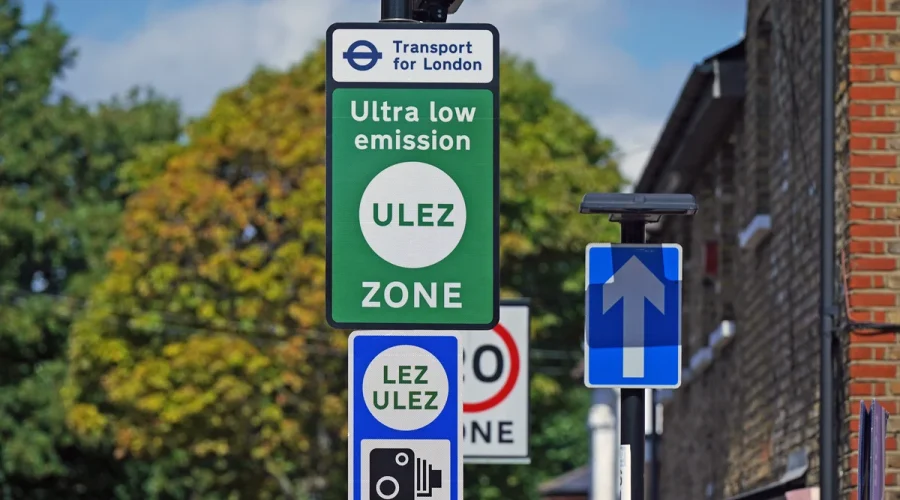
London’s ULEZ, introduced by Mayor Sadiq Khan in 2019, has been a persistent flashpoint in local politics. Supporters point to reductions in nitrogen dioxide concentrations within the zone boundary; opponents characterise the £12.50 daily charge levied on drivers of vehicles that fail to meet minimum emissions standards as a regressive levy that falls hardest on low-income workers, small-business operators, and tradespeople who depend on older vans and cars for their livelihoods. Questions about the scheme’s cost-effectiveness and its equity profile have kept it in the headlines ever since launch.
The new evidence, however, reframes the debate in clinical terms. Sarah Sleet, chief executive of Asthma + Lung UK, described the findings as “hard evidence” that low emission zones can reverse pollution-related lung damage in children.
“ULEZ can spark fierce political debate, but this study replaces the polarised opinions with hard evidence,” Sleet said.
“Air pollution damages kids’ lungs, and low emission zones can reverse the harm.”
Sleet went further, arguing that the capital’s experience should become a national template. She noted that seventy years have passed since the first Clean Air Act was enacted in Britain, yet millions of children in other UK cities continue to grow up in air that stunts their respiratory development.
“The ULEZ has been a world-leading public health success and should be replicated in urban areas across the country. There is no good justification for children living in other UK cities to suffer stunted lung development when we know clean air zones work,” she said.
“The study authors have provided the evidence, now it’s up to local and national leaders to take action. Seventy years on from the first Clean Air Act, politicians can – and should – take steps to protect countless children from the suffocating grip of air pollution.”
How the Zone Operates
The scheme’s mechanism is mechanical and straightforward: vehicles that do not satisfy defined minimum emissions thresholds — largely older diesel cars, petrol vehicles below Euro 4/5 standards, and non-compliant vans — must pay a daily charge of £12.50 to enter the designated area. The revenue funds further air-quality monitoring and local transport improvements. The primary pollutants targeted are nitrogen dioxide and fine particulate matter, both of which are well-established contributors to airway inflammation and impaired lung growth in children.
For parents and guardians, the practical takeaway is that proximity to a functioning clean air zone appears to confer a measurable developmental advantage on children’s respiratory systems. For policymakers, the study removes what had been a lingering evidentiary gap: the question is no longer whether such zones work, but how quickly and widely they can be deployed across Britain’s urban landscape.
Related Reading
Frequently Asked Questions
What is Ulez linked to improved lung growth?
Ulez linked to improved lung growth is the main topic of this guide. The article explains the context, practical details, and next steps readers should understand.
Why does Ulez linked to improved lung growth matter?
Ulez linked to improved lung growth matters because readers are looking for a useful answer, not just a short summary. Good content should match search intent and help them decide what to do next.