Ridley Scott’s Post-Apocalyptic Vision Hits London’s Big Screen
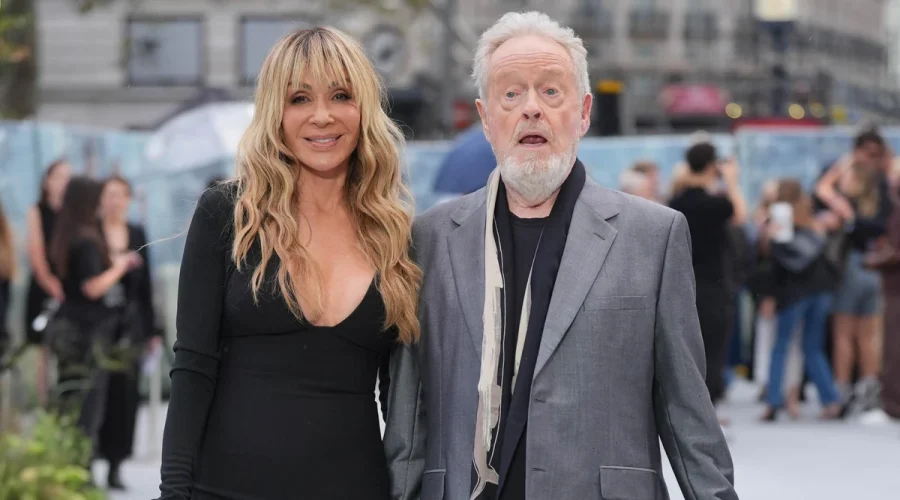
Traveloasisspot.com – At eighty-eight years old, Sir Ridley Scott remains one of cinema’s most formidable architects of spectacle and scale. The man who shaped the visual grammar of Gladiator, Thelma and Louise, and The Martian has returned with a project that channels his signature grandeur into a far more intimate, survival-driven narrative: The Dog Stars, an adaptation of Peter Heller’s 2012 novel. The film made its world premiere in central London, drawing attention not only for its apocalyptic premise but for the director’s own reflections on what draws him to a story in the first place.
A World After the Collapse
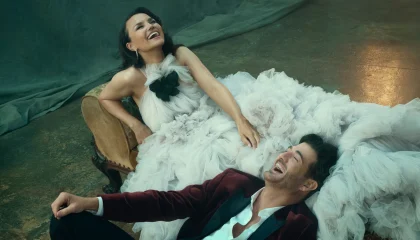
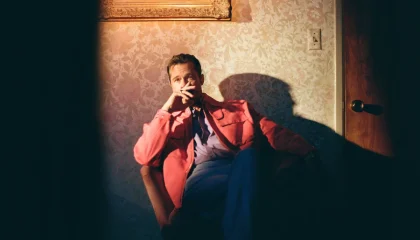
The story centres on Hig, a former pilot portrayed by Jacob Elordi, best known to a new generation for his role in Wuthering Heights. Hig navigates a landscape where a virus has already erased the vast majority of the human population. He moves through the wreckage alongside a small band of survivors, each trying to keep breathing in a world that has lost its infrastructure, its institutions, and most of its neighbours. The tone is less about spectacle than about endurance — about what a person does when the rules of civilised life simply stop applying.
Scott drew a pointed parallel between the film’s layered catastrophe and recent real-world shocks. Speaking to the Press Association at the premiere, he urged audiences to pay close attention to how the narrative stacks one disaster atop another.
“Be careful” and “watch out,” he cautioned, explaining that the film’s world is one where “you have Covid and then you have financial global collapse in 2008, but greedy banking, then you have something else. You have panic, chaos. Pay attention because it is kind of circling the waggon frame.”
Music as a Metaphor for Storytelling
When asked what compelled him to bring Heller’s novel to the screen, Scott reached for an analogy drawn from sound rather than image. For him, the act of reading a powerful novel is indistinguishable from listening to a great piece of music — both demand surrender, both reward attention, and both leave the audience altered.
“Readers like music, and great writing is like great music. So once I opened up that page with a good great writer, I listened to the music and I engaged.”
The remark underscores a recurring theme in Scott’s career: he has consistently gravitated toward source material that operates on an emotional frequency rather than a purely plot-driven one. Whether adapting Frank Herbert’s Dune or crafting the moral ambiguity of Alien, his work has tended to treat narrative as a kind of composition — structured, resonant, and ultimately felt in the body before the intellect can parse it.
An Ensemble Cast Spanning Generations
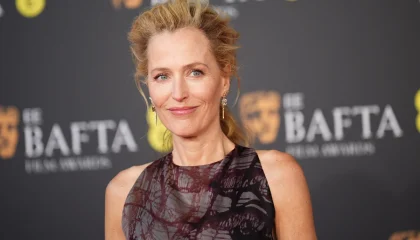
Beyond Elordi, the film assembles a roster of actors whose careers stretch across several decades of genre and drama. Margaret Qualley, recently seen in The Substance, joins Josh Brolin of No Country for Old Men, Guy Pearce of Memento, and Benedict Wong of the Marvel Cinematic Universe. The pairing of younger performers with veterans of the craft gives the project a generational texture that mirrors its own theme: survival across time, across loss, across the slow erosion of what came before.
Benedict Wong on Kindness, Loss, and Industry
Wong, who previously collaborated with Scott on both The Martian and Prometheus, framed his return to the director’s world as something closer to a civic reminder than a simple reunion. He described the film as a “timely reminder” to practise kindness in what he called a “divided world,” and spoke openly about how the pandemic’s toll on personal relationships made the story’s emotional core feel uncomfortably close to lived experience.
“It’s just a reminder of what we need. To be humane, humanity. The kindness that we need in a divided world hopefully, that we can take a leaf out of it, or we can take scenes from this movie. It’s just a timely reminder of maybe what we need to watch. We’ve definitely been in a situation in something that resonated like Covid. We’ve lost loved ones and so that’s not so far from the truth. It’s hope that centres around this – searching for humanity in devastating times.”
Those remarks land with particular weight given Wong’s recent public advocacy outside the set. Weeks before the premiere, he co-authored an open letter in The Guardian alongside Benedict Cumberbatch and Scottish actor Alan Cumming, urging the UK government to block the proposed Paramount–Warner Bros merger. The three argued the deal “threatens to inflict immense harm on the British public,” pointing to the consolidation of creative talent, the narrowing of editorial voices, and the vulnerability of production crews whose livelihoods depend on a diversified studio landscape.
Wong acknowledged that “some concessions” have since been tabled in the regulatory process, yet he maintained his core position: the two studios should “stand individually alone.” He cited the £12 billion the film industry contributes to the British economy and stressed that the sector’s capacity to “make something out of nothing” makes its structural independence a matter of national cultural interest, not merely corporate strategy.
“I never thought I’d find myself in that sort of situation, but you know, I care a lot about saving crews, jobs, and customers as well. The industry itself, you know, we bring in £12 billion in the economy. Like we make something out of nothing, and we’re good at this. During Covid everything kind of fell down, and we’re still trying to build back up. With any sort of merger, there’s always going to be losses and I just sort of felt that Paramount and Warner Brothers should stand individually alone. They’re great, great companies separately and both should have their own voice.”
Release and Context
The Dog Stars is scheduled for UK cinema release on 26 August 2026. Its arrival will place Scott’s latest work in a market still recalibrating after the pandemic-era disruptions to production schedules, exhibition patterns, and audience habits. For a director whose career has spanned five decades of technological and cultural upheaval, the film’s central question — what remains of human decency when every external structure has failed — feels less like genre convention and more like a direct address to the present moment.
Related Reading
Frequently Asked Questions
What is Sir Ridley Scott?
Sir Ridley Scott is the main topic of this guide. The article explains the context, practical details, and next steps readers should understand.
Why does Sir Ridley Scott matter?
Sir Ridley Scott matters because readers are looking for a useful answer, not just a short summary. Good content should match search intent and help them decide what to do next.