
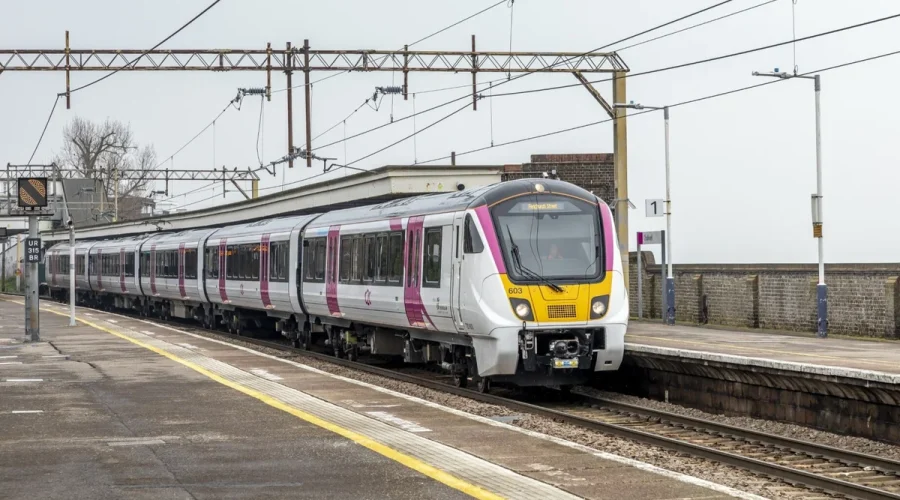
Essex Commuters Face Longer Rides as Heat-Damaged Tracks Force Timetable Overhauls
Traveloasisspot.com – For thousands of daily travellers shuttling between London and the Essex coast, the summer commute is about to stretch out. From Tuesday, August 25, amended schedules take effect across c2c routes, adding anywhere from two to eight minutes to affected journeys and shifting departure and arrival times. A second wave of adjustments lands on the Greater Anglia line linking Southend Victoria with London on Tuesday, September 1. The driver behind both sets of changes is not a strike, not a signal failure, but the sun itself — a prolonged spell of extreme heat paired with near-zero rainfall that has turned the clay subsoil beneath long stretches of Essex track into a cracked, shrunken mass, destabilising the rails above.
What the Timetable Shifts Mean in Practice
Passengers should expect slightly later departures and later arrivals on affected services. The added travel time ranges from two to eight minutes depending on the specific route and section of track under restriction. Because the adjustments alter the exact minute a train leaves or reaches a station, habitual commuters who rely on a fixed daily schedule are being explicitly warned to verify their journey before heading to the platform. The c2c and Greater Anglia websites carry the updated departure boards, and checking them before travelling is strongly recommended.
Elizabeth line services are, for now, unaffected by the speed restrictions. Transport for London nonetheless advises riders to consult TfL Go or the TfL website for real-time travel information before setting out, given that conditions on the ground remain fluid.
The Science of a Drying Trackbed
Clay soils expand when wet and contract when dry. After weeks of above-average temperatures and minimal precipitation, the expansive clay layers beneath the ballast in parts of Essex have lost moisture and pulled inward. That shrinkage creates voids and uneven support under the sleepers, meaning trains must slow down to prevent wheel-rail forces from displacing the track geometry. Speed restrictions are therefore imposed alongside the timetable amendments — a paired measure designed to keep trains moving safely while reducing the likelihood of sudden, short-notice cancellations that would hit passengers far harder than a modest schedule shift.
GBR Anglia’s Response
Martin Beable, Chief Operating Officer for GBR Anglia, framed the situation as one of balancing safety with service continuity:
“We’re taking action to keep everyone moving safely and reliably while minimising the impact on passengers. Our teams are working together across Anglia to keep running the best possible service despite the significant challenges we’re facing because of this exceptionally hot and dry weather.”
“We never want our customers to experience disruption, but safety will always be our priority. Thank you for bearing with us, and please do check before you travel, particularly if you’re used to getting the same time train every day.”
No Fixed End Date
Engineers are continuously monitoring track conditions across the region, and further speed restrictions could be layered in over the coming weeks if the subsoil has not yet rehydrated sufficiently. At present there is no published timeframe for when normal speeds — and therefore normal timetables — will be restored. Network Rail has stated that GBR Anglia is working to reintroduce standard schedules as quickly as ground conditions permit, but the pace of recovery depends entirely on rainfall and soil moisture returning to safe thresholds.
The Wider Engineering Programme
The heat-affected sections are not being left to recover passively. Network Rail is carrying out additional engineering work specifically aimed at hardening the railway against extreme weather events and the longer-term effects of climate change. This work sits within a £2.6 billion investment programme covering track maintenance and renewal across the network, with particular emphasis on drainage upgrades, earthworks reinforcement, and overhead power-line improvements.
In the Anglia region this summer, engineers have deployed specialist machines called tampers to compact the ballast stones beneath the rails, producing a denser, more stable foundation that resists differential settlement. Fresh ballast — the crushed stone that fills the space beneath rails and sleepers — is also being added to raise and stabilise sections of track that have settled unevenly. Last year, tampers were applied to roughly 100 kilometres of Anglia track already showing signs of dried-out soil. Ahead of this summer’s heatwave, thousands of tonnes of new ballast were laid in advance, and Network Rail projects using 49,000 tonnes across the region during calendar year 2026.
What Commuters Should Do Now
Until normal timetables are reinstated, the practical advice is simple: check before you travel. The c2c website and the Greater Anglia website publish the amended departure and arrival times in real time. For Elizabeth line users, TfL Go and the TfL website remain the authoritative sources. The two-to-eight-minute penalty may feel minor in isolation, but for connections at Liverpool Street, Fenchurch Street, or Southend Victoria, even a small shift can cascade into a missed transfer. Building in a buffer of ten to fifteen minutes for the duration of the restrictions is the least stressful approach.
The restrictions will remain in force until the clay subsoil has rehydrated and track geometry has been verified as stable by engineering teams. In a year when summer temperatures in southern England have repeatedly breached records, this episode is likely to become a recurring seasonal management challenge rather than a one-off anomaly — a reality that the £2.6 billion investment programme is explicitly designed to address over time.
Related Reading
Frequently Asked Questions
What is All the train timetable changes affecting?
All the train timetable changes affecting is the main topic of this guide. The article explains the context, practical details, and next steps readers should understand.
Why does All the train timetable changes affecting matter?
All the train timetable changes affecting matters because readers are looking for a useful answer, not just a short summary. Good content should match search intent and help them decide what to do next.