Davina McCall Receives Edinburgh TV Festival’s Top Honour for Three Decades on Screen
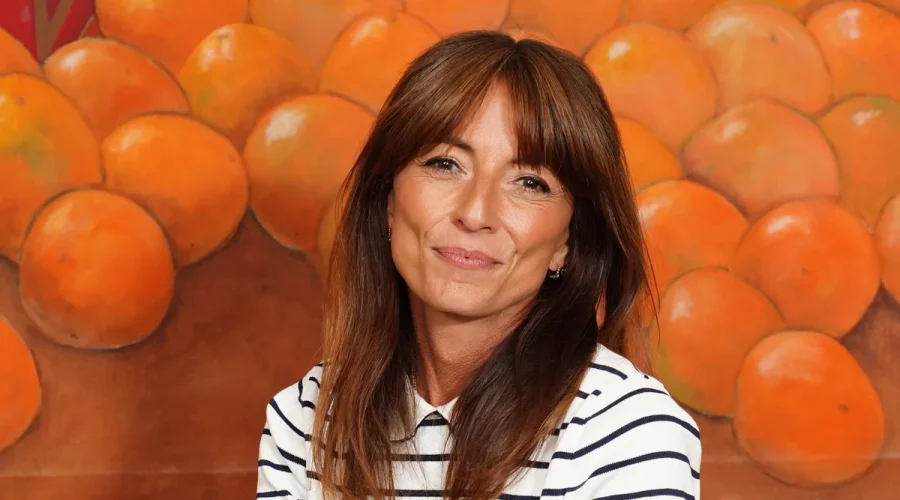
Traveloasisspot.com – The Edinburgh TV Festival handed its most prestigious recognition of 2026 to veteran broadcaster Davina McCall, whose three-decade presence on British television earned her the festival’s outstanding achievement award. The ceremony took place on Thursday evening, and McCall appeared visibly moved as she addressed the audience, admitting the honour carried an emotional weight she had not fully anticipated.
“It means a lot. I’m almost embarrassed by how much it means to me.”
That candid admission set the tone for an extended on-stage conversation with Nicky Campbell, her longtime friend and co-presenter of the BAFTA-winning documentary series Long Lost Family. Rather than delivering a rehearsed acceptance speech, McCall opted for an unscripted dialogue that ranged across her personal struggles, her evolving role as a health advocate, and what she believes the entertainment industry owes its audiences.
A Career Spanning Three Eras of British Television
The award recognises a trajectory that began in the early days of MTV’s UK expansion, where McCall first stepped in front of a camera. From that launchpad she moved into the reality-television boom, spending roughly ten years as the face of Big Brother, one of the longest-running formats in the genre. Since then her portfolio has stretched across game shows such as Million Pound Drop, the costume-competition spectacle of The Masked Singer, and the deeply personal genealogy storytelling of Long Lost Family, which collected multiple BAFTA nominations and wins for its empathetic approach to family mystery.
At fifty-eight, McCall occupies a rare position: she has navigated the tabloid era, the reality-TV gold rush, and the streaming-and-social-media disruption without retreating from public life. The festival’s decision to honour her at this juncture underscores how broadcasters still value sustained, multi-format careers over single-hit fame.
Divorce, Diagnosis, and the Cost of Public Scrutiny
Campbell steered the conversation toward the less glamorous chapters of McCall’s life. She spoke openly about a divorce that played out under intense media attention, comparing the sensation of watching headlines break to the experience of a Kardashian announcing a split.
“I felt a bit like a Kardashian when my divorce was announced.”
She described the process as “tough,” acknowledging that the public nature of the separation compounded the private grief. Yet when Campbell asked whether she would alter any decision made over thirty years of work, McCall’s answer was an unqualified no.
The interview then turned to health. In October of last year McCall received a breast-cancer diagnosis; by April she had been given the all-clear following surgery. That episode followed a prior operation in 2024 to remove a benign brain tumour, meaning she had already navigated one public health ordeal within a short span.
“When I got breast cancer, I felt like I could really disappear and not talk about it, but I’d already done it before with my brain tumour. I was kind of angry I had to talk about it.”
Her frustration at having to explain a second diagnosis to the same audience highlights a tension many public figures face: the expectation of transparency colliding with the desire for private recovery. McCall chose openness both times, a decision that fed directly into her subsequent advocacy work.
Menopause Advocacy and the Women’s-Health Mission
Following her diagnoses, McCall produced two documentary projects — Sex, Myths And The Menopause and Sex, Mind And The Menopause — that examine the physiological and psychological upheaval of perimenopause and menopause through interviews, medical commentary, and personal testimony. The films position menopause not as a quiet biological footnote but as a period that can, for some women, become genuinely life-threatening in its psychological toll.
“We are all going to go through the menopause, and for some of us it will be so bad that we consider taking our own lives. I’m on the other side, and I am living my best life and I am going to carry on doing that so you can see it is going to be OK. I’ve been reborn as a woman who can no longer give birth to children, but can hopefully mentor other women.”
She framed the work as a single, non-negotiable cause: women’s health. “You have to go all in on one thing, and this is it for me,” she told the Edinburgh audience, signalling that the advocacy will continue beyond the festival spotlight.
“Love Is the Antidote to Fear”
Campbell closed the interview by asking McCall for a single message directed at the television and entertainment industry as it grapples with algorithmic pressure, shrinking budgets, and a news cycle dominated by outrage. McCall’s answer was one word.
“Love.”
She expanded on the idea, arguing that the industry carries a “responsibility to be more loving about everything.” In her view, the current emphasis on clickbait functions as a form of structural violence — generating anger, hatred, and opposition that feeds back into audience anxiety.
“I know at the moment that clickbait is violence and anger and hatred and opposition, and I don’t know how we can do this, but we need to put more love out into the world to show that it is a safe place. Because it’s such a catch-22 that when you put violence out into the world, it creates more fear at the cost of love.”
The remark lands with particular force given the industry’s ongoing restructuring: consolidation of production houses, the migration of talent toward streaming platforms, and the erosion of traditional commissioning models all leave broadcasters and performers navigating uncertainty. McCall’s call for a more compassionate editorial culture is less a slogan than a practical challenge — one that the Edinburgh festival, by spotlighting a career built on empathy rather than spectacle, implicitly endorses.
The outstanding achievement award, presented at the close of the festival’s 2026 programme, joins a lineage of honours reserved for figures whose influence extends beyond any single show. For McCall, the recognition validates not just thirty years of on-screen work but the pivot from entertainer to advocate — a transition she describes as the most important chapter yet.
Related Reading
Frequently Asked Questions
What is Davina McCall almost embarassed by how much?
Davina McCall almost embarassed by how much is the main topic of this guide. The article explains the context, practical details, and next steps readers should understand.
Why does Davina McCall almost embarassed by how much matter?
Davina McCall almost embarassed by how much matters because readers are looking for a useful answer, not just a short summary. Good content should match search intent and help them decide what to do next.