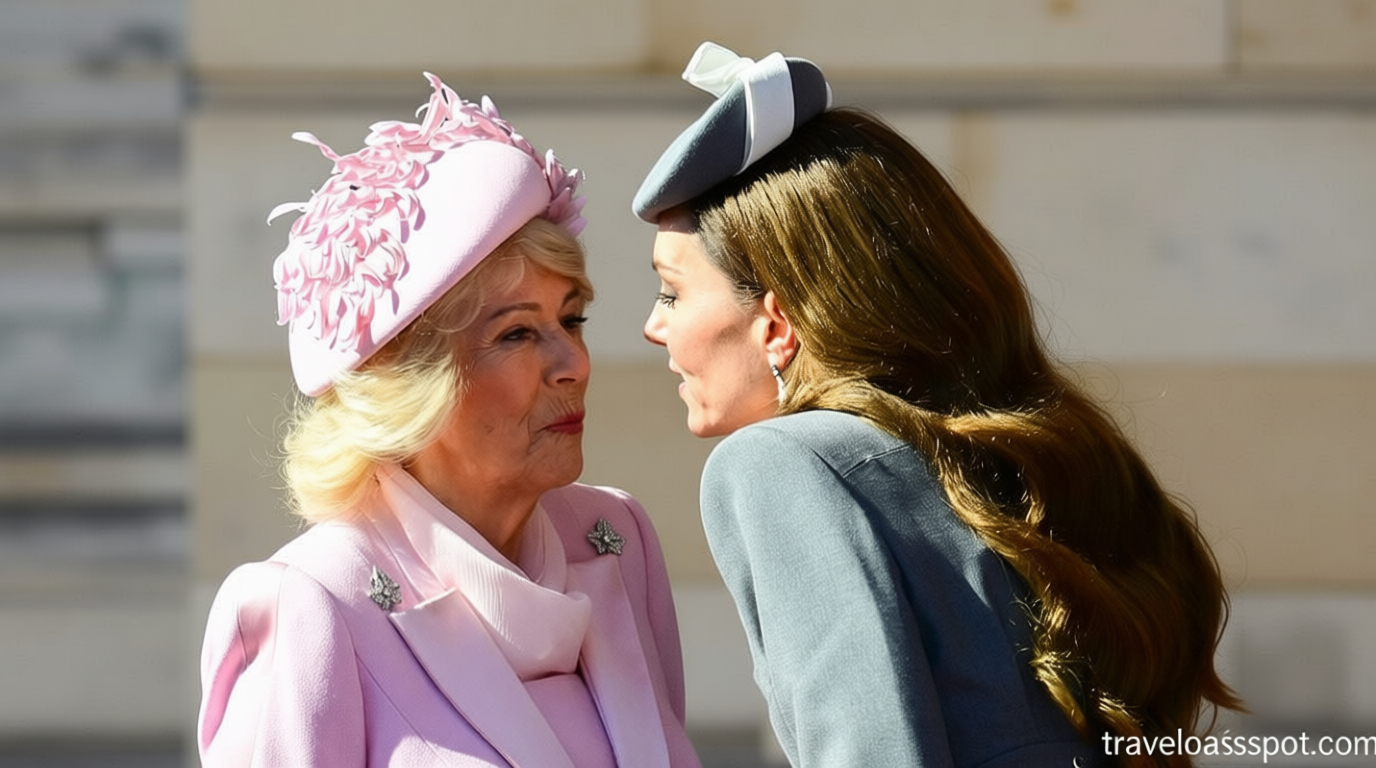
Kate’s secret message to Camilla, Charles’ kind gesture and ‘diplomatic’ jokes about jollof rice: All the moments you missed from the first Nigerian state visit in 37 years During the recent state visit, the royal family’s interactions highlighted a blend of tradition and warmth. The King took the lead in welcoming guests at Windsor, culminating in a dazzling banquet where he delivered a heartfelt toast. Mindful of cultural sensitivities, the event featured arrangements for Muslim attendees observing Ramadan, including a designated prayer space and Iftar setup. A heartfelt exchange and royal camaraderie The visit captured several touching scenes, such as the King’s lighthearted remark on jollof rice while the Princess of Wales performed a graceful curtsy. William and Kate, meanwhile, exchanged quiet laughter over a private joke, with the Prince receiving a warm greeting from his stepmother. One observer noted a sweet moment between Kate and Camilla, with Kate offering a compliment on the First Lady’s attire. According to a lip-reader, the exchange began with a greeting like ‘Good morning, how are you?’ followed by ‘you look beautiful!’ Camilla wore a pink wool crepe dress by Fiona Clare and a pink beret by Philip Treacy, alongside the late Queen Elizabeth II’s Cartier flower clip brooches. A unique royal gesture Following the ceremonial welcome in the Quadrangle, royal analysts remarked on a rare moment involving the King. He extended his hand to President Tinubu as they walked together, a gesture that may have reflected the President’s attentiveness or Charles’s cultural awareness. “The King’s downward glance suggests he was steadying himself on the uneven gravel. It’s possible Tinubu offered his hand to assist, highlighting a positive intent,” explained Inbaal Honigman of HELLO!. In Nigerian culture, men often walk closely and hold hands, a contrast to typical British norms. This subtle moment underscored the King’s diplomatic approach and appreciation for diverse customs. Words of recognition and unity The King’s speech included a memorable phrase, ‘Naija No Dey Carry Last’ – a Nigerian expression celebrating resilience and excellence. He also noted Nigeria’s status as the UK’s largest African export market since January, praising the diaspora as a ‘living bridge’ connecting nations. “The diaspora strengthens our cultures, enhances security, and boosts economic ties,” he stated, emphasizing shared growth and hope. Reflecting on history, the monarch acknowledged past challenges but framed them as lessons for progress. “History is not just a record of what was done to us – it’s a guide for how we move forward together,” he said, honoring those who endured hardship. As the festivities unfolded, the blend of British hospitality and Nigerian warmth created a memorable blend of tradition and camaraderie, offering a glimpse into the personal side of the royal family amidst grandeur.
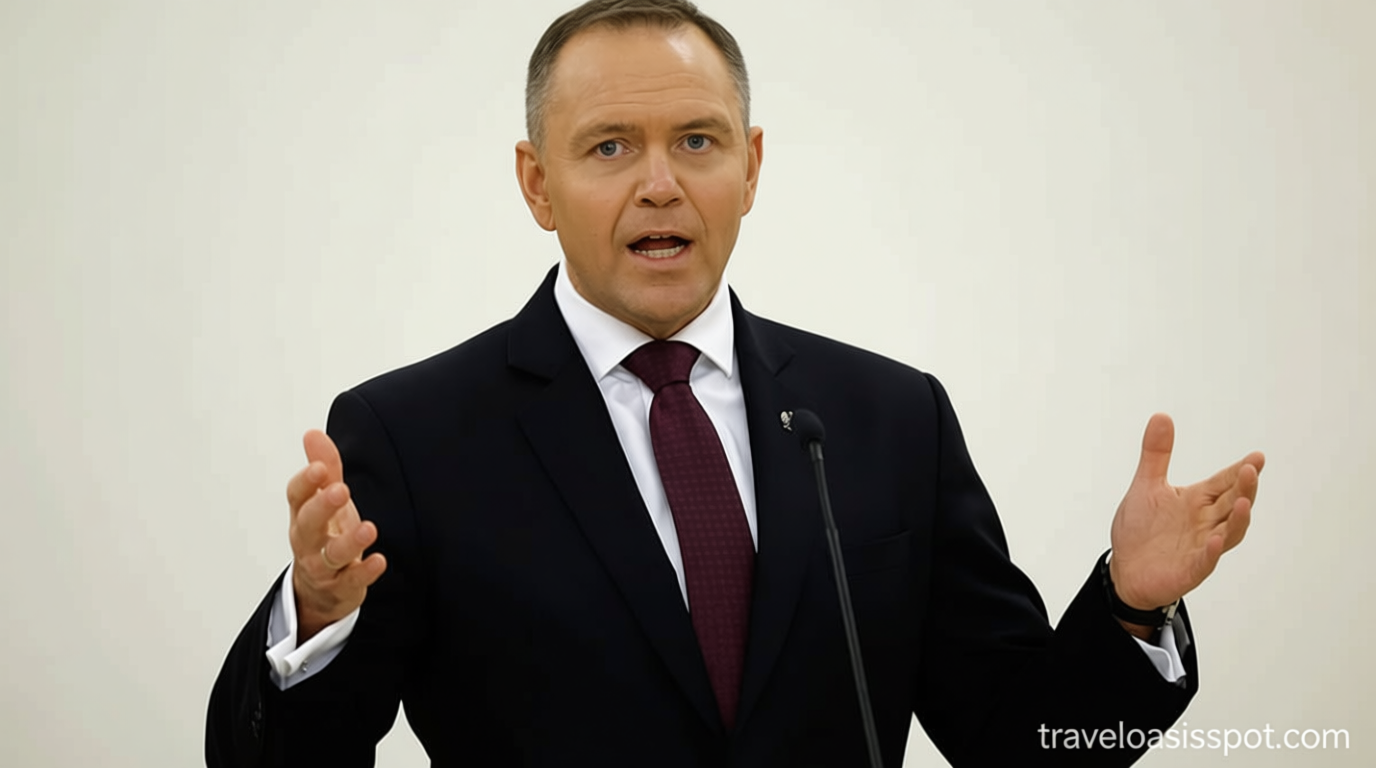
Polish president Nawrocki vetoes law unlocking €44bn in EU defence loans
Polish President Nawrocki Vetoes Law for EU Defence Loans President Karol Nawrocki of Poland has rejected a bill that would have granted the nation access to nearly €44 billion in European Union defence loans. This move has intensified a political disagreement with Prime Minister Donald Tusk’s pro-EU coalition, which advocated for the funding to support the country’s military modernization amid rising security threats. The legislation aimed to enable Warsaw to tap into the EU’s Security Action for Europe (SAFE) program, a €150 billion initiative designed to enhance defence spending and bolster Europe’s arms industry. Poland was projected to receive approximately €43.7 billion through the SAFE mechanism, positioning it as the largest recipient of the scheme. Tusk’s government argued that the loans would offer advantageous financing to accelerate military upgrades, particularly in light of Russia’s ongoing conflict in Ukraine. Officials highlighted potential uses of the funds, such as reinforcing eastern borders and expanding domestic weapon production. Nawrocki, backed by the conservative opposition, opposed the bill, citing concerns over increased reliance on Brussels. He suggested using national resources, including profits from central bank reserves, to fund defence projects. The veto sparked immediate backlash from the government. In a social media post, Prime Minister Donald Tusk criticized Nawrocki’s decision, calling it a missed opportunity to secure EU financial backing for defence initiatives. Government Pushes Back Against Veto Tusk announced plans to convene a special cabinet meeting to present alternative measures for approving the loan. He previously mentioned the government’s development of a “plan B” to ensure Poland could still benefit from SAFE funds. Foreign Minister Radosław Sikorski added his voice to the criticism, warning that denying access to the EU’s financial tool could hinder Poland’s ability to fortify its military. “The President lost his chance to act like a patriot,” Tusk stated on X, emphasizing the importance of EU support for national security. Defence Minister Władysław Kosiniak-Kamysz defended the government’s position, contending that EU loans would allow Poland to expand military spending without overburdening the national budget. The dispute underscores the tension between Poland’s domestic economic strategies and its reliance on EU funding for strategic priorities.

Iran is escalating the war by placing explosive mines along a key oil route. Here are the risks.
Iran’s Strategic Move in the Strait of Hormuz Iran’s ongoing military actions in the region have intensified, with reports indicating the country has begun deploying mines in the critical Strait of Hormuz. This move threatens global oil shipments, as the waterway serves as a primary conduit for one-fifth of the world’s oil supply. Analysts warn that the operation could disrupt maritime traffic and escalate regional tensions. Risks and Asymmetric Tactics Despite being outgunned and outspent by the US and Israel, Iran leverages its control over the strait as a key asset. The placement of mines aims to deter vessels from traversing the narrow passage, a strategy that highlights the nation’s reliance on unconventional warfare. This tactic, though limited in scale, could create significant challenges for international shipping. “If Iran has put out any mines in the Hormuz Strait, and we have no reports of them doing so, we want them removed, IMMEDIATELY!” Recent intelligence suggests Iran has laid a few dozen mines, according to sources close to US authorities. While the effort is not yet large-scale, the country still maintains a substantial fleet of small boats and minelayers. This contradicts Trump’s earlier assertion that Tehran has “no navy,” underscoring the complexity of the situation. Types of Mines and Operational Impact The US Congress estimated Iran possesses between 5,000 and 6,000 naval mines, including various designs such as limpet mines, moored mines, and bottom mines. These devices can be deployed manually or triggered by proximity, adding to the danger for ships navigating the strait. The Islamic Revolutionary Guard Corps (IRGC), with its own naval forces, remains a formidable threat in the region. On Tuesday, Iranian forces intercepted the Thai-flagged bulk carrier Mayuree Naree, causing an explosion in its engine room. Thai officials reported three crew members missing, while the Liberian-flagged Express Rome was also targeted that morning. The attacks illustrate the escalating risks for vessels attempting to pass through the strait. US Response and Limitations US Central Command claimed to destroy 16 Iranian minelayers near the strait, though it did not confirm any mines were removed. The US Navy’s minesweeping capacity has diminished, with the last dedicated minesweeper decommissioned in September. Critics now rely on littoral combat ships, which have faced reliability issues and are referred to as “Little Crappy Ships” by some. The UKMTO, a Royal Navy-backed organization, noted there is still no confirmed evidence of mine deployment or detonation in the strait. However, the potential for Iran to disrupt shipping persists, raising concerns about the strait’s vulnerability. Economic Consequences Should the strait remain closed, analysts estimate nearly 15 million barrels per day of crude oil and 4.5 million of refined products would be trapped in the Gulf. This could strain storage facilities and impact global energy markets. The narrow, high-traffic channel already demands precise navigation, but mines complicate efforts to restore normal operations.

Alexander brothers are convicted of sex trafficking in case that shocked real estate world
Three Alexander Brothers Convicted in High-Profile Sex Trafficking Case In a landmark ruling, three siblings—Oren and Alon Alexander, both prominent luxury real estate brokers, and Tal Alexander, who worked in the family’s private security operations—were found guilty of sex trafficking charges. The verdict, reached after a five-week trial, stemmed from accusations that they used drugs and force to sexually assault numerous women, lured by their wealth and lavish lifestyle. Victims Detail Assaults in Testimony Over a dozen female witnesses detailed encounters in upscale settings, including the Hamptons, a Caribbean cruise, and Aspen, Colorado. Eleven of these women specifically testified about being raped by one or more of the brothers. Prosecutors claim more than 60 women allege they were sexually assaulted, with some describing being drugged and losing control after minimal alcohol consumption. The defense argued that some accusers may have experienced memory lapses or sought financial compensation from the brothers’ fortunes. They conceded the Alexanders were known for attracting women but insisted all interactions were consensual. Jurors began deliberating on Thursday, ultimately convicting the trio on Monday. Professional Backgrounds and Legal Battles Before establishing their own firm, Official, Oren and Tal Alexander were top brokers at Douglas Elliman. Alon Alexander worked in the family’s private security firm. In addition to the criminal charges, the brothers faced approximately two dozen lawsuits. One notable case was filed by Tracy Tutor, a TV personality from “Million Dollar Listing Los Angeles,” who alleged Oren Alexander drugged and assaulted her in a New York City restaurant bathroom during a real estate event. When legal actions began, multiple women came forward, accusing the Alexanders of sexual harassment and assault. They described the brothers’ misconduct as a well-known secret in the real estate industry for years. Some victims testified that they were handed alcohol by the brothers, leading to a loss of control and subsequent attacks. Testimonies Highlight Tactics and Impact One accuser recounted meeting the Alexanders at a 2012 gathering hosted by actor Zac Efron. Though she had minimal interaction with the actor, she was taken to a nightclub and later woke up naked, with a nude Alon Alexander above her. Another woman, now 40, described being assaulted by Tal Alexander and another man in the Hamptons in 2011. She claimed she became so disoriented from drinking less than a glass of wine that she felt paralyzed. “I don’t want their money. I just don’t want them to have it,” she said. Lindsey Acree, a Brooklyn-based artist and gallery owner, testified that she sued Tal Alexander despite not needing his wealth. She expressed frustration over the Alexanders’ labeling of victims as “gold diggers.” “If there’s a kid with a stick who keeps hitting people, you take their stick away,” she told the jury. “Money is their stick, so you take it away so they can’t hurt people anymore.” Prosecutors Use Digital Evidence to Strengthen Case Prosecutors presented evidence including text and email exchanges where the brothers boasted about their sexual exploits and discussed the effects of drugs on a woman’s inhibitions. A blog post titled “It’s not rape if …” was also used to illustrate their mindset. The team also cited emails about sneaking drugs onto a cruise ship, videos of at least one assault, and photos of victims. The Associated Press typically does not reveal identities of sexual assault victims unless they publicly disclose their accounts, as Acree and Tutor did. The case has left a lasting impact on the real estate community, exposing a culture of exploitation linked to the Alexanders’ success.

Watch thief who targeted a wealthy tourist for his £37,000 timepiece as he left a high-end restaurant will be deported
Algerian thief sentenced to deportation after stealing £37,000 watch from Chinese professor Mohamed Sellaoui, a 19-year-old Algerian, has been sentenced to deportation following his conviction for robbing a Chinese chemistry professor of a £37,000 timepiece during an incident at a Mayfair restaurant. The young offender, who was aided by an Arabic interpreter, denied the charges but was found guilty after a three-day trial at Southwark Crown Court. The Heist in Mayfair Jiangfeng Ni, a professor at Soochow University in China, recounted the attack to jurors during the trial. He described how two men approached him from behind as he exited Langan’s Brasserie on Stratton Street. According to his testimony, one of the thieves attempted to remove his Patek Philippe watch from his left wrist, while the other pushed him into a corner. “The person with my watch fell over… the watch was still in his hand,” Ni said, emphasizing the clarity of the event through a Chinese interpreter. He added that the second suspect swung a punch at him as he tried to chase the thieves, shouting “woo woo” sounds before fleeing toward Green Park station. Legal Challenges and Testimony During the proceedings, defense lawyer Joshua Clements questioned the professor’s account. He argued that Ni had confused the suspects during the identity parade, adding unnecessary details not present in his initial police statement. Clements noted that the victim had spent nearly an hour examining different images, making certainty about the perpetrator questionable. “You asked to see different images 15 times. After that, you could not have been sure who the suspect was,” Clements claimed, challenging the reliability of Ni’s testimony. However, the professor countered that his strong eyesight allowed him to distinguish the individuals clearly, despite the nervousness he felt during the identification process. Deportation and Sentencing Judge Gregory Perrins confirmed Sellaoui’s deportation after sentencing him to jail time. The judge stated that while the teenager’s age would be considered, the illegal status of the defendant made deportation a certainty. The ruling follows a pre-sentence report, with the judge stressing that the outcome was not a surprise. Despite the defense’s plea for a suspended sentence, the judge ruled that Sellaoui’s unlawful presence in the UK meant a deferred penalty was not feasible. The teenager is now set for sentencing on April 9. Detective Constable Kira Halson, leading the Met Police investigation, praised the swift identification of Sellaoui via CCTV footage and a local officer’s recognition during a patrol. She highlighted the success of the New Met for London initiative in tackling violent crimes like this one.
2024 Travel News: Must-Know Trends & Destinations
2024 Travel News: Must-Know Trends & Destinations As we step into 2024, travel news in 2024 is shaping up to be a transformative year for the travel industry. With global recovery from the pandemic accelerating and travelers seeking new experiences, 2024 is marked by innovative trends, emerging destinations, and a renewed focus on sustainability. From tech-driven travel solutions to immersive cultural experiences, the year promises to redefine how we explore the world. Whether you’re planning a solo adventure or a family getaway, staying updated with the latest travel news in 2024 will help you make informed decisions and maximize your journey. Sustainable Travel Takes Center Stage Sustainability has become a cornerstone of modern travel, and travel news in 2024 highlights its growing importance. Airlines, hotels, and tour operators are increasingly adopting eco-friendly practices, such as carbon-neutral flights, plastic-free accommodations, and locally sourced tours. Travelers are also prioritizing destinations with strong environmental policies, pushing the industry toward greener operations. This shift isn’t just a trend—it’s a reflection of consumer demand for responsible travel that minimizes ecological impact. One of the key developments is the rise of carbon offset programs integrated into booking platforms. These programs allow travelers to calculate and compensate for their emissions, making sustainability accessible to all. Additionally, there’s a focus on zero-waste travel, with many destinations offering reusable luggage, biodegradable toiletries, and waste-free activities. As sustainability becomes more mainstream, it’s likely to influence travel costs and package offerings in 2024. Adventure and Culture: The New Travel Priorities Adventure and cultural immersion are now the top priorities for travelers in 2024. While budget-friendly options remain popular, there’s a noticeable shift toward unique, off-the-beaten-path experiences that offer deeper connections to local traditions and landscapes. From hiking in remote mountain ranges to exploring ancient ruins, travelers are eager to engage with authentic destinations that provide more than just scenic views. Travel news in 2024 also emphasizes the importance of cultural storytelling in travel planning. Destinations like Kyoto, Morocco, and New Zealand are not just popular for their natural beauty but for their rich heritage and storytelling opportunities. Tourists are seeking guided experiences that blend history, art, and local cuisine, ensuring a more meaningful trip. This trend is expected to drive demand for specialized tours and immersive cultural programs, offering travelers a richer and more personalized journey. Emerging Destinations to Watch in 2024 The 2024 travel landscape is seeing a surge in lesser-known destinations that are gaining global attention. Places like Bhutan, the Faroe Islands, and Uzbekistan are emerging as top choices for travelers seeking tranquility, adventure, or cultural depth. These spots are attracting visitors due to their unique offerings, from Bhutan’s emphasis on happiness and wellness to the Faroe Islands’ dramatic fjords and colorful cliffside villages. Another standout is Costa Rica’s Pacific Coast, which is becoming a hotspot for eco-tourism and adventure activities. Meanwhile, Alaska’s interior regions are seeing increased interest, thanks to improved infrastructure and the allure of wilderness exploration. These destinations are not only expanding the travel map but also pushing the industry to balance growth with conservation. As travel news in 2024 continues to spotlight these areas, they’re expected to become more accessible and popular in the coming year. Technology Enhances the Travel Experience Technology is playing a pivotal role in shaping the travel industry in 2024. From AI-powered travel assistants to seamless digital payments, innovation is making trips more efficient and personalized. Travel news in 2024 shows that travelers are increasingly relying on smart tools to streamline planning, navigation, and real-time updates. Apps that offer virtual reality previews of destinations, smart luggage with GPS tracking, and voice-activated booking systems are now mainstream. One of the most anticipated tech advancements is AI-driven itinerary planning, which uses machine learning to suggest tailored experiences based on user preferences. Additionally, contactless check-ins and biometric security measures are becoming the norm, especially in airports and hotels. These changes not only enhance convenience but also align with the growing demand for health and safety protocols. As technology continues to evolve, it’s likely to further revolutionize how we interact with the world during our travels. Safety and Health: A Focus for 2024 With the pandemic still influencing travel behavior, travel news in 2024 underscores the importance of safety and health considerations. Travelers are more cautious than ever, prioritizing destinations with low infection rates, reliable healthcare access, and flexible cancellation policies. This shift has led to a rise in health-focused travel packages, which include wellness retreats, guided fitness activities, and sanitization protocols. Health authorities and travel agencies are also emphasizing vaccination requirements and health passports as standard for international trips. Destinations are investing in better hygiene infrastructure, and airlines are introducing sanitized cabins and mask-free policies based on regional guidelines. These measures ensure that safety remains a key factor in 2024, allowing travelers to explore with confidence and peace of mind. The Rise of Solo and Small-Group Travel Solo and small-group travel are gaining momentum in 2024, driven by a desire for personalized experiences and social connection. Travel news in 2024 indicates that many travelers are opting for group tours that blend camaraderie with flexibility, rather than traditional large tours. These smaller groups offer a more intimate setting, allowing for deeper interactions with locals and a more tailored itinerary. Adventure-focused small-group tours are particularly popular, with themes like solo hiking, cultural exchange programs, and food tourism taking off. Destinations are also adapting by creating smaller accommodations and localized guides, enhancing the overall experience. This trend reflects a broader shift in how people approach travel, prioritizing meaningful connections over crowded tourist spots. FAQs Q: What are the top travel trends in 2024? A: 2024 travel trends emphasize sustainability, adventure, and technology, with a focus on eco-friendly practices, cultural immersion, and AI-driven travel solutions. Q: Are there any new destinations gaining popularity in 2024? A: Emerging destinations like Bhutan, the Faroe Islands, and Uzbekistan are becoming must-visit spots due to their unique experiences and growing accessibility. Q: How is technology changing travel in 2024? A: Technology

He was in his 90s – I never imagined he would sexually assault me
He was in his 90s – I never imagined he would sexually assault me I had never considered the possibility that someone of his age could commit such an act. For years, I had assumed that if I faced sexual assault, it would come from a younger perpetrator, someone less established in their demeanor and more likely to act impulsively. When the incident occurred, I froze instantly. My voice failed me, and I couldn’t even utter a single word. The man, who had once been my mentor and seemed both wise and reliable, stood before me with a triumphant smirk, his tongue tracing his lips as if savoring the moment. Later, I realized the assault felt like part of a sequence, a calculated move woven into the fabric of a routine exercise. It wasn’t the first time, and it wouldn’t be the last. The pattern was subtle, almost unassuming, which made it harder to recognize. During lockdown, when the world seemed to halt, I grasped a painful truth: life isn’t a dress rehearsal. The realization struck me deeply, especially as I prepared to pursue my passion for acting, something I had long delayed. At five, I fell for the magic of performance. For years, I dreamed of studying under a famous teacher in Los Angeles, but obligations kept pushing the dream aside. Yet, a few years ago, I decided it was time to take the leap. His age, I thought, was an advantage—his experience would offer insights I couldn’t ignore. On November 25, 2024, Metro launched This Is Not Right , a campaign to spotlight the ongoing crisis of violence against women. Partnering with Women’s Aid, the initiative aimed to reveal the depth of this national issue. My first lesson was straightforward. He outlined basic acting principles, focusing on observation and memory. But as the session neared its end, he proposed a new exercise, his tone gentle as he instructed me to close my eyes and repeat his name when something “happened.” Before I could react, his hand plunged into my jumper, swift and forceful. His assistant, a man in his 30s, remained silent, his gaze shifting away as if endorsing the act. The moment was both intimate and invasive, a violation disguised as a creative technique. I was too stunned to question him immediately. His reputation—built on a long career and a mention of his wife—made the abuse seem almost inevitable. The teacher’s authority cast a long shadow, blinding me to the harm unfolding in front of me. Later, I withdrew from the classes, though I stayed in LA for another month. A week after the assault, I received an email asking why I hadn’t returned for the second lesson. The audacity of his assumption left me speechless, a stark reminder of the power dynamics at play. Back home, I shared the story with others, hoping to make sense of it. Many had similar experiences, revealing how widespread the issue truly was. The teacher’s age and the way he integrated the abuse into a lesson were factors I hadn’t anticipated, yet they played a role in my hesitation to confront him. Victim Support provides assistance to survivors of sexual assault. You can reach them at 0333 300 6389. Though I never attended another session, the incident lingered, a constant reminder that even trusted figures can become sources of harm.
As Trump unleashes chaos, China has a message it wants the world to hear
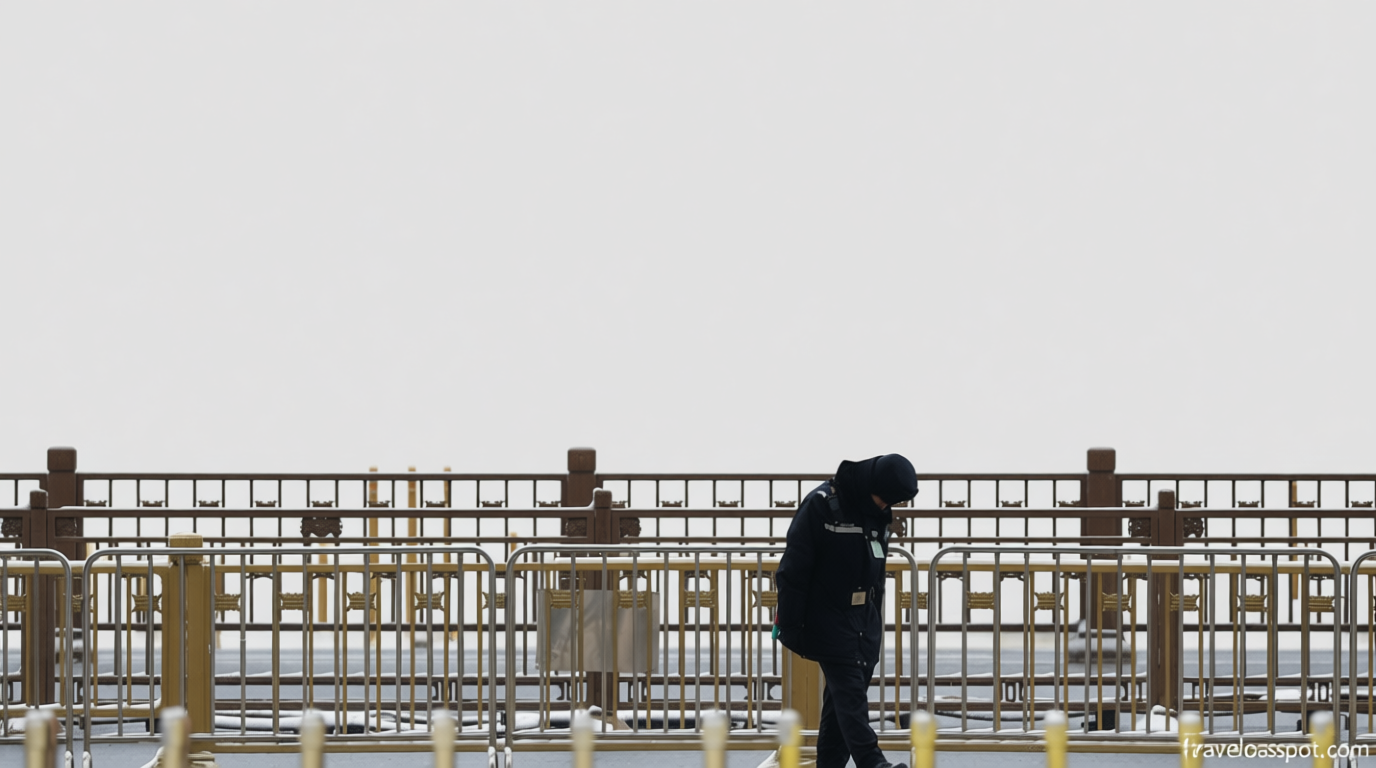
As Trump unleashes chaos, China has a message it wants to the world to hear This morning, Beijing’s Tiananmen Square was blanketed in snow, creating a stark contrast to the usual bustle. Typically a site where journalists face restrictions, its history imbues it with a sense of political gravity. However, today’s event marked an exception as the square was open to visitors, with full filming permissions offered—a sign of an extraordinary gathering. The annual Lianghui, or Two Sessions The annual Lianghui, or Two Sessions, is China’s counterpart to the parliamentary opening. It serves as a stage for showcasing the nation’s political direction, revealing glimpses of the leadership’s priorities and aspirations. Nearly 3000 delegates from across the country converged in the Great Hall of the People, representing China’s legislative body. Many wore traditional attire from various ethnic minorities, symbolizing the government’s emphasis on cultural diversity. “I’ve seen nothing to suggest my husband was involved,” said a Labour MP following the arrests of three men suspected of spying for China. The husband, a former Royal Marine and UK Border Force officer, was accused of participating in covert operations to gather intelligence for Beijing, according to court proceedings. This year’s session brought renewed focus on the latest Five Year Plan, a strategic roadmap outlining China’s objectives through 2030. While the document may sound ambitious, past iterations have proven pivotal in shaping the nation’s trajectory, such as the 1980s plan that catalyzed its economic transformation. China’s projected growth rate of 4.5 to 5% this year marks the lowest target set in over three decades, reflecting the country’s current economic challenges. Yet, the plan offers more insight into its future goals, particularly in advancing technological dominance and economic resilience. Although Xi Jinping did not address the assembly directly today, his influence is evident in every detail of the proceedings. His current position, bolstered by recent successes in countering Trump’s trade policies and consolidating authority within the military, positions him as the architect of a China that projects stability and strength. The meticulous staging and synchronized movements within the Great Hall underscore China’s message to the world: a model of unity and control. A global contrast While Lianghui primarily addresses domestic affairs, it unfolds against a backdrop of global tensions. The Middle East’s current situation serves as an unavoidable contrast, highlighting China’s ability to maintain order in its own political arena while the U.S. grapples with disorder under Trump’s leadership. This deliberate contrast between their polished display and the chaos associated with Trump’s presidency reinforces their narrative of being a reliable superpower. Be the first to get Breaking News by installing the Sky News app for free. Stay informed about developments across the UK and globe with continuous updates from our team.

Savannah Guthrie visits ‘TODAY’ studio as she plans to eventually return to show
Savannah Guthrie Returns to ‘TODAY’ Studio Amid Ongoing Search for Missing Mother On Thursday, Savannah Guthrie made a visit to the set of the NBC morning show, as the search for her missing mother entered its 32nd day. A TODAY representative stated that Savannah had come to the studio to express gratitude to her colleagues and spend time with them. Nancy Guthrie was last seen on Feb. 1, after failing to appear at a friend’s residence in Tucson, Arizona, for an online church service. She was last spotted the night before around 9:45 p.m. following a dinner at her daughter Annie’s home. Law enforcement has indicated the case could involve a kidnapping or abduction, though evidence remains limited. “Though she intends to eventually resume her on-air duties, Savannah is currently prioritizing family support and aiding in the effort to locate Nancy,” the spokesperson added. The visit was not broadcast, with Savannah having been absent from the show since her mother’s disappearance, focusing on time with her family in the Tucson region. Jenna Bush Hager, a TODAY co-anchor, appeared emotional during a segment, stating that Savannah’s return to the air “feels like the hardest thing to do, but it’s also her home and where she feels so loved.” “Sheinelle Jones, who co-hosted the third hour of TODAY, added that ‘we’re not out of the storm, but there’s a light somewhere even in the midst of the storm.’ She also told Savannah, ‘Whenever you are ready, we are here.’” Photographs captured by an Associated Press journalist outside the TODAY studio show Savannah, visibly emotional, wiping tears and hugging her team members. The Guthrie family is offering a $1 million reward for information leading to their mother’s recovery. On Feb. 24, Savannah announced the reward, noting that while her family believes Nancy “can come home,” they also acknowledge the possibility that she “may be lost” or “already be gone.” The FBI obtained doorbell camera footage of an armed, masked individual outside the Guthrie home on the morning of Nancy’s disappearance. Investigators have since identified this person as a suspect, though their identity has not been disclosed publicly. The suspect is described as a male between 5 feet 9 inches and 5 feet 10 inches tall, with an average build, and was seen wearing a black, 25-liter Ozark Trail Hiker Pack backpack in the footage. Daniel Arkin, a senior reporter at NBC News, provided additional details on the case.
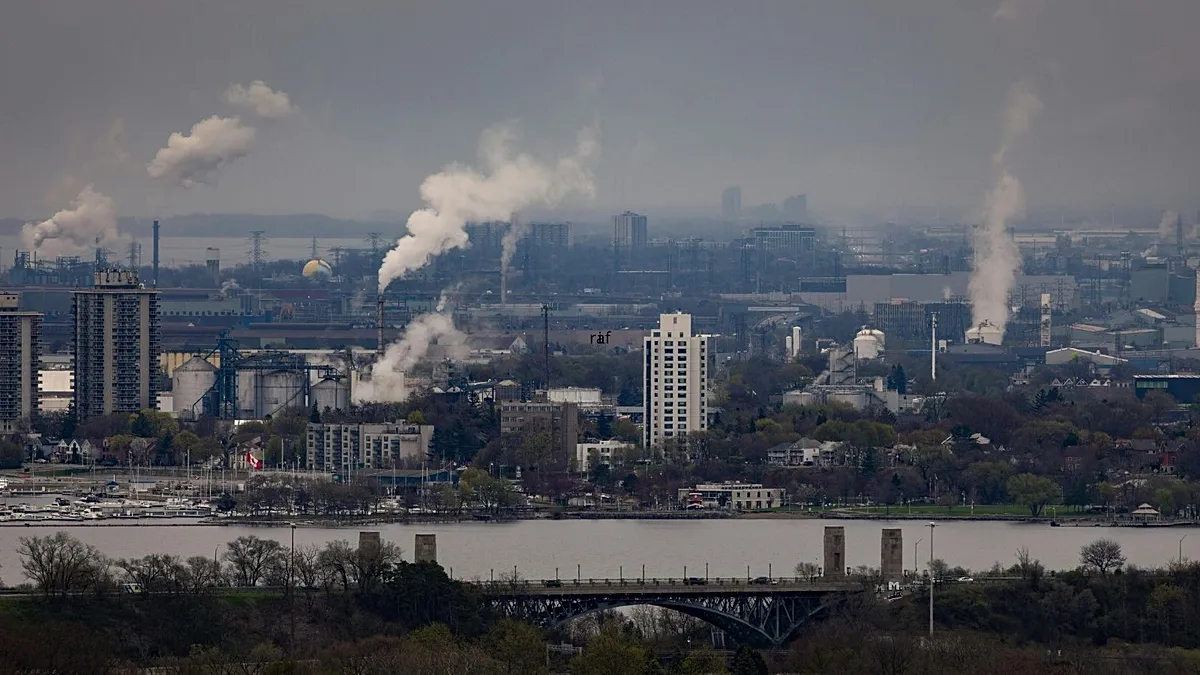
‘Urgent action’ needed as pollution fuels mental health risks, EU agency warns
‘Urgent action’ needed as pollution fuels mental health risks, EU agency warns The European Environment Agency (EEA) has sounded an alarm, highlighting how pollution—particularly air, noise, and toxic chemicals—plays a growing role in mental health challenges. With rising concerns over environmental factors influencing psychological well-being, the agency advocates for immediate and substantial measures to mitigate these risks. Air Pollution and Mental Health Conditions Pollution has been identified as a potential catalyst for mental health disorders, exacerbating existing symptoms or triggering new conditions through prolonged exposure. Research indicates that poor air quality, especially long-term exposure to fine particulate matter (PM2.5) and nitrogen dioxide (NO2), is significantly linked to depression. Recent studies further suggest that periods of high pollution correlate with increased depression rates, while short-term spikes in air quality can worsen schizophrenia symptoms. Noise Pollution and Its Impact Environmental noise, notably from transportation sources, is a key concern. Road traffic, railways, and aircraft contribute to stress responses in the body, fostering inflammation and oxidative stress that harm mental health. The EEA’s analysis reveals that for every 10 decibel (dB) rise in noise levels, there is a slight but measurable uptick in depression and anxiety risks. Aircraft noise, however, shows the strongest connection, with one study finding a 12 percent rise in depression risk per 10 dB increase. This type of noise also causes greater annoyance than other transport sounds, potentially leading to mental health issues. Chemical Exposure and Mental Health Links The EEA reviewed scientific studies connecting exposure to certain chemicals to mental health outcomes. Heavy metals, like lead, and second-hand smoke have consistently shown associations with depression and schizophrenia, especially after prenatal or childhood contact. Pesticides also link to depression, anxiety, and schizophrenia. Endocrine-disrupting chemicals, such as bisphenol A and PFAS, interfere with hormonal systems, with prenatal exposure tied to childhood depression and anxiety. According to the World Health Organization (WHO), one in six Europeans lives with a mental health condition, and one in three receive insufficient treatment. In the EU, over 11 million disability-adjusted life years were lost in 2023 due to mental health disorders. These figures are expected to grow in the coming years, particularly affecting young people and vulnerable groups.