
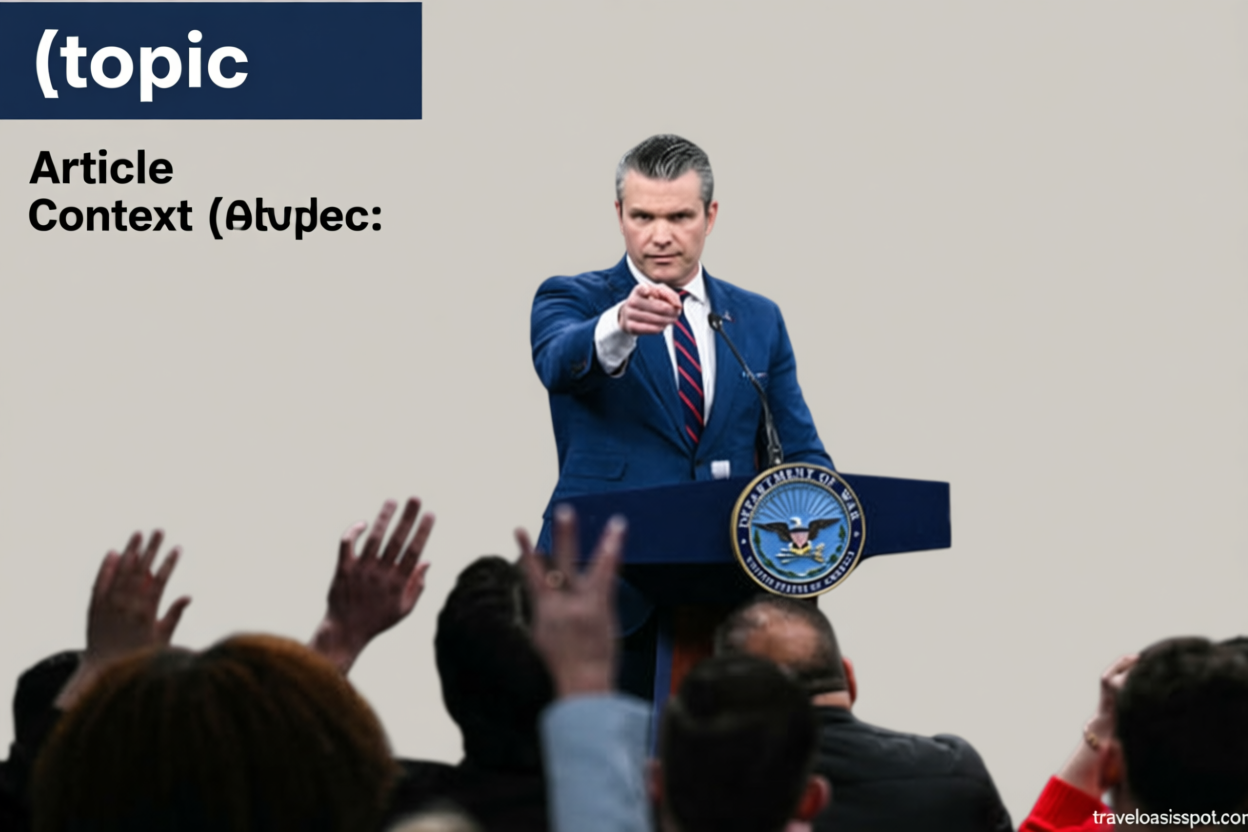
Federal judge to hear arguments about Pentagon’s restrictions on press access WASHINGTON — A federal judge in the nation’s capital will convene on Friday to address the legality of new Department of Defense regulations requiring credentialed journalists to report only on information officially cleared by the government, or face revocation of their Pentagon press badges. The New York Times’ legal team contends the policy, implemented in mid-2025, aims to limit journalists’ ability to question government officials and uncover stories that go beyond official statements. The 21-page agreement, which media outlets were asked to sign, bars the collection or dissemination of unapproved information, including classified data and off-the-record discussions, whether within or outside the Pentagon’s premises. “The Policy was not promulgated in a vacuum,” said Theodore J. Boutrous Jr., representing The New York Times. “Pentagon leadership has faced a stream of what it perceives to be unfair and unfavorable press coverage and, in response, promulgated the Policy to jettison journalists and news organizations whose reporting the Department disfavors, and to chill future reporting critical of the Pentagon.” Major broadcasters such as NBC News refused to sign the agreement, resulting in the loss of routine Pentagon access. The Department of Justice, in defense of the policy, argues it is “reasonable” as it balances national security concerns with the privilege of press access. “The Department could have decided not to allow any press access to the Pentagon: access to the Pentagon is a privilege, not a right,” stated Michael Bruns, a DOJ attorney. Meanwhile, journalists whose credentials were revoked were granted temporary entry to the Pentagon this week for briefings on the Iran conflict led by Defense Secretary Pete Hegseth and Joint Chiefs Chairman Dan Caine. In a sworn declaration, former Assistant Secretary of Defense for Public Affairs Pete Williams, now an NBC News correspondent, criticized the policy as undermining public trust in the military. “When I was at the Department, we did not decide who was eligible to obtain or maintain a press credential based on whether we thought a particular reporter or news organization would report favorably about the Department or its leadership,” Williams wrote. “There were times when journalists published critical stories or reported information that Department officials believed had come out too soon or wished had not been made public. But Department leadership understood and respected the role of an independent press in our democracy, and cutting off access to the Pentagon for journalists could never stop reporting that was critical of the Department.” Williams emphasized the importance of in-person access to quality journalism: “Trying to cover the Justice Department or the Pentagon without regularly being present in the building is like trying to write a restaurant review without going to the restaurant and trying the food.” The case echoes last year’s AP lawsuit against the Trump administration’s ban on White House event access, which was upheld by a federal appeals court pending further review. Gary Grumbach, an NBC News legal affairs reporter based in Washington, D.C., contributed to the coverage of this development.
US, Venezuela to restore diplomatic ties
US, Venezuela to restore diplomatic ties The U.S. and Venezuela’s interim administration have reached an agreement to reestablish diplomatic and consular connections, according to the State Department. This development signals a warming of relations following the arrest of former President Nicolas Maduro and his detention in New York. The announcement came after years of strained ties, particularly under the Trump administration, which had taken action to apprehend Maduro in January 2026 for potential criminal charges. During Trump’s initial presidency, the U.S. ceased to recognize Maduro’s government as legitimate, leading to the withdrawal of diplomats and the suspension of embassy operations in Caracas. Now, with the easing of tensions, the State Department emphasized its goal of fostering “the conditions for a peaceful transition to a democratically governed state.” This shift highlights a renewed commitment to cooperation between the two nations. Venezuela’s commitments to foreign investment As part of the reconciliation efforts, Venezuela pledged to create a secure environment for international mining firms. A U.S. official confirmed these assurances during a press briefing, stating that the country’s leadership had promised to “ensure” the safety of foreign companies. “I think you’re going to see this government very concerned about providing the right kind of security,” said Interior Secretary Doug Burgum, who concluded a two-day visit to the region. “I think you’re going to see this government very concerned about providing the right kind of security,” said Interior Secretary Doug Burgum. Burgum, accompanied by representatives from several mining and minerals firms, noted that numerous companies had expressed interest in investing in Venezuela. The nation boasts vast oil reserves alongside significant deposits of minerals such as gold, diamonds, bauxite, coltan, and other rare elements essential for manufacturing electronics. However, foreign investment has remained limited over the past decade due to nationalization policies initiated under Hugo Chávez, Venezuela’s leader from 1999 to 2013. Mining operations are heavily concentrated in the Orinoco Mining Arc, an area where armed groups have been active. Despite these challenges, the recent diplomatic move suggests Venezuela is aiming to attract renewed economic partnerships, particularly in the energy and mineral sectors. The video referenced in the original article can be viewed by enabling JavaScript and using a modern web browser that supports HTML5 video.
Watch: BBC asks Hegseth about reports of strike on school
Watch: BBC Investigates Allegations of School Strike in Iran During a press briefing, the BBC’s state department correspondent Tom Bateman questioned US Secretary of Defense Pete Hegseth regarding claims of an attack on the Shajareh Tayyebeh elementary school. The incident, which Iran asserts resulted in the deaths of 153 individuals including numerous children, has sparked international concern. Hegseth provided limited details about the operation, leaving key questions about its scale and duration unresolved. Iran’s state media confirmed the death of Supreme Leader Ali Khamenei, a significant development amid ongoing tensions. Protests erupted across American cities, with more demonstrations expected in the coming days. Meanwhile, the US reported that six F-15 jets were “mistakenly shot down by Kuwaiti air defenses,” with all crew members in stable condition. Iran’s Retaliatory Strikes and US-Israeli Response The US and Israel launched coordinated attacks as part of Operation Epic Fury, targeting Iran in response to recent developments. An eyewitness captured footage of an Iranian drone crashing in Kuwait, adding to the visual evidence of the conflict’s reach. The BBC’s Clive Myrie reported from Tel Aviv’s bomb shelter, detailing Iran’s retaliatory strikes toward the country. Donald Trump warned of further US casualties after three service members were killed in the second day of strikes. The president shared a video statement on Truth Social, accusing the Iranian regime of waging an “unending campaign of bloodshed and mass murder targeting the United States.” In Jerusalem, the BBC’s Jon Donnison covered the declaration of “major combat operations” by Trump. Global Reactions and Strategic Implications As the conflict escalated, global attention shifted to the broader geopolitical context. The expiration of the New START treaty removed nuclear weapon limits between the US and Russia for the first time since 1991. In Ecuador, the BBC’s Ione Wells examined the government’s response to the incident, which occurred during heightened regional tensions. The ongoing conflict has drawn celebrations of the Lunar New Year across the world, from Hong Kong to Buenos Aires. However, the focus remains on the military actions, with analysts like the BBC’s Sarah Smith speculating on Trump’s strategic ambitions in the latest assault on Iran.

Essential Travel Safety Gear to Keep You Protected on the Go
Travel safety essentials are vital for every traveler, whether you’re venturing across the globe or exploring a new city. Ensuring you are prepared for unexpected situations can make all the difference in maintaining peace of mind and staying secure during your journey. From medical emergencies to natural disasters, having the right gear can help you navigate challenges with confidence. This guide will cover the must-have items that should be included in your travel safety essentials to keep you protected on the go, no matter the destination or circumstance. The Importance of Travel Safety Essentials When you travel, you expose yourself to risks that may not be present in your everyday life. Travel safety essentials act as your first line of defense, helping you handle emergencies, stay connected, and navigate unfamiliar environments. These items are not just for the most extreme scenarios—they’re also useful for minor issues that can quickly escalate. For example, a basic first aid kit can treat cuts, insect bites, or allergic reactions, while a reliable flashlight can provide light during power outages or nighttime travel. By prioritizing these essentials, you create a safety net that supports your well-being throughout the trip. First Aid Kit: Your Health Guardian on the Road A first aid kit is one of the most critical travel safety essentials. It should include items like adhesive bandages, antiseptic wipes, pain relievers, and tweezers for removing splinters or ticks. For longer trips, consider adding items such as blister plasters, a thermometer, and an emergency blanket. This kit is essential for treating minor injuries or illnesses, especially in areas with limited medical access. Always check that your kit is well-organized and contains enough supplies for the duration of your journey. Navigation Tools: Staying Oriented in Any Situation Knowing your way is crucial when you’re away from home. Travel safety essentials like maps, compasses, and GPS devices ensure you can find your direction even if technology fails. A physical map is invaluable in remote locations where cellular signals may be weak. For digital navigation, a portable charger or power bank keeps your phone functional during long drives or hikes. Additionally, having a portable GPS device can be a lifesaver during unexpected detours or lost situations. These tools help you avoid getting stranded and maintain control over your itinerary. Emergency Communication Devices: Staying Connected at All Times Being able to communicate during an emergency is a key part of travel safety essentials. A fully charged emergency communication device, such as a satellite phone or a personal locator beacon, can send distress signals to rescuers when traditional networks are down. Even a basic two-way radio can be useful in areas with poor reception or during outdoor activities like camping or trekking. Always keep a list of emergency contacts in your phone and share it with someone you trust. This ensures you can reach help quickly if needed. Personal Security Items: Protecting Yourself and Your Belongings Safety during travel extends beyond physical health to personal security. Travel safety essentials like a portable alarm, anti-theft backpack, and lockable luggage can prevent theft and provide a sense of security. A travel alarm is a small device that can alert you if someone tries to open your bag without permission. For high-risk areas, consider carrying a pepper spray or a personal safety whistle. These items give you the means to defend yourself if you encounter danger. Always keep valuables like passports and money in secure, easily accessible pockets. Climate-Specific Gear: Adapting to Weather Conditions Weather can be unpredictable, and being prepared for different conditions is part of travel safety essentials. A compact umbrella or rain jacket keeps you dry during sudden downpours, while sunglasses and sunscreen protect against harmful UV rays. In colder climates, a thermal blanket or insulated jacket can prevent hypothermia if you’re caught in a storm. For extreme heat, a water bottle and heat-resistant gloves are useful. These items help you maintain comfort and avoid weather-related health issues. Packing Tips: Organizing Your Travel Safety Essentials Efficient packing ensures your travel safety essentials are always within reach. Use a dedicated pouch or compartment in your luggage to store critical items like a first aid kit, flashlight, and emergency contact list. Prioritize lightweight, compact gear that doesn’t take up much space. For example, a multi-tool can replace several items, while a portable power bank ensures your devices stay charged. Labeling your belongings clearly helps you locate them quickly in case of loss or damage. With thoughtful organization, you’ll always be ready to handle any situation. FAQ Q: What are the most important travel safety essentials for a short trip? A: For short trips, prioritize a first aid kit, flashlight, and emergency contact list. These items address common risks like minor injuries, power outages, and communication needs. Q: How do I choose the right travel safety essentials for my destination? A: Research the local climate, medical facilities, and common risks. For example, a portable GPS is essential in remote areas, while sunscreen is vital for sunny destinations. Q: Can I rely on a first aid kit for severe injuries? A: A basic first aid kit can treat minor injuries, but it’s not a substitute for professional medical care. Include items like antiseptic wipes and pain relievers for immediate relief. Q: What should I do if my travel safety essentials are lost or damaged? A: Have backup copies of critical items like passports and insurance documents. Use waterproof containers to protect gear from moisture and damage. Q: Are there any travel safety essentials I should carry for solo travelers? A: Solo travelers should always have a personal safety whistle, compact flashlight, and anti-theft bag. These items provide quick protection and visibility in emergencies.
Planetary parade: How and when to spot six planets in UK skies in rare alignment
Planetary parade: How and when to spot six planets in UK skies in rare alignment Rare celestial event brings six planets into view Over the next two days, an unusual cosmic arrangement will offer observers the chance to witness Mercury, Venus, Saturn, Jupiter, Uranus, and Neptune simultaneously in the night sky. This occurrence, noted by the Greenwich Royal Observatory, is described as a rare planetary alignment. Astronomers explain that while the planets won’t form a perfect straight line, they will cluster closely near the sun. This positioning allows for a striking visual display, particularly during the evenings of Saturday, 28 February, and Sunday, 1 March. Visibility details for UK viewers For most locations in England and Wales, Saturday’s skies are anticipated to remain clear until late evening, creating favorable conditions for spotting Mercury, Venus, Saturn, and Neptune. However, these planets will appear near the horizon in the western sky, making them harder to see due to sunlight and urban obstructions. Sunday promises better visibility in southern England, with showery weather likely to spread from the east. The Royal Observatory highlights that Uranus and Neptune will require optical aids like binoculars or telescopes for clear observation, while Jupiter stands out as the easiest to spot. Even in areas with high light pollution, Jupiter’s brightness will make it visible to the naked eye. According to Star Walk, the optimal viewing times in the UK will occur at 6:10pm in London and 6:16pm in Manchester. These moments provide the best chance to catch the planets in their aligned positions. Identifying planets in the sky Astronomers from NASA note that at least one bright planet will typically be visible on most evenings. Dr. Sara Mazrouei, a planetary scientist at Humber Polytechnic, advises: “If it is twinkling, it’s a star. If it is not twinkling, it’s a planet.” This distinction arises because planets orbit the sun, causing them to appear steady in the sky compared to stars, which twinkle due to atmospheric effects. The term “planetary alignment” refers to apparent groupings of planets, the moon, or bright stars as seen from Earth. While the planets aren’t in a direct line, they will appear closely spaced along an arc, creating a visually impressive arrangement. Weather outlook for the event Weather forecasts for the UK present a mix of conditions. On Saturday, clear skies are expected in the south and west, though cloud cover may increase from the north. Sunday sees a shift, with rain developing in the east and heavier downpours in the northwest. Southern England remains the most promising region for unobstructed viewing. Read more from Sky News: Vegetarian diet can slash risk of five cancers NASA reveals details of medical incident Optimizing your stargazing experience To enhance the likelihood of observing multiple planets, Dr. Shyam Balaji, a researcher in astroparticle physics, recommends the following strategies: Choose a site free from city lights to reduce glare Consult up-to-date astronomical tools or platforms to track planetary positions Be mindful of observing near sunrise or sunset, when atmospheric interference is strongest Monitor trusted astronomy resources for real-time updates as the event approaches

Wet Leg’s Rhian Teasdale arrives at the BRIT Awards with bloodied knees as she makes a bizarre red carpet appearance
Rhian Teasdale’s Unconventional BRIT Awards Entrance Sparks Discussion Rhian Teasdale’s striking entrance at the BRIT Awards on Saturday drew immediate attention, as the singer arrived at the ceremony with bloodied knees. The Wet Leg star, 32, made a memorable appearance at Manchester’s Co-op Live Arena, sporting a beige printed mini skirt and a cream faux fur shawl. Her choice of footwear—white boots—added a touch of contrast to her ensemble, while animal print gloves completed her look. Rhian’s pink and yellow dyed locks were styled in a poker straight manner, paired with a handbag for a final flourish. Teasdale joined her bandmates Hester Chambers, Henry Holmes, Josh Mobaraki, and Ellis Durand on the red carpet, creating a striking visual as they made their way to the event. The band, which originated in the Isle of Wight in 2019, was nominated for Group of the Year and Alternative/Rock Act, categories ultimately claimed by Wolf Alice and Sam Fender, respectively. Gender Shift and Recognition in 2026 The 46th edition of the BRIT Awards marked a pivotal moment, with the ceremony’s new structure—removing gendered categories—drawing both praise and critique. In 2023, the lack of female artists on the Artist of the Year shortlist sparked controversy, but the 2026 iteration saw 70 percent of nominations go to women or non-binary creators, signaling a shift in representation. “International Song of the Year was voted for by the public,” the ceremony’s rules emphasized, highlighting the democratic element of the award. Meanwhile, Olivia Dean dominated the awards stage, taking home four accolades—Best Artist, Best Album, Best Song, and Best Pop Act. At 26, the British singer and songwriter became the first woman since Adele in 2021 to secure the UK’s top single and album in the same week, with her work “Man I Need” and “The Art Of Loving” released in 2025. Lily Allen, however, had a different experience. Despite her fifth studio album “West End Girl” charting prominently last year, she failed to match Dean’s success in categories like Artist of the Year, Album of the Year, and Best Pop Act. Notable Winners and Highlights Manchester-born Noel Gallagher, 58, was honored with the Songwriter of the Year award, following his triumphant return with Oasis during their reunion tour. Sharon Osbourne, 73, accepted an award on behalf of her late husband Ozzy Osbourne, who received the BRITs Lifetime Achievement Award. Other standout moments included Lola Dean, 24, claiming the breakthrough artist category after a period of intense activity. British rapper Dave, 27, triumphed in the Hip Hop category with his third studio album, “The Boy Who Played The Harp.” Fred Again, the real name of producer and DJ Fred Gibson, joined Skepta and PlaqueBoyMax in securing the Dance award, while Sam Fender dominated the Best Rock category. Mark Ronson, 50, a ten-time Grammy winner, received the Outstanding Contribution to Music Award before taking the stage for a performance. SAULT, Jacob Alon, and PinkPanthress also claimed their respective honors in R&B, Critics Choice, and Producer of the Year categories. The night concluded with Geese winning Best International Group and Rosalia taking Best International Artist, as Rosé and Bruno Mars secured International Song of the Year for “APT.”
Crowds flee as falling object sparks fireball in Doha
Crowds flee as falling object sparks fireball in Doha A video captures citizens evacuating a street in Doha, Qatar, as a fiery explosion erupts behind them. The Qatar Defence Ministry confirmed intercepting multiple missiles aimed at al Udeid air base, the largest U.S. military installation in the Middle East. The incident has raised concerns about potential threats to the region’s strategic infrastructure. Humanitarian crisis in Gaza Three months into the ceasefire, additional aid has reached the enclave, yet the UN warns that the scale of assistance remains insufficient. Humanitarian leader Tom Fletcher shared accounts of dire conditions during a recent visit, emphasizing the urgent need for more supplies. “More aid trucks were entering Gaza, but it was a ‘huge job’ to get essential goods to those in need,” he explained to the BBC. Iran’s protests and unrest Anti-government demonstrations in Iran, now in their 13th night, have intensified, marking the most widespread unrest since December 28. Protests began as economic grievances but have since expanded into a broader movement. BBC Persian verified footage showed participants chanting slogans, underscoring the growing discontent. “The protests appear to be the most extensive since the movement began,” noted the BBC’s Middle East correspondent, Hugo Bachega. Disturbing images from Tehran “These images could hold clues about what’s happening inside Iran,” said BBC Verify, analyzing grim footage from a mortuary. The scenes depicted numerous bodies, prompting speculation about the toll of recent conflicts. Impact on Palestinian prisoners Shadi Abu Sido reported that an Israeli prison officer claimed his family was killed. Meanwhile, the United Nations Development Programme (UNDP) stated that over 80% of buildings in the territory are destroyed or damaged, highlighting the severity of the crisis. Israel has released 250 Palestinian prisoners as part of a ceasefire agreement with Hamas, with 1,968 detainees freed in total. Life in Syria and Gaza The BBC’s Middle East correspondent spoke to Syrians about their transformed lives since the revolution. In contrast, Tel Aviv residents described their relief after all remaining hostages were released by Hamas. The vehicle that once transported Pope Francis to Bethlehem in 2014 is now associated with a different chapter of history, symbolizing the region’s shifting dynamics. Global warnings and local accounts “About 14,000 babies will die in 48 hours if aid does not reach them,” warned a UN humanitarian chief. This stark projection underscores the urgency of delivering supplies to Gaza, where conditions continue to deteriorate despite ongoing efforts. Kurdish-run detention facilities Kurdish authorities oversee prisons housing approximately 8,000 suspected ISIS fighters and 34,000 of their family members in nearby camps. John Sudworth observed the sounds of heavy machinery resonating through the area, adding to the atmosphere of tension and activity.
Are the US and Iran on a collision course for war or a surprise deal?
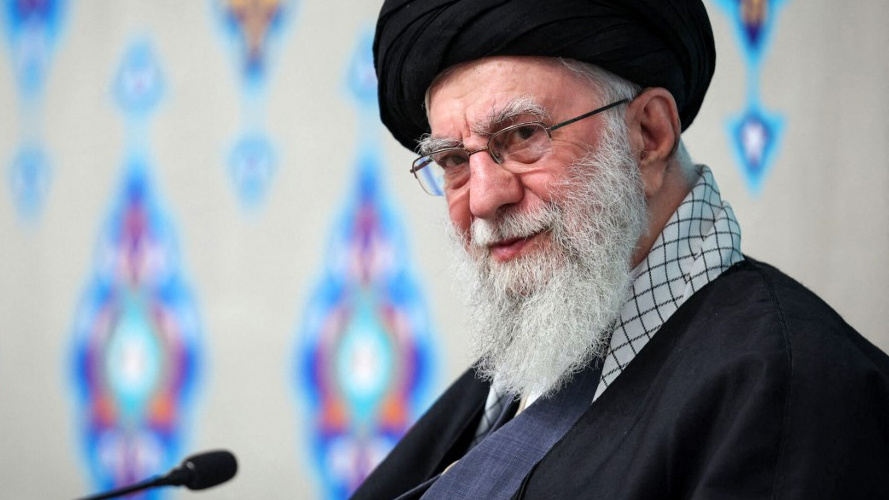
Are the US and Iran on a collision course for war or a surprise deal? The US’s recent military buildup near Iran signals the most significant regional deployment since the 2003 Iraq invasion. With the USS Gerald R Ford, the world’s largest supercarrier, now operating in the Mediterranean Sea and preparing to join the fleet, the strategic shift is clear. Yet, the most striking development involves six E-3 Sentry aircraft, representing almost 40% of the US inventory, stationed to monitor the area. These airborne surveillance systems serve as “eyes in the sky,” offering over-the-horizon radar critical for managing air defenses against potential Iranian retaliation. Their deployment hints at Washington’s readiness for a larger operation, even as tensions escalate. Analysts suggest such a move could signal a campaign aimed at reshaping the regional balance of power. Trump’s Strategy and the Cost of Conflict Despite his reputation for opposing interventionism, Trump has consistently shown a willingness to escalate tensions. His May 2025 speech in Riyadh underscored this approach, aligning with a broader policy of confrontation. Economically, a full-scale war risks derailing his domestic agenda, as oil prices could soar to $90–$200 per barrel, amplifying financial strain. Trump’s pressure on Israeli Prime Minister Benjamin Netanyahu to conclude the Gaza conflict further implies a desire for de-escalation. This strategy contrasts with the risk of igniting an unpredictable new front, suggesting a calculated effort to avoid prolonged hostilities. Domestic Setbacks and the Pressure to Act Recent domestic challenges have intensified the push for decisive action. A Supreme Court ruling, 6-3, declared Trump’s use of emergency laws to impose global tariffs as unconstitutional, dealing a blow to his economic vision. Seeking to mitigate this setback, Trump may lean on a high-profile military intervention as a political countermeasure. Former Commerce Secretary Wilbur Ross highlighted this motive, stating that the ruling could make a US attack on Iran more probable. The logic is simple: after a public defeat, Trump cannot afford to appear hesitant in the face of Iranian defiance. The Iranian Leadership’s Dilemma Iran’s leadership, led by Ayatollah Ali Khamenei, faces mounting pressure from within. The nation’s unrest, fueled by January’s mass protests, has left the regime struggling to maintain control. Human rights groups report thousands of arrests, with economic hardship intensifying due to sanctions and internal mismanagement. Food inflation has surged to triple-digit levels, with the free-market exchange rate reflecting this crisis. The currency’s sharp decline sparked the January uprising, and war now poses a potential final trigger for domestic instability. Khamenei’s defiance, however, remains unshaken, as the leadership seeks to consolidate power amid growing dissent. Meanwhile, Trump’s envoy Steve Witkoff hinted at a dual strategy. He noted the president’s interest in understanding Iran’s position, despite prior warnings of a limited strike if a nuclear deal fails. “He’s curious as to why they haven’t … I don’t want to use the word ‘capitulated’,” Witkoff said, emphasizing the tension between diplomacy and force. “Otherwise, bad things happen,” Trump added, framing the situation as a race against time.
Russian soldiers tell BBC they saw fellow troops executed on commanders’ orders
Russian soldiers reveal horrors of front-line executions Four Russian troops have shared harrowing accounts of the violent conditions at the Ukrainian front, with two describing how commanders ordered the immediate killing of soldiers who refused orders. The testimony, captured in a BBC documentary, sheds light on the extreme measures taken to enforce compliance among troops. Testimonies from the frontline One soldier recounted witnessing a comrade executed at close range by his superior, who was later honored as a “Hero of Russia” in 2024. “I saw it—just two metres, three metres… click, clack, bang,” he said in a direct quote . Another from a separate unit claimed to have seen his commander personally shoot four men, including those he knew personally. A third account described a pit filled with 20 bodies of fellow soldiers, victims of what the men call “zeroing”—a term for executing one’s own troops. “I remember one of them screaming, ‘Don’t shoot, I’ll do anything!’ but the commander still ordered the execution,” one soldier shared in a statement . The “Zero Line” of brutality These soldiers spoke of being subjected to torture for refusing to participate in what they deemed suicidal attacks. “Meat storms” is how they refer to these relentless assaults, where waves of men are sent across the front without adequate support. The BBC believes these are the first recorded accounts from frontline troops detailing such executions. One man, tasked with identifying and counting casualties, provided lists showing he is the only survivor from a group of 79 mobilized with him. He described being tortured and urinated on for refusing to go to war, while others who resisted faced electrocution and starvation before being forced into combat. Government response and casualty figures Despite the testimonies, the Russian government maintains that its forces “operate with utmost restraint,” treating personnel with care even in high-intensity conflict. It also claims to investigate reports of alleged violations, though it could not confirm the accuracy of the accounts provided. The UK’s Ministry of Defence estimates over 1.2 million Russian troops have been killed or wounded since the invasion began on 24 February 2022. Public dissent against the war has been suppressed, with almost all opposition silenced in Russia. Personal stories of soldiers Ilya, a former special needs teacher in Kungur, the Urals, was mobilized in May 2024 alongside 78 others. “Nearly everyone was drunk,” he recalled, as recruits were told to “forwards into battle! We’ll get Zelensky and raise our flag!” He feared for his life upon arriving in Ukraine, where many were immediately deployed to the front. He witnessed four executions in Russian-occupied Donetsk, including a man who screamed for mercy before being shot. “Your fate depended on your commander. The commander is on the radio: ‘Zero this one, zero that one,’” he explained, highlighting the fear instilled by such actions. Dima, a 34-year-old dishwasher repairman from Moscow, added that “of course they kill their own men—it’s a normal thing,” emphasizing the normalization of violence within the ranks. These accounts collectively reveal a breakdown of discipline and order on the Russian side of the front.
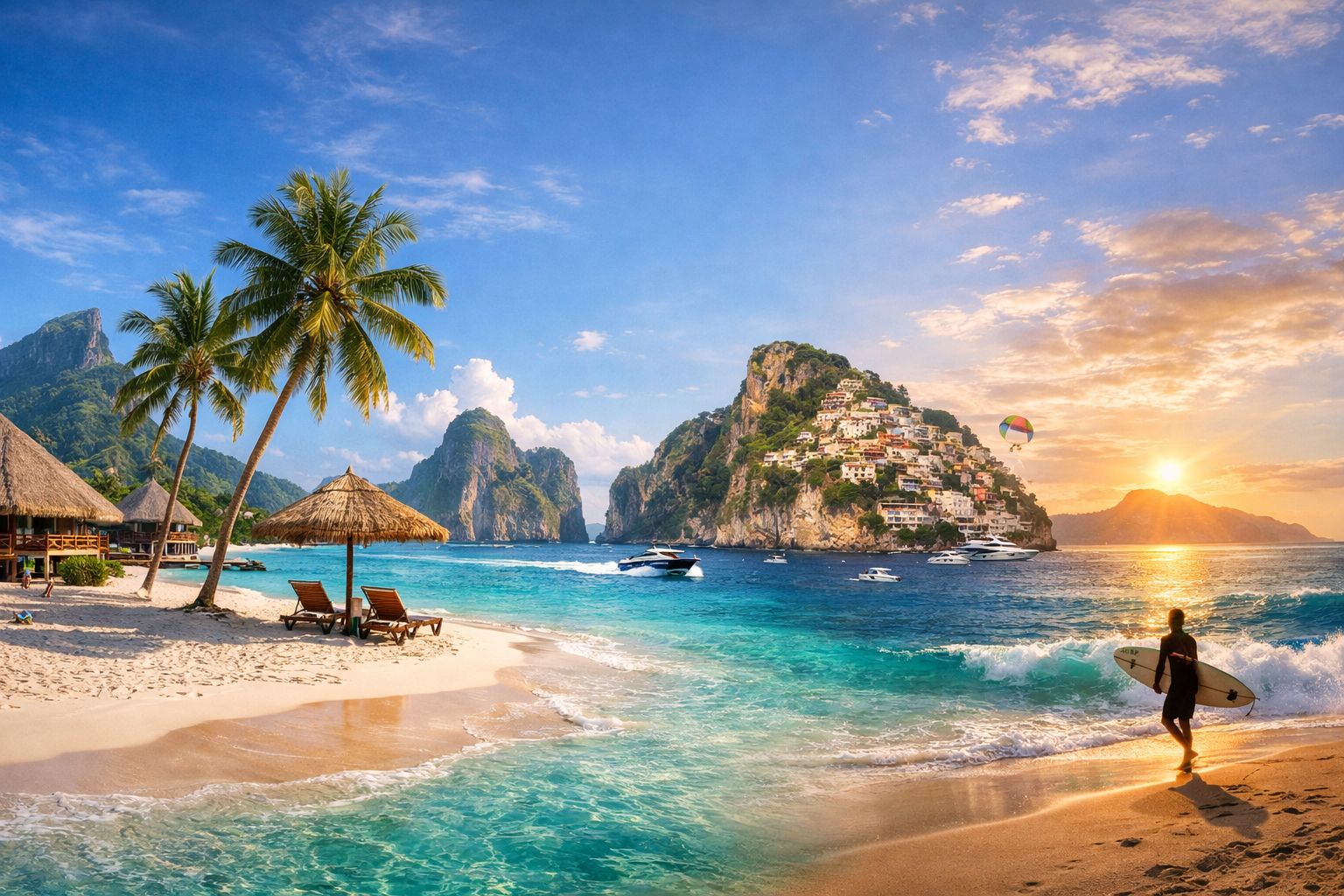
Best Beach Travel Destinations for 2025: Top Picks Worldwide
Planning a beach vacation in 2025 requires more than choosing a sunny coastline. Travelers are prioritizing sustainability, accessibility, cultural depth, and unique experiences alongside clear waters and soft sand. This curated guide to the best beach travel destinations for 2025 highlights diverse locations across continents, balancing iconic favorites with emerging hotspots. Each destination combines natural beauty, strong tourism infrastructure, and experiences that match evolving global travel trends. Maldives: Elevated Luxury and Marine Conservation The Maldives continues to rank among the best beach travel destinations for 2025 due to its unmatched turquoise lagoons and overwater villas. Beyond luxury, the country has strengthened its marine conservation programs, with resorts investing in coral restoration and sustainable energy initiatives. Travelers now seek immersive eco-experiences, including guided reef tours led by marine biologists. Private island resorts offer personalized service, world-class diving, and uninterrupted ocean views. Direct flight connectivity from major hubs has improved accessibility, reducing travel friction. The Maldives remains ideal for honeymooners, wellness travelers, and those seeking complete privacy. Despite its reputation for exclusivity, mid-range boutique resorts are expanding options for broader budgets. Water clarity, consistent warm temperatures, and diverse marine life make it one of the most reliable beach experiences globally. Algarve, Portugal: Dramatic Cliffs and European Charm The Algarve stands out in Europe for its golden cliffs, hidden coves, and mild year-round climate. In 2025, it is gaining attention as one of the best beach travel destinations for 2025 for travelers seeking both scenery and cultural depth. The coastline blends dramatic rock formations with wide sandy beaches like Praia da Marinha and Praia da Falésia. Portugal’s infrastructure supports easy exploration by car or train, making it accessible for multi-city itineraries. Beyond the beaches, visitors enjoy historic towns, seafood cuisine, and vineyard tours. The balance of natural beauty and affordability increases its appeal compared to more crowded Mediterranean alternatives. Outdoor activities such as kayaking through sea caves and coastal hiking routes add adventure elements. The Algarve’s growing focus on sustainable tourism further strengthens its long-term appeal. Phuket and Krabi, Thailand: Tropical Diversity and Value Thailand remains a strong contender among the best beach travel destinations for 2025 due to its consistent value and scenic variety. Phuket and Krabi provide different coastal experiences, from lively nightlife beaches to quiet limestone-framed bays. Travelers can choose between luxury resorts, boutique hotels, and budget-friendly stays. Island-hopping to Phi Phi or Railay Beach offers postcard-level scenery with accessible transport options. Thailand’s hospitality culture ensures smooth travel logistics and high service standards. The combination of affordability and tropical beauty attracts solo travelers, couples, and families. Culinary tourism enhances the experience, with fresh seafood and local street food near beach zones. The region also promotes marine protection policies, encouraging responsible tourism practices. Maui, Hawaii: Natural Landscapes and Regenerative Tourism Maui remains a top North American option for those researching the best beach travel destinations for 2025. The island blends pristine beaches with volcanic landscapes, waterfalls, and scenic drives along the Road to Hana. Beaches like Wailea and Kaanapali offer calm waters and well-developed amenities. Hawaii’s growing emphasis on regenerative tourism encourages visitors to engage respectfully with local communities and ecosystems. Cultural education programs, local farm tours, and reef-safe sunscreen initiatives reflect this shift. Travelers seeking both relaxation and outdoor adventure benefit from Maui’s versatility. Accessibility from the U.S. mainland supports steady visitor numbers, while strict environmental protections maintain natural quality. Surfing, snorkeling, and whale watching remain strong seasonal highlights. Seychelles: Untouched Beauty and Granite Landscapes Seychelles offers a distinctive visual identity, with massive granite boulders framing white-sand beaches. It continues to earn recognition as one of the best beach travel destinations for 2025 for travelers wanting less commercialized coastal scenery. Anse Source d’Argent and Anse Lazio rank among the world’s most photographed beaches. The archipelago prioritizes environmental preservation, limiting overdevelopment and protecting marine parks. Visitors experience quiet luxury combined with biodiversity, including rare bird species and vibrant coral reefs. Smaller boutique resorts dominate the hospitality landscape, ensuring intimate stays. While remote, improved air connections through major international hubs have increased accessibility. Seychelles suits travelers seeking exclusivity without the scale of larger resort-heavy destinations. Tulum, Mexico: Bohemian Energy and Caribbean Waters Tulum continues to evolve as a lifestyle-oriented beach destination. Its Caribbean coastline features soft sand and clear blue waters, drawing digital nomads and wellness travelers. For 2025, upgraded infrastructure and airport connectivity enhance convenience without fully losing its boutique appeal. Eco-conscious hotels and yoga retreats define the region’s identity. Travelers combine beach time with visits to Mayan ruins and cenote swimming experiences. This mix of culture and coastal relaxation supports its position among the best beach travel destinations for 2025. Seasonal weather patterns favor winter and early spring visits. While popularity has increased costs, the diversity of accommodations still allows flexible budgeting. Gold Coast, Australia: Surf Culture and Urban Access Australia’s Gold Coast delivers consistent surf conditions, wide beaches, and modern city infrastructure. It represents a strong option in the Asia-Pacific region for those exploring the best beach travel destinations for 2025. Surfers Paradise combines urban entertainment with accessible shoreline access. Beyond surfing, the region offers theme parks, hinterland rainforest hikes, and wildlife encounters. Australia’s strict environmental regulations preserve beach cleanliness and water quality. The blend of energetic nightlife and natural escapes suits varied traveler profiles. Improved airline routes connecting Asia and North America to eastern Australia enhance global accessibility. The Gold Coast appeals to families, adventure seekers, and long-stay travelers. Zanzibar, Tanzania: Cultural Fusion and Emerging Luxury Zanzibar is emerging as a standout African coastal destination in 2025. White beaches, spice plantations, and Swahili architecture distinguish it from more conventional resort zones. Stone Town’s UNESCO-listed heritage site adds historical depth to beach-focused itineraries. Resort development is increasing but remains measured, preserving authenticity. Travelers experience snorkeling, dhow boat cruises, and cultural immersion in local markets. Competitive pricing compared to Indian Ocean rivals increases its attractiveness. Zanzibar’s warm climate and expanding international flight connections strengthen its position in global rankings of desirable beach escapes. Conclusion The best beach travel destinations
