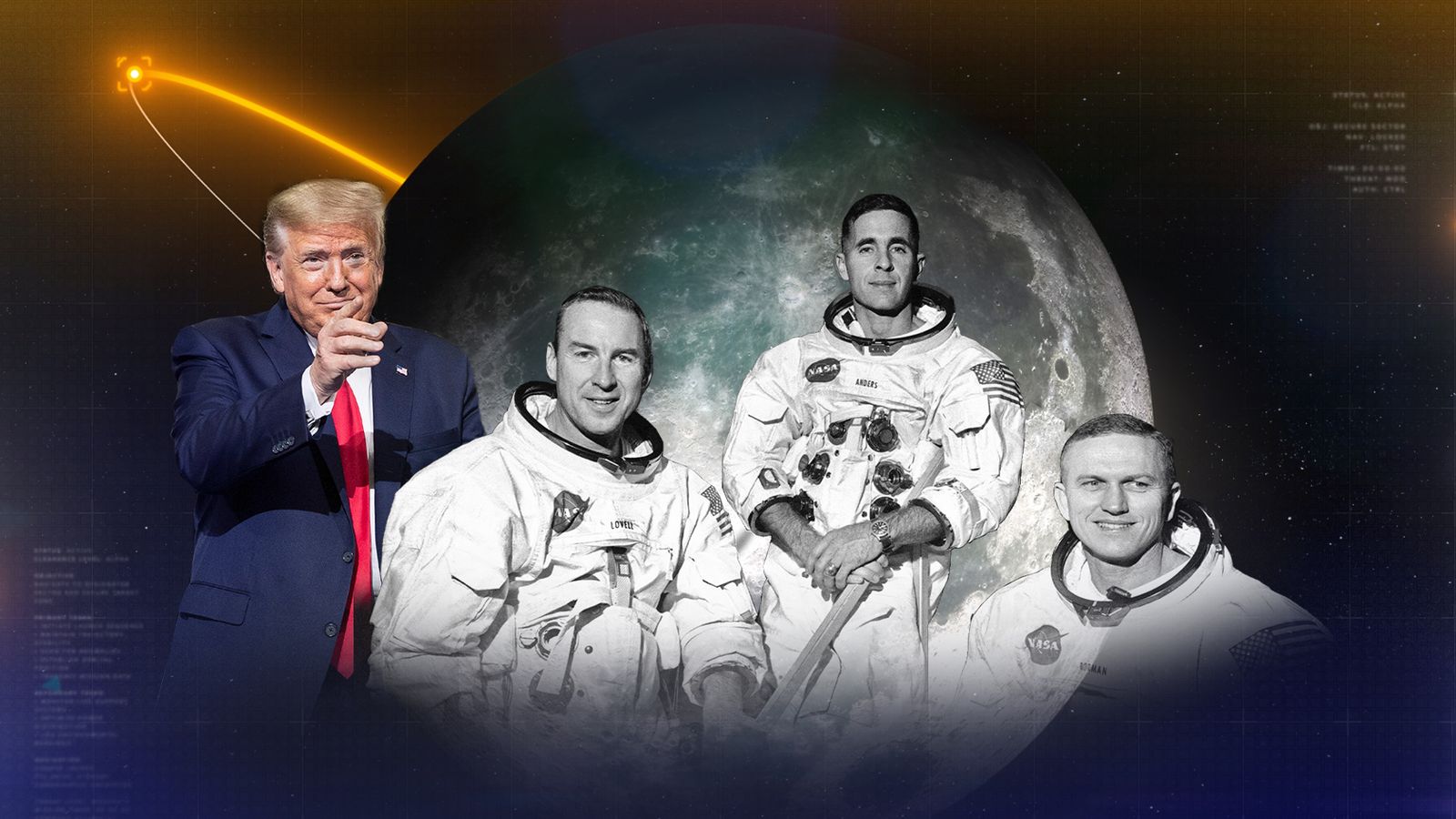
Historical Lunar Mission and Modern Parallels In 1968, the United States launched its first lunar expedition amidst a period of intense political strife. The mission, which marked the eighth Apollo flight, carried significant weight for the success of the space program. On December 21 of that year, three astronauts—Frank Borman, William Anders, and James Lovell—left Earth aboard a Saturn V rocket from Florida’s Kennedy Space Centre. Fast forward to today, and the nation finds itself at a crossroads, with divisions resurfacing in a manner reminiscent of the past. Yet, this renewed push to return to the moon, under the Artemis initiative, shares a striking timeline with the historic Apollo 8 launch. The 1968 mission coincided with a year defined by profound social unrest, as the Vietnam War escalated and public morale wavered under rising casualties. During that era, the Soviet Union had already secured major space milestones, including the first satellite, the first human in orbit, and the first woman to travel beyond Earth’s atmosphere. The Apollo 8 crew captured Earth’s fragile beauty from lunar orbit, a moment that galvanized global awareness of environmental issues. Their message of unity, broadcast from the vastness of space, resonated with a message of hope: “To all of you on the good Earth.” Unity in the Face of Division Dr. Jill Stuart, a space politics analyst at the London School of Economics and Political Science, notes that the shared objective of the moon mission briefly united the country. “The timing of Artemis’s revival during a period of cultural rifts and political tensions is noteworthy,” she explains in a interview with Sky News. “While the program has been in development for years, its current phase may inadvertently serve as a tool to foster collective identity, even if only temporarily.” Today, as Secretary of War Pete Hegseth and NASA Administrator Jared Isaacman inspect the Artemis II rocket, the parallels between past and present are evident. The same societal fractures that shaped the 1968 mission now influence the Artemis era, raising questions about whether space exploration can once again bridge ideological gaps. Looking back, the Apollo 8 crew’s composition—three white male astronauts—stood in contrast to the broader struggles of the time. While the mission symbolized progress, it also highlighted the limited representation of the era’s diverse challenges. With Apollo 8’s triumph, NASA hastened its efforts toward a lunar landing. Just seven months later, Neil Armstrong’s historic step was witnessed by a fifth of the world’s population, a testament to the mission’s global impact. The legacy of that time, however, remains a reminder of both achievement and omission in the quest for unity.

Barron Trump praised by UK judge for phoning 999 to report attack on friend
Barron Trump praised by UK judge for phoning 999 to report attack on friend A Russian man, Matvei Rumiantsev, 23, was sentenced to four years in prison after assaulting a woman and using her phone to film Barron Trump, the president’s youngest son, during the attack. Rumiantsev attacked the victim out of envy over her friendship with Donald Trump, whom he had met through social media. During the incident, he answered a FaceTime call from Barron and turned the camera to capture himself striking the woman while she cowered and cried on the floor. “It’s really an emergency. I’m calling from the US, uh, I just got a call from a girl, you know, she’s getting beat up,” Mr Trump said during the 999 call. The woman testified at Snaresbrook Crown Court that Barron’s prompt action helped her escape harm. She described the assault as lasting nearly an hour, with moments where she feared for her life. Mr Justice Bennathan, addressing Rumiantsev, called him a “trained fighter” and “a man driven by jealousy” with a short temper. The judge noted his failure to show insight or empathy, blaming the victim for the events. Metrolaunches campaign to spotlight violence against women On November 25, 2024, Metro launched “This Is Not Right,” a campaign to raise awareness about the ongoing crisis of violence against women. Partnering with Women’s Aid, the initiative aims to highlight the severity of the issue and advocate for systemic change. The 999 call transcript, made just days before Trump’s father’s inauguration, reveals his urgency in reporting the assault. Despite being in the US, he took responsibility for ensuring the UK emergency services were alerted. “I’m calling from the United States, uh, I just spoke to a girl, you know, she’s being attacked,” Barron stated. “The call was about eight minutes ago, and I don’t know what could have happened by now.” When asked how he knew the victim, he replied: “I don’t think these details matter, she’s being attacked. But okay fine, also I met her on social media, I don’t think that matters.” Although Trump didn’t testify in court, his account to police was crucial to the case. In an email to detectives last May, he mentioned: “What I saw was very brief, but prevalent. I didn’t expect her to answer due to the time zone difference. The phone was answered, but not by her, which dismayed me.”
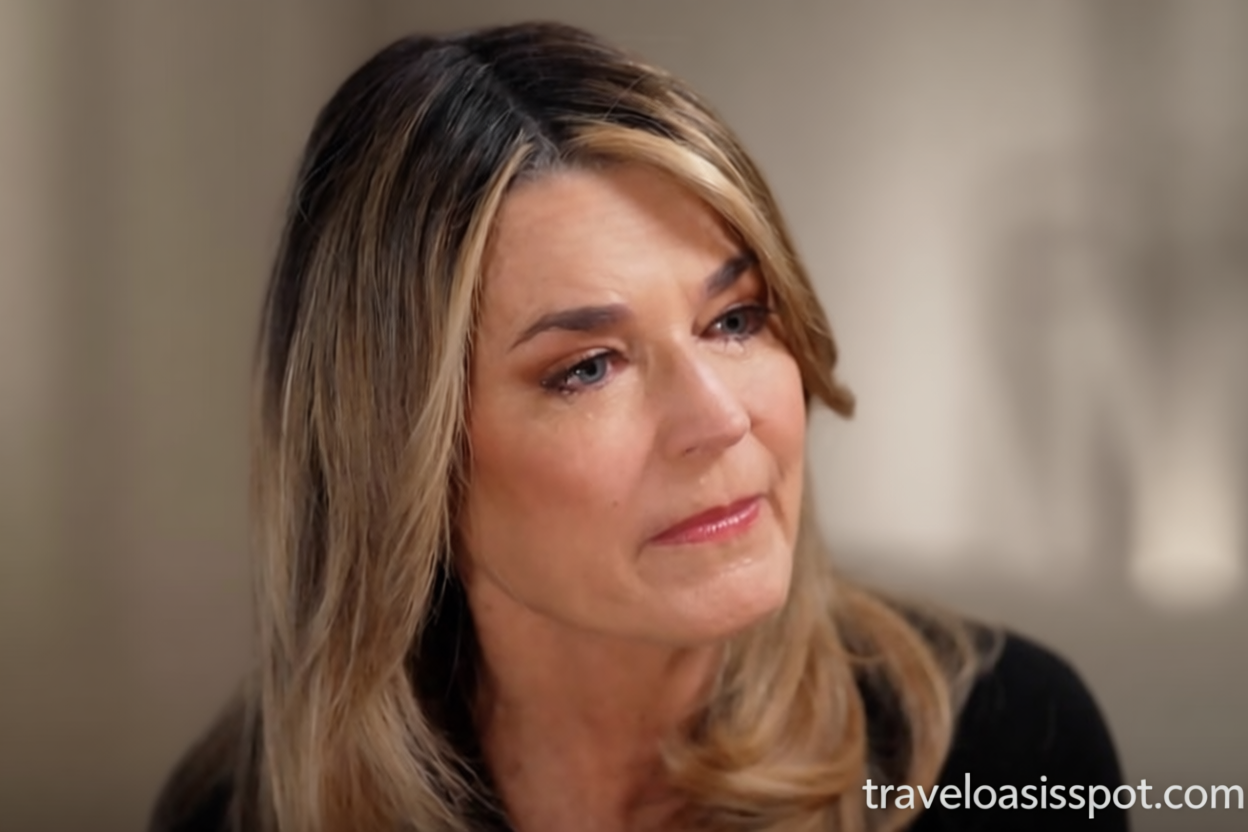
Savannah Guthrie feared her mother may have been targeted because of her fame
Savannah Guthrie’s Anxiety Over Mother’s Disappearance In a heartfelt conversation with Hoda Kotb, Savannah Guthrie expressed the deep fear and anguish she has endured since her mother, Nancy Guthrie, vanished from her home near Tucson, Arizona. The 84-year-old woman was reported missing on February 1 after failing to join a virtual church service at a friend’s residence. Authorities noted she was last seen the previous evening, around 9:45 p.m., following a meal at her daughter Annie Guthrie’s home. Uncertainty and Emotional Toll Savannah voiced concerns that her mother’s disappearance might be linked to her own public profile. “I don’t know if it’s because she’s my mom and someone thought, ‘Oh, that lady has money. We can make a quick buck,’ ” she shared, reflecting on the possibility that her fame as a “TODAY” co-anchor could have played a role. “But we don’t know. That’s what’s unbearable—thinking I brought this to her bedside.” “I’m so sorry, Mommy. I’m so sorry. I’m sorry to my sister and my brother and my kids and my nephew and Tommy, my brother-in-law,” Savannah said, expressing her grief. Family’s Immediate Response When the family first realized Nancy was missing, they recognized something more serious than a simple absence. “Annie and Tommy knew from the start this wasn’t the usual case where someone just walks away,” Savannah explained. Her mother, who suffers from chronic back pain, was unlikely to have wandered off. “On a good day, she could reach the mailbox, but most days, she couldn’t move that far.” Additional clues at the scene—such as open doors and blood on the doorstep—raised alarms. “The Ring camera had been yanked off, and the doors were propped open,” Savannah added, emphasizing the unsettling nature of the situation. Investigation and Ransom Notes As the search intensified, state and federal agencies joined the effort, conducting land searches and seeking video footage from neighbors. Savannah noted that while many ransom notes were received, she believes two are genuine. “There are a lot of different notes, and I think most are not real,” she said. “But I tend to think the ones we responded to are legitimate.” Hours after learning of her mother’s disappearance, Savannah boarded a plane to Tucson. “It’s been weeks since then, and the investigation is still in full swing,” she stated. The family also released a tearful Instagram video, pleading for clues and offering a $1 million reward for information leading to Nancy’s safe return. “How is it possible that someone would take my mother, knowing she lives in pain and can’t even walk a few steps? It feels surreal,” Savannah admitted, capturing the emotional weight of the situation. Brother’s Insight and Family’s Doubts Savannah’s brother, described by her as “brilliant” and with a military background, quickly grasped the severity of the situation. “Even on the phone, he knew,” she recalled. “He said, ‘I think she’s been kidnapped for ransom.’ I asked, ‘Why? What?’” Though initially skeptical, Savannah couldn’t shake the idea that her own visibility might have contributed to the risk. “It sounds so dumb, but I didn’t want to believe it,” she said. “I asked, ‘Do you think because of me?’ And he replied, ‘I’m sorry, sweetie, but maybe.’” The case remains a mystery, with investigators yet to confirm a suspect or motive. Meanwhile, the Guthrie family continues to search for answers, grappling with the uncertainty that has gripped them since February 1. Savannah’s first interview since the incident aired on “TODAY,” offering a glimpse into her emotional journey.
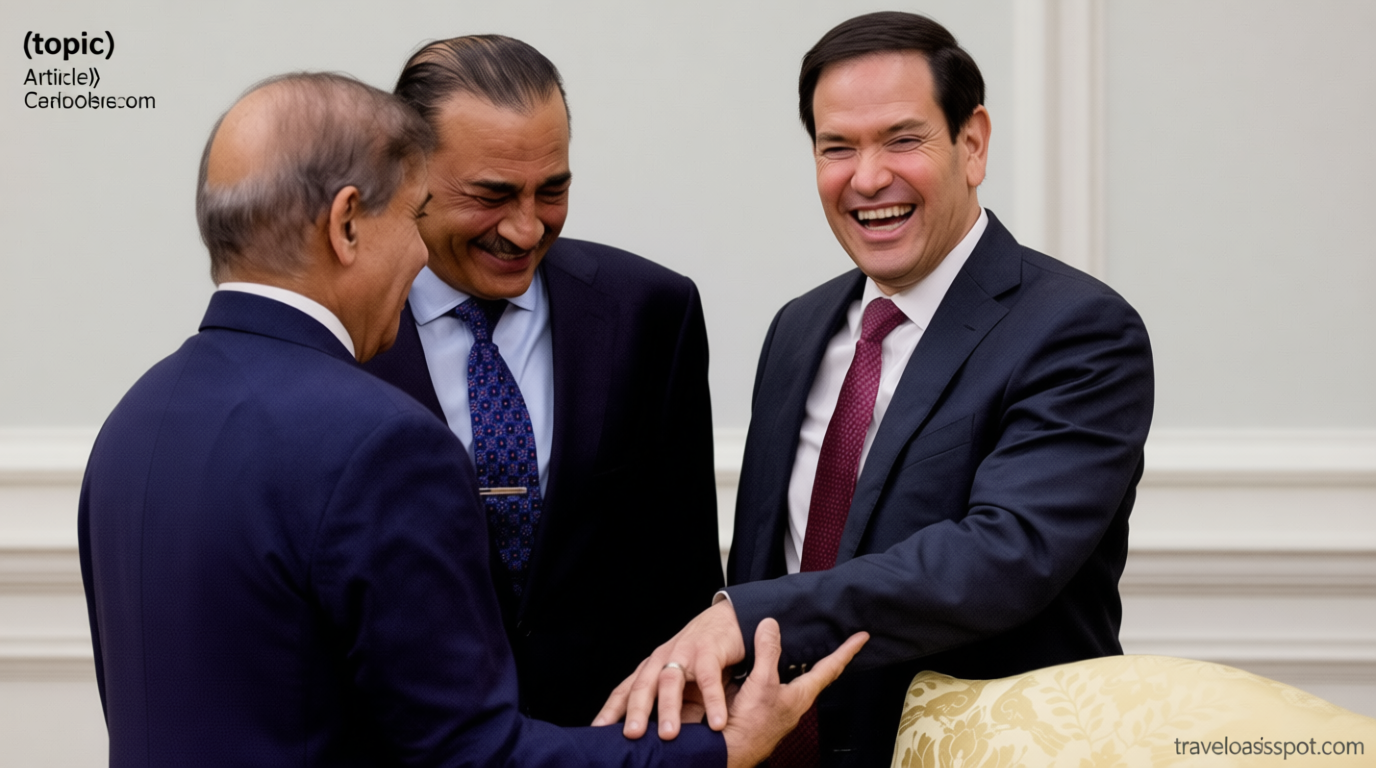
How Pakistan positioned itself at the centre of global crisis management
How Pakistan positioned itself at the centre of global crisis management In the high-stakes environment of Middle Eastern diplomacy, where the boundary between conflict and calm is often blurred by ongoing air strikes and fluctuating energy prices, a surprising actor has emerged. Pakistan, a nation with nuclear capabilities, has long been depicted through the prism of economic instability, political shifts, and security threats along its western border with Afghanistan under Taliban control. Now, it is stepping forward as a possible bridge between the U.S. and Iran. A recent proposal, appearing with unexpected speed, suggested Islamabad as a neutral ground for direct talks between the Trump administration and Iranian leaders. If this initiative succeeds, it could halt the current tension that has disrupted global energy markets and raised fears of broader regional warfare. It would also redefine Pakistan’s strategic role, shifting it from a state often seen as a security risk to a central figure in international crisis resolution. “This shift wasn’t sudden; it stems from a series of strategic choices made over the past year, which have reinvigorated Pakistan’s diplomatic influence,” said an anonymous security official in Islamabad. For Islamabad, fostering dialogue is less about ambitious global goals and more about safeguarding its economic and security interests. The country is working through a delicate economic recovery, bound by strict conditions from the International Monetary Fund. Escalating tensions between Iran and its neighbors have led to oil price surges and heightened energy challenges in Asia, particularly impacting Pakistan’s already fragile economy. Pakistan’s borders with Iran are a long, rugged 900-kilometre stretch that has historically been a pathway for militant groups, smuggling, and separatist movements. A broader regional war could destabilize these areas, where state control is tenuous. The nation’s internal dynamics also play a key role: with Shias making up 15-20% of its 240 million people, the largest such group outside Iran, Islamabad remains deeply attuned to developments in Tehran. The assassination of Iranian Supreme Leader Ayatollah Ali Khamenei early in the conflict sparked violent demonstrations in several Pakistani cities, highlighting how quickly Middle Eastern events can affect domestic stability. For Islamabad’s policymakers, the risk of the Iran war spreading or triggering internal sectarian strife is the most pressing concern. Meanwhile, Pakistan’s ties with Gulf allies, especially Saudi Arabia, are intensifying. A security pact signed with Riyadh last September, built on shared defense principles, has raised questions about Islamabad’s readiness to offer military aid if the conflict worsens. Analysts note that Pakistan’s flexibility in such a situation may be constrained. “Pakistan, situated at the edge of the conflict, is likely to seek ways to ease tensions rather than become embroiled in them,” wrote Michael Kugelman, a Washington-based analyst, on X. Despite its efforts to mediate, the western border remains under constant pressure from Islamist attacks originating in Taliban-controlled Afghan regions. A persistent separatist movement in the south continues to challenge stability, underscoring the complexity of Pakistan’s security landscape.
Explore the Latest Travel News and Discover Top Travel Blogs
Why Travel News and Travel Blogs Matter for Modern Explorers In today’s fast-paced world, travel news and travel blogs are essential tools for anyone planning a trip. These resources provide real-time updates on destinations, seasonal trends, and travel restrictions, helping travelers make informed decisions. While travel news covers broad updates like political changes or natural disasters, travel blogs offer personal insights and recommendations that can’t be found in traditional media. Together, they create a dynamic blend of objective information and subjective experiences, ensuring that adventurers have both the facts and the inspiration they need. The Power of Combining Travel News and Travel Blogs One of the biggest advantages of travel news and travel blogs is their ability to complement each other. News outlets often focus on major events, such as new airline routes or destination-specific promotions, while blogs dive deeper into local culture, hidden gems, and traveler stories. This synergy helps readers understand not just where to go, but why a place is worth visiting. For example, a blog might highlight a unique festival in Kyoto, while a news article could explain how the event is affected by recent infrastructure developments. By combining both, travelers gain a well-rounded perspective that enhances their journey planning. How to Stay Updated with the Latest Travel Trends To make the most of travel news and travel blogs, it’s important to follow trusted sources regularly. Many blogs update their content weekly, sharing tips on budget-friendly travel, sustainable practices, or off-the-beaten-path adventures. Meanwhile, news platforms like The Guardian Travel or BBC Travel release updates on global events that could impact your itinerary. Subscribing to newsletters or following social media accounts of top blogs can ensure you never miss out on the latest trends. Additionally, using keyword searches like “travel news and travel blogs” on Google can help you discover up-to-date content tailored to your interests. The Role of Travel Blogs in Shaping Travel Experiences Unlike traditional travel guides, travel blogs often reflect the real-world experiences of regular travelers. This personal touch can make a big difference, especially when exploring less mainstream destinations or trying new travel styles. Many bloggers share detailed itineraries, local recommendations, and even travel mishaps, which can be both entertaining and educational. By reading these accounts, travelers can gain a sense of what to expect, from the best restaurants to the most scenic hiking trails. However, it’s crucial to verify the credibility of the blog, as opinions can vary widely depending on the writer’s background and preferences. Why Travel News is Indispensable for Destination Planning Travel news plays a critical role in keeping travelers informed about the latest changes in the industry. From visa policies to flight cancellations, news updates ensure that your plans are not disrupted by unforeseen circumstances. For instance, a recent article on Lonely Planet might warn about a hurricane season in the Caribbean, allowing you to adjust your travel dates accordingly. News sources also highlight emerging destinations, such as new eco-lodges in Patagonia or cultural hotspots in Southeast Asia. By integrating travel news and travel blogs, you can combine factual data with creative ideas to craft an unforgettable trip. Top Blogs to Follow for Informed and Inspiring Travel There are countless travel blogs online, but only a few stand out for their reliability and engaging content. Blogs like Nomadic Matt or The Blonde Abroad are popular for their practical advice and personal travel narratives. Meanwhile, Wanderlust and Matador Network offer a mix of cultural insights and travel hacks. For those interested in sustainable travel, Green Global Travel provides eco-friendly recommendations that align with modern values. To ensure you’re getting quality content, look for blogs with high engagement rates and positive reader reviews. Exploring travel news and travel blogs can also help you discover niche communities, such as adventure seekers or luxury travelers, and connect with like-minded individuals. How to Effectively Use Travel News and Travel Blogs To maximize the value of travel news and travel blogs, create a personalized content calendar. Follow blogs that align with your travel interests, and set reminders for news updates that could affect your plans. Many blogs also offer downloadable guides or printable itineraries, making it easier to organize your thoughts. Additionally, using tools like Google Alerts or RSS feeds can help you stay on top of the latest travel trends without spending hours searching. By actively engaging with both news and blogs, you’ll build a more comprehensive understanding of your travel goals and the world around you. The Future of Travel News and Travel Blogs As the travel industry evolves, so do the platforms that keep travelers informed. The rise of AI-driven recommendations and social media integration has transformed how people consume travel news and travel blogs. For example, platforms like TripAdvisor now combine user reviews with real-time updates, offering a hybrid approach to travel planning. Meanwhile, video blogs and podcasts have gained popularity, providing immersive content that complements written articles. Looking ahead, expect more interactive tools, such as virtual tours or chatbots, to enhance the user experience. The key to staying ahead is to remain open to new formats while maintaining a critical eye for quality information. The Importance of Credibility in Travel News and Blogs When researching travel news and travel blogs, credibility is key to avoiding misinformation. Look for blogs with transparent author bios and news sources with a proven track record. Established travel news websites often have journalists with years of experience, ensuring accurate reporting. On the other hand, independent bloggers may have personal biases or limited access to certain information. To balance this, cross-reference content with multiple sources, whether it’s a blog post or a news article. This approach not only builds trust but also helps you form a more complete picture of your destination. Travel News and Blogs: A Guide to What to Look For When browsing travel news and travel blogs, focus on content that aligns with your travel goals. For family vacations, look for blogs that share kid-friendly tips or destination-specific activities. For solo

EastEnders legend makes very unexpected return after 8 years
A long-absent EastEnders icon reappears in a surprising comeback eight years later Monday’s episode of EastEnders, now streaming on BBC iPlayer, delivered a twist that left fans buzzing with anticipation. The return of a cherished character was quietly teased, setting the stage for a dramatic revelation that unfolded during the Mother’s Day celebrations in the Square. A Surprise That Left the Square Talking Peter Beale, played by Thomas Law, surprised his wife Lauren Branning (Jacqueline Jossa) with a gesture that would soon ripple through the community. As a family gathering at 45 Albert Square heated up, Cora Cross (Ann Mitchell) made her way back into the lives of those who had missed her presence since 2018, creating an unexpected stir. Cora’s Return Sparks Drama The veteran character’s arrival at the dinner table didn’t just stir conversation—it ignited conflict. Max Branning (Jake Wood) found himself on the defensive as Cora confronted him about past missteps, showcasing her sharp wit and unyielding spirit. Meanwhile, Lauren, still recovering from a recent attack orchestrated by Mark Fowler Jr (Stephen Aaron-Sipple), was offered a new opportunity to move forward. “Don’t let the attack get to you,” Cora advised, a sentiment that lingered with Lauren as she considered Mark’s proposition. The tension between past and present was palpable, with Cora’s return acting as a catalyst for both reconciliation and intrigue. A Bittersweet Farewell Cora’s reunion with her grandson Oscar (Pierre Counihan-Moullier) highlighted a softer side before she departed. The emotional exchange reminded Ian (Adam Woodyatt) of his late grandmother Lou (Anna Wing), sparking a nostalgic reflection on family bonds. As the episode closed, fans wondered whether this was a temporary visit or the beginning of a larger narrative. EastEnders continues to captivate with its blend of drama and character-driven storytelling. The show airs Mondays to Thursdays at 7:30pm on BBC One, with episodes available on iPlayer from 6am the following day. For the latest updates, join our community by commenting below or subscribe to our newsletter for exclusive soap news. If you have EastEnders-related content, reach out to us via email at soaps@metro.co.uk. Stay tuned for more surprises as the Square prepares for its next chapter.
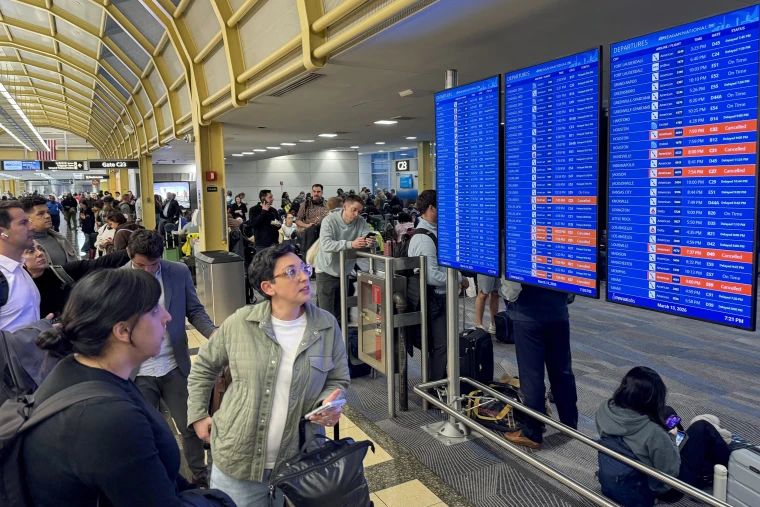
Overheated circuit board leads to ground stop at D.C. area airports
Overheated Circuit Board Causes Ground Stops at D.C. Area Airports A technical issue at a radar station in the Washington, D.C., region triggered flight disruptions at four major airports on Friday. Officials confirmed that the problem, linked to a faulty circuit board, was under investigation when the ground stops were enacted. The affected airports included Ronald Reagan Washington National, Washington Dulles International, Baltimore-Washington International, and Richmond International. Disruptions began around 6:30 p.m. local time, with operations paused to address the issue. By approximately 8 p.m., the situation had been resolved, though some delays were expected to persist. The Federal Aviation Administration reported that a “strong chemical smell” was detected at the Potomac TRACON facility, where air traffic controllers were impacted. “There is no danger to air traffic controllers,” stated Transportation Secretary Sean Duffy on X following the resolution. “The odor originated from a circuit board that overheated, and it has been replaced,” he added. Despite the lifting of ground stops, Baltimore-Washington International Airport warned of lingering delays in the evening. The airport’s social media update noted that airlines were restoring normal schedules but cautioned travelers about potential residual disruptions. The incident occurred at the Potomac TRACON building, located in Northern Virginia. Jay Blackman, an NBC News producer specializing in transportation, space, medical, and consumer topics, and Phil Helsel, an NBC News reporter, covered the event.
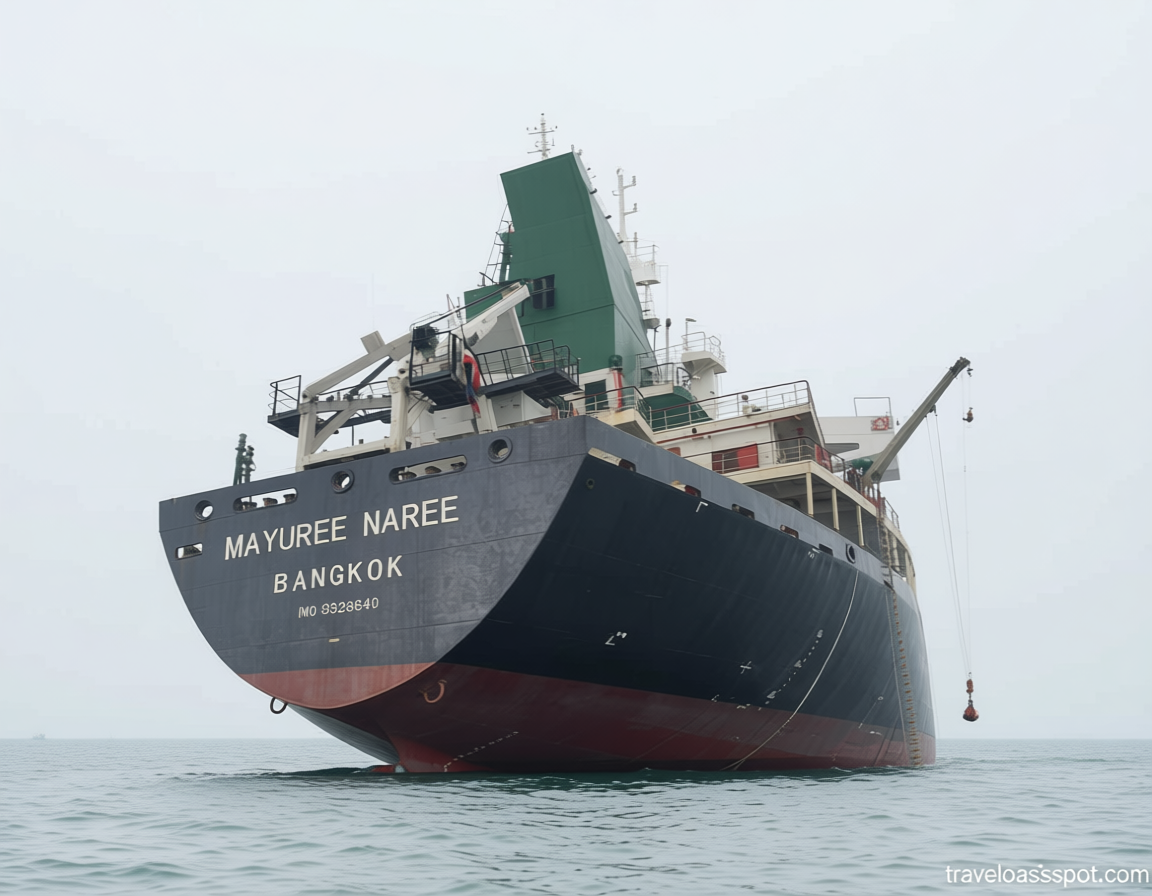
Iran escalates attacks on infrastructure and transport networks across the Gulf
Iran Escalates Attacks on Infrastructure and Transport Networks Across the Gulf On Wednesday, Iran significantly intensified its campaign of targeting civilian infrastructure and transport systems throughout the Gulf region, launching assaults on commercial vessels and striking Dubai’s international airport. These strikes came as U.S. and Israeli warplanes conducted additional raids on the Islamic Republic, marking a sharp increase in the conflict’s scale. Iranian officials expressed unwavering resolve, declaring the situation would lead to a prolonged “war of attrition” capable of destabilizing global energy markets. As the 12-day conflict entered a new phase, tensions remained high. Israeli air strikes hit Hezbollah positions in Lebanon, while Iranian missiles and Hezbollah rockets simultaneously targeted Israeli territory. The coordinated assaults, which included drone attacks from Hezbollah, were the first such synchronized efforts since the war began. In Lebanon, Israeli strikes have already claimed at least 634 lives and injured 1,586 people, with over 816,700 families officially registered as displaced. Wednesday night saw a dramatic escalation when Israeli warplanes bombed the southern suburbs of Beirut and parts of southern Lebanon. This followed Hezbollah’s earlier attacks on northern Israel, which were bolstered by Iranian missile support. The Iranian leader, who was killed in the opening moments of the U.S.-Israeli offensive, remains a central figure in public mourning, with large crowds in Tehran and other cities gathering for his commanders’ funerals. They carried caskets and displayed portraits of Ayatollah Ali Khamenei, the supreme leader, and his son Mojtaba, who also lost his life in the airstrikes. Iranian officials acknowledged for the first time that the country’s new leader had sustained injuries during the airstrikes, which also claimed the lives of his mother, wife, and a son. The 56-year-old leader has yet to make public appearances or address the situation directly. “I have heard that he was injured in his legs and hand and arm … I think he is in the hospital because he is injured,” said Tehran’s ambassador to Cyprus, Alireza Salarian, in a statement to the Guardian. Despite international calls for a pause, both the U.S. and Israel have shown no signs of scaling back their joint operations. Israeli Defence Minister Israel Katz emphasized the campaign would continue “without any time limit” until all objectives were met. Meanwhile, U.S. President Donald Trump oscillated between confidence and caution, asserting in a recent rally that “we won” but warning that the fight would persist to ensure full victory. “You never like to say too early you won. We won. In the first hour it was over,” he said, while also claiming the U.S. had sunk 58 Iranian naval ships. Trump’s remarks came amid growing concerns over the economic fallout from the war. The International Energy Agency recommended releasing 400 million barrels of oil, the largest such measure in its history, to ease rising prices. However, the strait of Hormuz—critical for a fifth of the world’s oil—still poses risks, with three merchant ships hit by unknown projectiles on Wednesday. This brought the total number of ships reportedly struck since the war began to 14, including a Thai-flagged bulk freighter where crew were evacuated after an explosion ignited a fire. “We don’t want to leave early do we? We got to finish the job … We don’t want to go back every two years.”

Iran won’t play in World Cup, minister says
Iran Will Not Compete in World Cup, Claims Sports Minister The Iranian sports minister has declared that the country will not participate in this year’s World Cup, regardless of the circumstances. This statement comes amid ongoing tensions following recent military actions by the United States and Israel against Iran, which prompted retaliatory strikes by Tehran on American targets in the region. “Considering that this corrupt regime has assassinated our leader, Ayatollah Ali Khamenei, in no way can we take part in the World Cup,” said Ahmad Donyamali, the minister, during a televised address. Iran’s football federation head, Mehdi Taj, echoed concerns, questioning, “Which rational individual would send the national squad into such a volatile situation?” FIFA President Gianni Infantino recently met with U.S. President Donald Trump to discuss the tournament’s readiness, assured that Iran would be invited to compete. The World Cup, co-hosted by the U.S., Mexico, and Canada, is set to feature Iran’s men’s team in June, with matches against New Zealand, Belgium, and Egypt. Trump, who received FIFA’s first peace award last year, has expressed support for Iran’s inclusion, stating on Instagram, “President Trump reiterated that the Iranian team is, of course, welcome to compete in the tournament in the United States,” according to Infantino. The situation gained attention when six members of Iran’s women’s football team were granted humanitarian visas to stay in Australia after refusing to sing the national anthem during a game. This decision followed fears they might face danger. One player later chose to return to Iran. A travel restriction imposed by Trump prevents Iranian fans from attending the U.S. games this summer, though exceptions are expected for the teams. FIFA’s chief operating officer, Heimo Schirgi, emphasized the tournament’s importance, noting, “The World Cup will go on obviously, right? It is too significant to be delayed due to global unrest.” Follow the latest developments on the Iran conflict and its impact on international sports events.

‘A lot of sleepless nights’: Why the war in Iran might cost Iraq a berth in the 2026 World Cup
A lot of sleepless nights: Why the war in Iran might cost Iraq a World Cup berth With just 90 minutes remaining until the final showdown, Iraq’s men’s national soccer team stands on the brink of securing a World Cup spot for the first time in four decades. Yet, the looming conflict in Iran and its ripple effects across the Middle East have turned this critical moment into a logistical nightmare. The Lions of Mesopotamia are set to face the winner of Bolivia and Suriname in a March 31 playoff qualifier, but travel to Mexico’s Monterrey is now uncertain. Graham Arnold, the Australian coach leading the squad, shared his concerns with CNN Sports. “It’s a major challenge,” he said, explaining how the country’s airspace closures have left his players and staff stranded in Iraq until at least April 1, the day after the match. “We’ve got several contingency plans, but they’re all different. It’s been stressful, and there have been many sleepless nights trying to get everything sorted.” “It’s a big challenge. I’ve got about four or five plans at the moment, and obviously, they’re all different. A lot of sleepless nights worrying about getting that planning right.” The Iraq Football Association (IFA) has officially asked FIFA to reschedule the playoff game, according to a source at the organization. The decision is expected by the end of the week. Meanwhile, Arnold remains trapped in Dubai, where he had been scouting talent, while his medical team is stuck in Qatar. The situation has become even more complicated due to embassy closures in the region, which are hindering visa processes for Mexico and the U.S. Arnold likened the current predicament to the early days of the pandemic, when he was coaching Australia. “Back then, we had plans A to F,” he recalled. “This time, though, we’re completely cut off—not just by travel challenges, but also by the difficulty of securing visas for the countries hosting the qualifiers.” The team’s planned training camp in Houston, Texas, aimed at adapting to the climate and time zone, has been abandoned. Busing players out of Iraq, the only alternative, would require a 30-hour journey, which Arnold calls impractical for both health and logistical reasons. Possible Impact on Iran’s Participation FIFA is also preparing for the risk that Iran might withdraw from the tournament. The country’s Football Federation president, Mehdi Taj, expressed doubt about their continued involvement after the recent attack, stating: “What is certain is that after this attack, we cannot be expected to look forward to the World Cup with hope.” “What is certain is that after this attack, we cannot be expected to look forward to the World Cup with hope.” If Iran exits, Arnold believes the vacant spot should go to Iraq. “Iran and Iraq are both in the Asian Football Confederation,” he said. “If Iran is out, we’re the next in line.” His solution involves pushing the playoff game to the week before the World Cup begins, allowing his team time to travel and prepare. “Bolivia and Suriname can play in March,” he noted. “We could play the winner of that just before the tournament starts; the winner stays, the loser goes home.”