I left Gaza with guilt, sorrow and tears for the son Israel took from me
I left Gaza with guilt, sorrow and tears for the son Israel took from me
Surviving 690 days of relentless violence, terror, and starvation in Gaza felt like a miracle. Yet, for a Palestinian mother, it came at an unbearable cost.
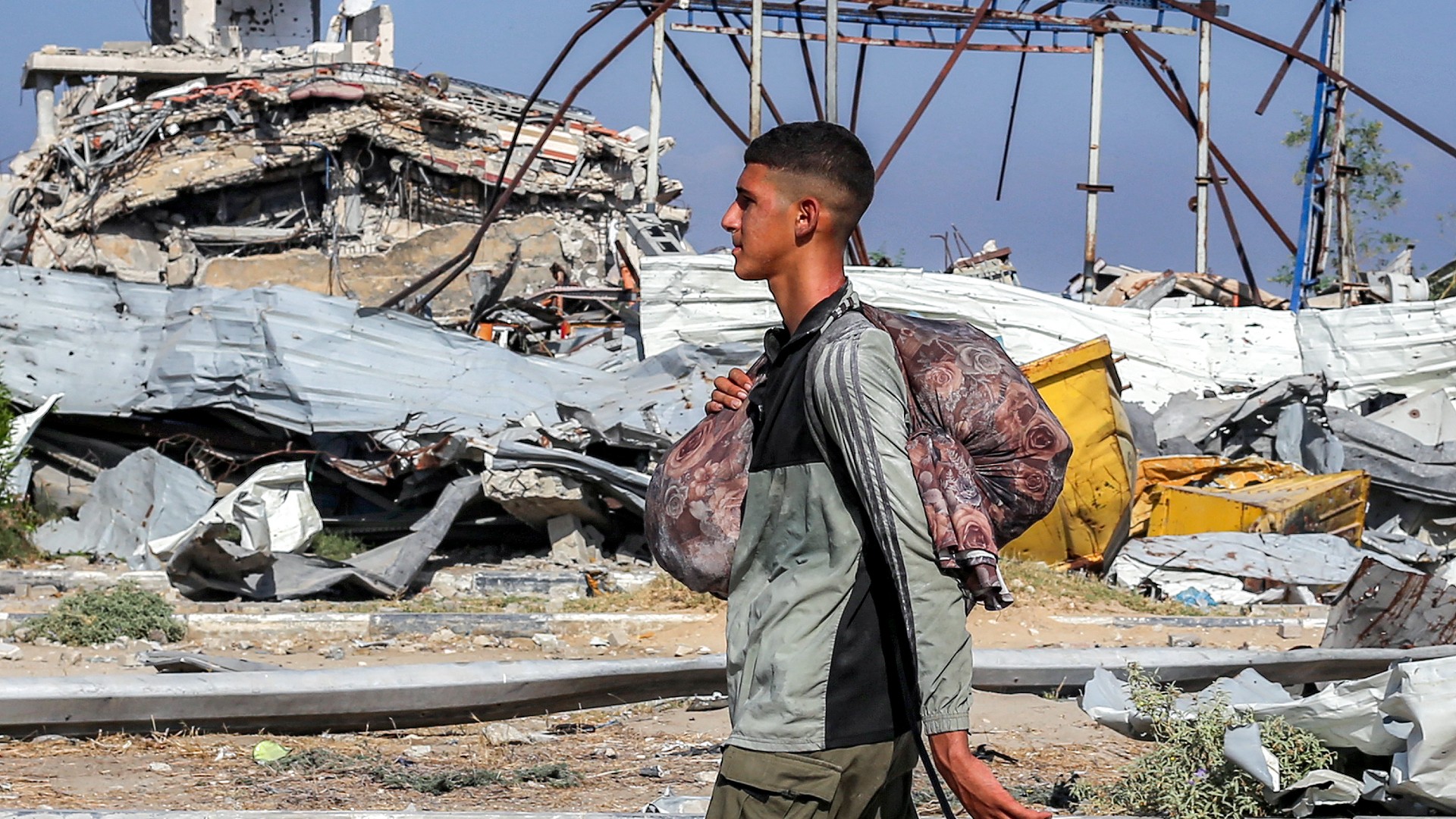
Since October 7, 2023, countless families in Gaza have been stripped of their possessions, their dignity, and their hope. Among them is the author, whose life was irrevocably altered when an Israeli airstrike obliterated their home in Rafah.
Weeks into the war, their eldest son Abdullah, just thirteen years old, perished in a strike that leveled their family home in Rafah. The attack left the author injured, their younger children displaced, and several relatives lost. The devastation was swift and merciless, wiping out a world in an instant.
As the conflict raged on, the author’s surviving children were sent abroad. Months later, the Israeli military razed the residential complex housing their apartment, along with the homes of relatives and the entire city. Shelter, safety, and the remnants of normalcy vanished, leaving only despair.
Two years into the ordeal, a chance encounter in the Netherlands opened a path to escape. A friend secured a writing position at De Correspondent, and the process unfolded with bureaucratic precision: permits were arranged, authorities were petitioned, and within weeks, the author received permission to leave. But the journey to freedom was fraught with uncertainty.
The Dutch embassy set the departure date for August 27, 2025. Restrictions were imposed on belongings—clothes beyond what was worn, books, electronics, even a phone charger were barred. The author, having lost nearly everything, chose to leave their few possessions behind, distributing them to siblings and relatives. It felt wrong to carry memories when others had nothing left.
What lingered was the grief of Abdullah, whose personal effects were reduced to ashes. The author had preserved his clothes and toys in a room, a sanctuary of remembrance, until the Israeli forces demolished the building. Only two items survived: his Quran and a comb, both saved by being stored outside the flat.
On the eve of departure, the author met only their father. A normal farewell was exchanged, but the silence afterward carried the weight of an unspoken farewell. The night before, the sky buzzed with drones, and the trio—along with Hazem and his wife Amal—traveled in darkness, guided by hope. Gaza’s two-year blackout only heightened the challenge of navigating the perilous route to Deir al-Balah.
At 2:30 a.m., the group arrived at the gathering point. After an hour of waiting, their names were verified, and they boarded a bus. Among the 130 passengers were students, reunited families, and individuals with work visas—all granted passage by European embassies. The author’s departure marked not an end, but a fragile beginning in a new land, carrying only the remnants of a life shattered by war.