Table of Contents
ToggleOil surges and stock futures sink as war in Iran threatens crude supply
Monday saw a sharp rise in oil futures following weekend strikes by the US and Israel on Iran, escalating tensions across the Middle East. US crude prices climbed 7.5%, while Brent crude, the global benchmark, spiked 6.2% to around $77 per barrel, briefly surpassing $82 earlier in the session. The market had already been anticipating a price increase due to fears of Iranian oil disruptions.
Meanwhile, stock futures declined, with the S&P 500, Nasdaq, and Dow all dropping over 1%. However, shares of Exxon and Chevron rose pre-market as higher oil prices typically benefit energy firms. Defense stocks, including Northrop Grumman and Lockheed Martin, also experienced strong gains.
Strait of Hormuz: A critical chokepoint
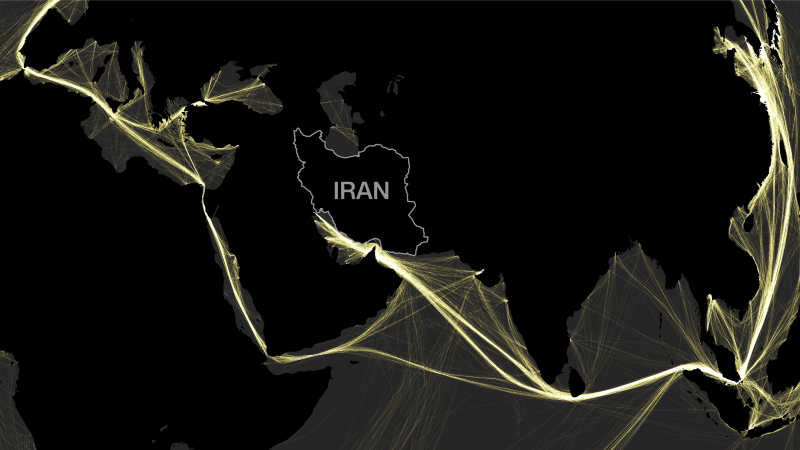
The Strait of Hormuz, a narrow passage near Iran’s southern coast, serves as a primary route for crude oil from Saudi Arabia and Kuwait. Iran controls the northern part of the strait, which sees 20 million barrels daily—nearly one-fifth of global production—according to the US Energy Information Administration. Analysts describe it as a “critical oil chokepoint.”
“Elevated global benchmark prices… are expected to be sustained until the Strait is passable,” noted Jorge Leon, head of geopolitical analysis at Rystad Energy, in a Saturday update.
Traders anticipate a temporary disruption but remain cautious about the war’s duration. US President Donald Trump suggested the conflict could last weeks, creating uncertainty. Industry experts warn that prolonged instability, such as a shutdown of the strait or damage to Saudi oil facilities, might push prices to $100 per barrel or beyond.
Regional and global repercussions
Asian economies, particularly China and India, face heightened vulnerability if the Strait of Hormuz is closed. Their efforts to secure oil from alternative sources could drive global prices upward. Even a localized impact on Iranian exports would ripple through markets, as oil is a fungible commodity.
“Since oil is a global, fungible commodity, a disruption anywhere affects prices everywhere,” wrote Clayton Seigle, a senior fellow at the Center for Strategic and International Relations, in a recent analysis.
Bob McNally, president of Rapidan Energy Group, highlighted the severity of a prolonged attack on Saudi facilities. The 2019 Abqaiq plant, which was hit by Iranian forces, used specialized equipment that “you can’t just order from General Electric,” he explained. On Monday, Saudi Arabia temporarily shut some units amid the ongoing crisis.
While the market currently favors a short-lived disruption, analysts caution that sustained conflict could create a long-term threat to oil stability. Americans may face rising gasoline costs as a consequence of the geopolitical shift.