
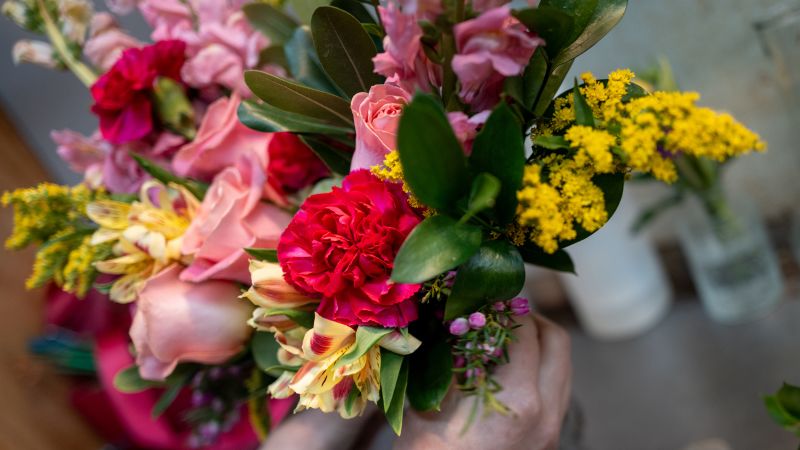
That Mother’s Day bouquet could be getting pricier this year
That Mother s Day bouquet could – As the calendar turns to May, the tradition of gifting flowers on Mother’s Day is under pressure from rising costs that ripple through the global supply chain. From the fields of Ecuador to the tables of American households, the journey of a single rose has become more expensive, and consumers may soon feel the impact. With Mother’s Day just weeks away, the flower industry is navigating a complex web of challenges, including fuel price surges and tariff adjustments, that could push prices higher than in recent years.
The Global Supply Chain
Flowers destined for Mother’s Day celebrations often begin their journey thousands of miles away. A rose plucked in the fertile highlands of Ecuador, for instance, is transported by cargo plane to Miami, Florida, before being moved via refrigerated trucks to wholesalers and grocery stores across the U.S. This intricate network ensures that blooms reach customers in peak condition, but it also exposes the industry to volatile expenses. This season, however, the path from farm to florist is fraught with added financial strain.
Higher fuel prices are casting a shadow over the entire process. Transportation costs have spiked, particularly for air freight, which remains a critical link in moving tropical flowers to U.S. markets. Charlie Hall, a professor at Texas A&M University specializing in international floriculture, highlights that jet fuel is the second-largest cost factor for imported flowers after labor. “The fuel cost is extremely expensive right now,” said Marlene Gutierrez, Saga’s business manager, emphasizing how these expenses directly translate to higher prices at the retail level.
Tariffs and Trade Agreements
The U.S. government’s import policies are also playing a role in the price hikes. Tariffs on imported floral products have climbed, adding to the financial burden on companies like Saga’s Wholesale. Although a trade agreement with Ecuador was signed in March, it has not yet taken effect, leaving roses subject to a 15% tariff. Similarly, flowers from the Netherlands face at least a 10% tariff. These levies, combined with increased shipping costs, are pushing the prices of vases, ribbons, and bouquets upward.
Armellini Logistics, a key player in the flower delivery sector, has introduced a dynamic fuel surcharge to account for diesel price fluctuations. The national average for diesel has recently climbed to $5.66 per gallon, nearing its highest level since 2022. “It’s hard to say it’s manageable when you increase your prices,” said David Armellini, the company’s CEO. “But it’s reality. The price of fuel has gone up, so the cost has to go up to everybody along the chain.” This surcharge reflects the industry’s need to absorb rising operational expenses while maintaining competitiveness.
Industry Trends and Consumer Behavior
Flower prices have historically risen around Mother’s Day due to increased demand, but this year’s situation is more pronounced. According to the Bureau of Labor Statistics, indoor plant and flower prices rose 7.5% year-over-year in March, outpacing the 3.3% increase in general inflation. This trend underscores the broader economic pressures facing the sector. Saga’s Wholesale, a long-standing fixture in the Los Angeles Flower District, has reported a 50% surge in the average cost of a two-dozen rose bouquet since last year, with prices now hovering near $30.
Seventy-five percent of Mother’s Day shoppers intend to purchase flowers, according to the National Retail Federation, with total consumer spending projected to reach $3.2 billion—similar to 2025 figures. Yet, the rising costs are forcing retailers and florists to rethink their strategies. At Flower Den Florist in Lorton, Virginia, a family-owned business with over 35 years of experience, the premium rose bouquet has increased by 7.5% compared to the previous year. While the company managed to absorb some costs, it also raised delivery fees, signaling a shift in how businesses are balancing expenses.
“Most customers have been understanding,” said Kamal Kalifa, co-owner of Flower Den. “They still value flowers, but they are making more thoughtful choices around size, add-ons, pickup, and delivery.” This sentiment reflects a broader trend: consumers are becoming more selective with their purchases, prioritizing quality and value over sheer quantity. As a result, the final bouquet for mom may look a little smaller or have fewer stems, a change that Hall attributes to florists’ efforts to stabilize price points amid surging input costs.
Import Dependence and Vulnerabilities
More than 80% of cut flowers in the U.S. are imported, with Colombia supplying the majority and Ecuador as a close second, per the Department of Agriculture. These flowers pass through Miami International Airport, which serves as a critical distribution hub before being sent to 38 states. However, the perishable nature of flowers makes the supply chain particularly sensitive to disruptions. “Because flowers don’t last long, long-term storage is less viable,” Hall explained. “That makes shipments more vulnerable to unexpected issues like the current energy price surge.”
While the supply chain’s complexity is a given, the recent price increases highlight how interconnected the global flower market has become. The combination of higher fuel prices, tariff adjustments, and the industry’s reliance on international suppliers has created a perfect storm of costs. For Saga’s Wholesale, this means that the average cost of a rose has risen significantly, threatening to erode the affordability that once defined the holiday’s floral offerings. Gutierrez noted that these changes are not just a temporary blip but a fundamental shift in the economics of the industry.
Florists are also adapting to these challenges by optimizing their operations. Some have streamlined inventory, focusing on locally sourced blooms or adjusting bouquet designs to reduce costs. Others are leveraging technology to improve efficiency, such as automated tracking systems for shipments or digital tools to manage customer expectations. Despite these efforts, the overall trend suggests that Mother’s Day bouquets will likely come with a higher price tag this year.
For many customers, the decision to spend on flowers remains a meaningful one, even as prices climb. The emotional value of a handpicked bouquet often outweighs the financial impact, but the increased costs may lead to more calculated choices. “What we are seeing is more selective spending,” said Kamal Kalifa. “If the bouquet looks a little smaller or the stem count is a little lower this year, it is not a coincidence.” This subtle shift in consumer behavior could redefine what’s considered a “perfect” Mother’s Day gift, as florists continue to navigate the pressures of a cost-driven market.
As the industry grapples with these challenges, the future of floral gifting remains uncertain. While the recent shocks may not yet be catastrophic, they are setting the stage for a more expensive Mother’s Day. For now, the focus is on managing costs and maintaining customer satisfaction, but the path to a bouquet that’s both beautiful and affordable is growing more complicated. Whether this translates to a pricier gift for mothers or a more thoughtful selection for customers, the impact of these changes is already evident in the prices lining the shelves of florists across the country.





