Harry Set to Learn Outcome of High Court Battle Against Daily Mail Publisher
Traveloasisspot.com – The Duke of Sussex is poised to learn the verdict in his legal dispute with the publisher of the Daily Mail as he lands back in the United Kingdom. His return to the country coincides with the release of the court’s decision, which will be made public on Tuesday afternoon. The ruling follows an 11-week trial earlier this year, where Harry contested claims of unlawful information collection by Associated Newspapers Limited (ANL).
Arrival Amid Unforeseen Circumstances
Harry touched down in the UK on Monday evening, positioning him to witness the judgment’s announcement. The trial, which centered on allegations of covert surveillance and deceptive practices by private investigators, freelance journalists, and ANL staff, has left the duke’s living arrangements in a state of uncertainty. His decision to stay at Buckingham Palace, initially confirmed on Saturday, was reversed just hours later, prompting a shift in plans for his upcoming appearances.
It is reported that Harry had accepted the offer of accommodation at Buckingham Palace for a single night, only to withdraw it at the last moment. The Royal Household cited the need for advance notice as a key factor, stating that the long-running legal case had complicated their ability to provide appropriate hospitality. Buckingham Palace also believed the ongoing litigation might jeopardize the King’s constitutional standing if the duke’s stay was linked to the royal residence.
Allegations and Defenses
A coalition of prominent figures, including Sir Elton John and his partner David Furnish, as well as Baroness Doreen Lawrence, leveled accusations against ANL. The group alleged methods such as voicemail interception, landline tapping, and “blagging”—the practice of obtaining information through deception. These tactics, they claimed, were used to gather details about Harry’s personal life and public activities.
“The Daily Mail and Mail on Sunday journalists provide a compelling account of a pattern of legitimate sourcing of articles,”
ANL asserted in its defense, emphasizing that the claims were brought too late and that the publisher had established a complete defense on the merits. The court’s decision will determine whether these arguments hold.
During the trial, dozens of witnesses testified, including Harry himself, other high-profile individuals like Liz Hurley, Sadie Frost, and Sir Simon Hughes, as well as current and former ANL staff. Harry’s written evidence revealed his frustration with the process, noting that “knowingly false” information was inserted into stories to mislead and hide the use of unlawful methods. He described how the media’s reporting had obscured the true nature of the investigations.
Accommodation Crisis and Public Appearances
The duke’s decision to forgo Buckingham Palace has sparked questions about the intentions behind the offer. While Harry initially declined the accommodation for himself and his family, he later reversed his stance, requesting a solo stay. The Royal Household maintained that the decision was necessary to ensure the proper provision of hospitality and staffing, though Harry’s team expressed disappointment at the last-minute change.
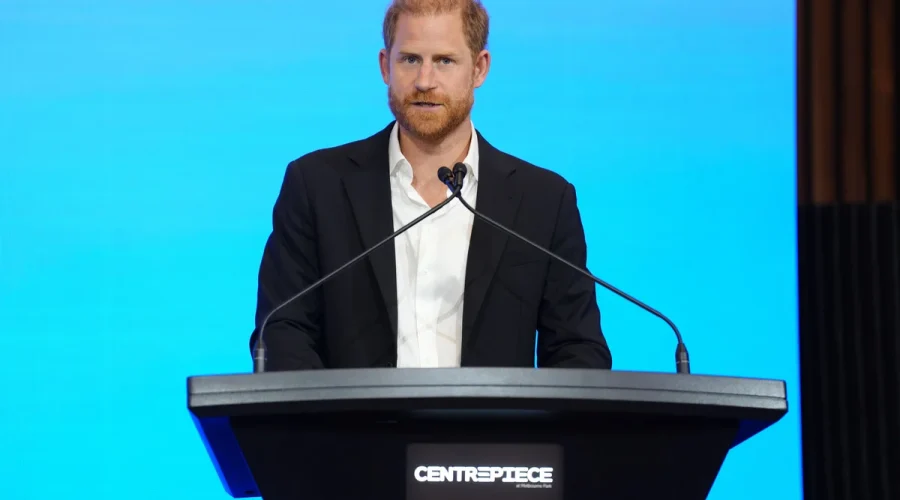
Despite the logistical hurdles, Harry is set to participate in a series of events marking the one-year countdown to the 2027 Invictus Games in Birmingham. His first public engagement will be an Invictus Games Foundation conference at Chatham House, where he will join veterans, experts, and policymakers to discuss support for wounded service members. The event will highlight his commitment to the cause, even as the legal battle casts a shadow over his recent activities.
Voicemail Interception and Legal Tactics
Harry’s case hinged on allegations of covert information gathering, with his team arguing that private investigators had accessed his personal communications. During a cross-examination in January, he admitted that some of the 14 articles in question had not been entirely satisfactory, but explained his restraint by citing the institution he represented at the time. “Because of the institution I was in,” he stated, “I could not complain about some of the articles.”
“Knowingly false information was added to stories to put me off the scent,”
Harry wrote in his evidence, further claiming that this was done to conceal the extent of the unlawful methods used. The case has drawn attention to the role of private investigators in modern journalism, with critics suggesting that the line between legitimate reporting and intrusive surveillance has been blurred.
ANL, meanwhile, defended its practices by highlighting the credibility of its journalists. They argued that the information obtained through friends, “leaky” social circles, press officers, and prior reporting was all within legal bounds. The publisher also emphasized that the lawsuit had been delayed unnecessarily, allowing the media to continue its investigative efforts without interruption.
Other Legal Claims and Public Scrutiny
While the focus has been on the Daily Mail case, Harry’s broader legal strategy remains under scrutiny. Questions linger about the status of his other claims against media outlets and the implications of the current ruling. The duke’s team has not yet commented on the potential fallout, but the case has already generated significant debate over privacy rights and journalistic freedom.
As the judgment nears, the spotlight shifts to the practical consequences for Harry. His absence from Buckingham Palace has forced a last-minute adjustment to his schedule, with the duke relying on alternative accommodations for his UK stay. This development adds another layer of complexity to his public image, as he balances legal challenges with his role as a global ambassador for the Invictus Games.
The court’s decision is expected to clarify whether Harry’s claims of unauthorized information collection are valid. If the ruling favors the duke, it could set a precedent for high-profile individuals challenging media practices. However, if ANL’s defense prevails, it may reinforce the publisher’s position that such methods are within acceptable bounds. Either way, the case underscores the tension between public interest and personal privacy in the digital age.
As Harry prepares to return to the spotlight, the outcome of his legal battle will likely influence his future engagements. The Invictus Games Foundation conference represents an opportunity to refocus attention on his advocacy work, even as the media continues to scrutinize his actions. The duke’s ability to navigate these challenges will be a key indicator of how he manages the intersection of personal life, public duty, and legal accountability.