
Trio of Crypto Scammers Sentenced After Snapchat-Enabled Heist Netted Nearly £5 Million
Traveloasisspot.com – It was captured on camera when a criminal mastermind tried to swindle thousands of pounds in digital currency from an unaware target, all while receiving real-time guidance from an accomplice through Snapchat messages. The incident highlights how modern technology has transformed traditional fraud schemes into sophisticated operations that can drain bank accounts in minutes.
The Masterminds Behind the Scheme
Three men—Anthony Ikenwe, aged twenty-nine, Hamza Bashir, twenty-three, and Kevin Nwamma, twenty-five—orchestrated an elaborate deception that left victims financially devastated. They would telephone unsuspecting individuals, presenting themselves as legitimate law enforcement officials. Their pitch was simple yet effective: they claimed the victims’ cryptocurrency holdings were under threat and demanded immediate protective action.
Having acquired personal information from dark web sources, the conspirators successfully manipulated their targets into surrendering crucial account credentials. Many victims were convinced to move their digital assets into accounts they believed were official police protection vaults, when in reality these were controlled entirely by the fraudsters themselves.
A Massive Financial Blow
Investigators confirmed that approximately five million pounds in cryptocurrency changed hands, stolen from eight identified victims. However, police authorities suspect the true scope of the operation extends much further, with numerous additional victims potentially still unaware they have been defrauded.
The criminals proved remarkably shameless in how they utilized their ill-gotten gains. Despite one of the trio maintaining a documented annual income of merely £444, the group embarked on extravagant spending sprees. Multiple international holidays became commonplace, and luxury purchases were made without hesitation.
Closed-circuit television recordings captured the trio’s brazen behavior as they laughed and chatted while shopping at Harrods department store. Additional photographs revealed them posing beside premium vehicles, displaying costly timepieces, and waving bundles of cash with evident pride.
The Snapchat Connection
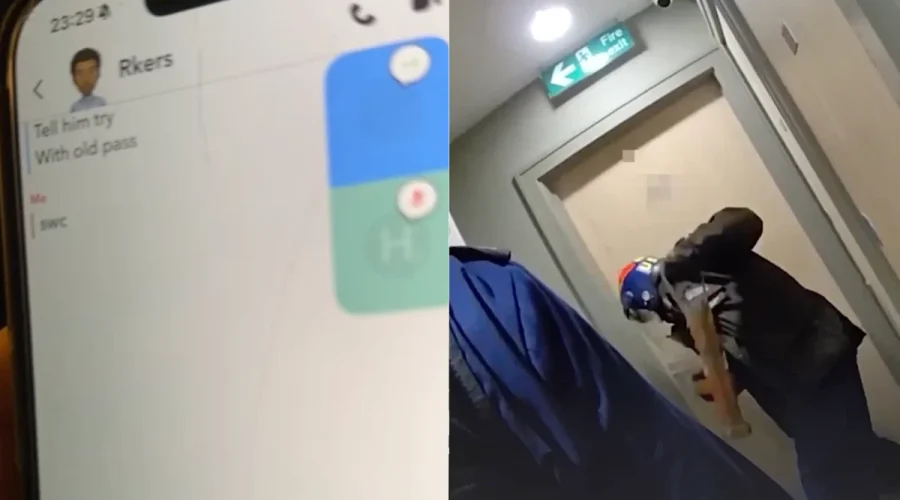
One particularly revealing video, thought to have been filmed by one of the perpetrators, shows him simultaneously conducting a scam telephone call and exchanging messages on Snapchat. While attempting to extract a victim’s cryptocurrency password, he received a brief instruction from his partner: “Tell him to try with old pass.”
This snapshot of modern criminal communication demonstrates how social media platforms have become integral tools for coordinating complex fraud operations across distances.
Justice Delivered
At Southwark Crown Court on Thursday, Ikenwe, Bashir, and Nwamma received a combined sentence of twenty-eight years and nine months. Their convictions covered both conspiracy to commit fraud and money laundering offenses.
“This was a highly complex investigation into a group of calculated manipulators who exploited victims’ trust by pretending to be police officers,” explained Detective Inspector Geoff Donoghue from the Metropolitan Police’s Cryptocurrency Team.
“The Met’s Cryptocurrency Team painstakingly traced millions of pounds, combining a wide range of investigative techniques to identify those responsible and dismantle a significant criminal network.”
“Fraud is far from a victimless crime. Many of those targeted suffered devastating financial losses.”
“Criminals cannot rely on sophisticated technology to hide their crimes. The Met Police remains committed to pursuing them and bringing them to justice.”
How the Investigation Unfolded
Cryptocurrency represents a decentralized digital currency system where transactions exist purely as virtual entries within computer networks, rather than physical notes or coins. The trio’s modus operandi involved building victim confidence before directing them toward counterfeit websites that closely mimicked legitimate platforms.
These fraudulent sites enabled the criminals to harvest passwords and secure access to cryptocurrency accounts. To enhance credibility, they also impersonated cryptocurrency company staff or fabricated third-party technical support representatives, providing false reassurance that everything was proceeding normally.
The entire operation came to light when victims began reporting suspicious activity in January 2025. Detectives immediately initiated a comprehensive investigation, employing data-driven methodologies to map the complete scope of the deception.
Officers examined blockchain transaction records, communication logs, financial documentation, cryptocurrency exchange histories, and internet service provider information. By cross-referencing aliases, phone numbers, web addresses, cryptocurrency wallets, and expenditure patterns, investigators connected offenses that initially seemed disconnected.
Their thorough examination revealed an organized criminal network that had operated systematically, exploiting the growing popularity of digital currencies and the relative unfamiliarity many people had with cryptocurrency security protocols.
Police continue to encourage the public to exercise caution when receiving unsolicited calls regarding financial matters. Authorities recommend hanging up immediately and contacting banks or account providers directly through verified channels before disclosing any personal or monetary information.