A Queer Love Story Set Against the Welsh Coastline: On The Sea
Universal Themes in a Traditional Setting
Traveloasisspot.com – Irish performer Barry Ward has shared insights into his latest cinematic project, a romantic narrative centered on queer experiences within a Welsh coastal community. The film, titled On The Sea, explores themes that extend far beyond its specific geographical location, according to the actor.
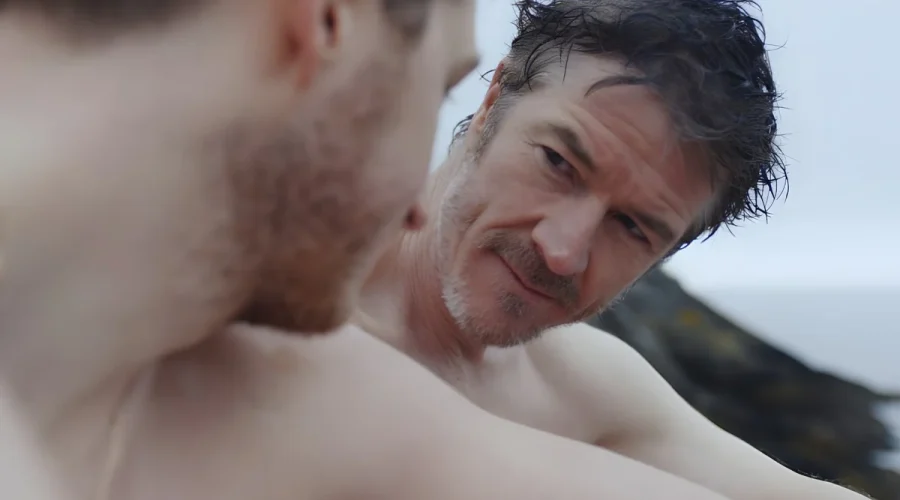
Ward, known for his work in the television series Bad Sisters, portrays Jack—a man whose life revolves around harvesting mussels. His routine existence transforms when he develops feelings for Daniel, portrayed by Scottish actor Lorne MacFadyen. The character of Daniel is a traveling worker who arrives in this tight-knit community, bringing with him unexpected emotional possibilities.
Jack’s world is built upon foundations of tradition. He is married to the woman he has known since childhood, and their lives are deeply intertwined with both the local church and the fishing industry that sustains the village. When Daniel enters his life, Jack discovers desires he has kept hidden for most of his years.
A Welsh Setting with Global Resonance
The forty-six-year-old actor emphasized that the Welsh backdrop serves as more than just a picturesque location. He believes the setting represents communities found throughout the world.
“I think that’s the point of the movie, in a way, that the Welsh location we chose can stand in for anywhere in the world,” he explained to the Press Association.
Ward noted that traditional working-class and industrial towns share common characteristics. The physical demands of manual labor often cultivate a particular type of masculinity within these communities.
“I think specifically in the more traditional working-class towns and industrial towns where, given the nature of manual labour, there’s often a bit more of a macho culture,” he observed.
During production, both Ward and his co-star were reading the works of Édouard Louis, a French author whose own background resonated with the film’s themes. Louis hails from an industrial town in southern France, far from any coastline, yet his experiences mirror those depicted in On The Sea.
“We were both reading Édouard Louis, a beautiful French writer, while filming. He’s from a town in the south of France, very much not coastal, but an industrial town and it chimes very much with On The Sea. So I think it’s a universal story,” Ward reflected.
Challenges of Accent and Expression
Originally from Dublin, Ward undertook the considerable task of mastering a Welsh accent for his role. He described this as one of several compelling challenges the project presented.
“We’re always looking as actors for interesting challenges, and they were plentiful on this,” he said.
The Welsh dialect proved particularly demanding, especially since the film was shot in northern Wales, near Liverpool. This created a distinctive hybrid accent that required dedicated practice.
“The accent, first and foremost, was a tricky one, and Welsh is notoriously difficult. It was such a specific part of Wales as well, up north, closer to Liverpool, that it was a strange hybrid accent,” Ward explained.
He also highlighted how Helen Walsh’s writing complemented the character dynamics. The dialogue remains sparse, reflecting both the script’s elegance and the macho environment in which the characters exist.
“We spent a lot of time working on that, but then, as Lorne mentioned, the dialogue is so sparse, given Helen’s beautiful and restrained writing, but also because of the world we’re in, which is very macho,” he added.
MacFadyen’s Connection to the Setting
MacFadyen, thirty-six years old and known for his roles in Vigil and The Lazarus Project, found personal resonance with the film’s setting. Having grown up in a fishing community on the Isle of Skye, he understood the dynamics portrayed on screen.
“I loved the writing, and the setting was something I really connected with because I’m from a fishing community in Skye,” he shared.
He appreciated how the film captured the insular nature of such communities and the challenges faced by those who differ from the norm.
“I felt that that world was depicted very well, the close-knit, somewhat closed-off community and the pressures that come with trying to exist within it as someone who is a bit different,” MacFadyen noted.
He praised the script’s use of silence, allowing actors to convey meaning through unspoken context and backstory.
“I really loved the way Helen wrote the dialogue as well, and how there was so much space between the lines. We could fill the silences with loaded context and back story,” he said.
Class and Identity in Traditional Communities
MacFadyen contemplated how the story might shift if relocated to Irish or Scottish villages with similar characteristics. He identified class as a unifying element across these different settings.
“The common factor as well is class. The way sexuality is dealt with and perceived in certain trades and professions can make it more difficult for people who are queer, or who are living with some kind of alternative identity, to work in these very macho, heteronormative environments,” he analyzed.
He expressed curiosity about how cultural variations might influence the narrative while maintaining its core themes.
“I think that would be the common theme I recognise, but it would be interesting to see where the differences lie. I’m sure there would be some big ones that I wouldn’t know until I experienced it. It would be interesting to see,” MacFadyen concluded.
On The Sea opens in cinemas across the United Kingdom and Ireland on Friday, offering audiences a chance to experience this heartfelt exploration of love, identity, and belonging.