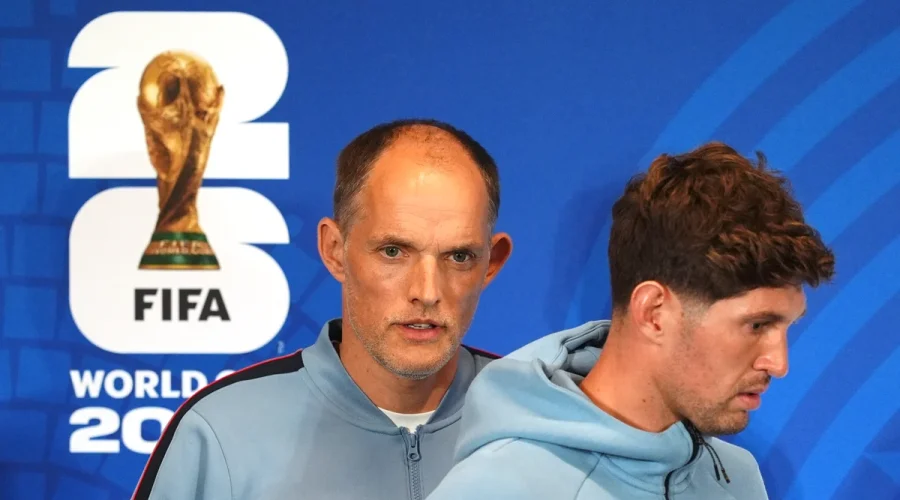
Tuchel’s Defiant Stance Following England’s World Cup Departure
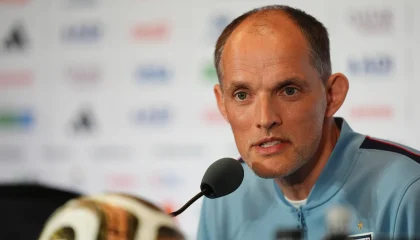
What we learned as Thomas Tuchel – Thomas Tuchel made his way to the media room considerably behind schedule, arriving two hours past the appointed time after the England squad’s flight into Fort Lauderdale encountered weather complications. Initially, the head coach presented a composed demeanor, showing no visible signs of irritation or anxiety about the situation.
However, as the questioning commenced regarding England’s disappointing semi-final loss to Argentina, Tuchel’s attitude shifted noticeably. The manager under considerable pressure remained steadfast, offering no apologies and declining to participate in what he described as “the blame game.” Sitting beside John Stones ahead of the evening’s third-place match against France — a fixture many would prefer to avoid — Tuchel deflected inquiries while declining to shoulder responsibility.
A Performance of Responsibility
His repeated assertion that he accepts “responsibility” appeared somewhat hollow, merely a rehearsed response rather than a genuine acknowledgment. Tuchel clearly maintained his position, defending his choices from the outset. When addressing the opening question, he stated unequivocally:
“If you are asking if I regret my decisions, I say no, I don’t.”
The initial inquiry also touched upon comments made by the US president, whose unusual press conference earlier that Friday had included criticism of Tuchel. Donald Trump had questioned why the German manager had utilized his golf companion Harry Kane as a “defensive player” during the tournament.
Tuchel seemed annoyed that this topic was being raised again.
“Do you use Donald Trump as your witness for the case, or?”
he responded when asked about the matter.
FA Backing and Tactical Defensiveness
The Football Association has already expressed its continued support for Tuchel. Having extended the head coach’s contract before the tournament began, the FA’s hands were tied regarding any changes to his position, particularly with Euro 2028 on the horizon. This backing came despite what many viewed as England’s self-sabotaging performance in Atlanta that ultimately eliminated their World Cup hopes and handed victory to Argentina.
Upon entering Miami Stadium for the press conference, Tuchel offered a brief half-smile that quickly faded. He fidgeted with the microphone, shifted uncomfortably in his chair, and displayed through both his words and body language that he would have preferred to be elsewhere. His barked self-defensive statements and physical restlessness conveyed his desire to distance himself from the scrutiny.
“I take responsibility,”
he declared performatively.
“If it is easier for someone to take responsibility, I do. But I will not engage in this kind of game. If you need to take someone to blame, I take the blame.”
Disconnect with Critics
Tuchel seemed unable to comprehend why there might be frustration regarding how England exited the tournament. The manner of their departure — featuring what was described as the worst-ever protection of a one-goal lead in a crucial knockout match — had occurred under his watch. The manager had been hired specifically to navigate these high-pressure moments successfully and to avoid repeating the errors of previous managers.
Standard Sport challenged Tuchel’s insistence that assigning blame was unnecessary. While he claimed there was no need for a blame game, it seemed reasonable that both media and supporters wanted clarity on which decisions — whether from the coach or the players — resulted in the late loss of their lead in a World Cup semi-final.
The German manager’s refusal to genuinely accept fault or humble himself has contributed to a more tense atmosphere following England’s elimination than might otherwise have been the case. When pressed, Tuchel told Standard Sport that he had
“never [been] shy to explain”
yet claimed he
“did not understand the question.”
In both instances, observers felt Tuchel had removed himself from blame by offering more excuses than explanations.
“Out of the four teams, the other three were expecting to be world champions,”
he maintained.
“We were hoping, dreaming, believing. We are not there yet. There is still a gap to close.”
According to Tuchel, England were not considered favorites to the same extent as France, Argentina, and Spain had been prior to the tournament. Over recent days, the manager has shown that he genuinely struggles to grasp the intensity and specifics of the criticism directed at him and his squad, with particular focus on his own tactical choices and substitutions during the crucial second half of the Argentina match.