Amad Diallo Sidelined by Training Niggle as Manchester United Begin Premier League Campaign
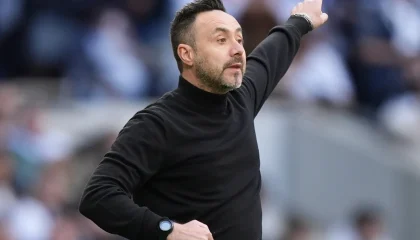
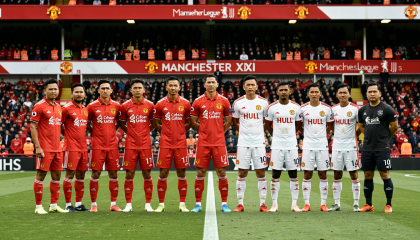
Traveloasisspot.com – Manchester United’s opening-day Premier League fixture at Hull City arrived with an unwelcome wrinkle: the absence of Amad Diallo from the matchday squad. The Ivorian winger, who had been among the most talked-about names in United’s attacking rotation during the summer build-up, was left out of the twenty-man selection for Saturday’s lunchtime trip to the MKM Stadium. Manager Michael Carrick addressed the omission directly in his pre-match briefing, confirming that Diallo had sustained a minor training issue earlier in the week and was undergoing further medical assessment.
What Happened and What It Means
The word Carrick used was “niggle” — a term familiar to anyone who follows professional football closely. In practical terms, a niggle refers to a low-grade muscular complaint: a tight hamstring, a strained calf, or a minor soft-tissue irritation that does not require imaging but does warrant a cautious approach. It is not, in most cases, a season-ending blow. Yet the timing makes it significant. Diallo, now twenty-four, had spent the previous campaign establishing himself as a reliable contributor in United’s forward line, and his pre-season performances had reinforced the perception that he would be a central figure in the club’s attacking plan this term.
Carrick’s comments, delivered ahead of kick-off against Hull, indicated that medical staff were still evaluating the extent of the complaint. No scan results or definitive diagnosis had been made public at the time of the squad announcement. The club’s stated position was that Diallo was expected to return “soon,” though no specific number of days or weeks was attached to that optimism. For a player whose value to the squad is measured in creative output, goal contributions, and the ability to unlock compact defensive blocks, even a short layoff at the start of a thirty-eight-game season carries disproportionate weight.
“He was being assessed after picking up a niggle in training earlier this week.” — Michael Carrick, pre-match update
Why the Absence Stings More Than a Typical Rotation Call
Not every missing name on a matchday sheet signals a problem. Managers routinely rest players, manage workloads, or make tactical substitutions in their selection. What made Diallo’s omission stand out was the combination of factors surrounding it. He had not been flagged as a rotation candidate in the weeks leading up to the season. His pre-season form had been strong enough to generate genuine excitement among supporters and analysts alike. And the match in question was not a midweek cup tie or a late-season fixture where a rest decision would be unremarkable — it was the opening weekend of the Premier League, the match that sets the narrative tone for an entire campaign.
For United, the practical implication is straightforward: Carrick’s attacking options for the Hull trip are narrowed. Diallo’s profile — pace, directness, and the ability to carry the ball into tight spaces — gives a manager a specific type of threat that is difficult to replicate with a like-for-like substitution from the remaining squad. Without him, United’s front line must rely on alternative combinations, and the tactical flexibility available at the MKM Stadium is correspondingly reduced.
The Broader Season Context
Opening-weekend injuries have a long history of shaping the trajectory of a club’s season. A minor knock that forces a player out for two or three weeks can disrupt the rhythm of a squad that has spent the summer building cohesion. Training sessions, set-piece routines, and the chemistry between front-line players all depend on continuity. Losing a key contributor before the first competitive minute of the season means that the replacement pairing must be tested under match pressure rather than in the controlled environment of a training ground.
For Diallo personally, the situation is less alarming than it might first appear. A training niggle, managed correctly, typically resolves within a matter of days to a couple of weeks. The player’s age — twenty-four — places him in the prime physical window where recovery times are shorter than they would be for a veteran. And the fact that Carrick’s language was measured rather than alarmist suggests the medical team does not anticipate a prolonged absence. Still, the uncertainty of “no exact timeframe” means that United’s next few fixtures could be affected if the complaint does not clear quickly.
Looking Ahead
The MKM Stadium contest against Hull will proceed without Diallo, and Carrick’s twenty-man group will be tasked with delivering a positive result on what is, for many United supporters, the most emotionally charged match of the calendar year. The club’s medical department will continue to monitor the winger’s condition in the days following the game, with a decision on his availability for subsequent fixtures expected once further assessment is complete. Until that clarity arrives, the question of when — and whether — Diallo reappears in a matchday squad remains open, adding a layer of uncertainty to an already high-stakes opening weekend.
Related Reading
Frequently Asked Questions
What is Why Amad Diallo is not in Manchester?
Why Amad Diallo is not in Manchester is the main topic of this guide. The article explains the context, practical details, and next steps readers should understand.
Why does Why Amad Diallo is not in Manchester matter?
Why Amad Diallo is not in Manchester matters because readers are looking for a useful answer, not just a short summary. Good content should match search intent and help them decide what to do next.