Tottenham’s Premier League Reset: What a 3-0 Brentford Thumping Really Means
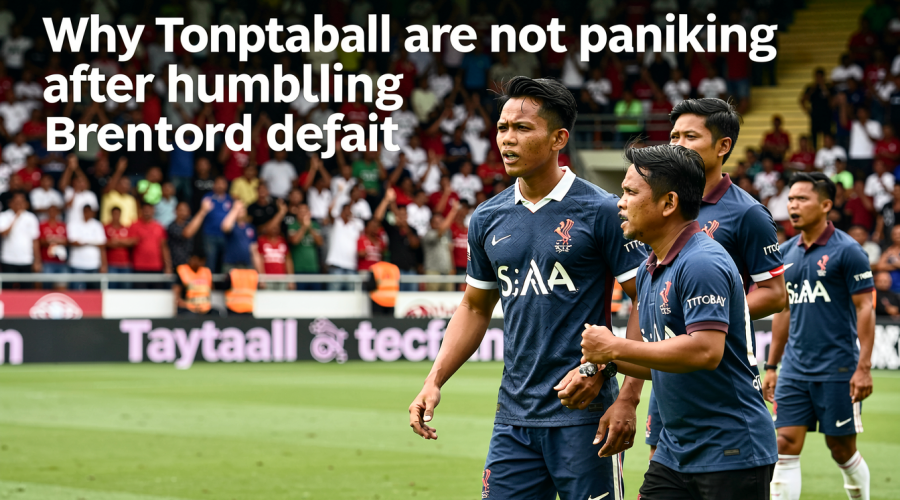
Traveloasisspot.com – The dream of a transformed Tottenham Hotspur squad hit a wall on Saturday afternoon. After a summer defined by record-breaking outlays and elevated expectations, the club’s new-look roster was dismantled 3-0 at Brentford Community Stadium in a performance that stripped away every veneer of optimism built over the preceding weeks. Four players made their first-team debuts in the starting lineup, an £85 million summer acquisition named Mateus Fernandes was introduced from the bench, and the result was a team that appeared to have no shared language on the pitch.
For a side that had spent the close season retooling its personnel almost entirely, the absence of collective rhythm was predictable. What was less predictable was the speed with which Brentford’s high-intensity pressing dismantled Spurs’ structure. Roberto De Zerbi’s players were unable to progress the ball under sustained pressure, and the defensive shape collapsed repeatedly, conceding three goals inside just 49 minutes.
A Defence Built from Strangers
The back line that faced Brentford’s front foot included three debutants alongside 20-year-old Archie Gray, a player who made history by becoming Tottenham’s youngest-ever captain but who does not naturally operate at right-back. The combination produced a unit with no established chemistry, no shared defensive triggers, and no ability to track overlapping runs. Chaos was the defining feature: players were caught out of position, communication broke down, and the gaps between lines were exploited relentlessly.
In midfield, the pairing of Lucas Bergvall and Sandro Tonali struggled to cover the spaces left by a back line that was perpetually stretched. Brentford’s forwards operated with freedom that a cohesive Spurs midfield should have denied, bullying the visitors into a reactive posture for the full ninety minutes.
De Zerbi’s Candid Assessment
Rather than deflect blame or offer platitudes, the Italian manager confronted the issue head-on in his post-match press conference. He acknowledged that a disrupted pre-season had left his squad physically unprepared, with several key players returning late from World Cup duties and others — including James Maddison, Dominic Solanke, Destiny Udogie, and Fernandes — managed conservatively to protect their fitness.
“I think we are not a team yet, for a lot of reasons,” De Zerbi said. “Yesterday in the press conference, when you asked me what is the target, we can fix the target when you become a team. Before becoming a team, we can’t say what we can do.”
He pressed the point further, insisting that collective identity cannot be manufactured through a transfer window alone.
“You can’t become a team for the transfer market window,” he continued. “You become a team with the players. They find the connection between them, they find the spirit, they find the soul.”
The message was clear: the squad that took the field at Brentford is unlikely to start together again. Further personnel changes are anticipated in the coming weeks, meaning additional upheaval is on the horizon.
The Transfer Window Still Has Teeth
Tottenham’s recruitment operation is far from concluded. Mikey Moore is expected to depart on loan, freeing a squad place and reducing wage overhead. More significantly, the club is in advanced discussions to bring in Manchester City forwards Omar Marmoush and Savinho within days, with medicals reportedly already booked. Interest in Cody Gakpo has also been noted, suggesting the front-of-house overhaul could extend beyond a single addition.
These moves underscore a broader truth: the project De Zerbi inherited was never going to produce a polished, cohesive unit by matchday one. Tottenham’s successive 17th-place finishes in recent Premier League campaigns meant the foundation was fragile, and rebuilding a competitive squad from that base requires patience measured in months, not weeks.
A Precedent Worth Remembering
For perspective, Spurs need look no further than their hosts. Last season’s opening weekend saw Brentford trail 3-0 at half-time against Nottingham Forest — a result that, by all conventional metrics, should have derailed a title-chasing campaign. Instead, Thomas Frank’s side regrouped, refined their pressing identity, and finished the season in the Champions League places. One catastrophic afternoon did not define their trajectory.
De Zerbi, for his part, has called explicitly for patience from the fanbase. He believes in the quality of his available personnel and the strategic direction of the club, but he has conceded that his team will need to “suffer” at intervals this season while the collective identity takes shape. The work required spans every phase of play — defensive organisation, midfield transition, attacking cohesion — and none of it can be shortcut by a single transfer or a single training block.
The Saturday result was ugly, and the questions it raised are legitimate. But in the context of a squad still assembling itself, a disrupted preparation period, and a transfer window that remains open, the 3-0 scoreline is better understood as a data point than a verdict. The project is young. The patience De Zerbi requests is not a cop-out; it is the only realistic timeline for a team that, by his own admission, has not yet found its soul.
Related Reading
Frequently Asked Questions
What is Why Tottenham are not panicking after?
Why Tottenham are not panicking after is the main topic of this guide. The article explains the context, practical details, and next steps readers should understand.
Why does Why Tottenham are not panicking after matter?
Why Tottenham are not panicking after matters because readers are looking for a useful answer, not just a short summary. Good content should match search intent and help them decide what to do next.