Newborn Genomic Screening Catches Rare Brain Disease Before Symptoms Can Strike
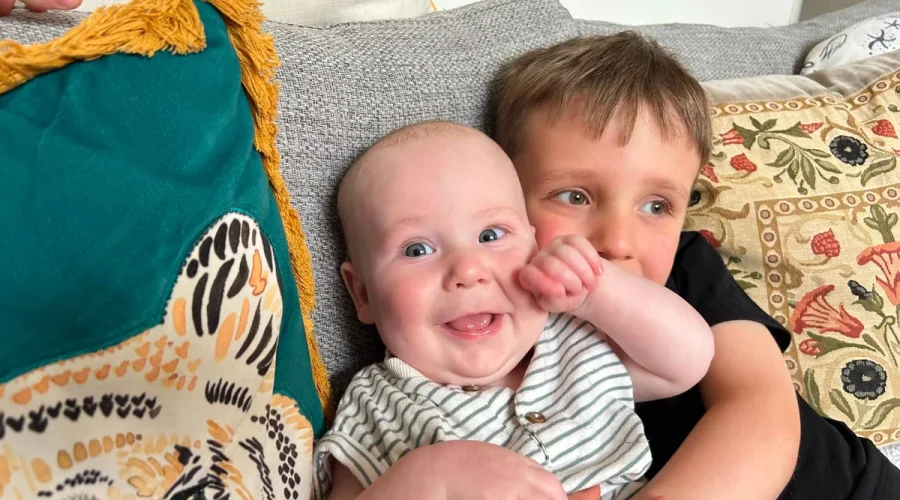
Traveloasisspot.com – Two young boys in West Yorkshire now face a future shaped not by chance, but by a heel-prick sample taken while their mother sat in a hospital corridor, half-listening to a research midwife’s pitch. Revan and Thorin Barker-Roe carry a genetic variant linked to adrenoleukodystrophy, a progressive disorder that erodes vision, motor control, cognition, and adrenal function. Because the variant was flagged before either child showed a single symptom, clinicians can now watch, wait, and intervene at the earliest possible window — a scenario that, for most families affected by ALD, simply does not exist.
A “Bored” Decision That Changed Everything
Jessica Barker-Roe, 32, of Bradford, was admitted to hospital during a complicated pregnancy with Revan, now eight months old. While recovering, research midwives from the Generation Study made their rounds and asked whether she would consider enrolling her unborn child in a large-scale genomic screening programme. Her response was characteristically casual.
“Honestly I was just bored so I said, ‘Yeah, whatever’ and put it to the back of my mind.”
That offhand agreement led to a heel-prick blood sample on Revan shortly after birth. The result identified a genetic change associated with ALD. Doctors immediately requested that Thorin, then four years old, be tested as well — a urgency driven by the fact that neurological symptoms of ALD typically emerge around age four, and once they do, therapeutic options narrow sharply.
Thorin’s sample confirmed the same variant. Neither boy currently shows symptoms, but both now sit under a structured surveillance protocol: brain MRI scans at six-month intervals until roughly age twelve, paired with regular blood work to monitor adrenal gland function. The goal is straightforward — detect the first whisper of neurological or endocrine change and act before irreversible damage sets in.
Why Early Detection Matters in ALD
Adrenoleukodystrophy is caused by mutations in the ABCD1 gene, which impairs the body’s ability to break down very-long-chain fatty acids. These lipids accumulate in the brain’s white matter and in the adrenal cortex, producing a dual assault on the nervous system and hormone regulation. In its childhood cerebral form, the disease progresses rapidly once symptoms appear, and no therapy can reverse established demyelination. Hematopoietic stem-cell transplantation and, in select cases, surgery on the adrenal glands remain the principal interventions, but their success depends almost entirely on timing.
For most families, the first sign is a subtle change in gait, a missed word, or a bout of adrenal insufficiency that mimics an infection. By the time a diagnosis is confirmed, the window for transplant has often closed. The Barker-Roe boys, by contrast, enter that window with years of margin.
“We are now in a position where it’s surveillance and, if it does occur, the worst thing that could happen is surgery and a bone marrow transplant – yes, it comes with risk, but it far less risky than the alternative.”
That assessment came from Dominic Barker-Roe, 36, the boys’ father. His framing captures the central trade-off: monitored risk versus unmonitored catastrophe.
The Generation Study: Scale and Purpose
The programme that surfaced the Barker-Roe variant is the Generation Study, launched in 2024 and jointly led by Genomics England and NHS England. It is enrolling approximately 100,000 newborns across more than 70 hospitals in England. Each participant undergoes whole-genome sequencing — a complete readout of roughly three billion base pairs — alongside the conventional heel-prick panel that already screens for ten rare but serious metabolic and endocrine disorders at birth.
The study’s stated aim is to generate the evidence base needed to decide whether whole-genome sequencing should become a routine component of newborn screening in the NHS. It targets over 200 rare conditions characterised by progressive loss of physical and cognitive function. Because many of these disorders remain clinically silent in infancy, the sequencing data can flag a predisposition years before a child would otherwise present to a paediatrician with an unexplained regression.
Experts involved in the project argue that earlier identification translates directly into earlier treatment, slower disease progression, and in some cases longer survival. At present, the diagnostic pathway for many of these conditions involves months of specialist referrals, repeated lumbar punctures, and trial-and-error enzyme assays — a process that delays intervention precisely when time is most scarce.
What the Barker-Roe Story Illustrates
Jessica Barker-Roe’s account carries an uncomfortable irony she herself highlights: her hospitalisation — prompted by bleeding during pregnancy — placed her in the exact corridor where the study’s midwives were recruiting. Without that admission, the enrolment conversation would never have happened, and the boys’ first contact with ALD might have been a neurological crisis at age four or five.
“I feel so lucky, instead of feeling worried, I feel so ridiculously lucky that we timed having a baby when the Generation Study was out there as an option and I was in hospital at a time when it was being offered by the research midwives because I had not heard of it. If I hadn’t had that bleeding I wouldn’t have been in hospital, we probably wouldn’t have signed up for it and the first we would have known about it was when one of the boys got ill.”
Her gratitude underscores a structural point: the study’s reach, however broad, still depends on a parent being present, willing, and available at the moment of enrolment. Scaling genomic screening to every newborn in England would remove that contingency entirely — turning a fortunate coincidence into a universal safety net.
Broader Implications for NHS Screening Policy
If the Generation Study’s data support routine genomic screening, the implications extend well beyond rare paediatric disease. Whole-genome sequencing at birth would create a lifelong genetic record for each child, raising questions about data stewardship, incidental findings, and parental consent for tests that may inform decisions decades later. NHS England and Genomics England have framed the study as an evidence-generating exercise precisely so that policy decisions rest on measured outcomes rather than assumption.
For conditions like ALD, where the therapeutic window is measured in months rather than years, the argument for universal screening is difficult to contest. The Barker-Roe boys’ story is not an outlier; it is the intended outcome of the programme, rendered visible by one mother’s boredom in a Bradford hospital ward.
Related Reading
Frequently Asked Questions
What is Brothers could be spared complications of rare?
Brothers could be spared complications of rare is the main topic of this guide. The article explains the context, practical details, and next steps readers should understand.
Why does Brothers could be spared complications of rare matter?
Brothers could be spared complications of rare matters because readers are looking for a useful answer, not just a short summary. Good content should match search intent and help them decide what to do next.