Table of Contents
ToggleFive Iconic Outfits of Queen Elizabeth II Displayed in New Royal Exhibition
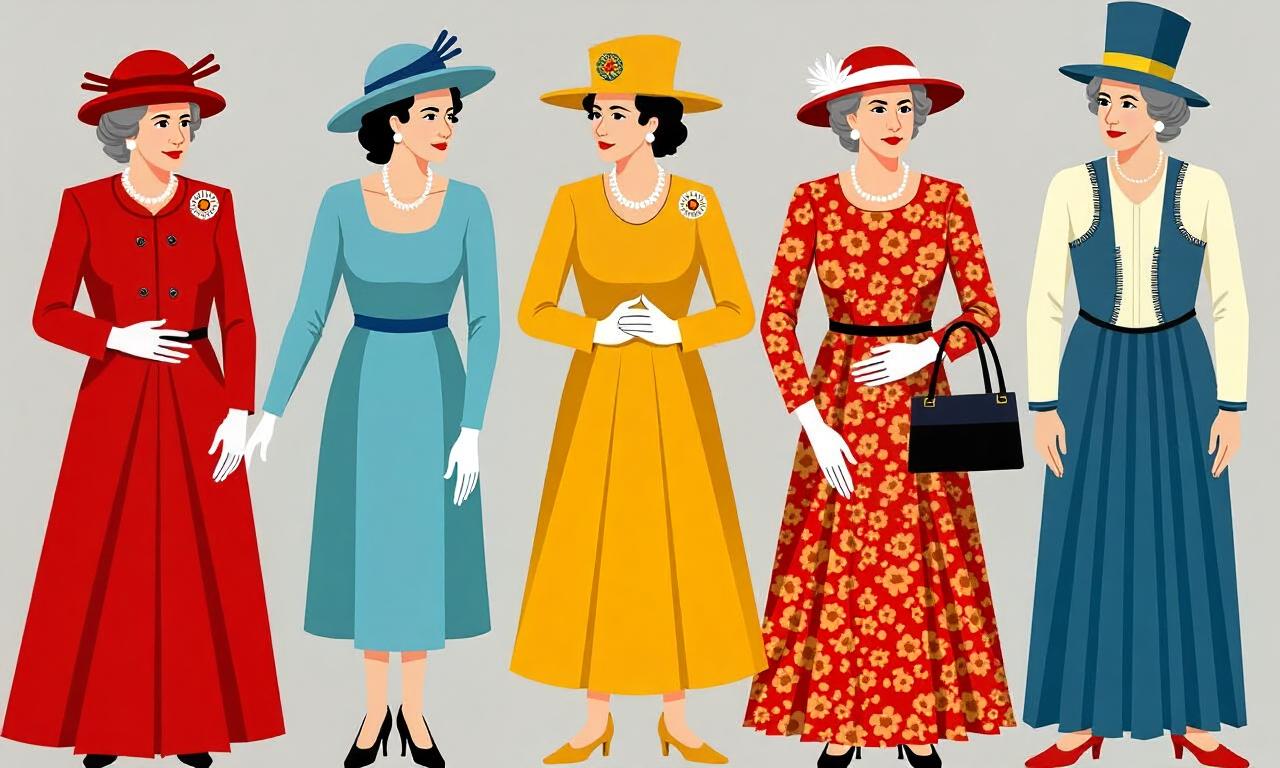
Queen Elizabeth II, one of the most widely recognized figures of her era, cultivated a style that was both understated and globally identifiable. Her fashion, often characterized by simplicity and tradition, served as a symbol of continuity and national identity throughout her 70-year reign. The recent exhibition at The King’s Gallery in Buckingham Palace explores this legacy, presenting 200 items—from clothing and accessories to jewellery and headwear—that reflect the evolution of British culture over a century. The showcase also celebrates the centenary of her birth on 10 April, highlighting how her appearance mirrored the changing world around her.
A National Symbol
Among the standout pieces is a Harris tweed jacket paired with a Balmoral Tartan skirt, designed by her long-time dressmaker Norman Hartnell. First worn in the 1950s, the outfit became a defining element of her casual attire. While practical for her active lifestyle and modest in design, it subtly reinforced British craftsmanship and heritage, as noted by royal fashion commentator Marian Kwei. The fabrics were chosen to “promote British fashion, excellence and production,” she explains, with the cut and color evoking “stability, dependence, soft power.” Kwei emphasizes that the look conveyed authority without overt flamboyance, embodying the idea of “I’m in charge” through quiet elegance.
“It’s ‘I’m in charge,’ without being too loud about it.”
Symbolism in Design
The 1953 Coronation dress, another Hartnell creation, exemplifies her commitment to national symbolism. Crafted from Kent silk and adorned with gold bugle beads, diamantés, and pearls, the gown features intricate embroideries that represent the four UK nations. The Queen’s decision to include emblems from other Commonwealth countries—such as the Canadian maple leaf and India’s lotus flower—demonstrates her role as a unifying figure. “The gown was pretty much a nod to Britain and the Commonwealth,” Kwei remarks, adding that her sartorial choices reflected “the kind of Queen we had and how she reigned.”
Divisive Yet Defining Moments
Her 1957 sleeveless green gown, also by Hartnell, is another notable item. Worn during a state banquet for US President Dwight Eisenhower, the dress sparked debate about its symbolism. While de Guitaut, the exhibition curator, calls it “absolutely beautiful,” she notes that its meaning remains unclear. Kwei suggests the “apple crisp green” hue may subtly reference American culture, linking it to the nickname “The Big Apple” and the archetype of “American Pie.” The Queen’s choice, she argues, conveyed both sovereignty and a gesture of connection: “It says, ‘I’m Britain’s sovereign, this is us, but I’m also nodding to you.'”
“From New York being known as ‘The Big Apple’ right through to the traditional place the ‘American Pie’ holds in American culture, apples have become synonymous with all things classically American.”
Early in her reign, Elizabeth II used her wardrobe to redefine her public image, as highlighted by author and royal fashion commentator Elizabeth Holmes. She notes that her outfits, often with a fitted waist and full skirt, “accentuated her femininity rather than attempting to mask or hide it,” positioning her as a glamorous yet authoritative presence on the global stage.