Travel decisions are no longer shaped primarily by brochures, guidebooks, or even traditional news outlets. Today, travel news on social media plays a central role in influencing where people go, what they experience, and how they spend. Platforms such as Instagram, TikTok, X, and YouTube have transformed travel updates into fast-moving streams of visuals, opinions, and real-time reports. As a result, trends emerge rapidly, destinations rise and fall in popularity, and consumer behavior shifts in response to what appears in social feeds.
The Rise of Social Platforms as Primary Travel Information Sources
Social media platforms have evolved into primary channels for discovering destinations and travel updates. Unlike conventional media, which follows structured publication cycles, travel news on social media spreads instantly through posts, stories, and short-form videos. This speed allows travelers to access updates about weather disruptions, airline changes, political developments, or newly opened attractions within minutes.
The immediacy of social platforms builds a perception of authenticity. Travelers often trust peer-generated content more than polished advertising campaigns. When a user shares a firsthand airport experience or a review of a new resort, it feels less filtered and more relatable.
Algorithms also play a decisive role. Content that gains engagement is amplified, creating viral travel moments. A single trending video can push a previously unknown location into international visibility, reshaping travel flows in weeks rather than years.
How Viral Content Creates Destination Trends
One of the strongest impacts of travel news on social media is its ability to generate sudden destination trends. A scenic viewpoint, hidden café, or remote island can become globally recognized after a few viral posts. Travelers often seek to replicate what they see online, turning digital exposure into physical movement.
Short-form video platforms intensify this effect. Visual storytelling compresses destination highlights into seconds, delivering emotional impact quickly. This format encourages impulsive travel planning, as viewers associate trending locations with status, uniqueness, or novelty.
However, rapid popularity can strain infrastructure. Overtourism in certain locations has been linked to viral travel exposure. When social media accelerates demand faster than local capacity can adapt, communities may experience environmental and economic pressure.
Trend cycles are also shorter. Destinations that gain attention can lose it just as quickly when new content replaces them. This creates a volatile tourism environment where sustained marketing must coexist with unpredictable digital waves.
Real-Time Updates and Crisis Influence
Beyond aspirational content, travel news on social media significantly affects travel decisions during crises. Natural disasters, political unrest, public health alerts, or airline disruptions often surface first on social platforms. Travelers monitor these updates before booking flights or adjusting itineraries.
Airlines, tourism boards, and hospitality brands now maintain active social media channels to distribute official updates. These channels compete with user-generated reports, which may be faster but not always verified. The interaction between official statements and crowd-sourced information shapes traveler confidence.
Public perception can shift quickly. A viral video highlighting safety concerns in a city can reduce tourism demand even if the situation is localized. Conversely, transparent and timely communication can restore trust.
The digital environment makes crisis response more visible. Organizations that respond efficiently to travel-related issues can strengthen their reputation, while delayed communication often attracts negative attention.
Influencers, Micro-Influencers, and Authority Shifts
The authority structure of travel journalism has changed. Traditional travel writers once controlled destination narratives through magazines and newspapers. Today, influencers and micro-influencers frequently shape the tone of travel news on social media.
Micro-influencers, in particular, often have highly engaged niche audiences. Their recommendations carry weight because followers perceive them as authentic and accessible. A well-timed collaboration between a tourism board and a niche creator can drive targeted traffic more effectively than broad campaigns.
This shift has blurred the line between news and promotion. Sponsored content may resemble organic travel reporting. Audiences must interpret whether content reflects independent experience or marketing strategy.
At the same time, user reviews, comment sections, and public feedback introduce accountability. If promotional content exaggerates claims, audience response can quickly challenge it. This dynamic creates a more interactive, though sometimes chaotic, travel information ecosystem.
Data, Personalization, and Behavioral Impact
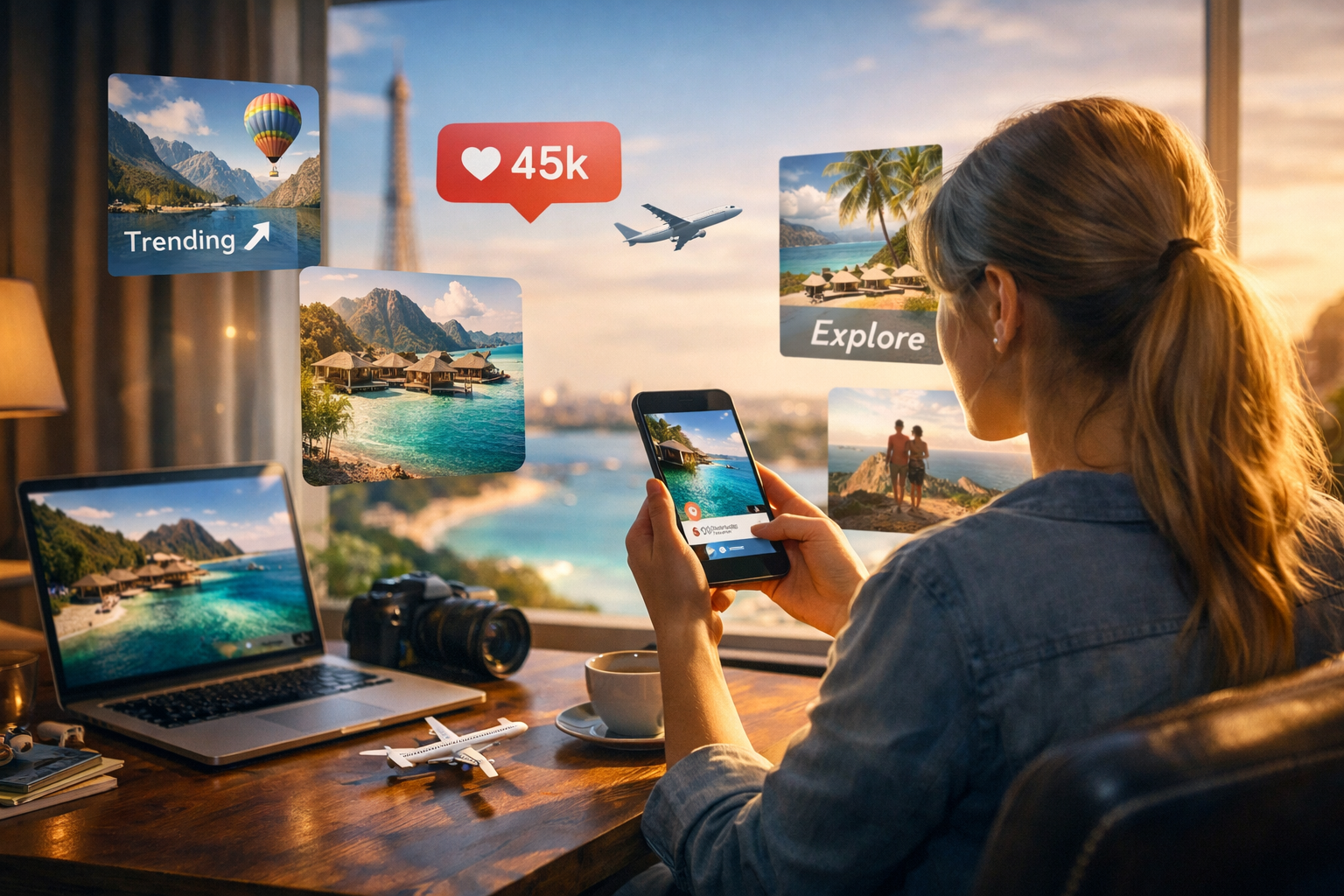
Social media platforms collect extensive behavioral data, allowing content feeds to become highly personalized. When users engage with travel-related posts, algorithms increase exposure to similar content. This feedback loop strengthens the influence of travel news on social media on individual preferences.
Personalization narrows attention toward specific types of travel experiences. A user who frequently watches luxury resort content may rarely encounter budget travel updates, and vice versa. Over time, this shapes expectations, budgets, and destination choices.
Booking behavior is increasingly integrated into platforms. Links to booking sites, in-app reservations, and direct partnerships reduce friction between inspiration and transaction. The journey from discovering a location in a feed to purchasing a ticket has shortened dramatically.
Social validation also plays a role. Travelers often select destinations that align with digital identity. If certain locations are widely shared and positively reviewed, they become markers of cultural relevance.
Economic and Cultural Consequences for Destinations
The economic implications of travel news on social media extend beyond marketing. Small businesses can gain international visibility without traditional advertising budgets. A café featured in a viral video may experience a surge in customers overnight.
Local economies can benefit from diversified tourism exposure. Lesser-known regions have an opportunity to attract visitors who might not have discovered them through conventional channels. Social media reduces geographic barriers to awareness.
However, sudden growth can challenge sustainability. Infrastructure, housing markets, and local culture may be affected when digital exposure attracts large visitor volumes. Responsible travel messaging has become increasingly important to balance promotion with preservation.
Destinations are now more active participants in digital storytelling. Tourism boards invest in social listening tools to monitor sentiment and emerging trends. By analyzing how their region appears in travel news on social media, they can adjust strategy in real time.
Conclusion
Travel news on social media has become a dominant force shaping modern travel trends. It accelerates destination popularity, influences crisis perception, shifts authority from traditional media to digital creators, and directly affects booking behavior. While it creates new opportunities for visibility and economic growth, it also introduces volatility and sustainability challenges. Understanding its influence is essential for travelers, businesses, and destinations navigating today’s rapidly evolving tourism landscape.
FAQ
Q: Why is travel news on social media more influential than traditional travel media? A: Social media delivers real-time updates, peer-generated content, and viral visibility, making information faster and often more relatable than traditional outlets.
Q: Can viral travel content lead to overtourism? A: Yes, rapid exposure can attract large visitor numbers quickly, sometimes overwhelming local infrastructure and resources.
Q: How do influencers affect travel trends? A: Influencers shape perceptions through curated experiences, and their recommendations often drive destination interest and bookings.
Q: Is travel news on social media always reliable? A: Not always; while it provides fast updates, information may be unverified, so cross-checking with official sources is important.
Q: How does personalization impact travel decisions on social platforms? A: Algorithms tailor content to user behavior, reinforcing specific travel preferences and influencing destination choices over time.