Table of Contents
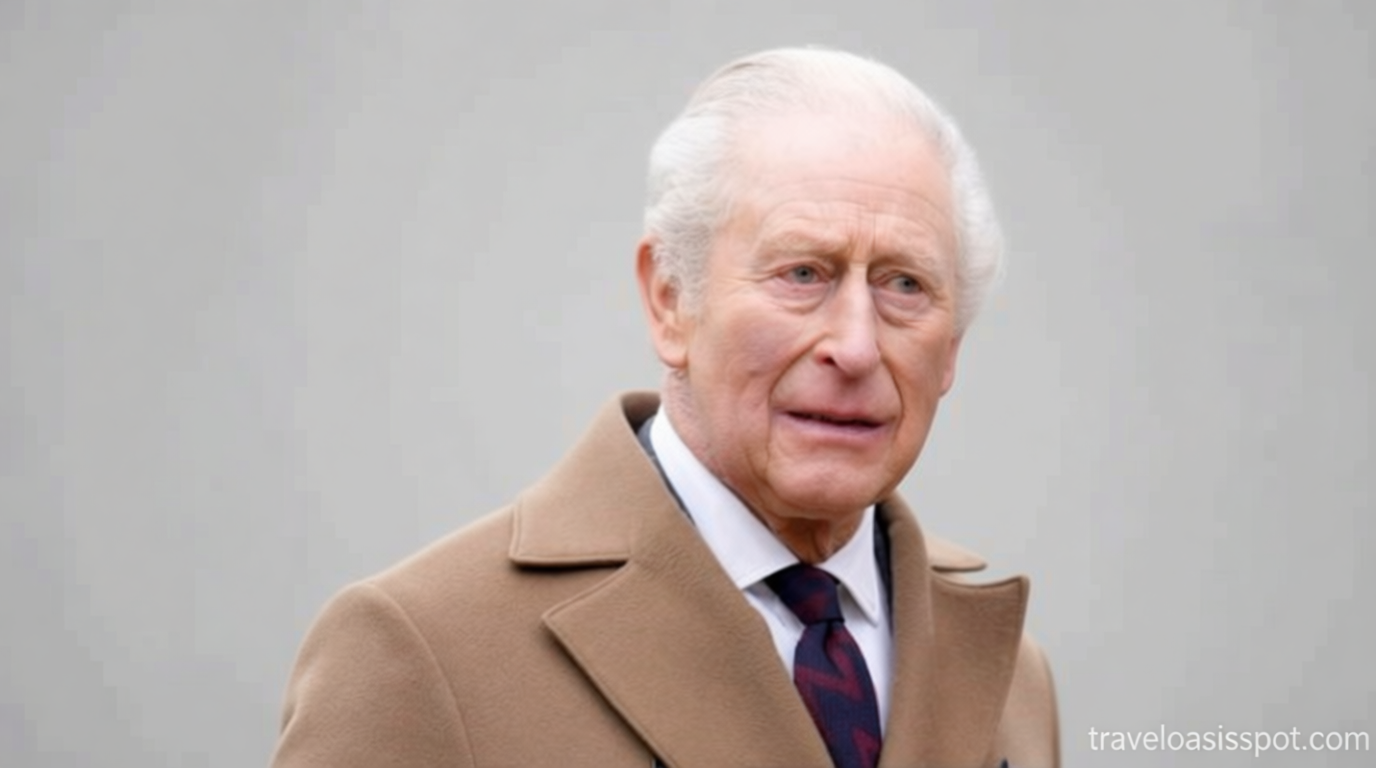
ToggleFormer NYC Mayor Giuliani Claims King Charles ‘Could Be Muslim’
Rudy Giuliani, the former mayor of New York City and former legal counsel to former US President Donald Trump, recently asserted that the reigning monarch of England might secretly adhere to Islam. During a conversation with British journalist Piers Morgan on his YouTube program, Giuliani expressed concerns that “Muslims wanna take over” Britain, labeling the Quran as “a cult of death.”
Atheistic Remarks in a Political Context
Giuliani’s remarks came as he defended the US-Israeli military campaign against Iran. He stated, “I have people from England telling me you’re gonna be a Muslim country in 10 years,” suggesting a shift in Britain’s religious demographics. The claim that King Charles III might be a Muslim monarch is part of a broader online narrative questioning the royal family’s faith.
Charles, who serves as the head of the Church of England, is widely recognized for his admiration of Islam. He once studied Arabic to engage directly with the Quran and has previously argued that Islam, Judaism, and Christianity share significant commonalities. “They are three great monotheistic religions,” he stated, emphasizing their mutual foundations.
Contrasting Views on Muslim Influence
Giuliani contended that Britain’s Muslim population is gaining political sway, accusing them of “taking over” and aligning with Iran as a driving force. “You take out the Islamic Republic of Iran, the whole thing moves in the other direction,” he claimed, during his discussion with Morgan.
In contrast, Charles has consistently praised Britain’s Muslim communities, calling them “an asset to Britain” and a source of “cultural richness.” When Morgan noted that only five percent of the UK identifies as Muslim, Giuliani responded, “Doesn’t matter. They have tremendous power,” citing the presence of several Muslim mayors, including London’s Sadiq Khan.
Sharia Law and the Quran: Giuliani’s Criticism
Giuliani further criticized sharia law, declaring it “a cult of death” and questioning its relevance in the UK. “Sharia law is a cult of death,” he stated, adding that the Quran itself embodies “a cult of death.” This view contrasts sharply with Charles’s 1993 declaration that Islamic law “should be those of equity and compassion,” highlighting the king’s appreciation for Islamic principles like women’s rights to property and inheritance.
Giuliani also claimed that British Prime Minister Keir Starmer is “very, very affected by [Muslims] politically,” appearing to favor their interests over national unity. “They just do the immigration part. Immigration and then follow Muhammad,” he argued, suggesting that Muslims prioritize expansion over assimilation.
The King’s Traditionalist Leanings
Charles’s interest in Islam is tied to his advocacy for Traditionalism, an esoteric 20th-century philosophy that emphasizes universal truths across religions. In a 2006 speech, he stated, “If [Traditionalists] defend the past, it is because in the pre-modern world, all civilisations were marked by the presence of the sacred.”
While Charles’s stance on the US-Israeli conflict with Iran remains unclear, he has publicly opposed the 2003 invasion of Iraq. This demonstrates a nuanced approach to global religious and political dynamics, distinct from Giuliani’s more confrontational rhetoric.
Sharia Councils and Their Role
Despite Giuliani’s assertion that sharia law “dominates” in parts of England, the UK hosts 85 sharia councils—unofficial organizations with no formal legal authority. These bodies operate within the framework of British law, reflecting the diverse cultural and religious landscape of the nation.
“I was in London about a year and a half ago, and it seemed to me there were an awful lot of women with veils on that I’d never seen before,” Giuliani remarked. “You have debates over whether sharia law should be respected. Of course it shouldn’t be respected.”
Giuliani’s critique of sharia law underscores his broader skepticism of Islamic influence, while Charles’s historical perspective highlights the interconnectedness of Britain’s cultural and religious heritage with the Islamic world.