Table of Contents
ToggleTerrifying ‘security breach’ spotted in Trump’s Situation Room as Ice Maiden Susie Wiles faces blowback
The White House’s Response
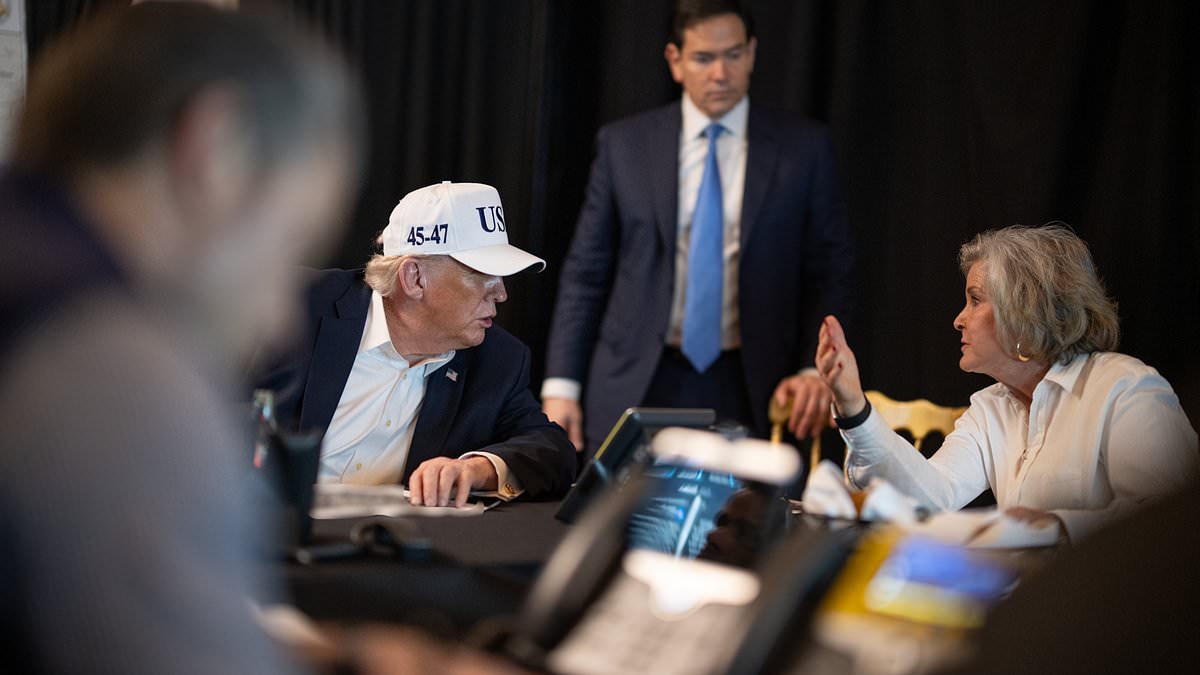
Photos from Trump’s improvised Situation Room at Mar-a-Lago were shared by the White House on Saturday morning, capturing the President as he directed the launch of ‘Operation Epic Fury.’ This mission led to the death of Iran’s Supreme Leader, Ayatollah Ali Khamenei.
Among the images, one highlighted Susie Wiles, Trump’s chief of staff, speaking with the President while wearing a personal electronic wrist device. Initially, some speculated it was an Apple Watch, but further analysis confirmed it as a WHOOP fitness tracker.
Public Reaction and Concerns
Critics raised questions about the device’s presence in the high-security environment, arguing that Bluetooth-enabled fitness trackers could be compromised for surveillance. Others pointed out the potential for remote hacking during the sensitive operation.
“I love my @WHOOP (and immediately recognized it in the photo of Susie Wiles)”
CNN’s Brian Stelter shared this sentiment online, sparking renewed debate over the security of wearable technology in such settings.
Defenses and Clarifications
WHOOP CEO Will Ahmed addressed the controversy, stating the device lacks microphone, GPS, or cellular capabilities. He emphasized its inclusion on the National Security Agency’s approved list for personal electronics.
The White House echoed this, asserting that WHOOP devices are “secure by design” and deemed safe for use during classified briefings.
Security Doubts and Context
While the NSA sanctions WHOOP for limited secure applications, some intelligence agencies reportedly ban all Bluetooth-enabled wearables in the Situation Room. A user on X noted that the Mar-a-Lago setup lacked walls, leaving it vulnerable to eavesdropping.
Others criticized the choice of launching the attack from a Palm Beach club rather than a secure White House location, questioning the readiness of the national security team.
Retaliatory Strikes and Casualties
Iran has retaliated with missile strikes across the Middle East, targeting the Fifth Fleet service center in Bahrain and claiming hits on bases in Qatar, the UAE, and Kuwait. The Ayatollah’s palace was also damaged by US-Israeli missiles.
The exact number of civilian casualties from these strikes remains uncertain. Meanwhile, Iran is deploying kamikaze drones to attack residential areas and airports in the region.
CENTOM reported Sunday that three US troops have been confirmed killed in the operation, though broader impacts are still under evaluation.