Table of Contents
ToggleAnas al-Sharif was murdered for being Gaza’s voice
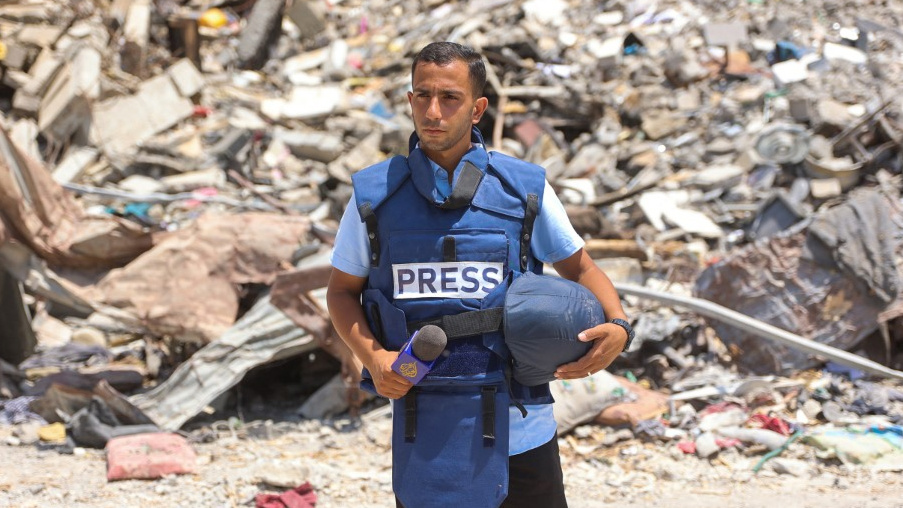
Israeli forces executed Al Jazeera correspondents Anas al-Sharif and Mohammed Qreiqeh, alongside camera operators Ibrahim Zaher, Mohammed Noufal, and Moamen Aliwa, during a direct strike on their media tent at al-Shifa Hospital in Gaza City. The attack was not a random act of conflict—it was a deliberate operation, designed to silence voices that refused to shy away from truth.
Anas al-Sharif’s Story
A young Palestinian from Jabalia in northern Gaza, al-Sharif had spent 22 months documenting the war. His crime? Persisting in exposing the horrors of genocide—unrelenting violence, the systematic dismantling of life itself. His work never ceased, no matter the peril.
The Weight of Truth
His journey was etched by conflict: born in 1996, he witnessed the Second Intifada as a child, the 2008 Gaza war at 12, and the 2014 assault at 18. At 28, he was among the casualties of a 22-month campaign that saw endless civilian deaths and the collapse of Gaza’s foundations. Yet, his commitment to truth endured.
A Voice for the Voiceless
“Carry on, Anas, you are our voice,” a passerby cried as he watched a woman faint from hunger, her fate captured live on camera.
Al-Sharif’s reporting reached millions across the Arab world, making him a symbol of resistance. His personal tragedies—his father’s killing by Israeli fire, the separation from his mother, daughter Sham, newborn son Salah, and wife Bayan—were not just family losses; they were part of a broader narrative of suffering. His audience knew his grief as intimately as his voice.
Legacy of Courage
He stepped into the void left by colleagues like Ismail al-Ghoul, slain by Israeli fire, and Wael Dahdouh, who continued reporting after his family was massacred before his eyes. Dahdouh later left Gaza for treatment, but al-Sharif returned, carrying the weight of their legacy.
Israeli intelligence openly threatened al-Sharif, warning him of punishment if he persisted. His father’s death was the first blow, followed by the assassination of his comrades. The final strike came in a drone attack, shattering his body along with those of four others—a grim echo of countless killings in Gaza, Lebanon, and Syria.
The Cost of Reporting
With no weapon and his location always known, al-Sharif could have been arrested. But Israel chose to eliminate him, ensuring their propaganda remained unchallenged. Netanyahu’s war on Gaza has stretched for 22 months, failing to achieve its stated goals except for mass civilian slaughter and the erosion of daily life.
Avichay Adraee, Israel’s most aggressive spokesperson, singled him out. Last month, the Committee to Protect Journalists cautioned:
“These recent baseless accusations aim to justify the killing of Al-Sharif, manufacturing public approval for his removal.”
Adraee, likened to a modern-day Joseph Goebbels, now marks targets for death with a smug smile.
Enduring the Storm
Al-Sharif’s courage was a beacon, even as friends and colleagues fell. He bore their coffins, then returned to the frontline, dust still on his hands from the graves. His strength drew from Shireen Abu Akleh, killed in Jenin in 2022—Israel’s indifference to religious or ethnic differences in its war on truth was absolute.
In the end, al-Sharif and his team became the final chapter of a campaign that sought to extinguish Gaza’s voice. With their loss, Israel’s propaganda machine now moves into darker territory, ready for the next round of erasure.